



CCSD code G5100: Bypass of duodenum billing guide
CCSD code G5100 bills a bypass that leaves the duodenum in place CCSD code G5100...

Last Updated: Oct 16, 2026

CPT Code 00145 covers anesthesia for vitreoretinal eye surgery, such as vitrectomy and retinal detachment repair; it is not the eye-anesthesia catch-all code.
The not-otherwise-specified (NOS) eye anesthesia code is 00140, not 00145; procedures without a dedicated code, including strabismus repair, are billed under 00140.
CPT 00145 carries 6 base units per the ASA Relative Value Guide; reimbursement is calculated using (base units + time units + modifying units) x conversion factor.
Practitioner-type modifiers (AA, QX, QZ), physical status modifiers (P1-P6), and qualifying circumstance add-on codes (99100, 99116, 99135, 99140) all affect commercial billing, though Medicare pays zero for physical status and treats the qualifying circumstance codes as bundled.
Practice management software like Pabau helps anesthesia billing teams validate modifiers, track time units, and submit cleaner claims.
CPT Code 00145 is the anesthesia procedure code for vitreoretinal surgery — procedures such as pars plana vitrectomy, retinal detachment repair, and related posterior segment surgery. It comes with a layered billing structure that catches many practices off guard.
The interaction between base units, time units, physical status modifiers, and qualifying circumstance codes creates multiple points of failure on a single claim. A missing modifier or an incorrect base unit count can trigger a denial that takes weeks to resolve.
This reference guide covers the official code description, base unit value, the full modifier set, 2026 reimbursement context, ICD-10-CM crosswalk codes, related ophthalmic anesthesia codes, documentation requirements, and how billing software reduces errors across all of these areas.
CPT Code 00145 is the procedure code for anesthesia administered during vitreoretinal surgery — surgical procedures on the posterior segment of the eye, including the vitreous and retina.
Maintained by the American Medical Association (AMA) as part of the CPT code set, it sits within the Anesthesia section, in the “Head” subsection that spans CPT range 00100-00222, alongside the other eye-procedure anesthesia codes (00140-00148).
The official AMA long description reads: Anesthesia for procedures on eye; vitreoretinal surgery. For surgical and ophthalmic practices, 00145 is billed specifically for posterior segment procedures such as pars plana vitrectomy, scleral buckle repair for retinal detachment, and other vitreoretinal surgery — it is not a general catch-all for any eye procedure.
That catch-all role belongs to a different code: CPT 00140 (Anesthesia for procedures on eye; not otherwise specified, 5 base units). Procedures that do not map to a more specific eye code — including strabismus repair, which involves the extraocular muscles rather than the vitreous or retina — are billed under 00140, not 00145.
When a procedure has its own designated anesthesia code within the family (00142 for lens surgery, 00144 for corneal transplant, 00145 for vitreoretinal surgery, 00147 for iridectomy, 00148 for ophthalmoscopy), that more specific code takes precedence over the 00140 NOS code.
CPT Code 00145 carries 6 base units according to the American Society of Anesthesiologists (ASA) Relative Value Guide (RVG). Base units reflect the inherent complexity of providing anesthesia for a given procedure type, independent of how long the case runs. A higher base unit value signals greater clinical complexity and typically correlates with a higher reimbursement floor.
Anesthesia billing does not work like standard CPT billing. Rather than a flat fee per code, the payment calculation combines three components. The standard formula, confirmed by both the ASA and CMS, is:
Total Billable Units = Base Units + Time Units + Modifying Units
That total is then multiplied by the applicable conversion factor to arrive at a dollar amount. The conversion factor varies by payer. Medicare publishes its own anesthesia conversion factor annually, and commercial payers set their own rates separately.
Time units are added to the base units to reflect the duration of anesthesia care. The standard convention is 1 time unit per 15 minutes of anesthesia time, though some payers use a different interval. Anesthesia time begins when the anesthesia provider starts preparing the patient and ends when the provider is no longer in personal attendance.
A 60-minute pars plana vitrectomy under general anesthesia, with no physical status modifiers beyond P2, would yield: 6 (base) + 4 (time, for 60 minutes at 1 unit per 15 min) = 10 total units before applying the conversion factor.
For payers that recognize modifying units, physical status or qualifying circumstance add-ons would increase this figure further; Medicare does not add either type of unit (see the Medicare reimbursement section below).
Anesthesia modifier selection is one of the most error-prone areas in ophthalmic anesthesia billing. CPT Code 00145 requires at least one practitioner-type modifier on every claim. Missing or incorrect modifiers are a leading cause of claim denials and audit flags for this code type.
Three modifier categories apply: practitioner-type modifiers, physical status modifiers, and qualifying circumstance add-on codes. All three may appear on a single claim, though Medicare only recognizes the first category for payment purposes.
Medicare’s medical direction rules for the AA and QK/QX modifier pair are strictly defined by CMS. An anesthesiologist claiming medical direction must satisfy all seven requirements outlined in the Medicare Benefit Policy Manual. Practices billing CPT Code 00145 under QX without meeting each condition risk full claim denial. Verify current rules through the CMS Physician Fee Schedule.
Physical status modifiers reflect the patient’s systemic health at the time of the procedure. The ASA classification system uses P1 through P6.
The ASA Relative Value Guide assigns add-on units to P3 through P5, as shown below, but those add-on units only matter to payers that follow the ASA RVG.
Medicare does not add physical status units at all: P1 through P6 are all worth zero payable units under the Medicare Physician Fee Schedule, regardless of ASA classification. Confirm each payer’s convention before including modifying units in a claim total.
Qualifying circumstance codes are add-on codes that may be reported alongside CPT Code 00145 when specific conditions make anesthesia care significantly more complex.
Under Medicare, however, 99100, 99116, 99135, and 99140 are all status B (bundled) codes: Medicare does not pay for them separately, and any additional complexity they represent is considered bundled into the primary anesthesia payment. Commercial payers that follow the ASA RVG may still recognize the add-on units listed below; confirm payer-specific policy before billing any of these codes.
Code 99100 is the most frequently applicable qualifying circumstance for procedures billed under 00145, since many vitreoretinal conditions — retinal detachment, proliferative diabetic retinopathy, endophthalmitis — are more common in patients older than 70.
Under Medicare, 99100 is bundled and not separately payable; commercial payers using the ASA RVG may still recognize the add-on unit when the medical record supports the qualifying circumstance.
Always check payer-specific policies before reporting qualifying circumstance codes with CPT Code 00145. Medicare treats 99100, 99116, 99135, and 99140 as bundled (status B) and will not pay them separately, and some commercial payers also exclude 99116 or 99135 for outpatient ophthalmic procedures. Keep a payer-specific modifier matrix in your billing system to catch mismatches before submission.
Anesthesia reimbursement is not a fixed dollar amount. The final payment depends on the total billable units (base + time + any recognized modifying units), the payer’s conversion factor, and geographic adjustments.
Medicare applies a Geographic Practice Cost Index (GPCI) adjustment, meaning a practice in a high-cost area like San Francisco receives a different allowable than an identical case billed from a rural county in the same state.
Use the CMS Physician Fee Schedule search tool to look up current Medicare allowable rates for CPT 00145 by MAC locality. For commercial rates, practices must negotiate or reference their individual payer contracts.
Medicare calculates anesthesia payment using the following formula, verified by CMS in the annual Medicare Physician Fee Schedule final rule:
Medicare Anesthesia Payment = [(Base Units + Time Units) x Conversion Factor x GPCI]
The anesthesia conversion factor changes each calendar year. For the most current figure, reference FastRVU’s 2026 RVU lookup tool, which draws directly from CMS published data. Do not rely on prior-year rates for current claims.
Medicare does not recognize physical status add-on units. Under the Medicare Physician Fee Schedule, P1 through P6 all carry zero payable units — the ASA’s P3-P5 add-on units (1, 2, and 3 units respectively) apply only to payers that follow the ASA Relative Value Guide, not to Medicare claims.
Qualifying circumstance codes (99100, 99116, 99135, 99140) are similarly bundled (status B) under Medicare and are not separately payable. Practices should confirm which convention each commercial payer follows before including any modifying units in a claim total.

Pabau’s claims management tools help anesthesia and surgical practices validate modifiers, track time units, and catch billing errors before claims go out. See how it works for your practice.

Pairing the correct ICD-10-CM diagnosis code with CPT Code 00145 establishes medical necessity and satisfies payer crosswalk requirements. Because 00145 is specific to vitreoretinal surgery, the diagnosis codes billed alongside it should reflect a genuine posterior segment condition — retinal detachment, diabetic retinopathy, vitreous hemorrhage, endophthalmitis, or macular pucker — rather than an anterior segment or muscle condition. Downcoding is as common as upcoding, and both trace back to how the decision-making level was recorded. A resubmission does not restart the clock, so the original filing limit still governs.
The table below lists the most common diagnosis codes documented alongside vitreoretinal anesthesia claims. For a complete crosswalk, use the AAPC Codify CPT lookup, which includes payer-validated ICD-10 pairing data.
Code specificity and laterality both matter here. Documenting right, left, or bilateral where applicable, and using the most specific code available in the record, reduces the risk of a medical necessity denial. Consistent use of structured medical forms for healthcare practices at intake reduces the risk of defaulting to unspecified codes at billing time.
A quick note on strabismus: because strabismus repair involves the extraocular muscles rather than the vitreous or retina, it is not billed under 00145. It is coded to CPT 00140 (the NOS code) and typically pairs with a strabismus diagnosis such as H50.9 (unspecified strabismus), H50.00 (esotropia, unspecified), or a laterality-specific code such as H50.411 (cyclotropia, right eye).
A claim for 00145 submitted with a strabismus-only diagnosis and no vitreoretinal procedure documented should be expected to draw a medical necessity denial. The same logic applies to eyelid trauma: a diagnosis such as S01.129S belongs with an eyelid repair code, not with 00145.
CPT Code 00145 is one of six anesthesia codes in the eye-procedure family. It is billed specifically for vitreoretinal surgery, while CPT 00140 serves as the catch-all (NOS) code for eye procedures that do not have a dedicated code of their own.
The table below maps the related CPT anesthesia procedure codes across the eye surgery range, including their base unit values for comparison.
The 2-unit difference between 00142 (lens surgery, 4 base units) and 00145 (vitreoretinal surgery, 6 base units) illustrates why specificity at code selection matters. Billing a cataract (lens) case under 00145 instead of 00142 — or vice versa — creates a base unit mismatch against the documented procedure, which is exactly the kind of discrepancy payer systems are built to flag.
For a full anesthesia code list, the AMA CPT coding resources page provides official descriptions and section guidance.
The same specificity principle applies elsewhere in the CPT anesthesia section: CPT 00212, for intracranial procedures, follows an identical base-unit logic within the same Head subsection.
Clean claims for CPT Code 00145 depend on a complete anesthesia record. Payers use the anesthesia record to verify time units, confirm modifier eligibility, and audit physical status classification. Missing or incomplete documentation is the fastest route to a post-payment audit request.
Following HIPAA-compliant documentation practices. Beyond HIPAA, the specific elements required for anesthesia billing include:
Practices using digital anesthesia consent forms cut down on missing pre-anesthesia documentation at the point of capture, before the case begins. Pre-populated physical status questions and timestamp fields mean the record is complete before the patient leaves intake.
This directly reduces the incidence of modifier-documentation mismatches that trigger post-payment audits. The same layered documentation burden applies to other anesthesia-heavy specialties.

Build a pre-billing checklist specific to CPT Code 00145: anesthesia start/stop times recorded, physical status modifier documented with clinical justification, practitioner-type modifier confirmed against the operative log, and any qualifying circumstance code supported by a documented indication for payers that recognize it. Running this check before submission catches most common denial triggers for ophthalmic anesthesia claims.
The layered billing structure of CPT Code 00145 creates multiple manual checkpoints: base units, time unit calculation from documented start/stop times, physical status modifier selection, practitioner-type modifier confirmation, and qualifying circumstance eligibility. Each one is a potential error point when managed manually.
Pabau’s claims management software helps anesthesia and surgical practices reduce this error surface. Time unit calculations can be automated from documented case times, modifier validation flags mismatched combinations before submission, and built-in audit trails satisfy payer documentation requests without manual record retrieval.
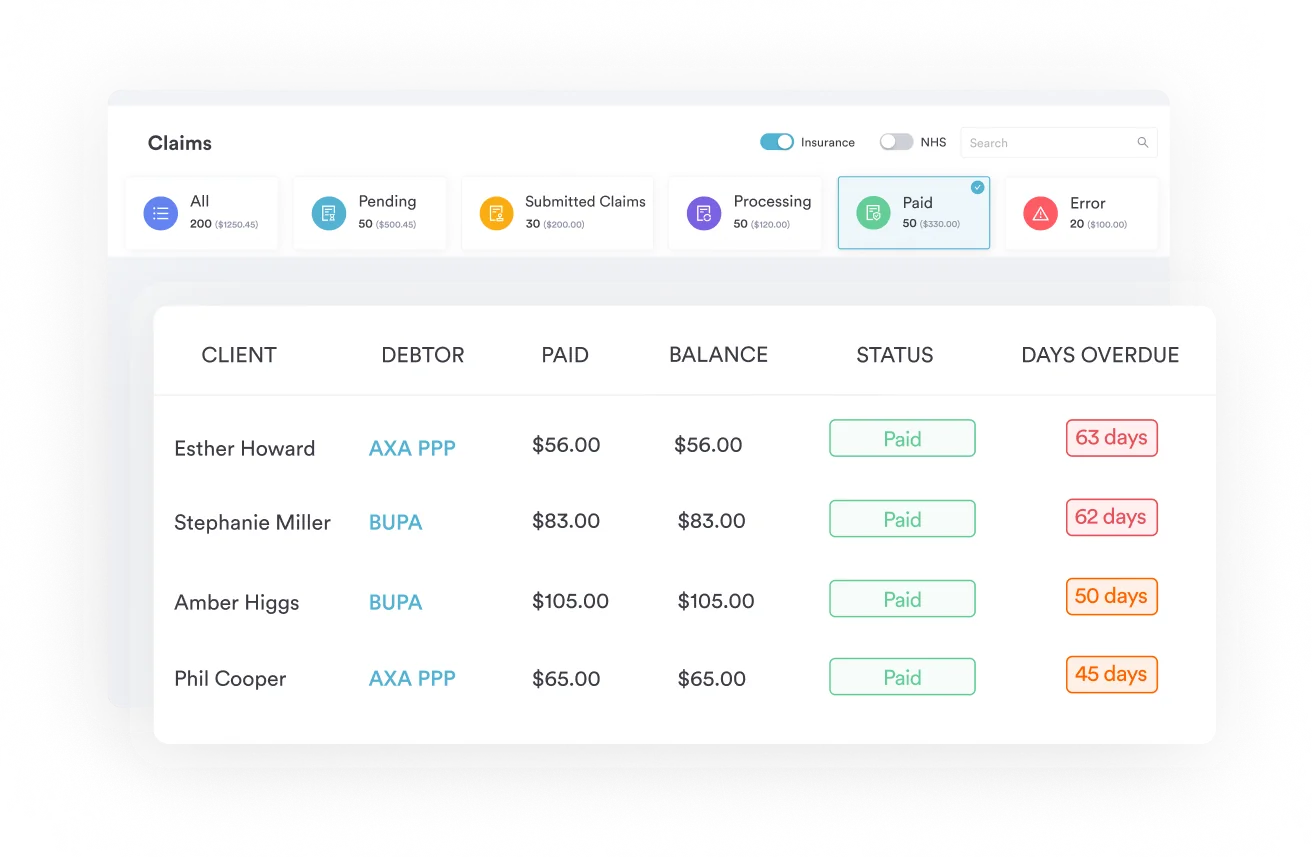
The automated billing workflows within Pabau allow teams to configure pre-submission checks for code-modifier combinations that commonly fail for specific payers, reducing denial rates for high-volume anesthesia codes including 00145.
Practices that have moved to structured digital workflows report measurable reductions in claim rework time. See how these types of tools compare to manual processes in this overview of practice management features for billing efficiency.
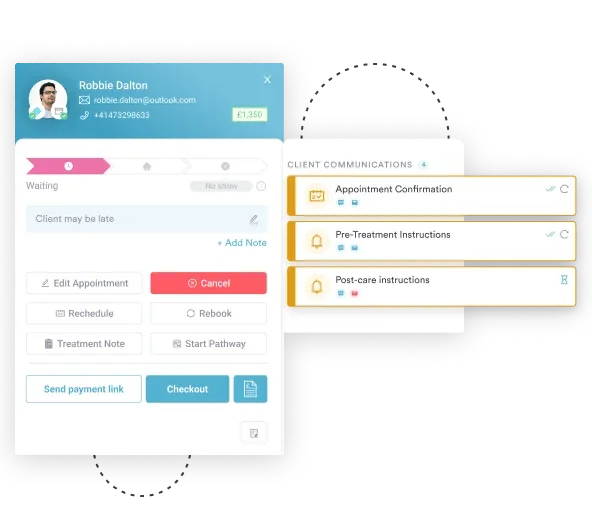
For teams evaluating how to reduce administrative burden across the full revenue cycle, a review of time-saving features for practices covers the workflow areas where structured software delivers the clearest ROI for practices billing procedure-heavy codes like CPT 00145.
Anesthesia billing for vitreoretinal surgery is precise work. CPT Code 00145 carries 6 base units, sits alongside — but should never be confused with — the NOS catch-all code 00140, and its multiple modifier categories and time-unit calculation leave little room for guesswork.
Misreporting the base code, missing a modifier, miscounting time units, or failing to document physical status classification can flip a clean claim into a denial or an audit trigger.
Pabau’s claims management tools are built for exactly this kind of structured, rule-heavy billing environment. Modifier validation, automated time unit tracking, and pre-submission audit trails reduce the manual checking burden so billing teams can focus on accuracy rather than catching errors after the fact.
To see how it works in practice, book a demo and walk through an anesthesia billing workflow with the Pabau team.

Need billing details for a related anesthesia code? CPT code 00212 covers anesthesia for intracranial procedures and subdural taps within the same Head anesthesia subsection as 00145.
Need a diagnosis code for eyelid trauma? S01.129S documents a laceration with foreign body involving the eyelid, distinct from the posterior segment diagnoses paired with 00145.
Billing a different high-modifier procedure code? CPT code 96372 covers therapeutic injection administration, with its own modifier and reimbursement rules.
CPT Code 00145 is the anesthesia procedure code for vitreoretinal surgery — procedures on the vitreous and retina such as pars plana vitrectomy, retinal detachment repair, and related posterior segment surgery. It is maintained by the AMA and is distinct from CPT 00140, which is the not-otherwise-specified (NOS) catch-all code for eye procedures that do not have a dedicated code.
CPT 00145 carries 6 anesthesia base units per the ASA Relative Value Guide. Base units reflect the inherent complexity of the procedure type and are combined with time units, and any modifying units recognized by the payer, to calculate the total billable units before applying the payer’s conversion factor.
Three modifier categories apply: practitioner-type modifiers (AA for personally performed, QX/QK for medically directed, QZ for independent CRNA), physical status modifiers (P1-P6), and qualifying circumstance add-on codes (99100, 99116, 99135, 99140). At least one practitioner-type modifier is required on every 00145 claim. Physical status and qualifying circumstance modifiers may add units for commercial payers that follow the ASA RVG, but Medicare does not pay separately for either category.
Reimbursement is calculated as: (Base Units + Time Units + Modifying Units) multiplied by the conversion factor. Time units are typically 1 per 15 minutes of documented anesthesia time. For Medicare, the calculation also applies a Geographic Practice Cost Index (GPCI) adjustment by MAC locality, and Medicare’s formula excludes physical status and qualifying circumstance units entirely, so national averages do not reflect local Medicare allowables.
Yes, Medicare covers CPT Code 00145 when medically necessary and properly documented. Payment varies based on the modifier used: AA and QZ claims are paid at 100% of the calculated allowable, while QK/QX medically directed cases split payment at 50% between the anesthesiologist and the CRNA, and AD (supervision of 5+ concurrent cases) is paid at 3 base units only. Physical status modifiers (P1-P6) add zero payable units under Medicare, and qualifying circumstance codes (99100, 99116, 99135, 99140) are bundled (status B) and not paid separately.
The most common diagnosis codes paired with CPT 00145 include H33.011 (retinal detachment with single break), E11.3511 (proliferative diabetic retinopathy with macular edema), H43.11 (vitreous hemorrhage), H44.011 (panophthalmitis/endophthalmitis), and H35.371 (macular pucker). Strabismus diagnosis codes such as H50.9 or H50.411 do not pair with 00145; strabismus repair is billed under CPT 00140, not 00145.
Required documentation includes: a pre-anesthesia evaluation with physical status classification (P1-P6) and clinical justification, the intraoperative anesthesia record with exact start and stop times, vital signs, and agents used, documentation establishing the practitioner-type modifier applied, any qualifying circumstance justification for payers that recognize it, and a post-anesthesia recovery note. Every element must be present to withstand payer audit review.
CPT 00140 is the not-otherwise-specified (NOS) catch-all code for eye procedures that do not have a dedicated anesthesia code — it carries 5 base units and is the code used for procedures such as strabismus repair. CPT 00145 is specifically for vitreoretinal surgery (vitrectomy, retinal detachment repair, and related posterior segment procedures) and carries 6 base units. Use 00145 only when the procedure is genuinely vitreoretinal; default to 00140 when no other code in the 00140-00148 family fits.



