



HCPCS code E0198: Water pressure pad billing guide
HCPCS code E0198 is a water pad for a standard mattress HCPCS code E0198 is the ...

Last Updated: Oct 13, 2026

CPT code 00160 covers anesthesia for procedures on the nose and accessory sinuses, NOS, with a base unit value of 5
Anesthesia payment is calculated using the formula: (Base Units + Time Units + Modifying Units) x Conversion Factor
Missing or incorrect modifiers (AA, QZ, QX, QK, QY, AD, QS) are the top cause of claim denials for CPT 00160
Practice management software like Pabau keeps intake, consent, and time-stamped treatment notes together, so the anesthesia record stays organized and audit-ready
CPT Code 00160 is the anesthesia code for procedures on the nose and accessory sinuses, not otherwise specified (NOS), billed at 5 base units. It is the anesthesia code billers reach for most often on nose and sinus cases, and it is also one of the most frequently denied when a modifier, time unit, or diagnosis code does not line up.
This reference covers everything anesthesia coders and billing teams need: the official description, base units, the 2026 reimbursement formula with a worked example, applicable modifiers, qualifying circumstances, ICD-10 crosswalk, and the documentation CMS requires before a claim will pay. A superbill form is not a claim form, but it carries the same data the patient insurer will ask for.
CPT Code 00160 is the AMA’s CPT code for anesthesia services provided during procedures on the nose and accessory sinuses, not otherwise specified (NOS). Notably, it falls within the head section of the anesthesia code range (00100-00222), which covers all anesthesia services for procedures on the head.
In particular, the NOS designation is important. It signals that this code applies when no more specific nose or sinus anesthesia code is available. For example, common clinical scenarios include functional endoscopic sinus surgery (FESS), nasal polypectomy, septoplasty, rhinoplasty, and turbinate reduction procedures. Therefore, for more specific nasal procedures with dedicated codes, billers should confirm whether 00162 (radical surgery) or 00164 (biopsy of nose) is a better match.
The base unit system for anesthesia CPT codes assigns a fixed relative value that reflects the complexity and risk of the procedure. For CPT Code 00160, the base unit value is 5, as published in the American Society of Anesthesiologists (ASA) Relative Value Guide.
Overall, a base unit of 5 places 00160 in the lower-complexity tier of anesthesia codes. By comparison, cardiac or thoracic procedures can carry base units of 20 or higher. Nose and sinus procedures are generally considered lower-acuity, which is reflected in the assigned value. That said, 5 base units is not a trivial figure; combined with time units and the 2026 conversion factor, it produces a meaningful reimbursement per case.
The anesthesia billing formula is standardized by CMS and applies consistently across all anesthesia CPT codes, including 00160. Per the Medicare Claims Processing Manual, Chapter 12, the formula is:
(Base Units + Time Units + Modifying Units) x Conversion Factor = Payment Amount
The finalized CY2026 national Medicare anesthesia conversion factor is $20.4976 for most clinicians, or $20.5998 for Qualifying APM Participants, per the CMS Physician Fee Schedule final rule. This is the national rate; locality-specific anesthesia conversion factors apply on top of it. Here is a worked example for a typical 45-minute sinus procedure:
Time is recorded from induction to emergence, not from room entry to room exit. Practices must document start and stop times accurately on the anesthesia record, because payers audit time units against OR logs. Your Medicare Administrative Contractor publishes the locality-specific anesthesia conversion factor used to price claims in your jurisdiction.
Comparing practice management systems for medical teams is worth the effort before anesthesia time-unit billing becomes a spreadsheet job.
Medicare anesthesia payments are not a flat per-procedure amount. Reimbursement varies by locality because CMS publishes a separate anesthesia conversion factor for each locality, rather than adjusting the national rate with the work, practice expense, and malpractice GPCIs used for RVU-priced services. The national CY2026 rate is $20.4976, but high-cost localities like Manhattan or San Francisco pay more, while rural areas pay less. Check the CY2026 final rule for the full locality-specific rate table.
These estimates use the national conversion factor and assume no qualifying circumstances. Anesthesia codes are not RVU-priced, so verify your MAC’s published locality-specific anesthesia conversion factor before quoting expected reimbursement to your billing team.

Pabau keeps intake forms, consent, and time-stamped treatment notes together in one record, so your anesthesia documentation stays organized and audit-ready.

Anesthesia modifiers identify who performed the service and in what care model. In fact, getting the modifier wrong on a CPT Code 00160 claim is the fastest path to a denial or a compliance audit. Moreover, each modifier carries specific documentation and supervision requirements.
The QK modifier triggers strict CMS documentation requirements. The anesthesiologist must perform all seven specific supervisory activities described in the Medicare Claims Processing Manual. Missing even one of those documented activities gives the payer grounds to downcode or deny.
QY differs from QK in scope: QY applies when one anesthesiologist directs a single CRNA, while QK covers 2 to 4 concurrent CRNAs. Once a fifth concurrent case opens, the arrangement becomes medical supervision, billed with AD instead.
Physical status modifiers P1 through P6 describe the patient’s overall health at the time of anesthesia, from P1 (a normal, healthy patient) to P6 (a declared brain-dead patient whose organs are being removed for donation). Only P3 through P6 can add units, up to 3 additional units for P5. Medicare does not separately reimburse physical status units, though some commercial payers do.
Qualifying circumstance codes are add-on CPT codes that report unusual risk factors present during anesthesia. They are not routinely appended; clinical documentation must support the specific circumstance before a coder may include one. Similarly, appending a qualifying circumstance code without supporting documentation is an audit red flag.
Code 99100 (extreme age) is the most commonly appended qualifying circumstance for sinus and nasal procedures, particularly in pediatric or elderly patients. For sinus cases involving controlled hypotension to reduce surgical bleeding, 99135 is applicable when the anesthesiologist intentionally induced and maintained hypotension and the anesthesia record documents this clearly.
CMS conditions of payment for anesthesia are specific. A claim for CPT Code 00160 can be denied not because the procedure was performed incorrectly, but because the documentation does not meet the payer’s requirements. Good medical office compliance workflows reduce this risk by building documentation checklists into the pre-op and intraoperative process. Practices that review a sample of notes each month catch documentation level drift before a payer does.

The diagnosis code paired with CPT 00160 must support medical necessity for the anesthesia service. Payers use automated edits to check that the procedure and diagnosis are clinically consistent, so accurate ICD-10 documentation helps claims pass initial edits. For nose and sinus procedures, these are the most commonly reported diagnoses.
Cosmetic rhinoplasty without a reconstructive diagnosis is not covered by Medicare. Practices offering plastic surgery or medical spa procedures should confirm the diagnosis code reflects a documented functional or reconstructive indication, not an aesthetic one, before submitting a claim.
CPT 00160 sits within the 00100-00222 anesthesia head section. Knowing the sibling codes below helps coders pick the most specific code and avoid the NOS designation when a more precise option exists.
When the procedure is radical sinus surgery (extensive resection, craniofacial procedures), 00162 at 7 base units is the correct code. Using 00160 in those cases understates the complexity and leads to underpayment. Verify the operative report against the code descriptor before submitting.
Claim denials for anesthesia codes, including CPT 00160, trace back to a small number of repeatable mistakes involving diagnosis pairing and modifier usage. These are the patterns that cause the most trouble:
Run a monthly modifier audit against your CPT 00160 claims. Pull all claims where a modifier is missing or where QK was billed without the corresponding QX on the CRNA’s claim. Catching these before the 90-day timely filing window closes is far less costly than retrospective appeals.
The manual nature of anesthesia billing creates room for costly errors. Pulling anesthesia start and stop times from a paper OR record, manually calculating time units, then cross-referencing modifier rules before entering the claim into a billing system creates multiple points of failure. Practice management software that connects clinical documentation to the billing workflow removes much of that manual work.
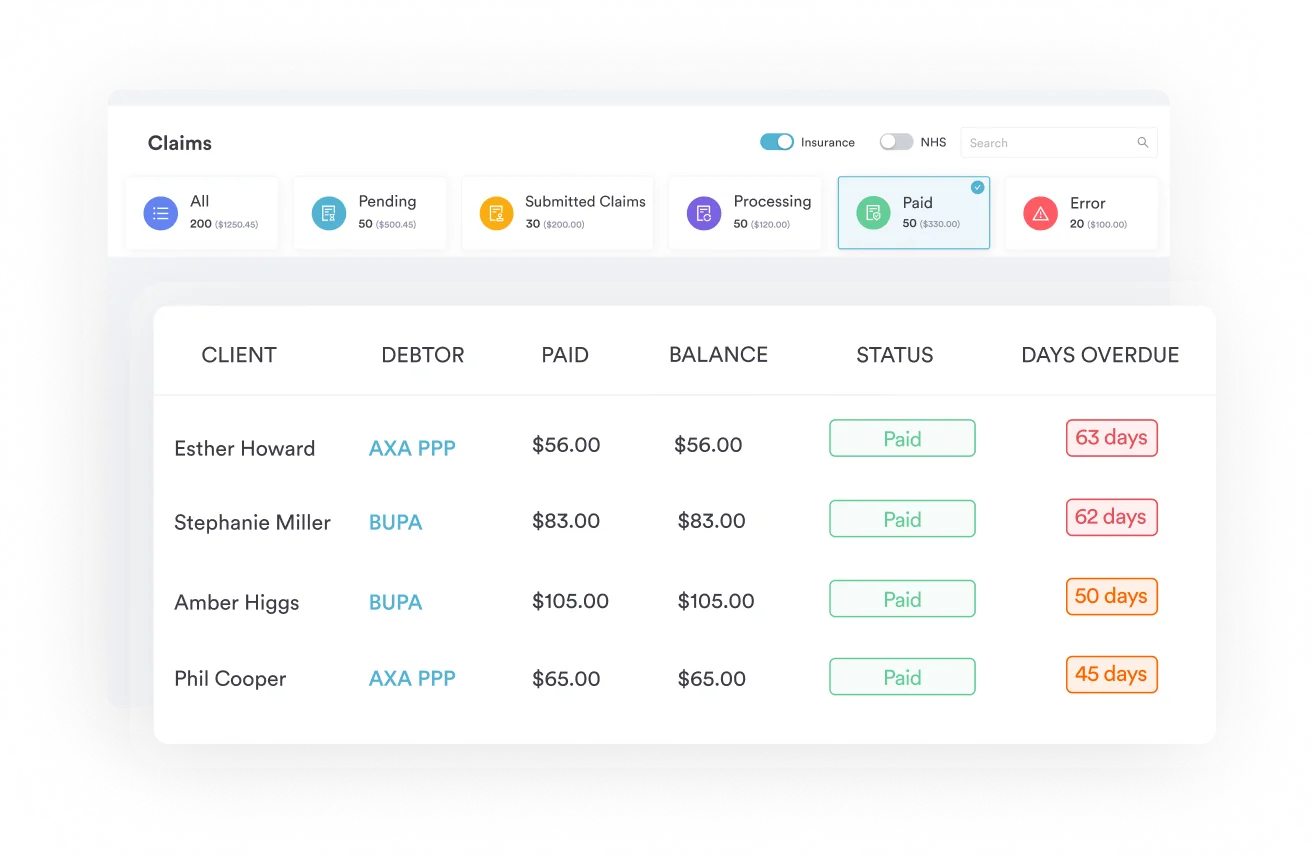
Pabau connects procedure-level documentation to billing codes within a single platform. Rather than context-switching between an anesthesia record, a separate coding reference, and a standalone billing system, billers work with structured data captured at the point of care.
This matters most for time-sensitive calculations like time units, where even a five-minute error in recorded anesthesia time shifts the reimbursement amount. Pabau’s practice management software keeps that documentation and revenue reporting together, so a discrepancy against expected Medicare rates gets caught during regular review rather than on audit.
For billing teams handling high volumes of procedure codes across multiple anesthesia providers, centralized patient management workflows reduce the risk of transcription error and make documentation review before claim submission a manageable daily task rather than an end-of-month scramble.
CPT Code 00160 is a concise anesthesia code, but it carries meaningful claim denial risk when modifiers are missing, time units are mis-recorded, or diagnosis codes do not support medical necessity. Practices that standardize their pre-anesthesia documentation, use the correct modifier for every provider type, and verify time unit calculations against the operative record see fewer denials and faster payment cycles.
Pabau keeps anesthesia documentation, from intake through time-stamped treatment notes, connected and organized, so your team spends less time reconstructing records before a claim goes out. To see how it works in a live environment.

Need the anesthesia billing details for a radical head-section procedure? CPT code 00192 covers radical surgery on facial bones or skull, using the same base-unit and time-based formula as CPT 00160.
Billing anesthesia for an eye procedure instead? CPT code 00144 walks through base units, modifiers, and reimbursement for eye anesthesia.
Need the surgical code that pairs with this anesthesia code? CPT code 31051 covers sinusotomy with mucosal stripping or polyp removal, one of the procedures CPT 00160 provides anesthesia for.
CPT Code 00160 is the anesthesia code for procedures on the nose and accessory sinuses, not otherwise specified (NOS). It carries 5 base units and applies to cases such as FESS, septoplasty, nasal polypectomy, and rhinoplasty when no more specific code applies.
CPT 00160 has 5 base units, per the ASA Relative Value Guide. Base units are fixed regardless of procedure length; time units are added separately based on anesthesia duration.
Yes. CPT 00160 is the standard anesthesia code for functional endoscopic sinus surgery (FESS), nasal polypectomy, and other sinus procedures when no more specific code applies. For radical sinus surgery, use CPT 00162 (7 base units) instead.
Reimbursement uses: (Base Units + Time Units + Modifying Units) x Conversion Factor. At the CY2026 Medicare conversion factor of $20.4976, a 45-minute case is (5 + 3 + 0) x $20.4976 = $163.98. Rates vary by payer and MAC locality.
When CPT 00160 is provided as monitored anesthesia care, modifier QS is appended. MAC requires medical necessity documentation, and CMS Local Coverage Article A57361 outlines the coverage criteria that must be met for Medicare reimbursement.
The most frequent causes are a missing anesthesia modifier (AA, QZ, QX, QK, QY, AD, or QS), incorrect time units from OR time instead of anesthesia time, a cosmetic diagnosis paired with a Medicare claim, and qualifying circumstance code 99135 appended without documented intentional controlled hypotension.



