

HCPCS Code E0272: Foam rubber mattress billing guide
HCPCS Code E0272: official descriptor and code overview HCPCS Code E0272 is the ...

Last Updated: Nov 6, 2026
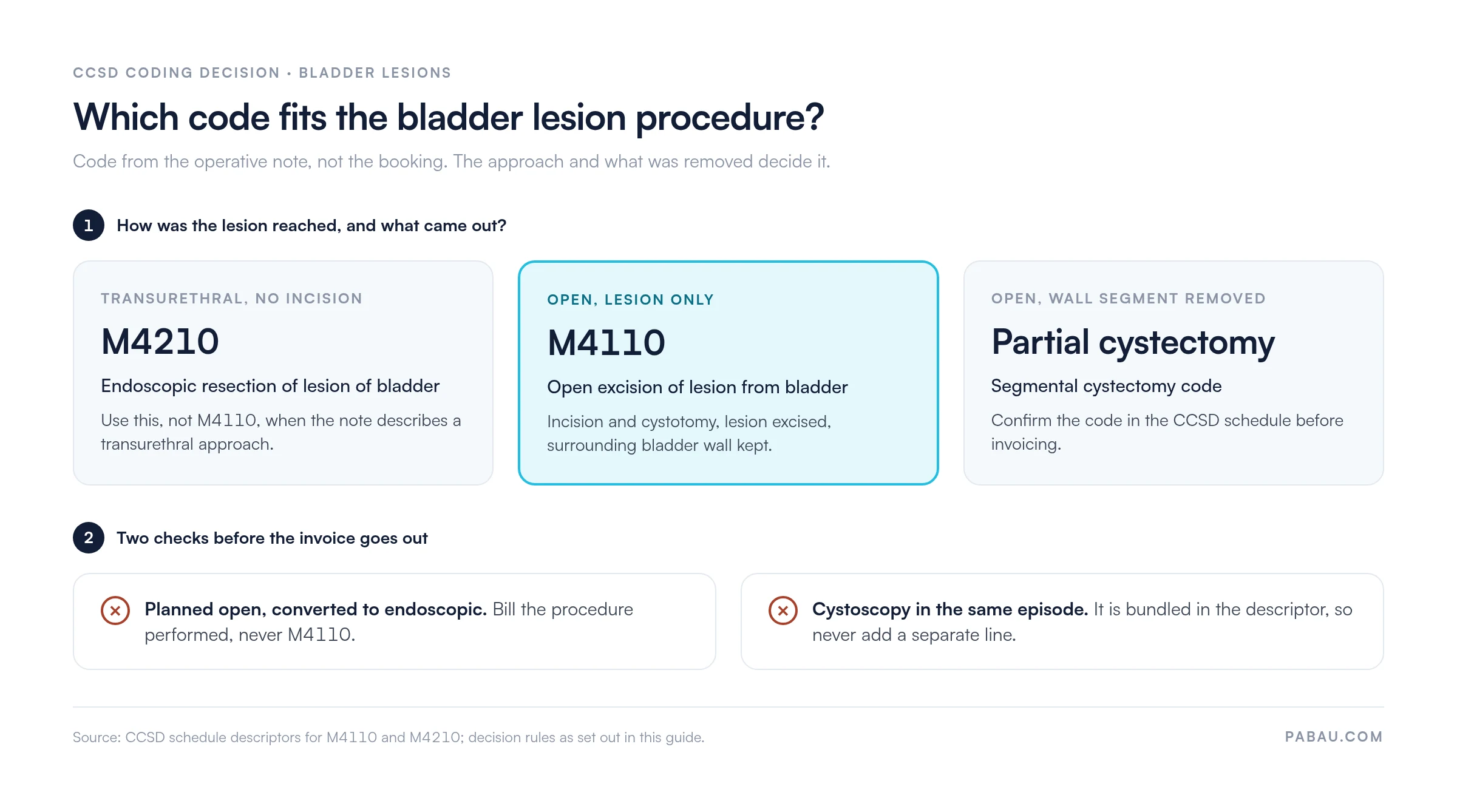
M4110 is the CCSD code for open excision of lesion from bladder (including cystoscopy). It covers removal of a bladder lesion through an abdominal incision and cystotomy when transurethral resection is unsuitable.
The cystoscopy performed in the same episode is part of the code, so it is never billed as a separate line. UK private medical insurers usually expect pre-authorisation and an operative note that explains why the open approach was needed.
Let Pabau's smart automation suggest the right codes, reduce claim denials, and keep your practice compliant—effortlessly.
Automate repetitive tasks and focus on what matters most—your patients.
Reduce coding errors and ensure compliance with the latest regulations.
Clean claims, fewer denials, and faster reimbursements.
Powerful insights and reporting to help your practice thrive.
HIPAA compliant SOC 2 certified GDPR-compliant Trusted by 4,000+ clinics worldwide

CCSD Code M4110 covers open excision of a bladder lesion, with cystoscopy bundled into the descriptor rather than billed separately.
M4110 applies when the lesion cannot be resected endoscopically and the surgeon has to use an open approach.
A missing pre-authorisation or a separately billed cystoscopy can get an M4110 claim rejected, so check each insurer’s current rules.
Pabau, the practice management platform we build, stores each insurer pre-authorisation with the claim and sends UK insurance claims through Healthcode.
CCSD Code M4110 is the code for open excision of a lesion from the bladder, with cystoscopic examination explicitly included as part of the procedure. It comes from the CCSD (Clinical Coding and Schedule Development) code set. That set is the standard billing reference for UK private medical insurers such as Bupa, AXA Health, Aviva, Vitality, and Cigna.
Within the library of private practice CCSD codes, M4110 sits in the M-series chapter that covers the urinary tract.
The official descriptor reads: Open excision of lesion from bladder (including cystoscopy). The parenthetical matters for billing, because it signals that cystoscopy is bundled within the code. In practice, a biller who also raises a cystoscopy charge invites an unbundling rejection, and some insurers reject both lines rather than one.
Open excision of a bladder lesion follows a defined surgical sequence. The urologist first performs a cystoscopic examination to confirm lesion location, size, and characteristics before committing to the open approach. The M4110 descriptor names that initial cystoscopy, so it is not a separate billable event.
Next, the open phase runs from a lower abdominal or suprapubic incision and cystotomy to excision of the lesion with an adequate margin. Finally, the surgeon closes the bladder and the wound. General anaesthesia and inpatient admission are standard because an open abdominal operation is a major procedure, unlike a day-case endoscopic one.
M4110 applies when a surgeon cannot safely or completely remove a bladder lesion by endoscopic (transurethral) resection. The choice of open approach is a clinical judgement based on lesion characteristics and patient anatomy.
For this reason, the clinical rationale for choosing open over endoscopic must appear in the operative notes. UK private payers expect the documentation to justify the approach as well as record it. A note that says “open excision performed” without explaining why the endoscopic alternative was unsuitable can delay or deny the claim.
Getting the inclusion boundary right is the difference between a clean claim and a rejected one. The table below shows what M4110 bundles and what you may bill separately where the case justifies it.
However, histopathology is the item billers most often ask about. M4110 does not bundle it. Send the excised lesion for histological examination, and the pathology service raises that laboratory charge separately.
A cystoscopy charge, however, is bundled. Check your payer’s current contract before billing it separately, because an insurer will often reject the cystoscopy line rather than query it.
A frequent coding error for bladder lesion procedures is applying a TURBT (transurethral resection of bladder tumour) code when the procedure was open. Still, the two approaches are clinically and procedurally distinct. A payer that pre-authorised an open procedure can reject a TURBT code, and vice versa.
A specific coding dilemma arises when a surgeon plans an open procedure but converts to an endoscopic one during surgery. In that case, do not bill M4110. The operative note must reflect the procedure performed, and the billing code must match it. Submitting M4110 against a note that describes a transurethral approach invites a documentation mismatch review and a likely rejection.
M4110 sits within a cluster of urological CCSD codes that cover overlapping procedures. Also, knowing the adjacent codes reduces wrong picks and helps billers respond when a payer queries the code choice. Endoscopic destruction of a bladder lesion has its own code, M4230, and never substitutes for an open excision.
Partial cystectomy deserves a specific note. It removes a segment of the bladder wall (segmental cystectomy) rather than excising the lesion alone. If the surgeon removed a full segment of the bladder wall as well as the lesion, the partial cystectomy code may fit better than M4110.
If the distinction is unclear, get written clarification from the operating surgeon before coding.
In short, three questions settle the choice between the bladder lesion codes. How did the surgeon reach the lesion, what came out, and did the plan change in theatre?
UK private insurers audit surgical claims closely, and M4110 attracts scrutiny as a complex, costly inpatient procedure. The documentation pack for an M4110 claim should contain the following elements.
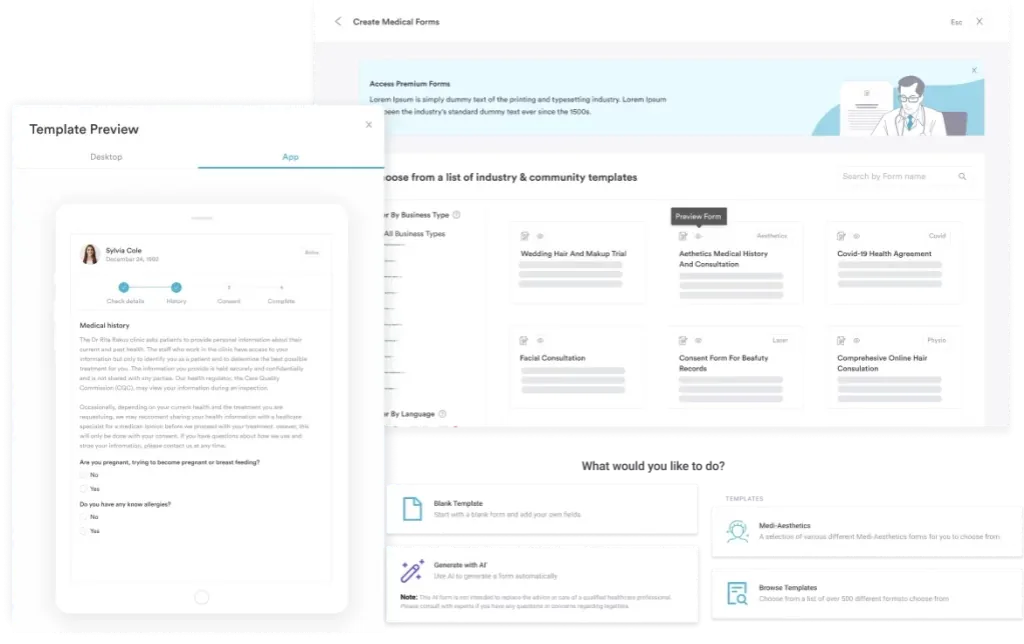
Use digital clinical forms to capture operative findings in a structured format at the point of care. A typed letter from the consultant days later slows the claim down. As a result, the claim can go out while the episode is fresh, and the payer’s clinical review moves faster.
Before submitting an M4110 claim, check that the operative note explicitly names the open approach and justifies it. A phrase like ‘bladder lesion excised’ that leaves out the technique is a frequent weakness in urology claim audits. One sentence from the operating surgeon confirming the reason for open access can decide between first-pass approval and a request for further information.
All major UK private medical insurers use CCSD codes as the basis for reimbursement. Without a valid CCSD code on the invoice, most insurers cannot process the claim, and they return it to the provider. Also, each payer has its own pre-authorisation threshold, documentation expectations, and fee schedule.
For an inpatient procedure at the complexity level of M4110, the major UK private payers usually require pre-authorisation. The specific requirements vary by insurer and by the patient’s policy year, so the guidance below reflects general practice rather than fixed rules. Always verify against the current provider agreement.
Each insurer sets its own M4110 fee schedule amounts in its provider agreement and does not publish universal figures. Contact your payer’s provider relations team for the current rate under your specific contract.
The Bupa fee schedule guide explains how one major insurer structures its rates. Likewise, do not use fee information from previous years without verifying that the schedule has not been updated.
Pabau’s Bupa CCSD codes guide gives UK private practices a reference point for structuring urology invoices before submission. Online submission through Healthcode is the standard route for getting paid by the major UK private insurers.
M4110 claims fail for a predictable set of reasons. Fortunately, most can be prevented before the invoice leaves the practice.
Accurate M4110 billing in a practice management system follows a consistent workflow. The steps below reflect best practice for UK private urology practices submitting claims via Healthcode.
For example, practices that run a mix of NHS and private urology lists should keep private billing records separate in the practice management system. That separation also supports GDPR compliance when patient data goes into claim submissions.
Run a weekly rejection audit on all CCSD claims submitted in the previous seven days. Catching a cystoscopy unbundling error or a missing authorisation reference that week keeps the payment cycle tight. Left until month end, the same errors turn into aged debt on urology claims.
Many urology practices still keep authorisation numbers in an inbox and key them onto invoices by hand. As a result, an M4110 claim fails on a missing reference or an expired authorisation, weeks after surgery.
Pabau’s insurance claims software stores each insurer pre-authorisation as a case. Attached at booking, it carries the reference through to the claim, and the software flags claims missing one before they go out.
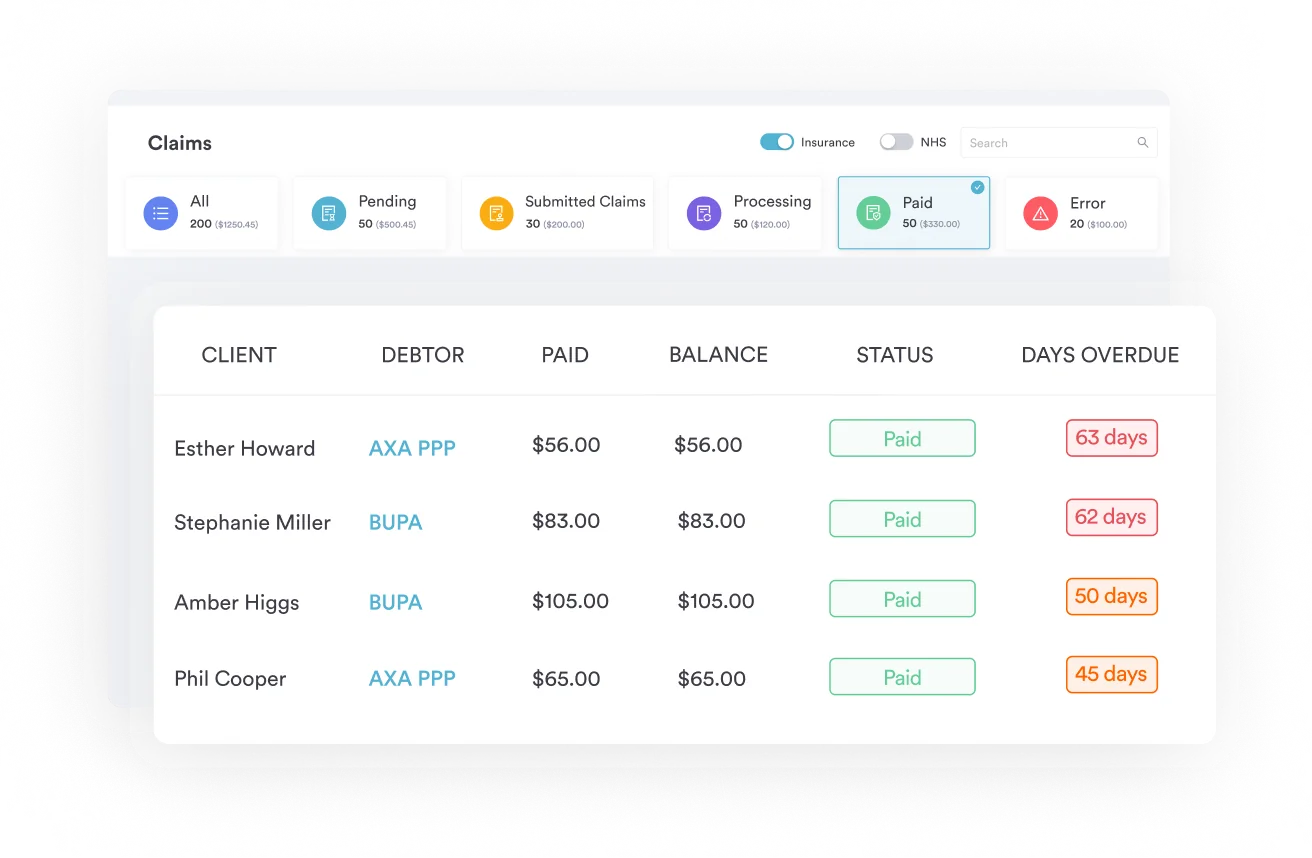
Pabau sends UK private medical insurance claims through Healthcode to insurers such as Bupa and AXA Health. Each claim moves from pending to paid on one dashboard, so your billing team chases rejections while they are still recent.

Pabau stores each insurer pre-authorisation with the patient’s claim and sends UK insurance claims through Healthcode. Your team sees every urology claim’s status in one dashboard.

Treat the operative note as the source of the M4110 code. If the note does not say the approach was open and why, fix the note before you raise the invoice, not after the insurer asks.
In short, the trade-off is a few minutes of the surgeon’s time on the day against weeks of rework later. A practice that captures the rationale and the authorisation reference up front has far less to fix when an insurer queries the claim.
Book a demo to see how Pabau keeps authorisation references and Healthcode claim status together for your urology team.

Need a broader CCSD billing reference for Bupa procedures? Bupa CCSD codes guide covers the structure and submission requirements for Bupa procedure coding.
Looking for Bupa fee schedule context? Bupa procedure codes fee schedule explains how Bupa fee schedules are structured and what to verify before invoicing.
Coding an endoscopic bladder procedure instead? CCSD Code M4230 covers endoscopic destruction of a bladder lesion and how it differs from open excision.
CCSD Code M4110 is the UK private healthcare billing code for open excision of a lesion from the bladder, with cystoscopy included in the descriptor. Surgeons use it when a bladder lesion needs removal through an open approach rather than endoscopic (transurethral) resection. It covers the full operative episode, including the initial cystoscopic examination.
Cystoscopy is included within M4110 so do not bill it separately. The official descriptor reads “Open excision of lesion from bladder (including cystoscopy).” UK private payers often reject a standalone cystoscopy charge raised alongside M4110 as an unbundling error. Verify against your specific payer contract before raising any additional cystoscopy line.
M4110 covers an open surgical approach requiring an abdominal incision, cystotomy, and inpatient admission under general anaesthesia. Endoscopic codes (TURBT equivalents) cover transurethral resection without an incision, usually done as a day case. The distinction matters clinically. A payer that pre-authorised an open procedure can reject a TURBT code, and the operative note must reflect the approach used.
M4110 applies when the surgeon excises a discrete bladder lesion and preserves the surrounding bladder wall. A partial cystectomy (segmental cystectomy) code applies when the surgeon removes a full segment of the bladder wall along with the lesion. If the operative note describes resection of a bladder wall segment rather than lesion-only excision, the partial cystectomy code is more appropriate. Where the distinction is unclear, seek written clarification from the operating surgeon before submitting the invoice.




