

HCPCS Code L0472: Hyperextension TLSO billing guide
HCPCS code L0472: Official descriptor and device definition HCPCS code L0472 des...

Last Updated: Nov 5, 2026
L1992 is the CCSD code for delayed repair of aortic dissection, meaning surgery more than two weeks after the dissection happened. It sits in the Vascular system chapter of the CCSD schedule, under thoracic vessels. UK private medical insurers use it for planned repair of a subacute or chronic dissection.
Repair within two weeks of onset is L1892, immediate repair of aortic dissection. The L1992 descriptor does not say whether the repair is open or endovascular, so confirm the approach against the CCSD schedule principles.
Let Pabau's smart automation suggest the right codes, reduce claim denials, and keep your practice compliant—effortlessly.
Automate repetitive tasks and focus on what matters most—your patients.
Reduce coding errors and ensure compliance with the latest regulations.
Clean claims, fewer denials, and faster reimbursements.
Powerful insights and reporting to help your practice thrive.
HIPAA compliant SOC 2 certified GDPR-compliant Trusted by 4,000+ clinics worldwide

CCSD code L1992 covers repair of aortic dissection more than two weeks after the dissection began, which separates it from L1892, the immediate-repair code.
The operative note must record the confirmed date of the first dissection, so the insurer can see the delayed timing.
Insurers often require pre-authorisation before L1992 surgery, so check each insurer’s rules before the patient is admitted.
The L1992 descriptor does not specify open or endovascular repair, so confirm how TEVAR is coded in the CCSD schedule principles.
Pabau’s claims management software helps UK private practices billing CCSD codes track pre-authorisation, insurer details and claim status.
CCSD code L1992 is the procedure code for delayed repair of aortic dissection, meaning repair more than two weeks after the dissection began. It sits in the Vascular system chapter of the CCSD official schedule, under thoracic vessels. The Clinical Coding and Schedule Development Group maintains the schedule. UK private medical insurers use it to link surgical procedures to their fees.
The “delayed” qualifier is what separates L1992 from L1892, immediate repair of aortic dissection within two weeks of onset. The two-week line follows the clinical course. After it, the dissection has moved out of the acute, haemodynamically unstable phase and into a subacute or chronic one, where planned surgery becomes possible.
Key facts about the code, with its neighbours listed in our CCSD code library:
Aortic dissection occurs when a tear in the inner layer of the aorta lets blood track between the layers of the vessel wall. This creates a true lumen and a false lumen. In the delayed setting, the false lumen may have partly thrombosed. The aortic wall is often fibrotic and stuck to surrounding structures, which makes surgery harder than an acute repair.
Patient selection for delayed repair rests on surveillance imaging. Surgeons look for aortic expansion, persistent symptoms, malperfusion of branch vessels, or a patent false lumen. The operative approach depends on the dissection type and the segment affected.
Core surgical steps in open delayed repair:
Surgeons also use endovascular repair (TEVAR) in delayed cases, mostly for descending thoracic disease. The L1992 descriptor does not say whether it covers open or endovascular repair, and the TEVAR section below explains how to handle that.
Stanford and DeBakey classifications describe how far a dissection extends, and that extent shapes which CCSD code fits. Stanford Type A dissections involve the ascending aorta. Stanford Type B dissections involve only the descending aorta, distal to the left subclavian artery. DeBakey Types I and II cover ascending (and arch) involvement, and DeBakey Type III covers descending-only dissections.
Record the dissection classification in both the operative note and the pre-authorisation request. An L1992 claim without it often draws a request for more detail, which delays payment.
The most common coding error with CCSD code L1992 is mixing it up with L1892, immediate repair of aortic dissection. L1892 covers repair within two weeks of the dissection starting, and L1992 covers delayed repair after that. Confirm the interval from the imaging-confirmed onset date before you choose the code.
The decision below shows how the pathology and the interval lead to the right code.
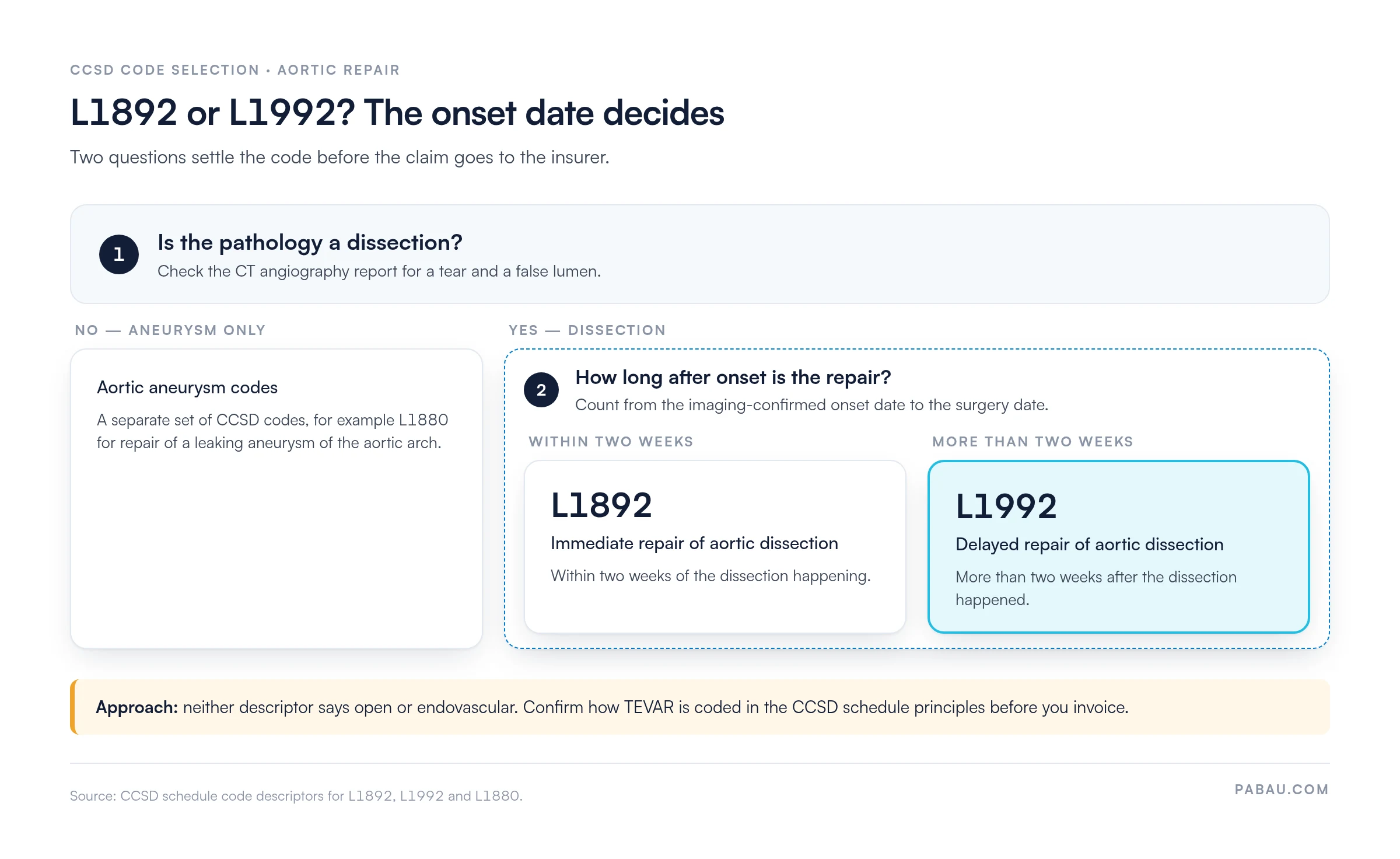
When the operative note describes a repair for a dissection diagnosed more than two weeks earlier, CCSD code L1992 is the correct primary code. An aneurysm without a dissection takes an aneurysm code instead, such as L1880 for a leaking arch aneurysm. Where the dissection also involves the aortic root, check the current CCSD schedule for secondary root codes rather than assuming bundling.
The operative note is the primary document behind an L1992 claim. Because the code depends on delayed timing, insurers look for evidence that the dissection began more than 14 days before surgery. A note that describes the procedure without a documented dissection date will not hold up on audit.
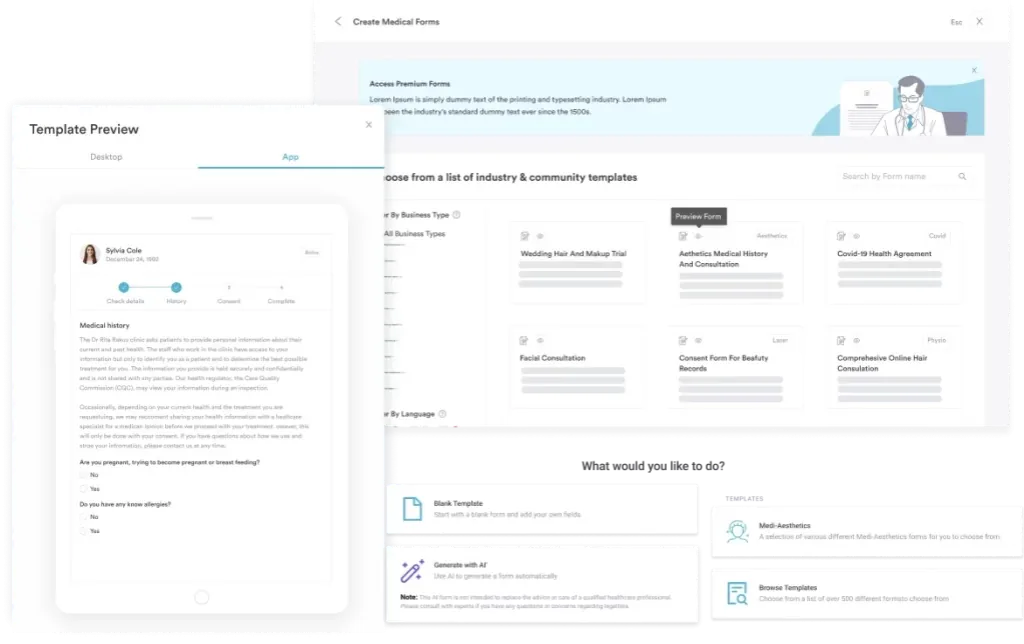
Digital operative note templates can carry fixed fields for the onset date and the surgery date. That stops the detail being skipped under time pressure in a busy theatre.
What an L1992 claim must include:
UK GDPR applies to these billing records too. Keep pre-operative imaging, MDT minutes and referral letters that show the dissection timeline in line with ICO guidance for private healthcare providers.
Build a pre-submission checklist into your L1992 workflow: confirm the date of first dissection in the clerk’s notes before the invoice is raised. A five-minute check at the point of billing prevents a denial that takes weeks to appeal.
UK private medical insurers often require pre-authorisation before the surgeon performs CCSD code L1992, so check each insurer’s rules before admission. Delayed aortic dissection repair is a high-value, high-complexity procedure. Insurers use pre-authorisation to confirm that the surgery is needed, that the code is right, and that the patient’s policy recognises the surgeon and facility.
Before you send an L1992 pre-authorisation request to Bupa, review Bupa’s CCSD code guidance and the Bupa procedure fee schedule. Documentation rules and fee limits vary by policy and can change from year to year.
Insurer portals and pre-authorisation rules change, so check the current rules on each insurer’s provider portal before submission. Include the pre-authorisation reference on the invoice you send after the procedure.
Delayed aortic dissection repair rarely happens alone. Cardiopulmonary bypass, deep hypothermic circulatory arrest and ICU admission are almost always involved, and each has its own billing status. Coding them correctly matters as much as selecting L1992 itself.
Guidance on billable versus bundled codes:
Unbundling rules vary between insurers. Check each insurer’s current schedule before invoicing linked procedures with CCSD code L1992.
The L1992 descriptor reads only “Delayed repair of aortic dissection”, so it does not specify an open or endovascular approach. Confirm how open and endovascular repair are coded in the CCSD schedule principles before you bill. Check the current edition each time, because the principles can change.
In practice, record the approach in the operative note. State whether the surgeon opened the chest and sewed in a graft under direct vision, or delivered a stent graft through femoral or iliac access. That detail lets the coder apply the CCSD principles correctly and answer any insurer query.
Insurers deny claims for CCSD code L1992 most often because of missing or weak records, not because the surgeon performed the procedure incorrectly. These are the denial patterns to guard against.
High-value CCSD codes like L1992 need more than the right code. The practice also has to track pre-authorisation, keep the operative record complete and get the invoice to the insurer on time. Pabau, the practice management platform we build, handles that billing work for UK private practices billing CCSD codes.
With Pabau’s claims management software, Pabau stores insurer authorisations as cases and attaches them at booking. The pre-authorisation reference then follows the appointment through to the claim. Each patient’s insurer and policy details sit on their client card, and claims go to Bupa, AXA Health, Vitality and other insurers through Healthcode.
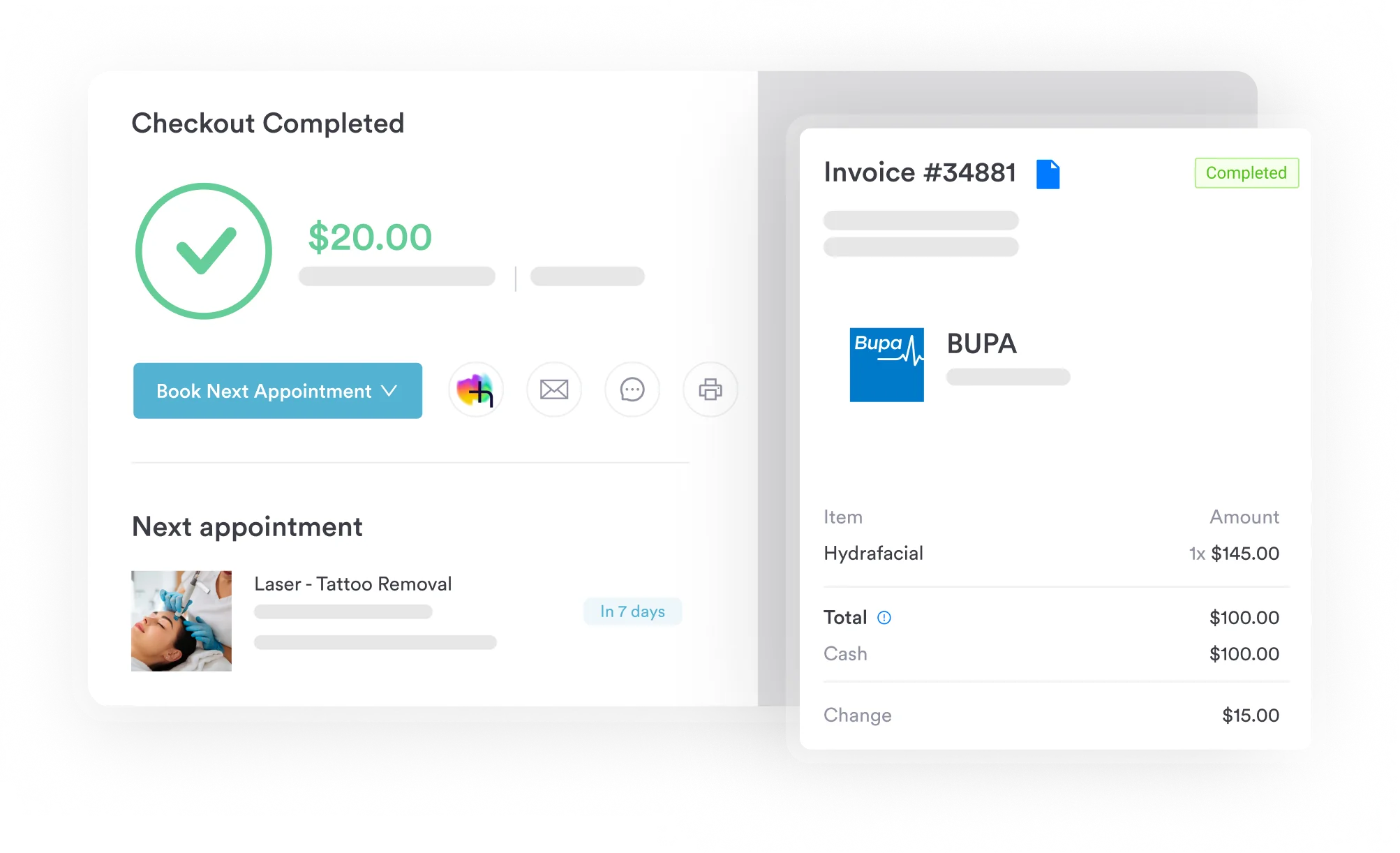
The claims dashboard moves each claim from pending to paid, with filters by insurer or date. The dashboard flags claims that need attention with the number of days they are overdue. You record each insurer payment once, and Pabau matches it to every invoice it covers, which keeps reconciliation quick.

Pabau helps UK private practices billing CCSD codes manage claim submissions, track pre-authorisation approvals and keep audit-ready records for high-value codes like L1992.

L1992 turns on one date. If the imaging-confirmed onset is more than two weeks before surgery, and the operative note says so, the code is L1992. Inside two weeks, it is L1892.
Settle two more questions before the invoice goes out. Confirm in the CCSD schedule principles how the approach is coded, because the descriptor does not specify open or endovascular repair. Then check the insurer’s pre-authorisation and unbundling rules for the add-on work.
Pabau keeps the pre-authorisation, insurer details and claim status for each L1992 case in one place. Book a demo to see how it tracks high-value CCSD claims from pre-authorisation to payment.

Billing Bupa for a CCSD procedure? Bupa CCSD codes guide walks through the CCSD schedule structure and how Bupa maps codes to its fees.
Need the Bupa fee for a specific procedure? Bupa procedure fee schedule is a reference for Bupa-recognised CCSD fees across surgical specialties.
Was the repair within two weeks of onset? CCSD code L1892 covers immediate repair of aortic dissection and the documentation that supports it.
Coding an aortic arch aneurysm instead? CCSD code L1880 explains repair of a leaking aneurysm of the aortic arch.
Building audit-ready billing records? Pabau claims management tracks CCSD invoices from pre-authorisation to payment reconciliation.
CCSD code L1992 is the UK private healthcare code for delayed repair of aortic dissection, more than two weeks after the dissection happened. It sits in the Vascular system chapter of the CCSD schedule, under thoracic vessels. Insurers including Bupa, AXA Health, Aviva and Vitality use the schedule to link the procedure to their fees.
L1892 is immediate repair of aortic dissection, within two weeks of the dissection happening, often after an emergency admission. L1992 is delayed repair, more than two weeks after the original dissection, usually as a planned operation. The two-week interval from onset decides which code applies.
L1992 can apply to delayed repair of both Type A and Type B dissections. Its descriptor does not specify an open or endovascular approach. If a Type B dissection is treated with TEVAR, confirm in the CCSD schedule principles whether L1992 or a separate endovascular code applies.
The L1992 descriptor does not say whether it covers open or endovascular repair. Check the CCSD schedule principles to confirm how TEVAR for a delayed dissection is coded. Do this before invoicing, because the insurer will query a code that does not match the operative note.



