ICD-10 Code S42.444P: Medial epicondyle fracture, right humerus
ICD-10 Code S42.444P: full descriptor and code validity ICD-10 Code S42.444P car...

Last Updated: Oct 13, 2026
Billable Code Specific Code
S92.145K is the billable ICD-10-CM code for nondisplaced dome fracture of left talus, subsequent encounter for fracture with nonunion.
In practice, ICD-10 Code S92.145K is a billable code for a nondisplaced dome fracture of the left talus at a subsequent encounter with nonunion. In practice, it applies once the treating physician documents that the fracture has failed to heal.
In short, this reference covers the official description, the 7th character set for talus fractures, the full S92.145 family, documentation requirements, and billing guidance. Throughout, all code details follow the ICD-10-CM system kept by the National Center for Health Statistics at the CDC. In addition, claim submission rules follow CMS coding guidance.
Let Pabau's smart automation suggest the right codes, reduce claim denials, and keep your practice compliant—effortlessly.
Automate repetitive tasks and focus on what matters most—your patients.
Reduce coding errors and ensure compliance with the latest regulations.
Clean claims, fewer denials, and faster reimbursements.
Powerful insights and reporting to help your practice thrive.
HIPAA compliant SOC 2 certified GDPR-compliant Trusted by 4,000+ clinics worldwide

Simply put, ICD-10 Code S92.145K describes a nondisplaced dome fracture of the left talus at a subsequent encounter with confirmed nonunion.
The 7th character K marks fractures that have failed to heal within the expected timeframe. By contrast, it is distinct from G for delayed healing and S for sequela.
Namely, documentation must confirm laterality, displacement status, dome shape, and nonunion in the clinical notes before this code can be assigned.
S92 codes use a short seven-character set, so nonunion always takes K whether the original fracture was open or closed.
In turn, practice management software like Pabau keeps the physician note, imaging, and diagnosis code on one patient record, then submits and tracks the claim.
Full description: Nondisplaced dome fracture of left talus, subsequent encounter for fracture with nonunion.
The code is billable and claim-specific, so it can be submitted on CMS-1500 and UB-04 claim forms. Additionally, it sits in category S92 for fractures of the foot and toe, inside block S90-S99 for ankle and foot injuries. From there, that block belongs to the S00-T88 injury chapter of ICD-10-CM.
To start, a dome fracture is a break in the upper articular surface of the talus, the part that meets the tibia. In this context, nondisplaced means the fragments have stayed in alignment.
In fact, the talus is the ankle’s load-bearing keystone. Also, it sits where the tibia, fibula, and calcaneus meet, and it carries body weight across the foot. So, dome fractures usually come from axial loading plus twisting force, most often in ankle sprains, falls from height, or sports impacts.
Often, coders and clinicians check the Ottawa ankle rules to see when imaging is indicated. But nonunion is where the coding gets decided. In fact, orthopedic literature generally puts the threshold at 6 to 9 months with no radiographic sign of bridging callus.
Then, once the physician confirms it, the 7th character K becomes correct. Notably, clinicians working in sports medicine and musculoskeletal rehabilitation see talar nonunion most often in athletes whose fracture was missed or diagnosed late.
In short, the 7th character K marks a subsequent encounter where the fracture has failed to heal. In fact, every fracture code in category S92 needs a 7th character, and that character carries two pieces of information at once. Namely, it records the encounter type and, for subsequent encounters, the healing status.
Again, parent code S92.145 covers nondisplaced dome fracture of the left talus across all encounter types. In practice, choosing the 7th character is the step coders most often get wrong, especially between delayed healing and confirmed nonunion.
Simply put, S92 fractures take a short set of seven characters. In fact, the set runs A, B, D, G, K, P, and S, and B is the only open-fracture character. In contrast, unlike lower-leg codes such as codes such as S82.291J, S92 codes do not split subsequent encounters by open-fracture type. So a talar dome nonunion always takes K, whether the original injury was open or closed. Medicare coverage for a service can depend on frequency limits rather than medical necessity alone.
To clarify, G applies when the fracture is healing, only slower than expected. By contrast, K applies when the physician has documented that healing has failed. A coder cannot assign K on time alone, so the physician must state nonunion in the notes. For reference, ResDAC ICD code guidance explains how these distinctions show up in claims data.
The table below shows the full S92.145 family, plus the right-side and unspecified equivalents and the displaced counterpart. Likewise, the rest of the tarsal fracture codes follow the same encounter pattern, as S92.209K shows.
Still, check every code against the CDC ICD-10-CM tool for the current fiscal year before you submit. That’s because code validity and descriptions are updated annually.
First, nonunion is a physician-determined diagnosis. In fact, a coder cannot assign S92.145K from time alone or clinical guesswork. Instead, the physician note must state that nonunion is present. In turn, structured patient records that capture this level of detail protect the practice during payer audits.
Likewise, physical therapy practice compliance rules set the same bar: documentation has to match what payers expect to see. So, the checklist below covers the minimum elements needed before S92.145K can be applied.
In turn, practices coding across several families often work from a medical coding cheat sheet. In turn, building the same checks into the clinical workflow cuts coding errors and audit risk.
Persistent foot pain months after a talus injury does not settle the code. Instead, confirm with the treating physician whether the diagnosis is delayed healing (G) or confirmed nonunion (K). Request an addendum if the note is ambiguous, because assigning K without explicit confirmation is a compliance risk.
Indeed, S92.145K is accepted for submission on CMS-1500 professional claims and UB-04 facility claims. Also, it applies across Medicare, Medicaid, and commercial payer claims wherever the diagnostic criteria are met. In practice, orthopedic and physical therapy practices use it to establish medical necessity for continued treatment of talar nonunion.
Still, a valid code is only half of a clean claim. Namely, the diagnosis has to match the procedure codes billed at that encounter, and the note has to support both. For that reason, AAPC Codify lists crosswalk references for pairing S92.145K with related procedure codes.
First, the diagnosis code establishes medical necessity, and CPT codes describe what was done. In fact, for talar dome nonunion, CPT choice depends on what the clinician performs at the encounter. For instance, a practice running a return-to-running protocol after talar injury bills differently from a surgical team repairing the nonunion.
Above all, CPT pairings must reflect the procedures documented for that specific encounter. Importantly, never assign a CPT code for a procedure that was not performed or planned at the visit. In addition, check payer medical necessity policies before submitting surgical nonunion repair codes, because some require prior authorization.
Often, most practices track a nonunion across three places. Often, the dictated physician note sits in one system, the radiology report in another, and the claim in a third. As a result, when a payer questions the fourth follow-up visit billed with S92.145K, someone has to reassemble that trail by hand.
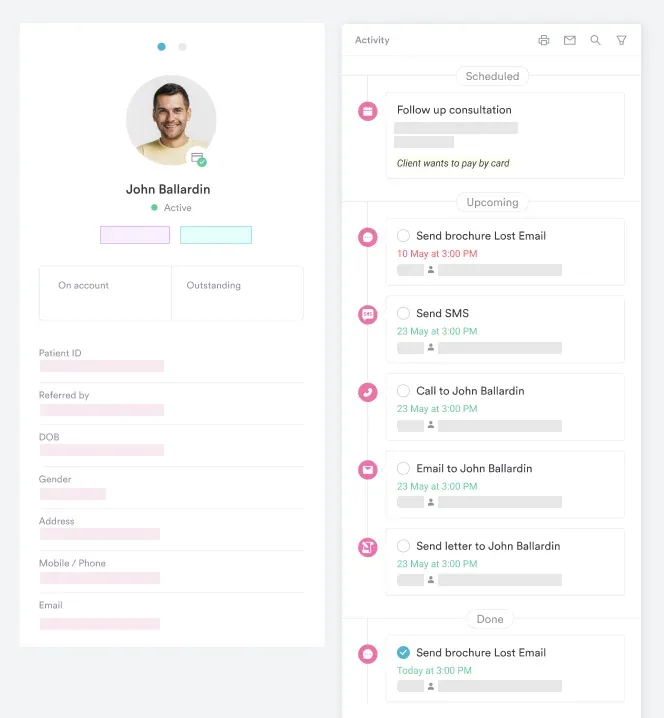
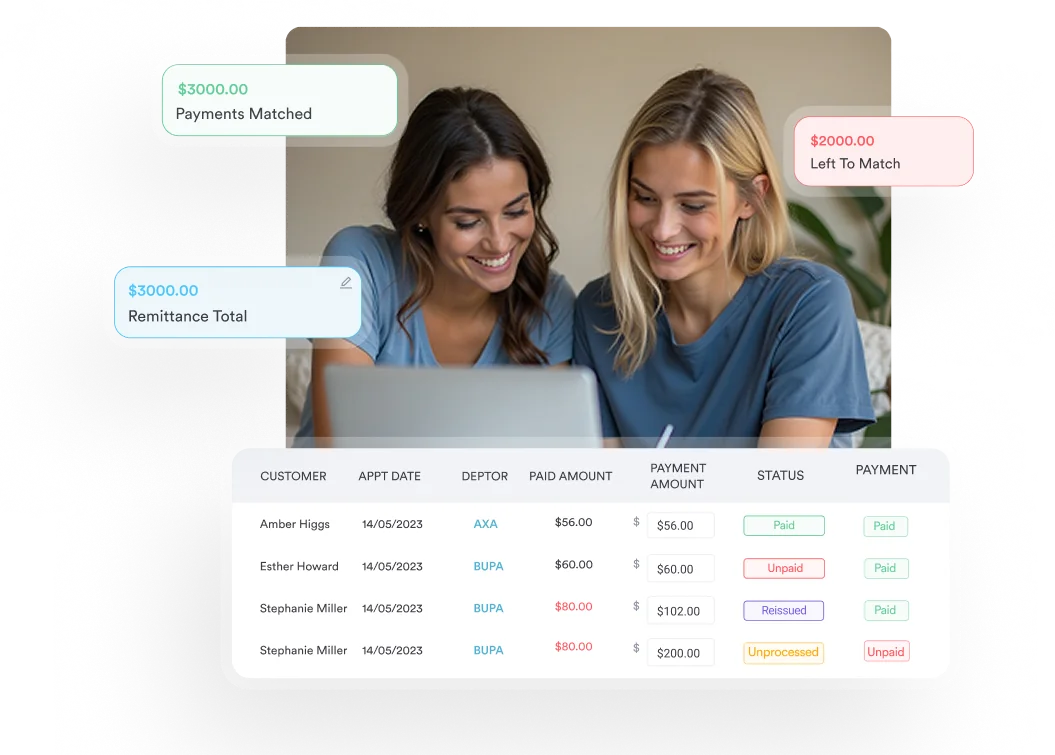
By contrast, Pabau holds the physician note, the imaging it references, and the assigned diagnosis code on one patient record. From there, its claims management software then pulls that existing record data into a pre-filled claim and tracks the response. As a result, nothing gets retyped between the chart and the payer.
In the end, the result is a shorter trail to assemble when an audit arrives, and fewer denials caused by a diagnosis the note never supported. In turn, your coders spend their time on the ambiguous cases instead of chasing paperwork.

Pabau keeps physician notes, imaging, and diagnosis codes on a single patient record, then submits and tracks the claim from the same place. Your team spends less time rebuilding an audit trail.

In the end, S92.145K rests entirely on one line in the physician note. Query that note when it hedges, because a query costs minutes and a denied claim costs weeks.
Simply put, coders who treat the 7th character as a documentation question rather than a timing question get this code right. In short, the same habit carries across the rest of the S92 family. Book a demo to see how Pabau keeps fracture notes, imaging, and diagnosis codes on one record.

Coding a nonunion in a neighboring tarsal bone? S92.209K walks through the unspecified tarsal fracture code and its documentation requirements.
Working on pediatric foot fractures? S99.101D covers physeal fracture coding and the routine-healing follow-up character.
Billing a binocular microscopy exam? Binocular microscopy billing guide covers this diagnostic ear exam that detects pathology standard otoscopy misses.
Billing a cardiac arrest response? CPR billing guide covers the documentation gaps around start time, end time, and defibrillation that cause denials.
Billing a congenital heart echocardiogram? Congenital echocardiography billing guide covers a complete transthoracic echocardiogram performed to evaluate congenital cardiac anomalies.
ICD-10 Code S92.145K describes a nondisplaced dome fracture of the left talus at a subsequent encounter where nonunion has been confirmed. In fact, S92.14 covers dome fractures of the talus. The sixth character 5 specifies nondisplaced and left. Finally, the 7th character K marks a follow-up visit where healing has failed.
The 7th character K designates a subsequent encounter where fracture nonunion is confirmed. Notably, it differs from D for routine healing, G for delayed healing, P for malunion, and S for sequela. Indeed, K is used only when the physician documents that the fracture has failed to heal, with no bridging callus on imaging.
Yes, S92.145K is a billable and claim-specific ICD-10-CM code. Namely, it is valid on CMS-1500 professional claims and UB-04 institutional claims, and accepted by Medicare, Medicaid, and commercial payers. In addition, verify its active status against the current fiscal year code file before submission, because codes are updated each year.
Six elements are required. First, the physician must confirm nonunion, laterality as left, nondisplaced status, and dome shape. The note must also show that the encounter is a follow-up rather than initial active treatment, and reference the supporting imaging. Otherwise, missing any element means querying the physician before assigning S92.145K.
No. S92 fracture codes use a short seven-character set that does not split subsequent encounters by open or closed status. An open dome fracture takes B at the initial encounter, then K once nonunion is confirmed. By contrast, only long-bone families such as S82 carry the Gustilo open-fracture characters.