

ICD-10 Code S42.444P: Medial epicondyle fracture, right humerus
ICD-10 Code S42.444P: full descriptor and code validity ICD-10 Code S42.444P car...

Last Updated: Oct 13, 2026
Billable Code Specific Code
S82.291J is the billable ICD-10-CM code for other fracture of shaft of right tibia, subsequent encounter for open fracture type IIIA, IIIB, or IIIC with delayed healing.
Let Pabau's smart automation suggest the right codes, reduce claim denials, and keep your practice compliant—effortlessly.
Automate repetitive tasks and focus on what matters most—your patients.
Reduce coding errors and ensure compliance with the latest regulations.
Clean claims, fewer denials, and faster reimbursements.
Powerful insights and reporting to help your practice thrive.
HIPAA compliant SOC 2 certified GDPR-compliant Trusted by 4,000+ clinics worldwide

ICD-10 Code S82.291J covers an other fracture of the shaft of the right tibia at a subsequent encounter. Specifically, the fracture was open, graded Gustilo type IIIA, IIIB, or IIIC, and healing is delayed.
Delayed healing is not nonunion. However, if the record says union has failed rather than slowed, the correct character is N, not J.
The 7th character J is one of 16 valid extensions for S82.291. Namely, choose J only when the encounter is subsequent, the fracture is open Gustilo type III, and the provider documents delayed healing.
S82.291J is billable and specific. In particular, it is valid under the FY2026 ICD-10-CM edition, which applies to encounters on or after October 1, 2025.
Practice management software like Pabau links note fields for laterality, fracture type, and healing status to the claim. Coders then work from a complete record instead of chasing addenda.
ICD-10 Code S82.291J reports a right tibial shaft fracture that was open and graded Gustilo type III, and that is now healing slowly. Specifically, the healing status built into the code is delayed healing, not nonunion. As a result, coders who read the J extension as failed union land on the wrong character.
The full official description reads: Other fracture of shaft of right tibia, subsequent encounter for open fracture type IIIA, IIIB, or IIIC with delayed healing. As such, it is a billable, specific ICD-10-CM code.
The code is valid under the FY2026 edition, which applies to encounters on or after October 1, 2025. For confirmation, the CDC/NCHS ICD-10-CM web tool returns the same descriptor.
The trap in this family is the J and N pair, since both cover a subsequent encounter for an open type III fracture. In fact, the bone and the side are identical. In the end, only the documented healing status separates them, and only the treating provider can supply it.
Each segment of the code answers one clinical question. In other words, reading the code from left to right shows exactly which piece of documentation supports it.
So S82.291 (Other fracture of shaft of right tibia) isn’t billable alone — it needs a 7th character encoding three things: encounter type, open/closed status, and healing status.
Specifically, character J combines subsequent encounter, open fracture type IIIA, IIIB, or IIIC, and delayed healing. Near neighbors: N shares the encounter and Gustilo grade but means nonunion; H means delayed healing at a lower grade; F means routine healing.
The letters I, L, and O never appear as 7th characters, so the sequence skips from H to J and from M to N — 16 valid extensions for S82.291.
Delayed healing means the fracture is still progressing toward union, only slower than the expected timeline for that injury. By contrast, nonunion means healing has stopped and will not finish without intervention. In short, they are different clinical states, and they point to different 7th characters.
ICD-10-CM sets no week count for either state, so the provider’s own wording controls the character. For instance, phrases such as slow to heal, delayed union, or healing behind schedule point to the J character. Wording such as failed union or established nonunion moves the encounter to N instead, the character S82.242N carries for a spiral shaft fracture.
The distinction also changes what the payer expects to see. A delayed healing claim usually sits alongside continued follow-up and imaging. By comparison, a nonunion claim tends to sit alongside surgical intervention, so a J code paired with a revision procedure invites a records request.
The Gustilo-Anderson classification is the standard for grading open long-bone fractures. Specifically, its three high-severity grades (IIIA, IIIB, IIIC) map onto the same 7th character options in the S82 code family.
The distinction matters because payers may audit claims where the Gustilo grade sits oddly next to the procedure codes billed. Indeed, guidance from the CMS ICD-10 codes page reinforces that every coded diagnosis needs supporting clinical documentation.
The Gustilo grade must be assigned by the operating surgeon at the time of initial debridement. Therefore, coding staff cannot infer the grade from a wound description alone. Instead, clinical documentation tools with a fixed field for the grade keep it where the coder can find it, even in high-volume trauma caseloads.
The ICD-10-CM Official Guidelines for Coding and Reporting define when each encounter designation applies. In other words, the test is the phase of care, not the number of visits so far.
Initial encounter (A, B, C) covers the period of active treatment. For example, that includes the emergency department visit, the surgical admission, and follow-up visits while active fracture treatment continues. This holds even when a different provider takes over, so it is not limited to the first calendar visit. Similarly, S59.229A uses the same A character uses the same A character on a closed physeal fracture. Practices billing in Australia check the current MBS descriptor before submitting, because descriptors are revised on a schedule. A paper claim is scanned before it is read, so alignment and legibility affect whether it processes.
Subsequent encounter (D through R) applies once active treatment ends and the patient is in the healing or recovery phase. Specifically, follow-up visits, cast changes, hardware checks, and rehabilitation monitoring during this phase all take a subsequent character. For example, S52.529D shows the routine-healing version of that character.
Finally, sequela (S) applies to a condition that arises as a direct result of the fracture, after the fracture itself has resolved. Similarly, S59.199S is the same character applied to a later physeal fracture problem.
For ICD-10 Code S82.291J specifically, use it when all of the following are documented:
Orthopedic practices managing these cases often run fracture follow-up on sports medicine software. As a result, those systems flag the documentation still outstanding at each visit, which keeps the encounter character defensible.
Document the Gustilo grade in every operative note at first debridement, and restate the healing status in plain words at every follow-up. Coders cannot assign a type IIIA, IIIB, or IIIC character without surgeon documentation. They also cannot choose between J and N unless the provider names delayed healing or nonunion.
ICD-10 Code S82.291J sits at the seventh-character level of the ICD-10-CM code tree. Consequently, each parent level carries notes and instructions that apply to every child code beneath it.
Anything the tabular list attaches at the S82 or S82.2 level also governs S82.291J. Specifically, that includes the 7th character requirement and the excludes notes covered below.
Healing status, fracture type, and laterality decide which neighboring code applies. In particular, the table below covers the codes most often confused with S82.291J.
Neighboring shaft codes follow the same structure with a different fracture line. For example, S82.222E pairs a displaced transverse shaft fracture with a routine-healing subsequent character. Use the AAPC Codify lookup to cross-reference adjacent S82 codes.
The ICD-10-CM tabular list carries several instructional notes at the S82 category level. Therefore, check each one before assigning any code in this family.
Includes note (S82 level): fracture of malleolus.
Excludes1 note (S82 level): an Excludes1 entry is a true exclusion. As such, it can never be reported with a code from this category for the same encounter.
Excludes2 notes (S82 level): notably, an Excludes2 entry is a different condition, and you may report it alongside S82.291J when both are documented.
External cause codes: chapter 19 guidance asks for a secondary code from chapter 20. Specifically, that code identifies the mechanism of injury when the record documents it. Above all, it matters most for the high-energy trauma that produces Gustilo type III fractures.
The WHO ICD-10 browser gives the international classification context. However, US coders should still work from the ICD-10-CM version maintained by CMS and NCHS.
No aftercare Z codes: in fact, fracture aftercare is not reported with the Z47 or Z51 aftercare codes. The guidelines instead direct you to the acute fracture code with the subsequent encounter 7th character, which is exactly the role S82.291J plays.
Every element of ICD-10 Code S82.291J needs support in the physician record. Indeed, a payer can request the chart for any element the code asserts. Here is what the record must contain.
For example, practices running a physical therapy EMR can build note templates for these visits. The template prompts for each element at every subsequent fracture visit, so nothing is missing at billing.
Records, radiology reports, and operative notes often use other wording that still maps to S82.291J. Specifically, these are the phrasings coders should recognize.
Watch the wording closely when a report hedges. Terms like poor callus or limited interval healing describe delayed healing, while established nonunion or atrophic nonunion do not. In short, where a report reads both ways, query the provider rather than pick the character yourself.
An ICD-10-CM code carries no payment rate of its own. Instead, payment follows the CPT or HCPCS service billed with it, and S82.291J is what establishes medical necessity for that service.
Payer policies differ on what counts as adequate wording for delayed healing, so check the medical policy for your largest plans. Ultimately, a short internal coding rule, agreed with your orthopedic team, saves repeated physician queries later.
Fracture follow-up creates a long tail of subsequent encounter claims. In fact, most denials in that category come down to a note that never named the healing status. Meanwhile, many practices handle it by hand today, with coders emailing physicians for addenda weeks after the visit.
Practice management software like Pabau closes that loop at the point of care. Specifically, Pabau’s claims management software carries the coded visit straight into the claim. As a result, laterality, fracture type, and healing status travel from the consultation into the billing record without re-entry. Finally, coders read the note beside the code and confirm J before the claim goes out.
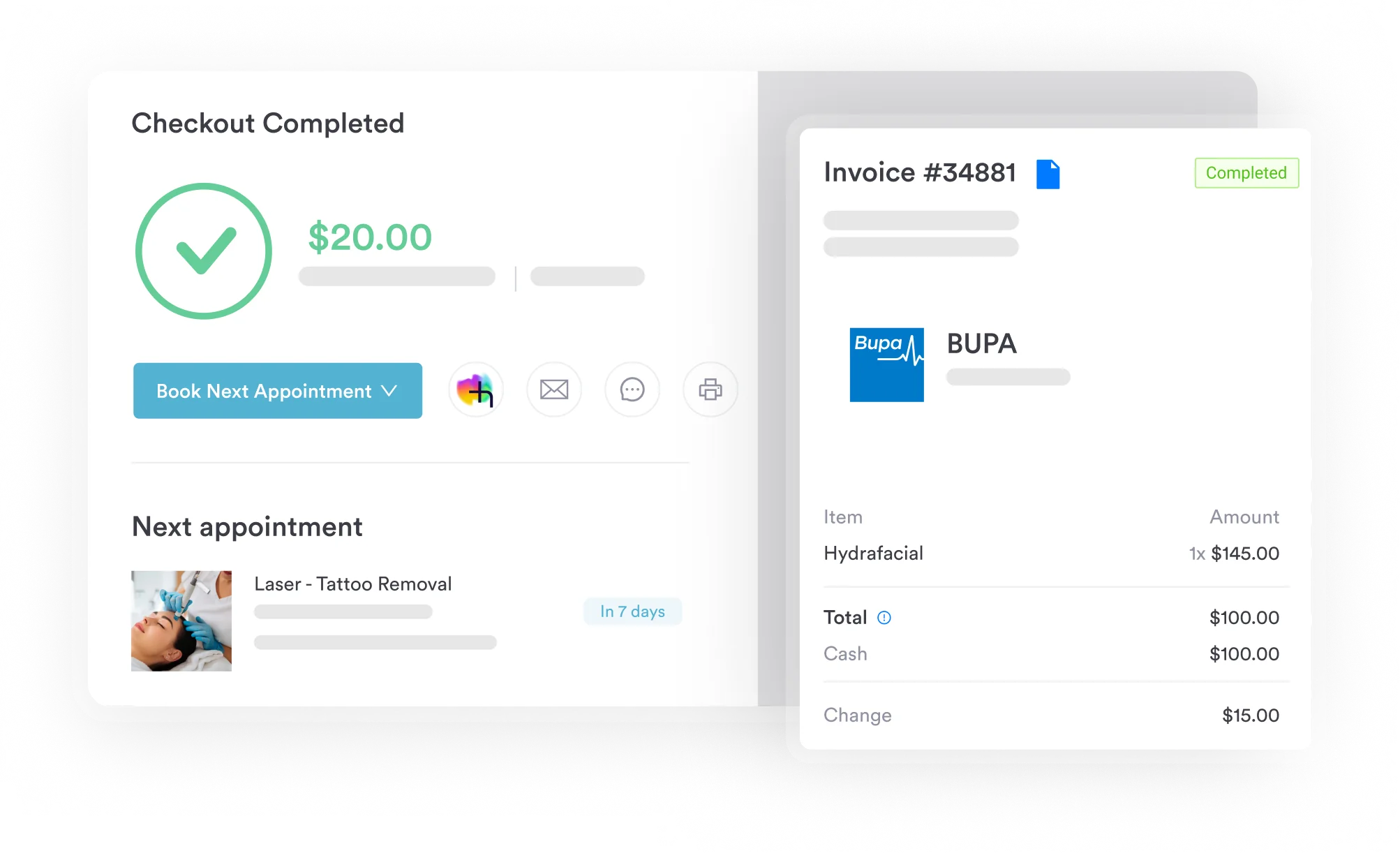
Structured note templates in Pabau prompt for the Gustilo grade at debridement and for healing status at every review. The chart then answers the payer’s question the first time, which shortens the wait between the visit and the paid claim.

Pabau’s claims management tools help orthopedic practices capture the documentation each 7th character needs. Denials fall, and subsequent encounter billing stays consistent across multi-visit fracture cases.

S82.291J belongs to one narrow scenario. Specifically, the right tibial shaft fracture was open at Gustilo type III, the encounter is subsequent, and healing is slow rather than failed.
Get the surgeon’s grade recorded at debridement, get the healing status named in each follow-up note, and confirm laterality every time. Miss any one of those, however, and the claim is hard to defend on audit.
The J and N mix-up is the one to guard against, because both codes describe the same bone, side, and encounter type. Pabau builds those documentation prompts into the clinical workflow, so coders work from a complete record instead of chasing addenda. Overall, to see how Pabau handles multi-visit fracture billing, book a demo.

Coding a subsequent visit in the same shaft family? ICD-10 Code S82.222E walks through the same encounter and healing-status logic for a displaced transverse tibial shaft fracture.
Need the routine-healing version of a subsequent encounter? ICD-10 Code S99.101D shows how the D character works on a metatarsal physeal fracture.
Coding nonunion in a nearby bone? ICD-10 Code S92.145K covers a talar dome fracture that has failed to unite.
Billing a lumbar spine MRI claim? CPT code 72148 billing guide covers billing for lumbar spine MRI scans performed without contrast material.
Billing an upper extremity joint MRI? CPT code 73221 billing guide covers MRI billing for shoulder, elbow, and wrist joint scans without contrast.
S82.291J reports an other fracture of the shaft of the right tibia at a subsequent encounter. Specifically, the fracture was open at Gustilo type IIIA, IIIB, or IIIC, and healing is delayed rather than failed. In other words, delayed healing means union is still progressing, only slower than expected. As such, the code is billable under the FY2026 ICD-10-CM edition.
Yes. Indeed, S82.291J is a billable, specific ICD-10-CM code valid for claim submission. However, the parent code S82.291 is not billable without a 7th character. Specifically, S82.291J is valid under the FY2026 edition, which applies to encounters on or after October 1, 2025.
ICD-10-CM does not set a number of weeks. Simply put, delayed healing is whatever the treating provider documents as slower than expected progress toward union. For example, wording such as delayed union, slow to heal, or healing behind schedule supports the J character. Wording that describes failed union points to nonunion instead.
Gustilo type III open fractures are high-energy injuries with significant soft tissue involvement. Type IIIA has extensive laceration but adequate soft tissue coverage. Similarly, Type IIIB involves bone exposure that needs flap coverage. Likewise, Type IIIC includes an arterial injury needing vascular repair. All three share the same 7th characters in the S82 family, so J covers a subsequent encounter with delayed healing for any of them.
Three codes in the S82.291 family report delayed healing at a subsequent encounter. Specifically, S82.291G covers a closed fracture, S82.291H covers an open type I or II fracture, and S82.291J covers an open type IIIA, IIIB, or IIIC fracture.




