ICD-10 Code T55.0X4D: Toxic effect of soaps, undetermined intent
ICD-10 code T55.0X4D: Definition, billable status and code facts ICD-10 code T55...

Last Updated: Oct 19, 2026
Billable Code Specific Code
S37.502S is the billable ICD-10-CM code for unspecified injury of fallopian tube, bilateral, sequela.
Let Pabau's smart automation suggest the right codes, reduce claim denials, and keep your practice compliant—effortlessly.
Automate repetitive tasks and focus on what matters most—your patients.
Reduce coding errors and ensure compliance with the latest regulations.
Clean claims, fewer denials, and faster reimbursements.
Powerful insights and reporting to help your practice thrive.
HIPAA compliant SOC 2 certified GDPR-compliant Trusted by 4,000+ clinics worldwide

S37.502S is a billable ICD-10-CM code for unspecified injury of the fallopian tube, bilateral, sequela, valid for FY2026 claim submission.
The 7th character S designates sequela, also called a late effect. Use it when treating a condition that is a direct consequence of a prior fallopian tube injury, not the active injury itself.
S37.502 without the 7th character is non-billable; coders must append A, D, or S to submit a valid claim.
Practice management software like Pabau supports ICD-10-CM code lookup and documentation workflows for pelvic and reproductive health practices.
ICD-10 Code S37.502S is a billable ICD-10-CM code for unspecified injury of the fallopian tube, bilateral, sequela. Importantly, ICD-10-CM diagnostic coding requires a full seven characters for all injury codes in the S37 block. Therefore, S37.502S is the complete, billable form documented as a sequela. Below is the structured reference data for this code.
Each character in ICD-10 Code S37.502S carries specific clinical and administrative meaning. Consequently, understanding the segment structure helps coders apply the code accurately and avoid documentation mismatches that lead to payer denials.
The bilateral designation (6th character: 2) is clinically significant. Specifically, it distinguishes this code from S37.501S, which applies to unilateral fallopian tube injury. When only one tube is affected, or laterality is not specified, a different code in the S37.5xx family applies.
When the medical record documents injury to both fallopian tubes but does not specify the mechanism or type, S37.502S is the appropriate code. It is not a combination of two unilateral codes. Verify bilateral status in the operative or discharge notes before assigning.
Incorrect 7th character assignment is one of the most common causes of claim denial for injury codes. In fact, the difference between A, D, and S is not just administrative – it reflects the phase of care and must match clinical documentation precisely. As outlined in the CMS ICD-10-CM official guidelines, each 7th character extension carries a distinct meaning:
Key distinction for S37.502S: the 7th character S does not mean the patient still has the original injury. Rather, it means the current encounter is for a condition caused by that prior injury. In other words, the original fallopian tube trauma has resolved. The patient now presents with a sequela, such as pelvic adhesions or tubal occlusion resulting from the past bilateral injury.
When coding a sequela of a fallopian tube injury, the residual condition is listed first, followed by the sequela code. For example, a patient presenting with bilateral tubal occlusion caused by prior bilateral fallopian tube trauma has the occlusion code listed first, then S37.502S. Similarly.
In software built for occupational therapists, each S-code links to the functional goals guiding a patient’s recovery.
Fallopian tube injuries are most commonly encountered in the context of pelvic trauma, surgical complications, or procedures affecting the female reproductive tract. As a result.
Common causes of bilateral fallopian tube injury that may eventually require sequela coding include:
The “unspecified” component of S37.502S indicates that the medical record does not document the specific type of injury (e.g. laceration, contusion, or blast injury). However, when the injury type is documented, more specific codes within the S37.5xx family should be used. For instance.
Understanding where ICD-10 Code S37.502S sits within the broader classification helps coders navigate the tabular list. Additionally, it helps identify when a parent or sibling code is more appropriate. For reference, the CDC/NCHS ICD-10-CM web tool reflects this hierarchy in the FY2026 tabular list.
The S37 block covers injuries across multiple pelvic and urinary structures. Specifically, fallopian tube injuries fall under S37.5, which is subdivided by injury type and laterality. Therefore, coders should always verify the appropriate subcategory when the documented injury is more specific than “unspecified.” Furthermore, the same 7th-character convention governs sequela codes outside the pelvic organs.
Selecting the most specific code within the S37.5xx family requires careful review of the clinical documentation for injury type and laterality. To illustrate the full range of options, the table below maps the S37.502 family alongside adjacent fallopian tube injury codes.
To maintain coding accuracy, verify current code validity annually using the AAPC Codify ICD-10-CM lookup or the CDC/NCHS ICD-10-CM Browser Tool referenced above. This is necessary because code additions and revisions occur with each FY update, effective October 1.
Accurate sequela coding depends on documentation that establishes a clear causal link between the prior injury and the current condition. Specifically, ICD-10-CM Official Guidelines Section I.C.19 governs the use of sequela in injury coding. Therefore, effective documentation workflows should capture all of the following before a sequela code is submitted.
When coding a sequela of a fallopian tube injury, the sequencing rule is clear. First, the code for the residual condition, the current presenting problem, is listed first. Then, S37.502S follows as the secondary code, describing the nature and origin of the causative injury.
Coders and clinicians using clinical documentation tools should ensure the medical record explicitly addresses each of the following points before S37.502S is assigned:
Practices managing ongoing documentation for complex pelvic cases benefit from structured record systems that flag incomplete injury history. For this reason.
Never assign S37.502S if the encounter is still treating the original injury. S37.502A (initial encounter) or S37.502D (subsequent encounter) apply instead when treatment is still active. Use them if wound care, surgical intervention, or any other active treatment for the bilateral fallopian tube injury is ongoing. The sequela character S applies only after the original injury has fully resolved and the patient presents with a residual condition.
S37.502S is a valid, billable ICD-10-CM code accepted by Medicare, Medicaid, and most commercial payers for claim submission in FY2026. However, acceptance of the code does not guarantee reimbursement – payer-specific policies and documentation requirements determine coverage. As a result. In particular, keeping injury history, encounter type, and laterality organized helps a coder validate the claim against payer policy. Coding sits in the middle of the revenue cycle, between registration and payment posting. Coders working across several specialties keep a coding reference to hand rather than searching the full manual.
CMS’s ICD-10-CM coding and billing resources, referenced above, cover detailed coverage policies by payer. Additionally.
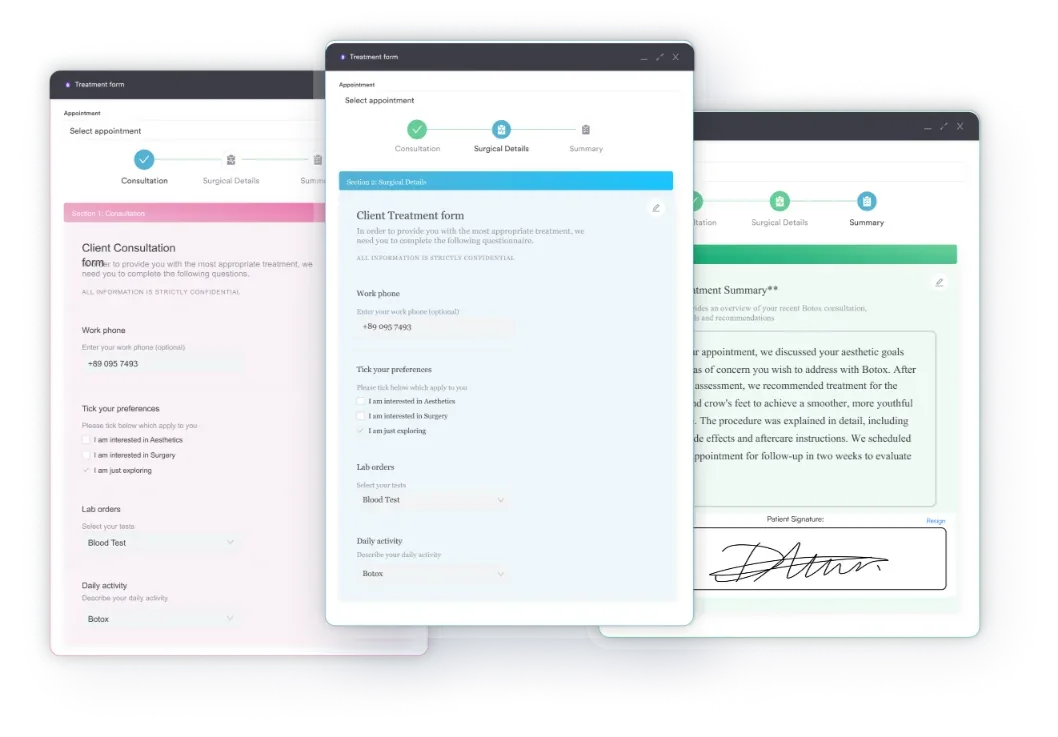
Coding a bilateral fallopian tube sequela accurately depends on documentation captured at several points. Specifically, those points are the original injury record, the encounter type, and the residual condition driving the current visit. In practice, many practices piece this together from paper notes, prior EMR exports, and staff memory, which is where 7th-character errors creep in.
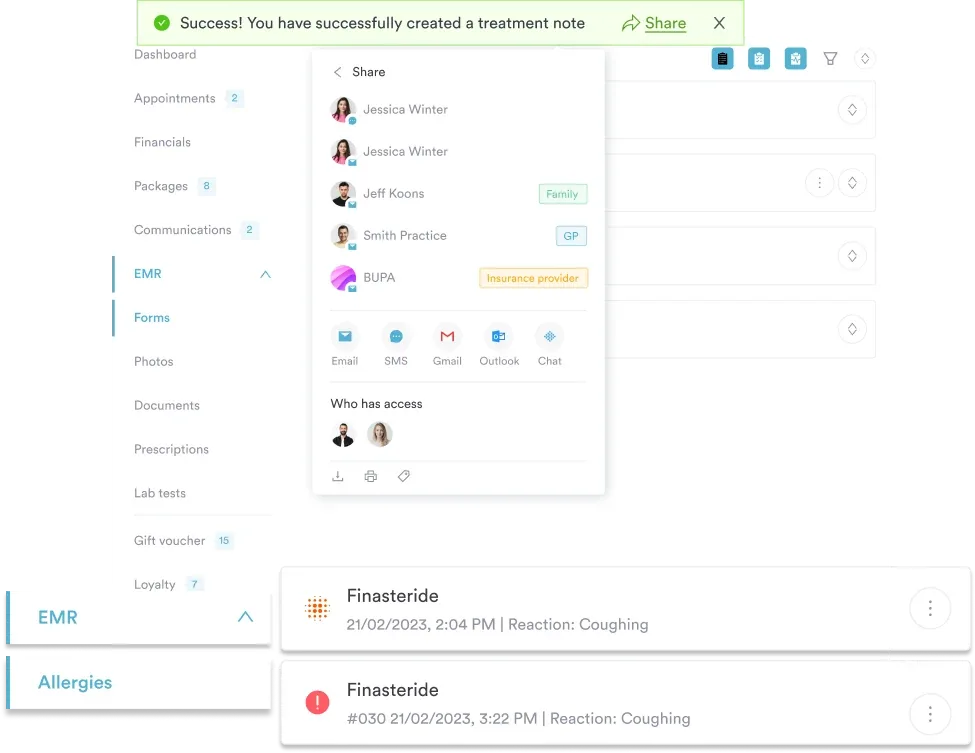
Practice management software like Pabau keeps injury history, encounter type, and laterality together in one patient record. Furthermore, digital intake forms and structured clinical notes capture that history at the point of care. As a result, the details a coder needs for a sequela case like S37.502S are already documented, instead of reconstructed later by a biller.
Consequently, the result is fewer incomplete injury records reaching the coding stage, and less time spent chasing missing documentation before a claim goes out.

Pabau keeps injury history, encounter details, and clinical notes organized for pelvic and reproductive health practices. Coders get the documentation they need for accurate ICD-10-CM sequela coding.

Missing or incorrect 7th characters on pelvic organ injury codes remain a persistent source of claim rejections. Therefore, S37.502S is the complete, billable code for unspecified bilateral fallopian tube injury in the sequela phase. It applies only when documentation clearly links the current residual condition to the prior injury and confirms active treatment has ended.
Pabau keeps that documentation – injury history, encounter type, and laterality – organized in one patient record. As a result, coders have what they need at the point of billing instead of chasing details across separate systems. Book a demo to see how Pabau supports ICD-10-CM documentation for pelvic and reproductive health practices.

Coding obstetric complications alongside pelvic organ injuries? O67.8 documents other intrapartum hemorrhage, a related OB/GYN billing scenario.
Need the code for obstructed labor? O66.9 covers unspecified obstructed labor, another OB/GYN diagnosis requiring precise documentation.
Coding anesthesia for an elbow osteotomy? Elbow osteotomy anesthesia billing guide covers the 5 base units and the time-based anesthesia billing formula.
Working with other sequela injury codes? S31.607S applies the same 7th-character sequela logic to an abdominal wall open wound.
Coding musculoskeletal conditions outside the injury chapter? M85.9 covers unspecified disorders of bone density and structure.
ICD-10 Code S37.502S is a billable ICD-10-CM code for unspecified injury of the fallopian tube, affecting both tubes (bilateral). It is encountered during the sequela (late effect) phase of care. The 7th character S identifies this as a sequela encounter. The patient is now being treated for a residual condition caused by a prior bilateral fallopian tube injury, not the active injury itself.
The 7th character S in ICD-10-CM designates sequela, also called a late effect. It indicates the encounter is for a condition that is a direct consequence of a prior injury. It is not the original injury or its active healing phase. Sequela coding requires the residual condition to be sequenced first, followed by the sequela injury code.
S37 covers injury of urinary and pelvic organs. Subcategories include the kidney (S37.0), ureter (S37.1), bladder (S37.2), and urethra (S37.3). Additional subcategories cover the ovary (S37.4), fallopian tube (S37.5), uterus (S37.6), adrenal gland (S37.8), and other specified pelvic organs. Each subcategory requires a 7th character (A, D, or S) to produce a billable code.
Yes. The S37.5xx family contains multiple billable codes for fallopian tube trauma. Codes are organized by injury type (unspecified, laceration, other), laterality (unilateral, bilateral, unspecified), and encounter phase (A, D, or S). S37.502S is the billable code specifically for unspecified bilateral fallopian tube injury in the sequela phase.