ICD-10 Code S42.444P: Medial epicondyle fracture, right humerus
ICD-10 Code S42.444P: full descriptor and code validity ICD-10 Code S42.444P car...

Last Updated: Oct 13, 2026
Billable Code Specific Code
S25.111D is the billable ICD-10-CM code for minor laceration of right innominate or subclavian artery, subsequent encounter.
The artery is rarely what causes trouble here. The last character is. Coders reach for A because the wound is still being treated, or for S because a follow-up feels like a late effect. Either choice sends the claim back.
The code sits in category S25, injury of blood vessels of the thorax, inside chapter S00-T88. Its 2026 edition took effect on October 1, 2025. S25.111D is also exempt from present on admission (POA) reporting, so a facility files no POA indicator against it.
Let Pabau's smart automation suggest the right codes, reduce claim denials, and keep your practice compliant—effortlessly.
Automate repetitive tasks and focus on what matters most—your patients.
Reduce coding errors and ensure compliance with the latest regulations.
Clean claims, fewer denials, and faster reimbursements.
Powerful insights and reporting to help your practice thrive.
HIPAA compliant SOC 2 certified GDPR-compliant Trusted by 4,000+ clinics worldwide

S25.111D is the billable code for a minor laceration of the right innominate or subclavian artery, subsequent encounter.
The 7th character D means the patient is back for ongoing treatment of the same injury, not a new one.
Severity splits at S25.11 for minor and S25.12 for major, while the sixth character carries the side.
An operative note that says only laceration codes to minor, because the tabular list files laceration NOS under S25.11.
The CMS grouper sends S25.111D to DRG 949 or DRG 950, the aftercare pair, because character D is a follow-up encounter.
Practice management software like Pabau records the diagnosis against the treatment note and checks insurer-required claim fields before submission.
Two vessels on the right side of the chest sit inside this code. The innominate artery, also called the brachiocephalic artery, leaves the aortic arch and divides into the right common carotid and the right subclavian. The right subclavian artery then supplies the right arm.
The wording hides an anatomical quirk. There is only one innominate artery, and it sits on the right. The left side has no equivalent trunk. ICD-10-CM still mirrors the phrase across, so S25.112 reads “left innominate or subclavian artery” while it really covers the left subclavian.
Both vessels carry high-volume flow, so even a partial-thickness tear needs repair and close follow-up. That follow-up is what character D exists for. You can confirm the current descriptor in the CDC ICD-10-CM web tool before you submit.
Use D when the patient is back for ongoing treatment of the same injury. That is the whole test.
ICD-10-CM gives injury codes three encounter characters. A covers the first round of active treatment. D covers every visit after that while treatment continues. S covers a problem left behind once the injury itself is finished.
A common slip is keeping A on every visit because the wound is still healing. Active treatment does not reset the character. Once the first encounter is coded, every visit after it takes character D instead. The same A, D, and S ladder runs through the rest of the injury chapter, including S23.110A and T63.064D. Claim scrubbing catches the mismatches that would otherwise come back as a denial two weeks later.
Rehab and wound-care visits fall in the same band. That is why physical therapy practices file so many D-character injury codes, even though the original repair happened somewhere else.
Write the encounter type into the note in plain words. A line like “patient returns for follow-up wound care of a previously repaired right subclavian artery laceration” does the job. That sentence in the record makes character D defensible to an auditor without a query back to the provider.
Injury recovery often runs through occupational therapy, and occupational therapy software tracks function from assessment to discharge.
Reading the code left to right shows what each character is doing. S25 names the region and vessel group. The fifth character sets severity. The sixth sets the side. The seventh sets the encounter.
Note that S25, S25.11 and S25.111 are all non-billable on their own. Only the seven-character version belongs on a claim. CMS publishes the annual tabular list files on its ICD-10 codes page, so it is worth re-checking the S25 block each October.
Severity is decided at the fifth character, not the sixth. S25.11 is the minor branch and S25.12 is the major one. The sixth character then picks the side, so S25.111 is minor on the right and S25.112 is minor on the left.
Helpfully, the tabular list does most of the interpreting for you. Three phrases sit under S25.11: incomplete transection, superficial laceration, and laceration not otherwise specified (NOS).
Two sit under S25.12, namely complete transection and traumatic rupture. So an operative note that says only “laceration of the right subclavian artery” codes to minor.
Read that table one more time, because the pattern catches people out. S25.119D is the fallback for a missing side, not a missing severity, and it is still a minor laceration code.
If the note names no side at all, query the provider before you settle for it. The AAPC code lookup puts the two branches side by side.
The minor branch runs to nine billable codes, which is three sides multiplied by three encounter characters. Knowing all nine saves a lookup when the patient’s status changes mid-episode.
Step across to the major branch and the structure repeats exactly, from S25.121 through to S25.129S. Two neighbours are worth keeping in view as well.
S25.101 covers an unspecified injury of the right vessel, and S25.191 covers another specified injury. Reach for those when the record describes damage that nobody has called a laceration.
If you want the whole branch on one screen, the icd10data S25 index lists every 7th character variant together.
No Excludes1 note stops you reporting S25.111D alongside a chest injury. Category S25 carries no Excludes1 note at all. What it carries is a code-also instruction, which is a different thing entirely.
That instruction tells you to code also any associated open wound of the thorax, from category S21. Sequencing is your call, based on severity and the reason for the visit.
Traumatic pneumothorax (S27.0), hemothorax (S27.1) and hemopneumothorax (S27.2) are separate conditions, and you may report them with S25.111D when the record documents them.
Two real exclusions apply, and both come from higher up the tree. The S20-S29 block excludes injuries of the axilla, clavicle, scapular region and shoulder. Chapter S00-T88 excludes birth trauma and obstetric trauma.
The first one matters more than it looks. The subclavian artery becomes the axillary artery at the outer border of the first rib. That line is where S25.1 hands over to S45.0, so a vessel injury the surgeon places at the shoulder belongs in the S45 range instead.
Two further notes are easy to forget. Add a secondary external cause code from Chapter 20 to show how the injury happened, on every encounter that treats it.
Codes such as V05.92XS live there. Add Z18.- as well when a retained foreign body is documented.
S25.111D is valid in HIPAA-covered transactions and needs no further specification. From there, three attributes decide how it lands.
The DRG point surprises people. A thoracic artery laceration sounds like a trauma admission, and on the initial encounter it is. Change the 7th character to D and the grouper reads the stay as aftercare instead.
Most billing teams build this into the coder’s worklist rather than trusting memory. A medical coding cheat sheet covers the same ground for the codes around it.
Injury codes make up a large share of the caseload at sports medicine practices, so the check becomes second nature there.
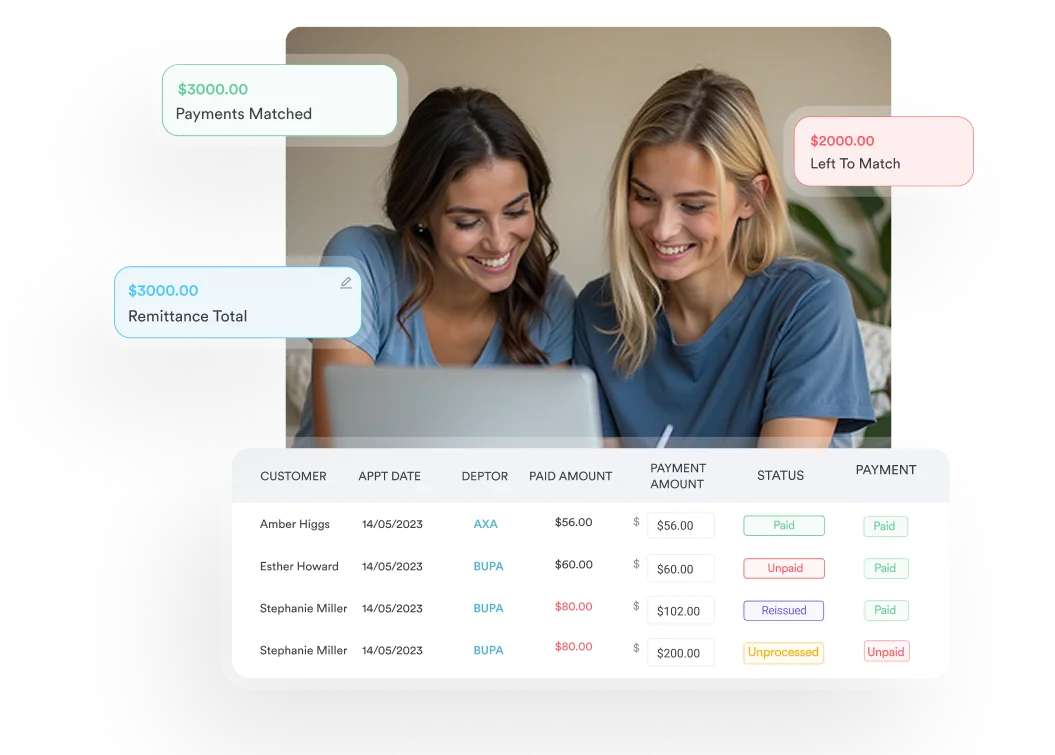
Four things in the record keep the coder off the phone.
Structured templates do most of this work for you. The same prompts belong on the medical forms a practice already uses at intake and follow-up.
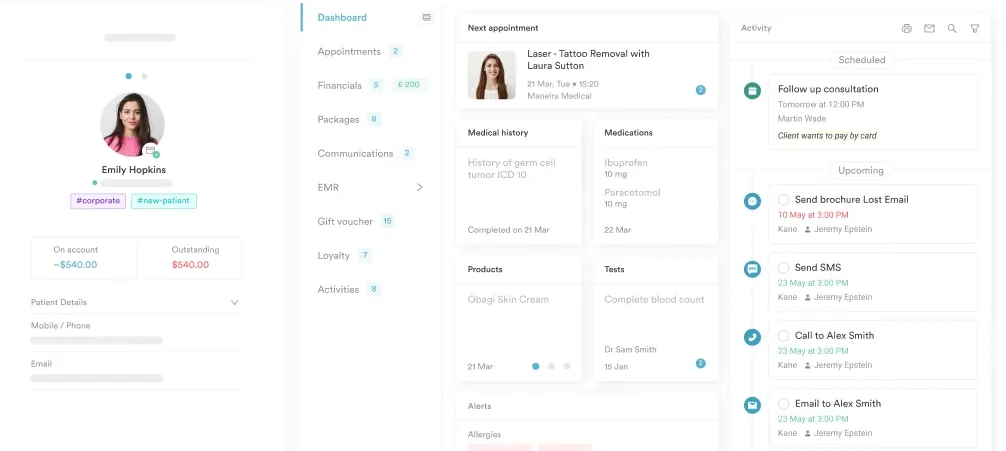
The coding detail usually lives in three places. The side is in the operative note, the follow-up date is in the calendar, and the claim is in a separate billing tool. Someone has to reconcile all three before anything goes out.
Practice management software like Pabau keeps them together. The treatment note, the diagnosis code, the visit history and the invoice all sit against the same client record. When a patient comes back for a wound check, the earlier encounter is right there, so character D is easy to justify.
On the billing side. It then tracks that claim’s status after submission. Coders still own severity and laterality. The software’s job is to stop claims bouncing on missing information.
For a low-volume code like S25.111D, that means fewer queries back to the surgeon and fewer resubmissions a month later.

Pabau keeps treatment notes, diagnosis codes and invoices on one client record, and checks insurer-required fields before a claim goes out. Fewer queries, fewer resubmissions.

Assigning S25.111D takes a few seconds. Defending it six months later takes a note that already says right, minor and follow-up. Put the effort at the point of care, not at the point of billing.
The payoff is quiet, which is why it gets skipped. Claims that carry the side and the encounter type go out once and stay paid. Claims missing that detail come back as a query, then a rebill, then a month of delayed cash.
If your coding detail is scattered across notes, spreadsheets and a separate billing tool, that is the thing worth fixing first. Book a demo to see how Pabau keeps injury-code documentation and claims on one record.

Need another subsequent-encounter example? T38.802D applies the same 7th character to a poisoning code.
Coding the first visit instead? T43.225A shows how the initial-encounter character behaves on an adverse-effect code.
Working denials on a procedure code? CPT code 15260 breaks down the billing and denial patterns for full-thickness grafts.
Billing a cardiovascular device? HCPCS code C1900 covers left ventricular lead billing from claim to payment.
Coding a thoracic complication? T86.812 walks through lung transplant infection coding and its documentation.
No. ICD-10-CM guidelines direct you to code injury aftercare with the acute injury code and 7th character D instead. Aftercare Z codes such as Z47 and Z48 apply to conditions that have no 7th character option. Reporting both on the same claim duplicates the story.
There is no day limit. Character D applies for as long as the provider actively treats the laceration, whether that runs two visits or twelve. It stops when treatment ends. If a lasting problem remains after that point, move to S25.111S.
Yes, when the encounter exists to treat the laceration itself. On an inpatient aftercare stay it groups to DRG 949 or 950. On an outpatient claim, sequence it first where the follow-up visit is for the injury and nothing more pressing.
No. The 7th character tracks the injury’s treatment stage, not the provider. A new physician picking up the follow-up still reports character D. Character A belongs only to the first round of active treatment, wherever that happened.
That depends on what happens at the visit. A routine wound check bills as an established patient office visit, usually 99212 through 99215. If the wound needs debridement or the repair needs revision, the procedure code leads and S25.111D supports medical necessity.