ICD-10 code S61.201A: Open wound of left index finger without nail damage
ICD-10 code S61.201A covers a left index finger wound of unstated type ICD-10 co...

Last Updated: Oct 16, 2026
Billable Code Specific Code
S25.509S is the billable ICD-10-CM code for unspecified injury of intercostal blood vessels, unspecified side, sequela.
This code is only valid for sequela encounters. Coders who apply it to an active injury visit have used the wrong 7th character, and payers reject the claim as a result. Its full official description is: Unspecified injury of intercostal blood vessels, unspecified side, sequela.
Let Pabau's smart automation suggest the right codes, reduce claim denials, and keep your practice compliant—effortlessly.
Automate repetitive tasks and focus on what matters most—your patients.
Reduce coding errors and ensure compliance with the latest regulations.
Clean claims, fewer denials, and faster reimbursements.
Powerful insights and reporting to help your practice thrive.
HIPAA compliant SOC 2 certified GDPR-compliant Trusted by 4,000+ clinics worldwide

ICD-10 Code S25.509S describes an unspecified injury of intercostal blood vessels, unspecified side, as a sequela encounter
The 7th character S designates sequela: a condition resulting from a previous injury, not an active or follow-up encounter
Coders must document the causal link between the original thoracic injury and the current sequela condition to support this code
Pabau’s claims management software helps practices submit thoracic trauma codes accurately and reduce claim denials
The 7th character is where most coding errors on this code occur. S25.509S uses the 7th character S to designate a sequela encounter, as defined in the ICD-10-CM Official Guidelines for Coding and Reporting (Section I.C.19.a).
A sequela is a condition that results directly from a previous injury. The original intercostal vessel injury has resolved. The patient now presents with a complication or late effect, such as chronic thoracic pain, scar formation, or vascular insufficiency traceable to the original trauma.
Coders who understand sequela coding for S23.131S will recognize the same 7th-character logic applies across other thoracic injury categories.
Key rule: When using S25.509S, coders must also sequence the sequela condition first, followed by the injury code with the 7th character S. The sequela code describes the current complaint; the injury code with S explains its cause.
Understanding where S25.509S sits in the ICD-10-CM hierarchy helps coders confirm they have selected the most appropriate level of specificity. The full hierarchy, as published in the CMS ICD-10 codes page, runs from the broadest injury category down to this specific code.
The intercostal blood vessels run in the groove along the inferior margin of each rib. They supply and drain the intercostal muscles, parietal pleura, and adjacent soft tissues. Each intercostal space contains an artery, vein, and nerve in a neurovascular bundle.
Injury to these structures most commonly results from blunt or penetrating thoracic trauma. Clinicians involved in physical therapy EMR documentation will also encounter post-procedural or post-surgical contexts where intercostal vessels are inadvertently damaged during thoracic or thoracoabdominal procedures.
The “unspecified” designation in S25.509S applies when the medical record does not document whether the injury involved the right or left intercostal vessels. When laterality is known and documented, coders should use a laterality-specific code instead.
S25.509S belongs to the S25.5 subcategory. The full set of codes in this group covers unspecified injuries, lacerations, and other specified injuries to the intercostal blood vessels. Laterality options exist for the right and left sides.
Coders working with laterality-specific codes like S15.029S will recognize the same laterality and encounter-type logic applied here.
Selection rule: Use S25.509S only when the medical record specifies an unspecified injury type (not a minor or major laceration) AND does not document laterality. If the operative or clinical note specifies right or left, or identifies the injury as a laceration, use the more specific code.
Claim review for sequela codes is more rigorous than for initial encounter codes, because payers require documented evidence of the causal chain. Practices that rely on medical record documentation forms should ensure their clinical notes capture each of the following elements before submitting under S25.509S.
Maintaining robust digital intake forms that capture prior injury history at intake closes off the missing documentation that leads to sequela coding denials. Practices should also follow HIPAA compliance for medical offices when retaining historical records from prior providers.

Review the original injury record before assigning S25.509S. If the prior facility used ICD-10 Code S25.509A and the current clinician documents the sequela relationship, cite the original record date in your clinical note. Include the causal language that links the two encounters, since payers auditing sequela claims look specifically for that documented link.
For inpatient Medicare claims, S25.509S groups under Major Diagnostic Category 21 (Injuries, Poisonings & Toxic Effects of Drugs). This grouping is specified in the ResDAC ICD codes in Medicare files resource.
MS-DRG assignment itself depends on the principal diagnosis, the presence of a major or other complication/comorbidity (MCC/CC), and the full claim context.
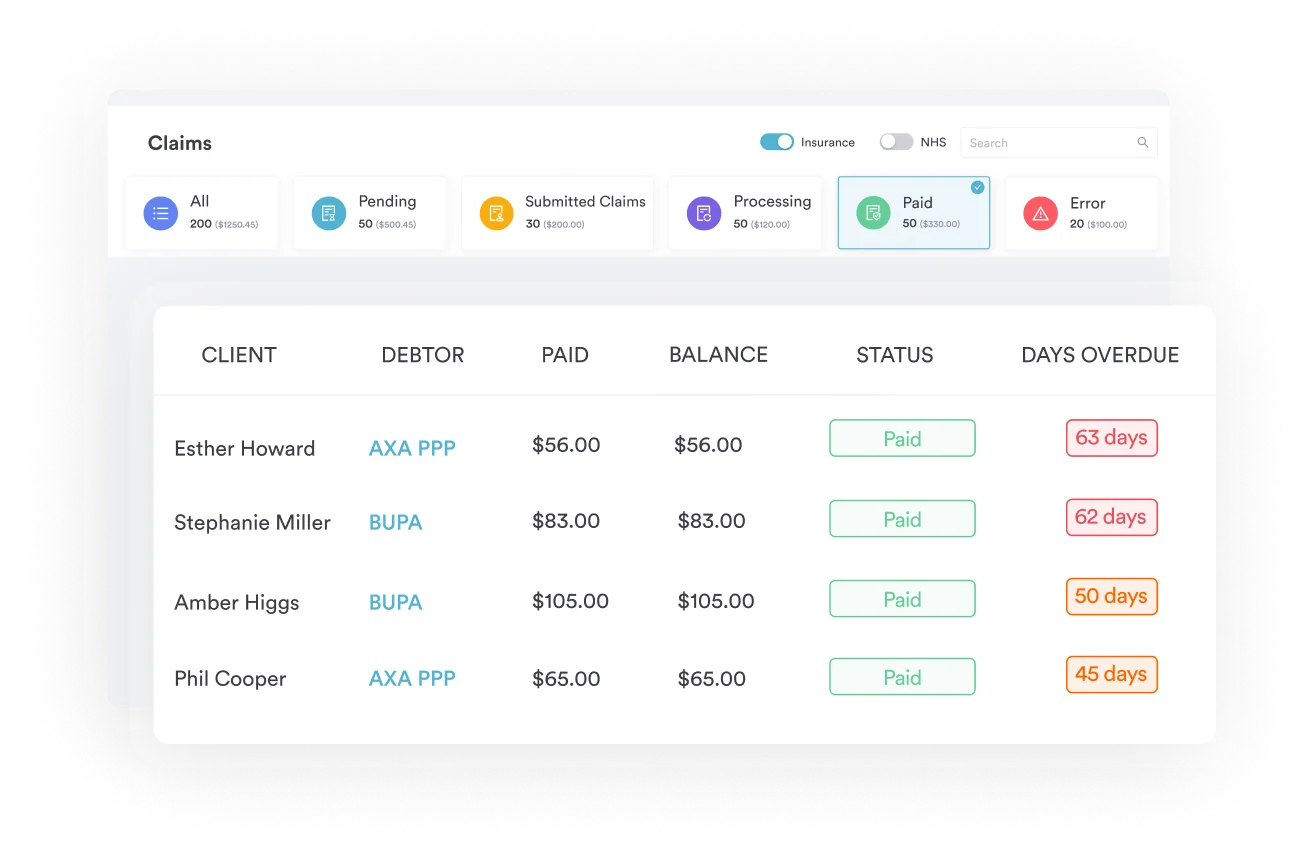
S25.509S as a secondary diagnosis on an inpatient claim may influence DRG assignment when the sequela condition itself constitutes a complication. Practices managing thoracic injury billing should use claims management software to track payer-specific DRG grouping rules. This helps ensure sequela codes are sequenced correctly with the principal diagnosis. Payment posting from a remittance file is faster than manual entry and keeps the adjustment reasons attached.
Good patient data security in billing workflows also matters here. Sequela claims often require pulling prior encounter records, and practices must retrieve and transmit historical documentation within compliant data-sharing frameworks.
Practices maintaining legacy billing systems or processing historical record requests may need to cross-reference S25.509S with its ICD-9-CM predecessor. Per the AAPC Codify ICD-10-CM lookup, the ICD-9-CM approximate equivalent for intercostal blood vessel injuries maps to code 901.81 (Injury to intercostal artery or vein).
Coders supporting EHR integration for legacy coding transitions should treat ICD-9 crosswalks as approximate rather than exact mappings. The ICD-10-CM system introduced laterality and encounter-type specificity that ICD-9 did not capture.
Sequela coding has a higher audit risk than active-injury coding because it requires documented causation from a prior encounter. These are the errors coders most commonly make when applying ICD-10 Code S25.509S.
Practices that enforce HIPAA documentation standards as part of their coding workflow reduce the risk of these errors. Consistent documentation habits produce the causal language sequela audits require. Consulting the WHO ICD-10 browser for contextual code definitions also helps coders verify the intended clinical meaning before assigning a code.
Run a pre-submission audit on all S25.509S claims before you file. Confirm a prior injury record is referenced in the clinical note. Confirm the sequela condition is listed first in the diagnosis sequence. Also check that no active-injury indicator (7th character A or D) was accidentally retained from a copied note template.
Many practices track sequela claims by hand. They flip between the current chart and an old paper or EHR record to confirm the causal link back to the original injury. That manual cross-referencing is exactly where the documentation a payer wants goes missing.
Practice management software like Pabau keeps every encounter, from the initial thoracic injury visit through to the sequela claim, inside one client record. Coders can pull the original injury date, mechanism, and clinical findings without hunting through a separate system.
Pabau’s claims management software also flags a sequela submission that is missing its causal documentation before it reaches the payer. The result is fewer denials on complex thoracic billing and a faster path to reimbursement.

Pabau’s claims management software helps practices code sequela encounters accurately, track prior injury records, and reduce denials on complex thoracic billing submissions.

S25.509S only fits a true sequela encounter: an intercostal blood vessel injury that has already resolved, now producing a late complication with undocumented laterality. Applying the 7th character S to an active or healing injury is the most common way this code gets rejected.
Coders who confirm the causal link to the original injury before submitting clear the audit risk that sequela claims carry. Sequencing the sequela condition ahead of S25.509S does the same. Skipping that check is what turns a billable code into a denied one.
Book a demo to see how Pabau’s claims management software keeps thoracic injury encounters and sequela documentation in one record, ready for accurate S25.509S submissions.

Coding the initial encounter instead of the sequela? S21.112A covers the active-encounter side of a left thorax laceration for comparison.
Need a companion thoracic trauma code? S22.068B walks through billing a T7-T8 thoracic vertebra fracture that often accompanies vessel injuries.
Billing a related thoracic procedure? CPT Code 00546 explains anesthesia billing for pulmonary resection with thoracoplasty.
Managing a vascular complication of trauma? HCPCS Code C1880 covers vena cava filter billing and fee schedules.
Need the vascular access billing rules too? CPT Code 00532 covers anesthesia for central venous access procedures.
ICD-10 Code S25.509S is a billable ICD-10-CM diagnosis code describing an unspecified injury of intercostal blood vessels, unspecified side, as a sequela encounter. It is valid for reimbursement submissions under the 2026 ICD-10-CM code set, effective October 1, 2025. It falls under Major Diagnostic Category 21 (Injuries, Poisonings & Toxic Effects of Drugs).
Yes. S25.509S is a billable, specific ICD-10-CM code valid for submission to payers for reimbursement. It is not a header or parent code; it is a fully specified code at the maximum level of detail available for this diagnosis.
The three codes differ only by their 7th character encounter type. S25.509A is used for the initial encounter, when active treatment is being provided. S25.509D is used for subsequent encounters, when the injury is healing and routine care is being given. S25.509S is used for sequela encounters, when a late effect or complication results from the original resolved injury.
S25.509S groups under Major Diagnostic Category 21 (Injuries, Poisonings & Toxic Effects of Drugs) in the CMS MS-DRG v43.0 Definitions Manual. Specific DRG assignment for inpatient claims depends on the principal diagnosis, presence of MCC/CC, and full claim context, not the sequela code alone.
Use S25.509S only when the medical record does not document which side was injured. S25.501S applies when the right intercostal blood vessels were injured and S25.502S applies when the left side was affected. Always check operative reports, radiology notes, and clinical documentation before defaulting to the unspecified-side code.
S25.509S maps approximately to ICD-9-CM code 901.81 (Injury to intercostal artery or vein). This is an approximate crosswalk only, as ICD-9-CM did not capture laterality or encounter type with the same specificity as ICD-10-CM.