

HCPCS code E0198: Water pressure pad billing guide
HCPCS code E0198 is a water pad for a standard mattress HCPCS code E0198 is the ...

Last Updated: Oct 13, 2026
C1900 is the HCPCS Level II code for lead, left ventricular coronary venous system.
The code pays for the device. It does not pay for the implant work. The hospital bills C1900 on a UB-04 under the Outpatient Prospective Payment System, or OPPS. Separately, the implanting cardiologist bills the procedure on a CMS-1500.
So one CRT implant produces two claims from two entities. Once that split is clear, the rest of the work is mechanical. You need the right diagnosis, the right units, and a device record that matches the operative note.
Let Pabau's smart automation suggest the right codes, reduce claim denials, and keep your practice compliant—effortlessly.
Automate repetitive tasks and focus on what matters most—your patients.
Reduce coding errors and ensure compliance with the latest regulations.
Clean claims, fewer denials, and faster reimbursements.
Powerful insights and reporting to help your practice thrive.
HIPAA compliant SOC 2 certified GDPR-compliant Trusted by 4,000+ clinics worldwide

HCPCS code C1900 reports the lead placed in the left ventricular coronary venous system during a CRT implant.
Only hospital outpatient departments billing under OPPS report C1900, and the charge goes out on a UB-04.
The lead is billed apart from the generator and the right ventricular lead, so one CRT case produces several device lines.
Device C-code costs are usually packaged into the procedure APC, so check the current OPPS Addendum B before quoting a rate.
Practice management software like Pabau keeps patient records and claim documentation in one place, so missing details surface before submission.
C1900 is a HCPCS Level II C-code. According to the Centers for Medicare and Medicaid Services (CMS), Level II codes cover devices, supplies, and services the CPT code set does not describe. C-codes narrow that down to devices and drugs used in the hospital outpatient setting, and CMS maintains them directly.
The family reaches well beyond cardiology. That same code range carries catheters, stents, generators. What they share is the setting, not the specialty.
The lead travels through the coronary sinus and settles in a lateral or posterior branch vein of the left ventricle. From there it paces the left ventricle so both ventricles contract together.
That coordination is the whole point of CRT. Patients with heart failure and electrical dyssynchrony lose it, and the LV lead brings it back. Both device types need the lead. CRT-D adds a defibrillator, while CRT-P handles pacing only.
The lead is anatomically distinct from a right ventricular lead and carries its own acquisition cost. That is why CMS gives it a dedicated code rather than folding it into the procedure.
The implant procedure carries its own CPT codes. 33225 is the add-on code for placing the left ventricular lead through the cardiac venous system.
In most cases C1900 is not paid on its own line. OPPS packages device costs into the payment for the procedure’s Ambulatory Payment Classification group, known as an APC. The device still has to be reported, because those reported costs are what shape next year’s rates.
Transitional pass-through status is the exception. When CMS grants it, a device earns separate payment for a limited period. That status is reviewed annually, so last year’s answer is not this year’s answer.
Important: A specific 2026 reimbursement rate for C1900 could not be confirmed from a primary CMS source. Pull the figure from the current Hospital OPPS Addendum B before you quote one. Third-party rate lists go stale within weeks of a January update.
Commercial payers do not have to follow Medicare here. Review each plan’s contract schedule and prior authorization rules before reporting C1900 for a non-Medicare patient. Good EHR integration workflows help by surfacing those rules at charge entry.
Check CMS OPPS Addendum B at the start of each calendar year. Payment rates for C1900 and related device C-codes reset on January 1. Build a calendar reminder into your revenue cycle workflow, so someone pulls the updated file before your first claim of the year.
The device charge starts in the lab, gets priced from the charge master, and lands on the hospital’s UB-04. Nothing about C1900 touches the physician’s claim. Here is the path a clean one takes.
Take a CRT-D implant on a Medicare patient. The hospital’s UB-04 carries three device lines at minimum. C1882 covers the biventricular generator, C1895 or C1777 covers the right ventricular shock lead, and C1900 covers the LV lead. The delivery system can add another, because the peel-away guiding introducer carries its own code. Denial codes in medical billing group the reasons a payer refuses, and the group decides the fix. Where a payer still requires a paper claim, the practice needs the current revision of the form.
The cardiologist’s CMS-1500 carries the CPT codes instead, and neither claim repeats the other’s work. Billing the professional component from the hospital’s claim is a familiar trigger for duplicate-billing review. Check the physician’s Medicare status too.
Care does not stop at discharge, and neither does the billing. Device checks, cardiac rehab, and primary care follow-up each generate their own claims. Those come from the rehab team working in a physical therapy EMR.
Every device line needs a diagnosis that explains why the device went in. For C1900 that means the cardiac condition behind the CRT implant, taken from the operative note rather than the problem list.
Specificity carries real weight inside the conduction-disorder range.
I44.2 and I44.0 describe very different degrees of block, and a reviewer reading the ECG report expects the code to match it. Check your payer’s local coverage determination, or LCD, before you finalize the pairing.
Treat the list as commonly accepted pairings rather than a guaranteed coverage set. Coverage language shifts between MACs, and a diagnosis that clears one contractor can stall at another.
C1900 rarely travels alone. A CRT implant puts a generator, at least one right ventricular lead, and the LV lead on the same UB-04, each on its own line.
The AAPC HCPCS Level II lookup is a quick way to confirm a descriptor before it reaches the charge master.
The last two rows are where money goes missing. The same trap sits on the pacing side with C1785.
Bundling the three device lines into one code, or dropping one of them, leads to underpayment or a claim edit. Report each device that was actually implanted, on its own line, at its own charge.
A C-code answers what was implanted. A CPT code answers what was done. Coders who spend their days in physician billing sometimes apply CPT logic to a device line, and the claim stops moving.
The National Library of Medicine publishes a free HCPCS Level II API. Billing systems can query it directly instead of relying on a manual code-book search. Wiring it into the charge master catches a retired descriptor long before it reaches a claim.
The operative note and the device record carry the claim. Thin device documentation is the most common reason a C-code line gets pulled back, and it is the easiest problem to fix in advance.
Where those records live decides how fast you can produce them. Teams still working from paper medical forms rekey device details by hand, and rekeying is where a serial number goes wrong. An EHR for private practice keeps the implant record attached to the encounter instead.
Retention matters as much as capture. Implant records sit under the HIPAA Security Rule once stored.

If the hospital paid nothing for the lead, the claim has to say so. Report the credit amount with value code FD, then add the condition code that explains why the credit exists.
Modifiers FB and FC used to handle this. CMS retired both on hospital outpatient claims on January 1, 2014. A charge master still pointing at FB is more than a decade out of date.
CMS uses the reported credit to reduce payment on the affected claim. Leaving it off keeps money the hospital never spent, and that is precisely what a post-payment review looks for. Warranty replacements on CRT leads are common enough that this should be a standing step, not a special case.
Go down this list before the claim leaves. It takes under a minute, and it catches most of what comes back.
Audit a sample of C1900 claims every quarter. Cardiac device C-codes are a standing target for Recovery Audit Contractors, so pull ten recent claims and check three things. Confirm the device record is complete, the diagnosis matches the operative note, and any manufacturer credit was reported. Catching a pattern internally costs far less than answering for it later.
The hospital’s UB-04 is only half of a CRT implant’s paperwork. Professional claims, device checks, and follow-up visits all come from a practice, and those records face the same scrutiny.
Practice management software like Pabau keeps that half in one place. Patient records, treatment notes, consent forms, and invoices sit in the same system. Nobody has to open three tools to answer one payer question.
Pabau’s claims management software checks the fields an insurer requires before a claim can be sent. Submission stays locked until they are complete. A status dashboard then shows what is pending, submitted, processing, paid, or in error.
So the team spends less time reworking rejected claims, and more time with the patients who just had a device implanted.
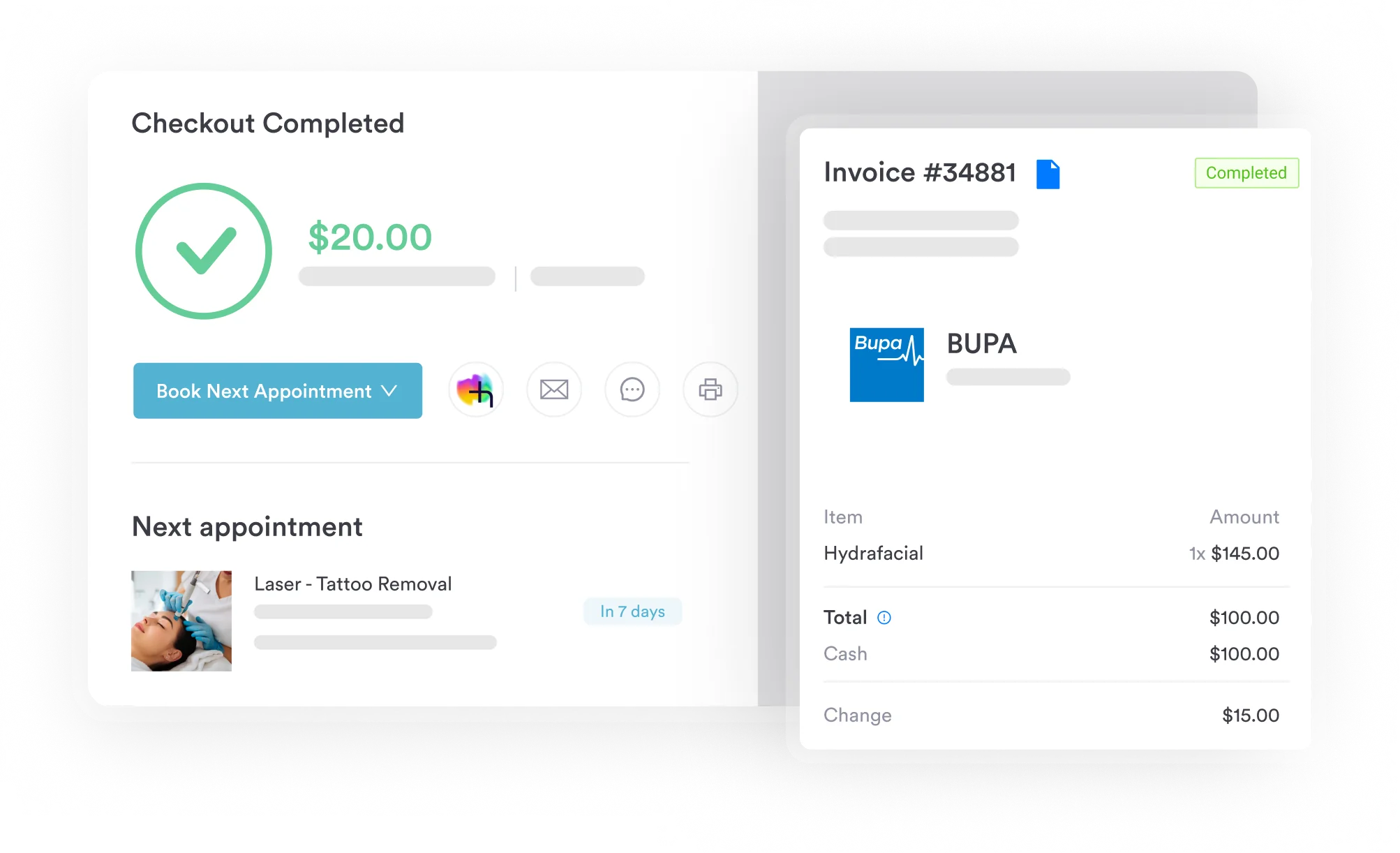

Pabau brings patient records, treatment notes, and claims into a single system. Required insurer fields are checked before a claim can be sent, so fewer submissions come back for rework.

C1900 is a small line item that touches a lot of records. The device log, the operative note, the diagnosis, and the current rate file all have to agree before it pays cleanly.
So treat it as a documentation job first and a coding job second. Confirm the lead went in, match the generator code to the device, and report any manufacturer credit. Take the rate from the current OPPS Addendum B, never from last year’s saved file. Do that every time and C1900 stops being interesting, which is the point.
On the practice side, cardiac billing often lives across separate tools. Book a demo and see how Pabau keeps records and claims together in one system.

Billing the delivery system as well as the lead? C1892 covers the peel-away guiding introducer used to place a coronary venous lead.
Want a C-code example from outside cardiology? C1784 shows how an ocular device code moves through the same OPPS rules.
Coding a lumbosacral strain visit? ICD-10 code S39.012A for lumbosacral strain explains how location, tissue type, and encounter stage shape this code.
Stuck with a procedure that has no specific code? 20999 explains how unlisted codes are documented, priced, and defended.
No. Left bundle branch area pacing and His-bundle pacing use a standard transvenous lead placed in the septum. That lead is not routed through the coronary sinus. Report the pacemaker lead code that matches the device used.
C1900 is specific to the left ventricular coronary venous lead. C1898 covers pacemaker leads other than a transvenous VDD single pass, which takes in standard atrial, ventricular, and myocardial leads.
Medicare’s hospital outpatient prior authorization list does not include CRT implants. Plenty of commercial plans do require it, so confirm the plan’s rules before the case rather than after the claim rejects.
Leave C1900 off the claim. Report only the devices actually implanted, and let the operative note explain the abandoned attempt and what the team did instead.
No. Device C-codes belong to the hospital outpatient system. An inpatient stay is paid under the MS-DRG, and the device is captured through ICD-10-PCS coding rather than a HCPCS C-code.



