ICD-10 Code S42.444P: Medial epicondyle fracture, right humerus
ICD-10 Code S42.444P: full descriptor and code validity ICD-10 Code S42.444P car...

Last Updated: Oct 13, 2026
Billable Code Specific Code
S01.341A is the billable ICD-10-CM code for puncture wound with foreign body of right ear, initial encounter.
Let Pabau's smart automation suggest the right codes, reduce claim denials, and keep your practice compliant—effortlessly.
Automate repetitive tasks and focus on what matters most—your patients.
Reduce coding errors and ensure compliance with the latest regulations.
Clean claims, fewer denials, and faster reimbursements.
Powerful insights and reporting to help your practice thrive.
HIPAA compliant SOC 2 certified GDPR-compliant Trusted by 4,000+ clinics worldwide

ICD-10 Code S01.341A covers a puncture wound with a foreign body of the right ear at the initial encounter.
The code is valid for FY2026, which runs from October 1, 2025 through September 30, 2026.
S01.341A is billable and accepted for HIPAA-covered transactions when the record documents laterality, wound type, and a retained foreign body.
The 7th character A means active treatment. Choosing D or S by mistake is a common trigger for denial.
Practice management software like Pabau puts ICD-10 lookup inside the clinical record, so codes are never retyped between two systems.
ICD-10 Code S01.341A is the billable code for a puncture wound with a retained foreign body of the right ear, initial encounter. It is the fully specified code to reach for when a patient arrives with this exact mechanism of injury. Every head and ear injury code in the S00-S09 chapter shares the same A, D, and S framework. The 7th character is decided at the point of documentation.
The code is valid under the CMS ICD-10-CM code set for fiscal year 2026, effective October 1, 2025 through September 30, 2026. It sits within the S00-S09 chapter for injuries to the head, under category S01 for open wounds of the head. Below is the complete quick reference.
A puncture wound with foreign body of the right ear is a penetrating injury where an object stays in the wound. The site is the right external ear. In practice that covers an earring backing embedded in the earlobe or a splinter driven into the cartilage. It also covers a metal fragment lodged in the ear canal after a workplace accident.
Three elements have to be present together before this code beats a simpler open wound code. The wound must be a puncture rather than a laceration or avulsion. The foreign body must be documented as retained. And the site must be confirmed as the right ear.
If any of these elements is missing from the record, a different code applies. A puncture wound with no documented foreign body maps to S01.331A. A wound of the left ear takes a 2 in the sixth position, and an unspecified ear takes S01.349A. Consistent medical documentation practices at the point of care are the most reliable safeguard against that rework.
The 7th character turns the parent code S01.341 into a fully billable, encounter-specific code. Across all three variants, it tells the payer which phase of care the visit represents.
The most common 7th character error is using A for a follow-up wound check after the foreign body has already been removed. Per the CDC ICD-10-CM guidelines, “initial encounter” describes the phase of active treatment, not the first time a given provider sees the patient.
Take a patient who goes to the emergency department for foreign body removal, then sees a family physician five days later for a wound check. That return visit is coded D, even though the family physician has never met the patient before. Practices running on primary care software see this pattern constantly, because the follow-up almost always lands somewhere other than the treating site.
Sequela is reserved for visits where the reason for care is the late consequence of a healed injury. It also requires an additional code for the specific late effect. If a wound infection is treated with an intravenous antibiotic, the encounter may carry a drug code such as J1364 as well. Fracture codes stretch the same logic further with characters for healing status, as in S52.262K.
Understanding the full hierarchy helps coders audit their own selections and find related codes quickly. S01.341A sits at the most specific level of a five-tier structure.
The parent code S01.341 is not billable on its own. It needs a 7th character to become a specific, reimbursable code, and submitting it bare will be rejected in most HIPAA-covered transactions. Not every head injury lives in this chapter either. Birth injuries are coded from the perinatal chapter instead, as with instead, as with P10.3.
Check your practice management system’s code validation settings. Many systems let incomplete parent codes such as S01.341 pass through to claim submission without flagging the missing 7th character. Run a quarterly audit of submitted injury codes to catch systematic omissions before they turn into a pattern on payer audits.
Coders often cross-reference S01.341A against its siblings to confirm laterality and wound type. The table below covers the codes most frequently confused with it.
The AAPC ICD-10-CM lookup tool lets coders browse the full S01.3 subcategory. Comparing adjacent codes side by side is the quickest way to confirm a choice.
The S01 category covers every open wound of the head. Ear wound codes are sorted by mechanism first, then by laterality. Mechanism covers laceration, puncture without foreign body, puncture with foreign body, and open bite. Confirm the mechanism and the correct ear, and you can go straight to the code without reading the full S01 list.
Thin documentation is the most common reason an auditor downcodes a foreign body ear wound to something less specific. The record has to support all four elements of the code before it can be assigned.
Practices that standardize their clinical record templates to prompt for these four elements capture the detail without adding clinician workload. Fields for laterality, wound description, and foreign body status can sit in the digital form itself, which makes compliant documentation the path of least resistance. The same specificity carries into patient-facing paperwork, including any diagnosis letter issued after the visit. A clean claim carries the code, the modifiers and the diagnosis in agreement, and needs no rework before payment. Coding names the service; medical billing gets it submitted, adjudicated and paid. A clean claim carries the code, the modifiers and the diagnosis in agreement, and needs no rework before payment. Coding names the service; medical billing gets it submitted, adjudicated and paid.
Several ICD-10-CM Official Guidelines apply specifically to injury codes in the S00-T88 range. Anyone working with S01.341A should know each of the following.
For the authoritative text on injury coding, use the official CMS guidelines for US billing and the WHO ICD-10 reference for international context. Practices that build compliance management workflows into their software can surface these rules as prompts during code selection. That turns a guideline nobody rereads into a check that runs on every claim.
The alphabetic index routes coders to S01.341A through several entry points. Knowing the synonyms helps when a clinician’s note uses non-standard wording.
In the alphabetic index, start at “Wound, open,” then move to “ear,” then “puncture,” then “with foreign body.” The entry “Foreign body, in wound, ear” reaches the same code range. Most coders now rely on EHR-integrated code lookup and search by keyword instead.
Errors on S01.341A rarely start with the coder picking the wrong code. They start in the handover. The chosen code gets retyped from a reference site into a billing system. Somewhere in that step, a digit or a 7th character falls off.
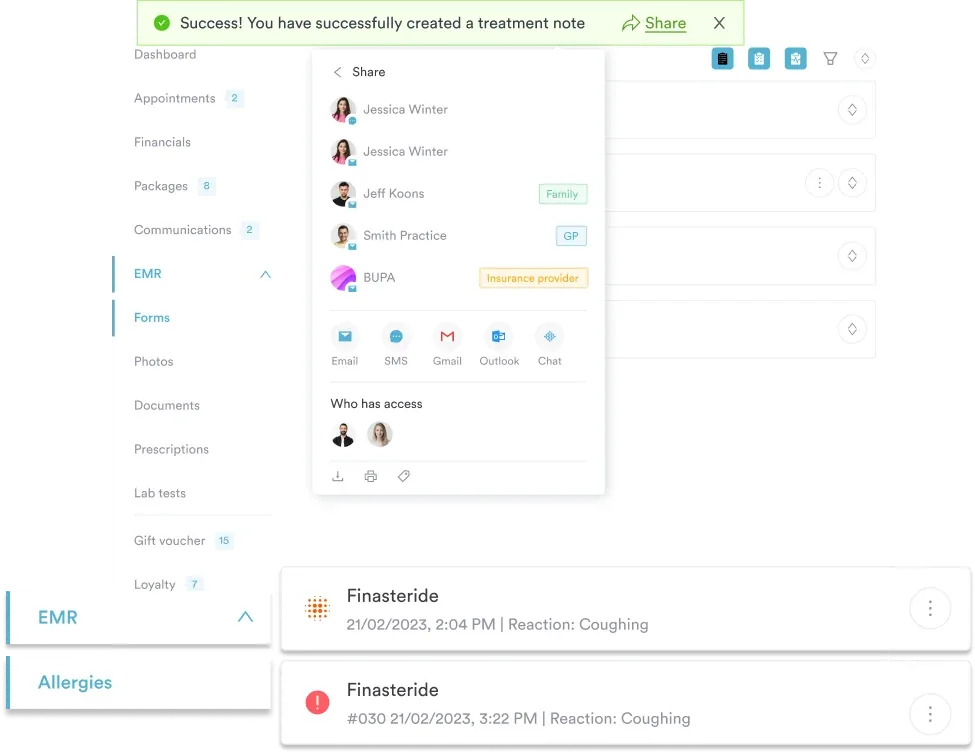
Practice management software like Pabau closes that handover. Our claims management software puts ICD-10 search inside the clinical encounter. A clinician or coder can look up S01.341A, confirm the description and billable status, then attach it to the claim. No second application is involved. The code that goes on the note is the code that goes on the claim.
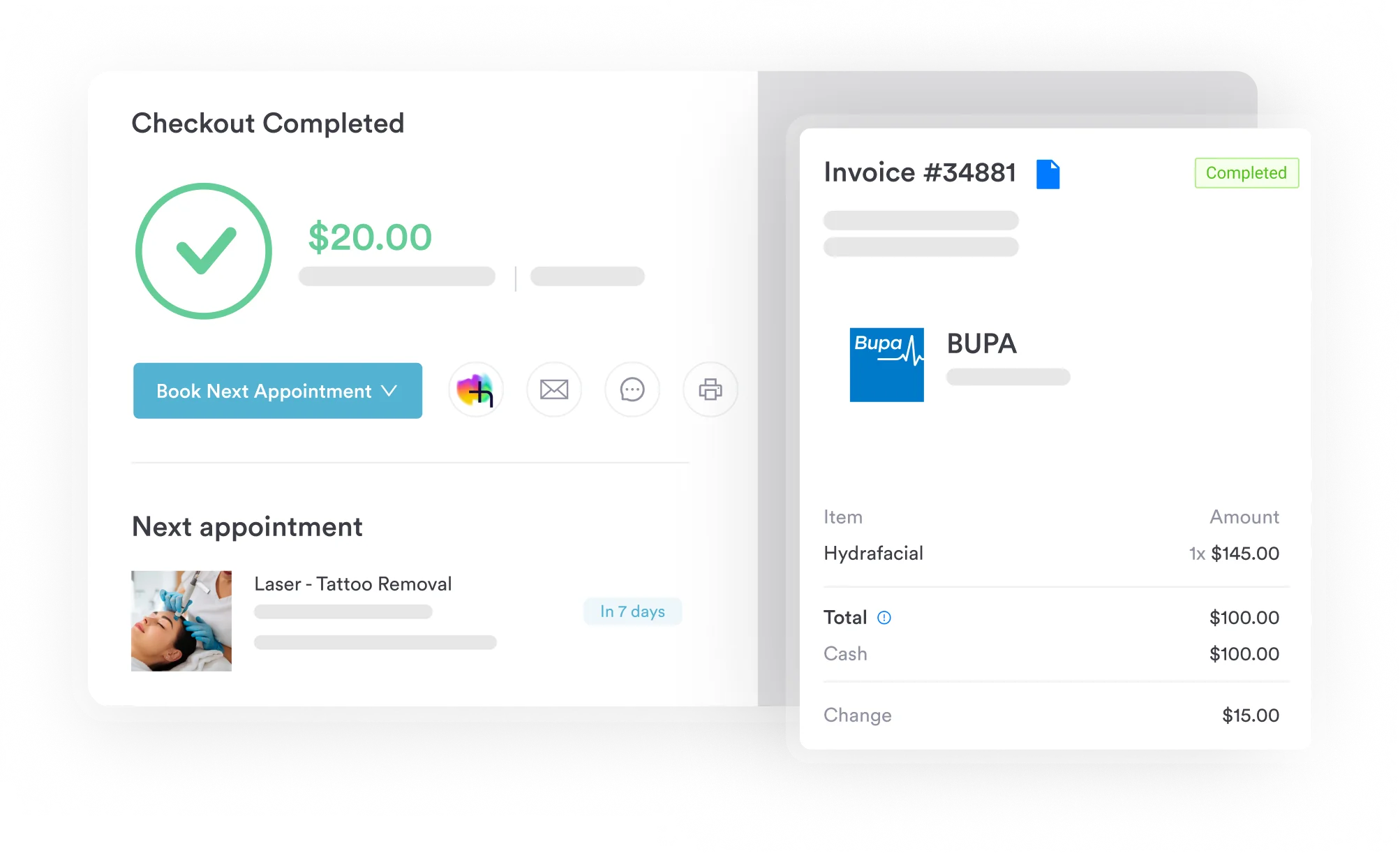
Digital clinical forms can then prompt for the four elements S01.341A needs: wound type, foreign body status, laterality, and encounter type. When the form captures those fields, the code follows from the documentation instead of a retrospective review. Injury-heavy settings feel this most, which is why sports medicine practices tend to build the prompts into the note template itself.

Attaching the code at the point of care is also what keeps a claim clean weeks later, when nobody remembers the visit. That is the same discipline behind HIPAA-compliant practice software and behind any integrated practice management platform worth adopting.
Configure your ear injury note template with a mandatory foreign body field and a laterality dropdown. The two elements most often missing are then captured before the note is signed. Code selection takes seconds instead of a call back to the clinician.

Pabau connects diagnosis code selection to claim submission in one workflow, so injury codes are never retyped between a reference site and a billing system. See how it works for your practice.

S01.341A rewards a coder who gets four things right at once: mechanism, foreign body, laterality, and 7th character. Miss one and the claim still goes out, just on a vaguer code that pays less and reads worse under audit.
The fix is upstream of the coder. Build the four elements into the note template for ear injuries. The correct code then becomes the obvious one, not a judgment call made days later.
Want the code to travel from the note to the claim untouched? Book a demo and see how Pabau handles injury code documentation for your practice.

Coding the follow-up visit for a glass injury? W25.XXXD shows how the same 7th character logic plays out on an external cause code.
Need the external cause code for a constriction injury? W49.09XD walks through documentation and sequencing for the W49 range.
Billing a purely diagnostic shoulder procedure? CCSD code W8820 covers the correct billing code for a diagnostic shoulder arthroscopy with no therapeutic work.
Comparing tools for cleaner claims? Pabau vs. Waystar sets the two claims platforms side by side on submission, tracking, and denials.
S01.341A is the billable ICD-10-CM code for a puncture wound with a retained foreign body of the right ear. The 7th character A marks the initial encounter, meaning active treatment. It sits in category S01 and is valid for FY2026.
Yes. S01.341A is billable and valid for HIPAA-covered transactions in FY2026. The parent code S01.341 is not billable on its own. Submitted without the A, D, or S extension, it will be rejected.
The 7th character A marks the initial encounter, when the patient is still in active treatment. For S01.341A that covers foreign body removal, wound irrigation or closure, and the first assessment.
Initial encounter (A) applies while active treatment continues. Subsequent encounter (D) applies to routine follow-up, such as wound checks or suture removal. Sequela (S) applies when the visit treats a late effect of the healed injury, such as scarring.
S01.342A covers a puncture wound with foreign body of the left ear at the initial encounter. S01.342D and S01.342S cover the subsequent encounter and the sequela. Use S01.349A only when the record does not state which ear.
S01.341A sits in Chapter 19, which covers injury, poisoning and certain other consequences of external causes. Within that chapter it belongs to the S00-S09 block for head injuries, category S01.