

HCPCS code E0198: Water pressure pad billing guide
HCPCS code E0198 is a water pad for a standard mattress HCPCS code E0198 is the ...

Last Updated: Oct 13, 2026
J1364 is the HCPCS Level II code for injection, erythromycin lactobionate, per 500 mg.
Let Pabau's smart automation suggest the right codes, reduce claim denials, and keep your practice compliant—effortlessly.
Automate repetitive tasks and focus on what matters most—your patients.
Reduce coding errors and ensure compliance with the latest regulations.
Clean claims, fewer denials, and faster reimbursements.
Powerful insights and reporting to help your practice thrive.
HIPAA compliant SOC 2 certified GDPR-compliant Trusted by 4,000+ clinics worldwide

HCPCS Code J1364 is the Level II J-code for injection of erythromycin lactobionate, billed per 500 mg administered.
J1364 is covered under Medicare Part B as a physician-administered injectable antibiotic, and NDC reporting is required on Medicaid claims.
Billing errors most often stem from incorrect unit calculation, a missing NDC, or thin medical necessity documentation.
Practice management software like Pabau helps infusion practices submit J-code claims and track their status after submission.
HCPCS Code J1364 covers the injection of erythromycin lactobionate at a billing unit of per 500 mg. Most billing teams reach this code while confirming the right J-code for an IV antibiotic. It is billed from physician offices, outpatient infusion centers, and hospital-based infusion suites. Unit structure is where most errors start. Each 500 mg administered equals one unit billed.
Erythromycin lactobionate is the IV-only formulation of erythromycin, a macrolide antibiotic used when oral dosing is not feasible. For IV therapy practice management, accurate J-code assignment starts with confirming the administered dose. Map that dose to the correct billing unit before the claim goes out.
Erythromycin lactobionate is used when patients cannot tolerate oral antibiotics or need rapid serum levels. It is typically given in hospital infusion suites, physician offices with infusion capability, and outpatient infusion centers. Confirming who can administer IV therapy in each setting matters before you bill J1364.
Clinical indications include moderate-to-severe bacterial infections where erythromycin is the appropriate choice. Practices running an infusion program need administration protocols and documentation standards that hold up under audit. Purpose-built infusion center software keeps both in one record.
That last indication matters for billing, because prokinetic use places J1364 outside a straightforward antibiotic claim. Billing staff need a diagnosis pairing that reflects the documented clinical intent. Infection treatment and prokinetic therapy are not interchangeable on the claim.
Every J1364 claim requires a linked ICD-10 diagnosis code that establishes medical necessity. The diagnosis must be documented in the patient’s record and match what is submitted on the claim. Payers audit the J-code-to-diagnosis pairing, and mismatches are a leading cause of denial.
For gastroparesis use, verify individual payer coverage policies before billing J1364. Some commercial payers and Medicare contractors apply medical necessity criteria specific to the prokinetic indication. Document the clinical rationale explicitly in the patient record.
National Drug Code (NDC) reporting is required on Medicaid claims for drug products, and it is strongly recommended on Medicare Part B claims. The NDC maps the specific product dispensed back to the HCPCS J-code on the claim. Pull the NDC from the product label or pharmacy record at the time of administration, never from memory.
Confirm every NDC against the current FDA NDC Directory before submission. NDC numbers change when a labeler updates packaging or a product is discontinued. Submitting an outdated NDC will trigger a claim edit.
On Medicaid claims, report the NDC in the 11-digit format using 5-4-2 segments. Pair it with the quantity and the unit of measure qualifier in the appropriate claim field. Use F2 for international units, ML for milliliters, GR for grams, or UN for units. State Medicaid programs vary here, so confirm the format with each state agency.
Under Medicare Part B, physician-administered injectable drugs including J1364 are generally paid using the Average Sales Price (ASP) methodology. The standard rate is ASP plus 6% in non-facility settings such as physician offices and outpatient infusion centers. Hospital outpatient departments are paid under the Outpatient Prospective Payment System (OPPS) instead.
CMS updates ASP pricing quarterly. Erythromycin lactobionate has low market volume next to widely used biologics, so its rate can move more noticeably between quarters. Check the current quarter in the CMS ASP drug pricing files before you build a fee schedule. The Physician Fee Schedule lookup is the wrong tool here, because it does not carry drug payment limits. Claims management software that reflects current payer rates reduces the risk of under-billing. Revenue cycle management reporting separates claims that were denied from claims nobody submitted. Revenue cycle management reporting separates claims that were denied from claims nobody submitted.
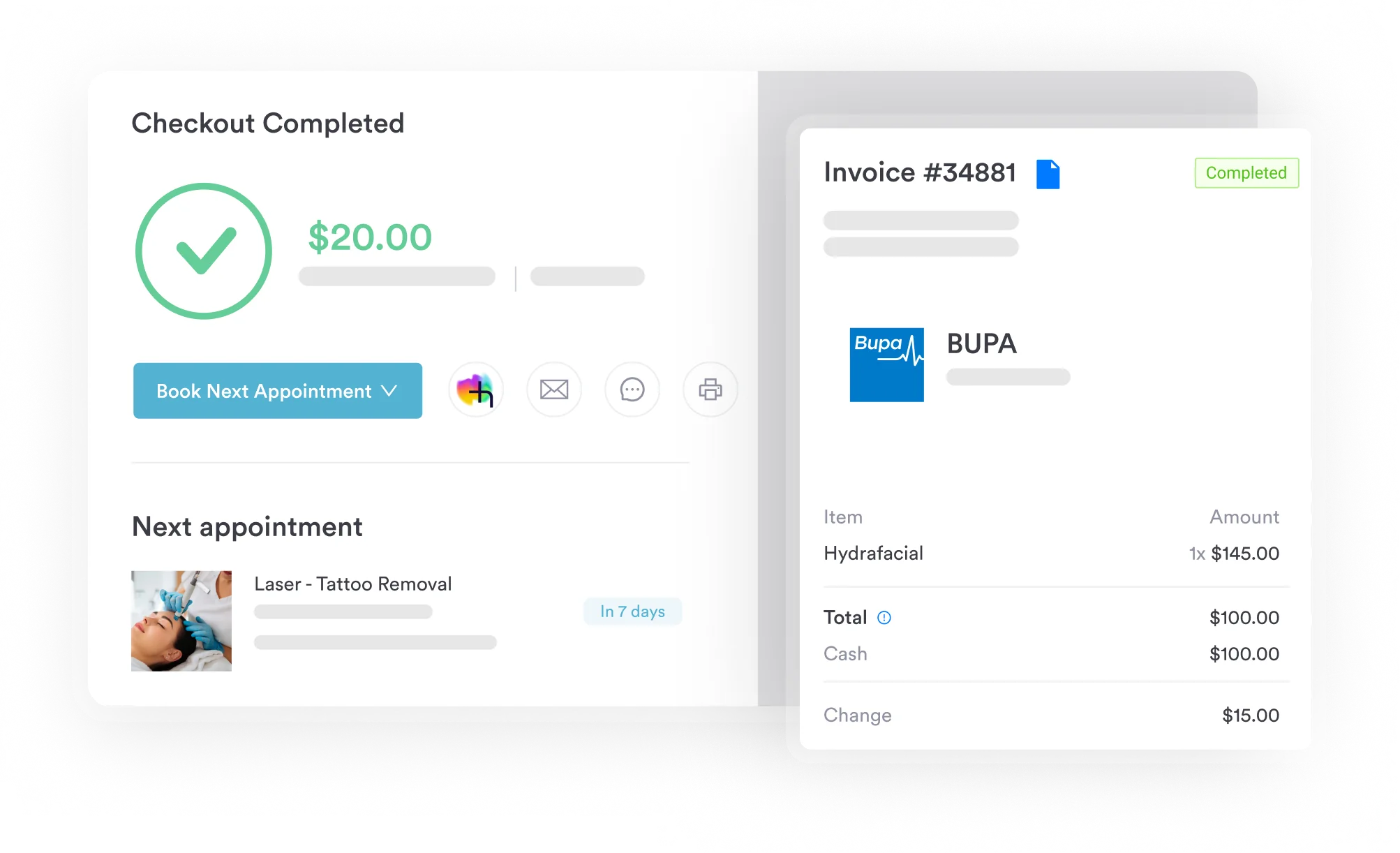
Practices running infusion alongside other services get the most from an EMR built for IV therapy. The administration record and the claim then draw on the same data. When the administered dose is charted electronically, the coder reads the dose from the note instead of chasing a paper log.
Buy-and-bill applies when the practice purchases the drug directly, administers it, and then bills the payer for both the drug and its administration. For J1364 that means acquiring erythromycin lactobionate from a wholesaler and submitting the J-code with the matching administration CPT code. Practices opening an IV therapy practice should map this workflow before the first patient.
Mobile programs add another variable. The billing workflow for mobile IV therapy turns on place-of-service coding, because the claim must reflect where the infusion actually happened. That single field changes the payment rate applied.
Connecting the clinical record to the billing system through EHR integration cuts the transcription errors that creep in between the note and the submitted claim. The unit count then comes from the charted dose rather than a coder’s arithmetic.
Incomplete documentation is the most common reason J1364 claims fail on audit. CMS and commercial payers expect the medical record to support every element of the claim on its own. That record has to exist before the claim goes out, not be reconstructed afterward.
HIPAA-compliant documentation practices are both a regulatory requirement and the foundation for surviving an audit. Structured medical forms that capture every billing element at the point of care remove the need to chase charts later.
The prokinetic indication needs more on the chart. Include the K31.84 diagnosis, the rationale for choosing IV erythromycin over standard prokinetic agents, and any prior treatment failure or contraindication. Some payers require prior authorization for off-label use.
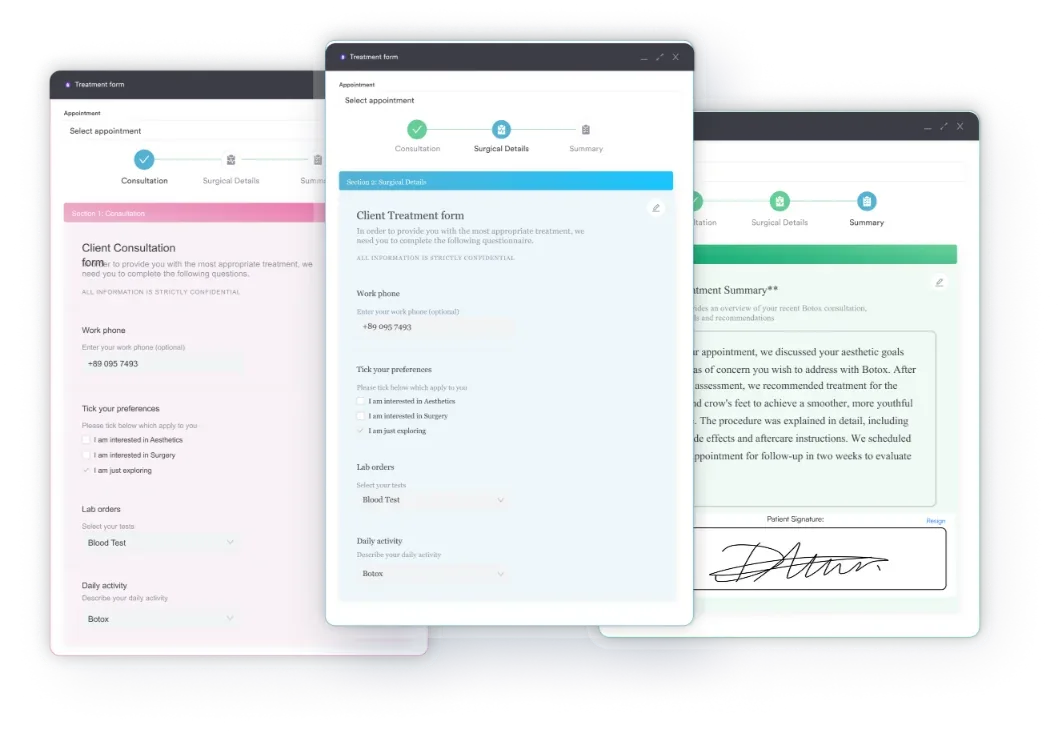
Prompting clinicians to complete every required field at administration time is what stops audit failures. Digital intake and treatment forms can make those fields mandatory before the note is signed.
Audit your J1364 claims quarterly. Pull ten claims and check each one for the 11-digit NDC, the correct unit count, a linked ICD-10 code, and a named administering clinician. Catching a systematic error across ten claims costs far less than finding it during a payer audit.
Most J1364 errors are preventable, and they cluster in three places. Unit calculation, NDC reporting, and administration code pairing account for the bulk of denials. Each one has a straightforward fix once the team knows what to look for.
J1364 is billed per 500 mg. A patient who receives 1,000 mg needs 2 units billed, and 500 mg is 1 unit. A 250 mg dose works out at 0.5 units, though some payers require rounding to a whole unit. Confirm the rounding policy with each payer before billing a fractional dose.
The most common error is billing 1 unit regardless of the dose given. At a typical dose of 500 mg to 1,000 mg every six hours, a single infusion episode can legitimately require 1 to 2 units. Check the administered dose against the physician order before assigning units.
Medicaid claims submitted without an NDC reject outright in most states. Medicare Part B claims can process without one, but they may be flagged for post-payment audit. The NDC must be the 11-digit code from the product actually administered, in 5-4-2 segments, for example 00409-6482-01.
Using a 10-digit NDC is an audit risk, as is reporting the NDC of a product other than the one given. Capture the NDC from the label at administration and record it in the note immediately. Where a practice stocks both the branded vial and a generic, the NDC on the claim has to follow the vial.
J1364 covers the drug only, so the infusion itself is billed separately. Use CPT 96374 for an IV push of a single or initial drug. Use CPT 96365 for an infusion up to one hour, then CPT 96366 for each additional hour. Billing J1364 with no administration code leaves revenue behind and can trip a claim edit at payers that expect both.
Verifying the code before billing prevents misassignment between adjacent antibiotic and injectable codes. The table below covers the codes most often confused with J1364, along with those that show up in the same infusion billing context. Other single-drug J-codes such as J0153 and J0153 and J0600 follow follow the same unit logic.
J3490 is the distinction that costs practices money. Erythromycin lactobionate has its own code, so submitting it as an unclassified drug is an error. Some payers pay J3490 claims, but they invite scrutiny and require the drug name and dose written on the claim form. Always use the specific code where one exists.
In most infusion practices the J1364 claim starts life in three places at once. The dose sits in the clinical note, while the NDC sits on a vial log or in pharmacy records. The claim itself is keyed into a separate billing system. Every hand-off is a chance for the unit count or the NDC to drift.
Practice management software like Pabau keeps the administration note, the diagnosis, and the claim in one patient record. Your team still decides the code, the units, and the NDC that belong on the claim. Pabau then submits it and tracks its status, so a rejection surfaces while the encounter is still fresh.
That matters most for drugs like erythromycin lactobionate, where volume is low and each claim carries real value. Our comparison of claims tools covers how the submission and tracking workflow differs between platforms.

Pabau keeps your administration notes and your billing in one record, then helps you submit J-code claims and track their status after submission. Rejections surface early, so fewer of them turn into write-offs.

J1364 is a simple code with three expensive failure points. Get the unit math, the NDC, and the medical necessity documentation right and the claim pays without argument. Miss one of them and the money comes back months later, with a request for records attached.
The fix is structural rather than educational. Capture the dose, the lot, and the NDC at the moment of administration, and the coder never has to reconstruct the encounter. Knowing the code is the easy part.
If your practice bills physician-administered drugs regularly, that discipline is worth building into the software rather than the checklist. Book a demo to see how Pabau connects infusion records to claim submission and status tracking.

Billing another single-drug J-code? J0153 walks through unit calculation and documentation for another Part B injectable.
Need the same detail for a different drug? J0600 covers coverage rules, units, and the NDC reporting payers expect.
Coding an osteoarthritis diagnosis too? Erosive osteoarthritis coding guide covers the inflammatory osteoarthritis subtype affecting hand joints within the M15 code family.
Coding a hip osteoarthritis case? Hip osteoarthritis coding guide covers the billable FY2026 code for bilateral hip osteoarthritis in the musculoskeletal chapter.
Coding a thumb joint case? Thumb osteoarthritis coding guide covers billable status, hierarchy, and related codes for wear-and-tear arthritis in both thumb joints.
HCPCS Code J1364 is the Level II billing code for injection of erythromycin lactobionate, billed per 500 mg administered. Physician offices and outpatient infusion centers use it to bill Medicare, Medicaid, and commercial payers for intravenous erythromycin.
J1364 is billed per 500 mg. A dose of 1,000 mg equals 2 units, and a dose of 500 mg equals 1 unit. Divide the total administered dose in milligrams by 500, then confirm the rounding policy for fractional doses with each payer.
Medicare Part B generally covers J1364 as a physician-administered injectable antibiotic, paid at ASP plus 6% in non-facility settings. Coverage depends on documented medical necessity and remains subject to payer policy and local coverage determinations.
Products mapped to J1364 include Hospira’s Erythrocin Lactobionate-IV 500 mg vial, NDC 00409-6482-01. Generic 500 mg vials come from labelers such as Gland Pharma and Armas Pharmaceuticals. NDC numbers change with packaging, so pull the number from the label at administration and verify it in the FDA NDC Directory.
You need the ICD-10 diagnosis code establishing medical necessity, plus the drug name and the administered dose in milligrams. The record must also show the IV route, the 11-digit NDC, and the infusion start and stop times. Name the administering clinician and their credentials.



