

ICD-10 Code S42.444P: Medial epicondyle fracture, right humerus
ICD-10 Code S42.444P: full descriptor and code validity ICD-10 Code S42.444P car...

Last Updated: Oct 13, 2026
Billable Code Specific Code
J42 is the billable ICD-10-CM code for unspecified chronic bronchitis.
Let Pabau's smart automation suggest the right codes, reduce claim denials, and keep your practice compliant—effortlessly.
Automate repetitive tasks and focus on what matters most—your patients.
Reduce coding errors and ensure compliance with the latest regulations.
Clean claims, fewer denials, and faster reimbursements.
Powerful insights and reporting to help your practice thrive.
HIPAA compliant SOC 2 certified GDPR-compliant Trusted by 4,000+ clinics worldwide

ICD-10 Code J42 is the billable ICD-10-CM diagnosis code for unspecified chronic bronchitis, effective October 1, 2025 (2026 edition).
J42 includes chronic bronchitis NOS, chronic tracheitis, and chronic tracheobronchitis as official inclusion terms.
J42 cannot be coded alongside chronic asthmatic bronchitis (J44.-) – Excludes1 is an absolute prohibition, not a guideline.
Pabau’s claims management software and structured patient records help clinicians document the specificity needed to support J42 over J44 and avoid claim denials.
J42 is a billable, specific ICD-10-CM diagnosis code for unspecified chronic bronchitis. It sits within the J40-J4A category block (chronic lower respiratory diseases) and is valid for reimbursement on inpatient and outpatient claims for the 2026 fiscal year. The CDC/NCHS ICD-10-CM web tool confirms J42 as a reportable code with no additional characters required.
Every code in the J40-J4A block is billable on its own, including J40. The same specificity logic applies to symptom-only codes:
Inclusion terms in ICD-10-CM function as official synonyms. When a provider documents any of the following, J42 is the appropriate code. Coders do not need to see the words “unspecified chronic bronchitis” verbatim.
None of these inclusion terms require a separate code. All three map directly to J42 in the ICD-10-CM tabular list, confirmed by the AAPC Codify ICD-10-CM lookup and the official NCHS tabular list.
The J42 excludes notes are where most claim errors originate. ICD-10-CM uses two distinct exclusion types, and they carry different coding implications.
Every row in this table is an Excludes1 note under CMS ICD-10-CM Official Guidelines: J42 has no Excludes2 relationship with any code. Two conditions on an Excludes1 list can never coexist. If the note mentions any obstructive, asthmatic, or emphysematous component, or a specified sputum character, the coder moves to J44 or J41 instead of J42.
There is no “softer” version of this rule for J42. Unlike Excludes2 notes elsewhere in ICD-10-CM, which allow two conditions to be reported together when both are independently documented, none of the six excluded codes above can ever appear on the same claim as J42. When documentation is ambiguous, query the provider rather than default to J42.
A GP practice platform keeps respiratory patients on schedule for the checks their diagnosis codes call for.
Coders frequently face the J42 vs J44 choice when a patient presents with a productive cough and a history of respiratory complaints. The critical differentiator is whether the provider documents an obstructive component. Without it, J42 applies. With it, J44 applies and J42 is excluded.
The WHO ICD-10 browser classifies both J42 and J44 under chronic lower respiratory diseases, but places them in distinct clinical categories. Clinically, chronic bronchitis is defined in the pulmonology literature as a productive cough lasting at least three months per year for at least two consecutive years without an obstructive component.
That definition is a clinical guideline, not an ICD-10-CM rule. Code selection depends on what the provider documents, not on whether the patient meets that clinical threshold.
When the provider note says ‘chronic bronchitis’ and the patient has a prior COPD diagnosis on file, query the provider before coding J42. Historical diagnoses on the problem list can affect current-encounter coding if the condition is still active and relevant to the visit.
Understanding where J42 sits in the code hierarchy helps coders choose the right level of specificity. The J40-J4A block contains several bronchitis codes that are often confused. ICD-11’s CA22 classifies the same obstructive picture under a different structure, a useful cross-check for practices that track both code sets.
Claim denials for J42 almost always trace back to the same issue: the provider note doesn’t clearly establish that the bronchitis is chronic rather than acute. Payers applying medical necessity edits expect the record to support the code, not just contain the word “bronchitis.”
Use digital clinical forms that prompt providers to capture each required element at the point of encounter rather than correcting the record during coding review. This matters most in high-volume settings like general practice, where family physicians managing chronic respiratory conditions alongside dozens of other diagnoses benefit from software built for that pace. Payment posting from a remittance file is faster than manual entry and keeps the adjustment reasons attached.
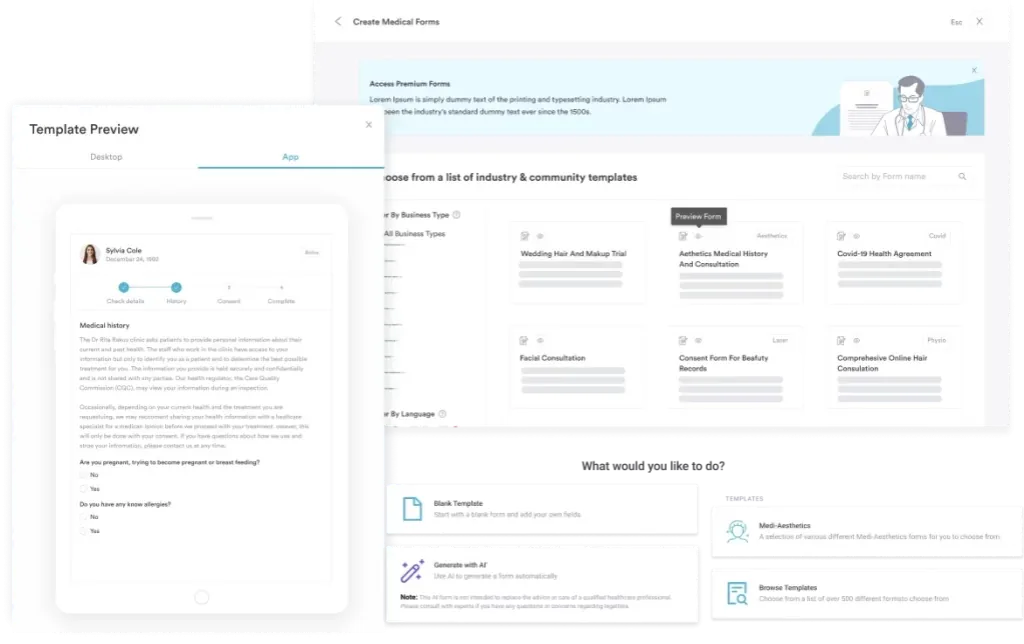
The record must support all of the following to sustain J42 on audit. The same principle applies to J06.9: coders must confirm the infection is genuinely unspecified rather than defaulting to it when a more specific code is supported.

Pabau’s structured clinical records and integrated workflows help practitioners capture the diagnosis specificity that coders need, reducing claim rework and denial rates across respiratory and other chronic condition coding.

Three error patterns account for the majority of J42 denials and audits. Each maps back to a misreading of the exclusion notes or missing documentation that should have triggered a provider query.
The ICD-10-CM Official Guidelines for Coding and Reporting, maintained by CMS and NCHS, govern sequencing and selection for J42. These are the principles coders apply at primary care coding workflows and specialist practices alike.
Coding accuracy for J42 lives or dies at the point of documentation. By the time a coder reviews a note, the documentation is fixed. Practices that capture the right clinical detail during the encounter avoid provider queries, reduce denial rework, and shorten the claim cycle.
Pabau’s structured patient records give providers a consistent framework for capturing chronicity, associated conditions, and obstructive status at the point of care. Rather than relying on free-text notes that coders must interpret, structured templates prompt the specific data points that determine whether J42 or J44 applies.
Pabau’s claims management software then connects that clinical documentation to the billing workflow, so coded diagnoses flow directly to claims without re-entry. Together with EHR integration and workflows built around HIPAA-compliant clinical documentation, Pabau supports the documentation-to-billing chain that coding accuracy depends on.
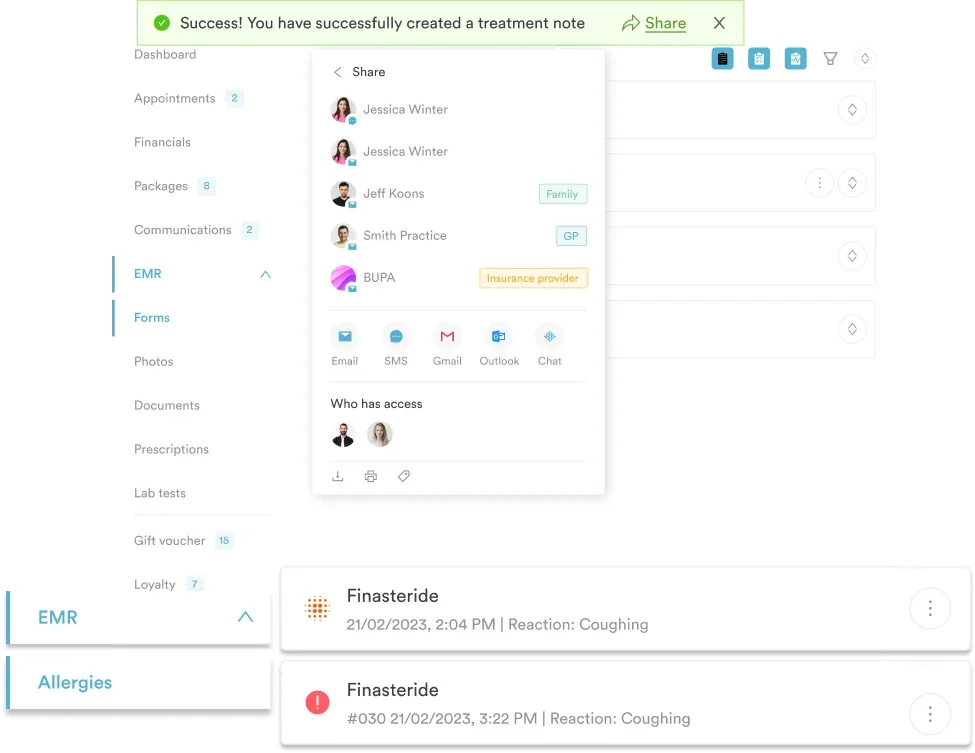
Run a quarterly audit of J42 claims against your active COPD patient list. Any J42 claim for a patient with an active J44 diagnosis in the same period is a potential Excludes1 violation. Catching these internally is faster and less costly than responding to a payer audit.
ICD-10 Code J42 is straightforward when the documentation is clear. The Excludes1 relationship with J44 is the pivot point. Practices that capture obstructive status, COPD history, and bronchitis chronicity in structured clinical notes before claims are submitted avoid the most common denial and audit triggers.
Pabau’s structured patient records and claims management software help practices build that documentation discipline into the clinical workflow rather than relying on post-hoc corrections. To see how it works in a respiratory or primary care setting, book a demo.

Coding a different chronic condition? ICD-10 code M35.3 covers polymyalgia rheumatica billing and documentation.
Billing for respiratory equipment? HCPCS code E0482 covers cough stimulating device billing, often relevant for the same patients.
Need a broader coding reference? Our chiropractic billing cheat sheet is a free downloadable CPT and ICD-10 quick reference.
ICD-10 Code J42 is the billable ICD-10-CM diagnosis code for unspecified chronic bronchitis, effective for the 2026 fiscal year (October 1, 2025). It covers chronic bronchitis documented without further specification and without an obstructive component, and includes chronic bronchitis NOS, chronic tracheitis, and chronic tracheobronchitis as official inclusion terms.
Yes, J42 is a billable, specific ICD-10-CM code that can be used as a principal or secondary diagnosis on both inpatient and outpatient claims. No additional characters are required.
J42 applies when chronic bronchitis is documented without an obstructive component. J44 applies when COPD, chronic obstructive bronchitis, or asthmatic bronchitis is documented. The two codes cannot be reported together on the same claim due to the Excludes1 note: if J44 criteria are met, J42 is excluded entirely.
The provider note must explicitly document chronic bronchitis (using the word “chronic” or an equivalent), confirm the absence of an obstructive component or COPD diagnosis, and establish that the condition is relevant to the current encounter. A historical entry on the problem list alone is insufficient if the condition was not addressed at the visit.
J42 has only Excludes1 notes; there is no Excludes2 relationship for J42. The Excludes1 note prohibits coding J42 alongside chronic asthmatic bronchitis, chronic obstructive bronchitis, chronic emphysematous bronchitis, COPD NOS, and bronchiolitis obliterans (all classified under J44), as well as simple or mucopurulent chronic bronchitis (J41.-). None of these can ever appear on the same claim as J42.
When J42 is the principal inpatient diagnosis, it maps to MS-DRGs within the chronic lower respiratory disease group (typically DRGs 190-192, depending on complication and comorbidity level). Specific DRG assignments and reimbursement amounts vary by payer and fiscal year; verify current groupings against the CMS MS-DRG definitions manual for the applicable year.




