HCPCS code E0198: Water pressure pad billing guide
HCPCS code E0198 is a water pad for a standard mattress HCPCS code E0198 is the ...

Last Updated: Oct 13, 2026
E0482 is the HCPCS Level II code for cough stimulating device, alternating positive and negative airway pressure.
Claim denials for durable medical equipment codes are disproportionately high compared to physician service codes.
For HCPCS Code E0482, most denials trace back to the same root causes: a missing or incomplete Standard Written Order, clinical notes that do not document the secretion-clearance failure caused by the qualifying disease, or a diagnosis code that does not appear on the LCD L33795 / Policy Article A52510 covered list.
Let Pabau's smart automation suggest the right codes, reduce claim denials, and keep your practice compliant—effortlessly.
Automate repetitive tasks and focus on what matters most—your patients.
Reduce coding errors and ensure compliance with the latest regulations.
Clean claims, fewer denials, and faster reimbursements.
Powerful insights and reporting to help your practice thrive.
HIPAA compliant SOC 2 certified GDPR-compliant Trusted by 4,000+ clinics worldwide

HCPCS Code E0482 describes a cough stimulating device that delivers alternating positive and negative airway pressure to simulate a natural cough.
Medicare coverage under LCD L33795 and Policy Article A52510 requires a neuromuscular disease causing significant chest wall or diaphragmatic impairment that results in an inability to clear retained secretions, plus a Standard Written Order — both parts must be met or the claim is denied.
E0482 is billed through DMEPOS suppliers under Medicare Part B and is on the CMS Master List of items potentially subject to prior authorization.
Pabau’s claims management software helps practices track DME orders, link clinical documentation to billing actions, and reduce claim errors for codes like E0482.
HCPCS Code E0482 identifies a cough stimulating device that delivers alternating positive and negative airway pressure. The full official descriptor is: Cough stimulating device, alternating positive and negative airway pressure. This is a HCPCS Level II code maintained by the Centers for Medicare and Medicaid Services (CMS) for billing durable medical equipment under Medicare Part B.
The device is also known as a mechanical insufflation-exsufflation (MI-E) device or insufflator-exsufflator. Philips Respironics CoughAssist is the primary branded device billed under this code. The code is active with no current termination date.
Patients with neuromuscular disease often cannot generate the expiratory flow needed to cough effectively. A natural cough requires peak flows well above 270 liters per minute. When neuromuscular weakness drops that capacity below the threshold, secretion clearance fails and respiratory complications follow.
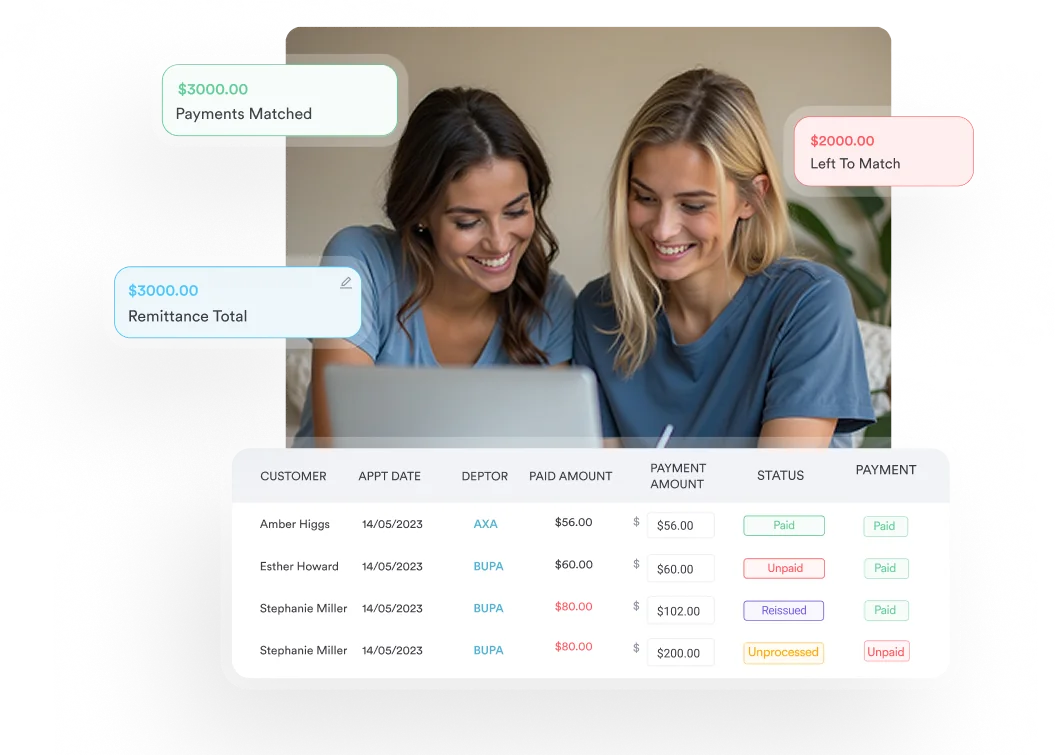
A mechanical insufflation-exsufflation device addresses this by mimicking the two-phase cough cycle mechanically. The device first inflates the lungs with positive pressure, then rapidly shifts to negative pressure, producing a high expiratory airflow that propels secretions upward. Patients with amyotrophic lateral sclerosis (ALS), muscular dystrophy, spinal muscular atrophy (SMA), and cervical spinal cord injury resulting in quadriplegia are among the primary beneficiaries. Payment for this code arrives with a remittance advice that explains any adjustment line by line.
Under LCD L33795 and Policy Article A52510, coverage turns on two things: a qualifying neuromuscular disease that is causing significant chest wall or diaphragmatic impairment resulting in an inability to clear retained secretions, and a Standard Written Order from the treating practitioner.
Coverage for HCPCS Code E0482 under physical therapy and neuromuscular care settings is governed by Local Coverage Determination L33795 (Mechanical In-exsufflation Devices) together with Policy Article A52510. Medicare Part B covers the device only when both criteria below are met. If either is missing, the claim is denied as not reasonable and necessary.
CMS requires that both conditions be present at the time of claim submission. Note that LCD L33795 and Policy Article A52510 do not set a numeric peak cough flow (PCF) or maximum expiratory pressure (MEP) threshold — those figures appear in clinical literature and manufacturer guidance, not in the CMS coverage rule.
Verify that LCD L33795 and Policy Article A52510 remain active and have not been revised before relying on this guidance, as CMS does update LCDs periodically.
HCPCS Code E0482 appears on the CMS DMEPOS Master List of items potentially subject to prior authorization (PA) conditions of payment.
Appearing on the Master List does not automatically mean PA is required for every claim, but DMEPOS suppliers must check with the applicable DME MAC (Durable Medical Equipment Medicare Administrative Contractor) for current PA requirements in their jurisdiction before submitting.
The four DME MACs (Noridian for Jurisdictions A and D, CGS Administrators for Jurisdictions B and C) each issue jurisdiction-specific guidance. Confirm the current PA trigger list with your MAC before ordering. Other respiratory DME accessories.
A patient management system reminds you when issued equipment is due for review, replacement, or return.
The following ICD-10-CM codes are recognized under Policy Article A52510 (the coding article linked to LCD L33795) as supporting medical necessity for a cough stimulating device. A covered diagnosis code alone is not sufficient — the chart must also document that the disease is causing significant chest wall or diaphragmatic impairment resulting in an inability to clear retained secretions.
Only link an E0482 claim to diagnoses explicitly covered by the active Policy Article. Do not infer coverage for unlisted codes. For the full current list, consult the CMS Medicare Coverage Database directly.
Always verify the complete covered diagnosis list against the active version of Policy Article A52510 in the CMS Medicare Coverage Database. Diagnosis codes not appearing in the article will trigger medical necessity denials regardless of clinical appropriateness, and a covered diagnosis alone does not guarantee payment if the chart does not also document the resulting secretion clearance failure.
Incomplete documentation is the primary driver of E0482 denials. Before a claim is submitted, the medical forms workflow must produce a chart that includes every item below. Missing even one component gives the DME MAC grounds for denial or recoupment on post-payment review.
Good digital intake forms and structured clinical documentation tools reduce the chance of a checklist item being overlooked. Consider building a checklist into your referral and order workflow so nothing ships incomplete. Patients using a tracheostomy alongside their MI-E device may also need airway filtration billed under A4481, which carries its own separate documentation requirements.
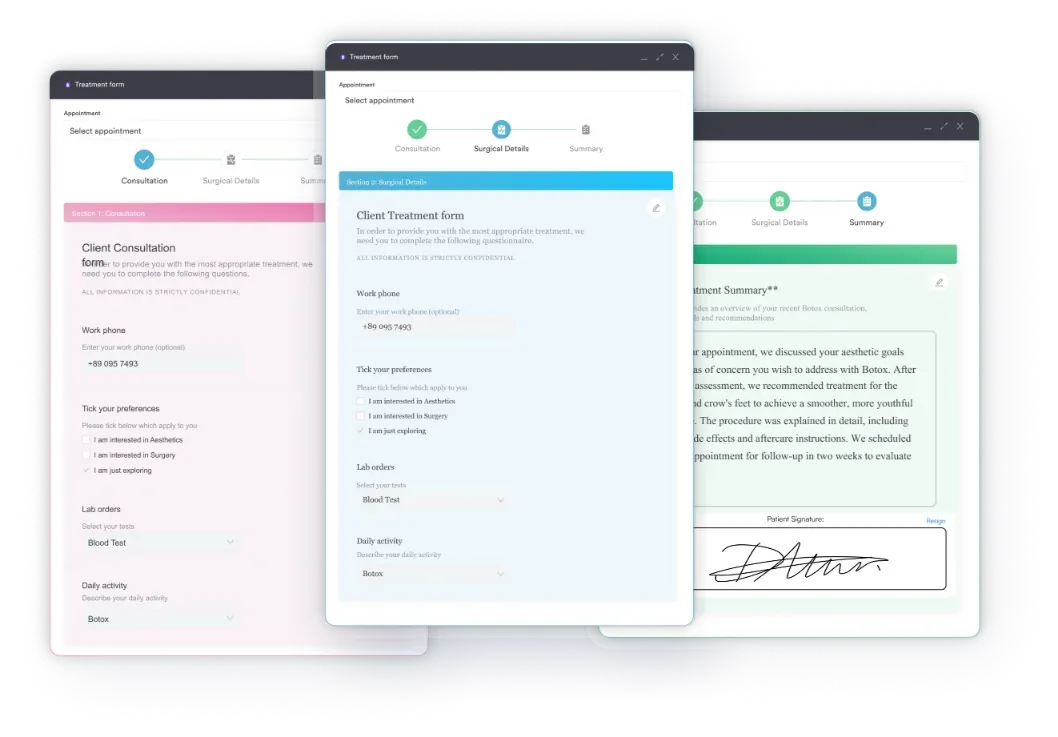
For practices that manage patient records across multiple referral sources, linking the Standard Written Order, diagnosis data, and secretion-clearance clinical notes into a single patient file reduces retrieval time during audits.
Pabau’s documentation tools let clinical teams capture referral details, diagnosis data, and clinical notes in one place, making it straightforward to assemble the complete documentation package before a claim goes to the DMEPOS supplier.
Build a DME documentation checklist into your referral workflow for E0482. Flag the order as incomplete until the Standard Written Order, the supporting diagnosis, and the secretion-clearance-failure documentation are all attached. A missing SWO or undocumented secretion-clearance failure is one of the most common reasons these claims come back denied.
HCPCS Code E0482 is billed exclusively through Medicare-enrolled DMEPOS suppliers. The treating physician does not bill E0482 directly. This distinction matters because the supplier assumes responsibility for meeting all LCD documentation requirements before submitting the claim.
Good practice management software features that support DME referral tracking keeps the clinical team and the supplier working from the same referral record.
Key billing rules to follow:
Practices that coordinate DME referrals benefit from using claims management software that links the clinical documentation directly to the billing workflow. This prevents situations where a claim goes to the supplier without the required SWO or secretion-clearance documentation attached. For a broader look at current billing data, the CMS DMEPOS fee schedule provides free reference data sourced directly from CMS.

Pabau links clinical notes, referral orders, and diagnosis data in one platform so your team can hand off complete documentation packages to DMEPOS suppliers without the last-minute scramble.

The Medicare allowable for HCPCS Code E0482 varies by geographic region and is updated annually by CMS. The table below shows representative national figures.
Always verify current rates using the CMS fee schedule lookup tool for the specific MAC jurisdiction and calendar year before quoting reimbursement to patients or referring providers. Rates are subject to geographic adjustment multipliers that can raise or lower the national average by 10% or more in high-cost or rural areas.
For exact 2026 rates, download the current DMEPOS fee schedule file directly from the CMS DMEPOS fee schedule page.
E0482 does not stand alone. Several companion codes are billed alongside it for the accessories and supplies that make the device functional. Understanding the distinctions between these codes matters for prescription management workflows and prevents unbundling errors. The same replacement-versus-initial-issue distinction applies to other respiratory DME accessories.
A7020 shares E0482’s LCD L33795 / Policy Article A52510 coverage rules, while A7025 and A7026 fall under E0483’s separate LCD L33785 / Policy Article A52494 — billing an A7025 or A7026 claim against E0482’s coverage rules is a common unbundling error. Confirm current descriptors against the CMS HCPCS code file before submitting a claim.
This section covers the denial patterns that recur most often on E0482 claims.
Practices that use HIPAA-compliant documentation practices and structured referral workflows catch most of these errors before the order leaves the practice. Standardizing the documentation package at the point of order creation is more effective than auditing claims after denial.
Run a monthly audit of E0482 denials against this error list. Track which denial reason code (CO-50 medical necessity, CO-4 incorrect modifier, CO-16 missing information) appears most often. The pattern tells you which step in your referral workflow needs a process fix, not just a resubmission.
HCPCS Code E0482 denials are predictable. Most trace to the same causes: a missing or incomplete Standard Written Order, clinical notes that do not document the secretion-clearance failure caused by the qualifying disease, or a diagnosis code that does not appear on the LCD L33795 / Policy Article A52510 covered list.
Fixing those upstream in the referral workflow eliminates the bulk of rejections before a claim ever reaches the DME MAC.
Pabau’s claims management software links clinical notes, referral orders, and diagnosis data in one platform, so documentation packages go to DMEPOS suppliers complete and audit-ready. To see how the workflow fits your practice, book a demo with the team.

Billing other neuromuscular DME accessories? Our billing guide for A4560 covers the replacement-only billing rules for neuromuscular electrical stimulators, which share similar documentation requirements with E0482.
Coding an open finger fracture? ICD-10 code S62.601B covers an unspecified finger open fracture at the initial encounter for Gustilo type I or II.
Coding an unspecified thumb dislocation? ICD-10 code S63.106A covers an unspecified thumb dislocation at the initial encounter until laterality is documented.
HCPCS Code E0482 is a durable medical equipment billing code for a cough stimulating device that delivers alternating positive and negative airway pressure to simulate a natural cough. It is used to bill Medicare and other payers for mechanical insufflation-exsufflation (MI-E) devices such as the Philips Respironics CoughAssist, which are prescribed for patients with ALS, muscular dystrophy, spinal cord injury, and other neuromuscular conditions that impair effective airway clearance.
Medicare covers E0482 under LCD L33795 and Policy Article A52510 when two criteria are both met: the beneficiary has a neuromuscular disease (from the ICD-10-CM list in Article A52510) that is causing significant chest wall or diaphragmatic impairment resulting in an inability to clear retained secretions, and a complete Standard Written Order (SWO) is on file. If either criterion is not met, the claim is denied as not reasonable and necessary. The LCD does not set a numeric peak cough flow or maximum expiratory pressure threshold — those figures come from clinical literature and manufacturer guidance, not the CMS coverage rule.
E0482 appears on the CMS DMEPOS Master List of items potentially subject to prior authorization conditions of payment. Whether PA is actually required for a specific claim depends on the DME MAC jurisdiction covering the beneficiary’s residence. DMEPOS suppliers must verify current PA requirements with the applicable MAC (Noridian or CGS Administrators) before dispensing the device, as billing without required PA approval makes the claim non-covered with no appeal path.
Required documentation includes a complete Standard Written Order (SWO), a covered ICD-10-CM diagnosis from LCD L33795 / Article A52510, clinical notes documenting that the qualifying disease is causing chest wall or diaphragmatic impairment with resulting secretion clearance failure, and a face-to-face evaluation note. CMNs are no longer part of the requirement: CMS discontinued them CMS-wide for dates of service on or after January 1, 2023, so the SWO and chart documentation above now satisfy that role. Prior authorization approval is still required where mandated by the applicable DME MAC.
E0482 describes a cough stimulating device (mechanical insufflation-exsufflation device) that uses alternating positive and negative airway pressure to simulate a cough. E0483 describes a high frequency chest wall oscillation system that applies rapid oscillatory pressure to the chest wall to loosen secretions. The two codes describe distinct clinical mechanisms, are governed by separate LCDs (L33795 for E0482, L33785 for E0483) and Policy Articles (A52510 and A52494 respectively), and are not interchangeable.
Covered ICD-10-CM codes under Policy Article A52510 include G12.21 (ALS) and other G12.2x motor neuron disease codes, G12.0, G12.1, G12.8, and G12.9 (spinal muscular atrophies), G71.00–G71.09 (muscular dystrophies), G70.01 (myasthenia gravis with exacerbation), the specific multiple sclerosis codes G35.A, G35.B0–B2, G35.C0–C2, and G35.D (the unspecified G35 code alone is no longer sufficient for MS claims as of October 2025), and the quadriplegia codes G82.50–G82.54. Chronic respiratory failure codes such as J96.10 are not on the covered list. Always cross-reference the complete covered diagnosis list in the active version of Article A52510 before submitting a claim, as the list can be updated by CMS.