GLP-1 diet plan
A GLP-1 diet plan is a structured eating framework for patients taking semagluti...

2
Last Updated: Oct 13, 2026

No single blood test for depression exists: current diagnosis relies on symptom-based evaluation using DSM-5 criteria, supported by lab tests that rule out medical conditions.
Standard lab panel includes thyroid function, vitamin D, B12/folate, CBC, iron studies, and inflammatory markers such as CRP.
Serotonin cannot be measured in peripheral blood to reflect brain chemistry, making a direct biochemical test for depression impossible with today’s technology.
Pabau’s digital forms and structured client records help mental health and psychiatry practices systematically track lab results alongside screening scores and follow-up protocols.
Most clinicians ordering labs for a patient with persistent low mood are not looking for a depression result on the printout. They are looking for a reason not to diagnose depression, specifically a treatable medical condition driving identical symptoms. That distinction shapes everything about how blood tests fit into psychiatric workups.
No validated blood test for depression exists for routine clinical use as of 2026. What does exist is a well-established panel of tests that rule out thyroid disorders, nutritional deficiencies, and inflammatory conditions that can mimic or worsen depressive episodes.
This guide explains what each test checks, what the results can and cannot tell you, and where emerging research is heading.
There is no blood test for depression that can confirm or rule out a diagnosis on its own. According to MedlinePlus, depression screening tests are questionnaires used by healthcare providers to identify people who may need further evaluation. Blood tests sit alongside that process, not above it.
The reason is biological. Major depressive disorder (MDD) involves complex changes in neurotransmitter regulation, neural circuit activity, and stress response systems. No single measurable biomarker in peripheral blood captures that complexity reliably enough to serve as a diagnostic marker in clinical practice.
What blood tests do achieve is exclusion. Thyroid disorders, anemia, vitamin D deficiency, and B12 deficiency all produce depressive symptoms. A clinician ordering a blood test for depression workup is systematically eliminating these alternatives before a psychiatric diagnosis is made or treatment escalated.
Diagnosing depression follows a structured clinical process, not a single test result. Understanding where blood work fits requires a clear picture of that process.
Effective patient care management workflows ensure screening scores and lab results are documented together, so the full clinical picture is available at every follow-up appointment. Scores recorded at each session are only useful when they sit in one place, which is what psychology practice software does.
The standard lab tests for depression workups cover four broad categories: thyroid function, nutritional markers, metabolic markers, and inflammatory markers. Some clinicians also review electrolytes, where a carbon dioxide blood test can flag acid-base imbalances behind fatigue. The table below summarizes the core panel.
Thyroid disorders are among the most common reversible causes of depressive symptoms. Hypothyroidism slows metabolism, causes fatigue, weight gain, and low mood that closely resembles major depression. Hyperthyroidism can cause anxiety, irritability, and emotional instability. A TSH test is typically the first-line screen, with T3 and T4 ordered if TSH is abnormal.
Treating an underlying thyroid condition often resolves depressive symptoms without antidepressants. This is precisely why thyroid testing is considered essential in any depression workup, not optional.
Vitamin D deficiency is associated with depressive symptoms, particularly in patients with seasonal affective disorder (SAD). The association is documented across observational studies, though the causality picture is less clear. Low vitamin D is common in populations with limited sun exposure and is worth testing in any depression presentation.
B12 and folate deficiency impair neurotransmitter synthesis and are linked to depression. NICE guidelines and NIH clinical literature both recognize folate deficiency as clinically relevant to depressive presentations. Iron deficiency causes brain fog and mood disturbance even when hemoglobin is still within the normal range, making ferritin the more sensitive marker.
The inflammation hypothesis of depression holds that elevated pro-inflammatory cytokines such as IL-6 and CRP may contribute to depressive symptoms in a subset of patients. Meta-analyses consistently show higher CRP and IL-6 in patients with depression compared to controls.
These markers are non-specific (elevated in many conditions), so a raised CRP does not diagnose depression. It does, however, support clinical decision-making about inflammation as a contributing factor.
Cortisol dysregulation via the hypothalamic-pituitary-adrenal (HPA) axis is well-documented in MDD. A morning cortisol or dexamethasone suppression test can help identify Cushing’s disease, which frequently presents with depressive symptoms, weight gain, and fatigue.
Order a fasting glucose and HbA1c alongside the standard depression panel. Undiagnosed type 2 diabetes is more prevalent than many clinicians expect in patients presenting with low mood and fatigue, and it is easily missed when the clinical focus is psychiatric.
Understanding the limits of a blood test for depression is as important as knowing what to order. Three common misconceptions persist in clinical conversations.
Clinicians dealing with burnout in healthcare teams sometimes face similar diagnostic ambiguity when differentiating burnout from clinical depression. The same principle applies: lab results inform, they do not decide.
Improving patient engagement in the diagnostic process also matters here. Patients who understand why their clinician is ordering blood tests are more likely to engage with the follow-up psychiatric evaluation, reducing the risk of diagnostic dropout.

Pabau gives mental health and psychiatry practices structured patient records that connect blood test results with PHQ scores, care plans, and follow-up protocols, keeping lab reports and clinical decisions in sync.

Research into a direct blood test for depression has advanced significantly. The most cited work comes from Northwestern University’s Feinberg School of Medicine, where researchers identified nine RNA biomarkers in peripheral blood associated with major depressive disorder.
Published in Translational Psychiatry (PMC4198533), the Redei study (2014) identified messenger RNA markers that differed significantly between patients with MDD and healthy controls. Crucially, the study also found markers capable of predicting antidepressant response, which would have substantial clinical utility for treatment planning.
For clinicians wanting a practical framework for interpreting biomarker results without overpromising, the current picture is one of genuine scientific progress with important caveats about clinical readiness.
The standard depression blood test panel does not change dramatically across subtypes, but certain presentations call for additional targeted testing.
A blood test for postpartum depression has specific hormonal dimensions. After delivery, estrogen and progesterone drop sharply. While this hormonal shift is normal, it is not uniform, and some patients are biologically more vulnerable to mood disruption from rapid hormonal change.
Clinicians assessing postpartum presentations should add thyroid function (postpartum thyroiditis affects up to 7% of women after delivery and is a common driver of postpartum mood symptoms), iron studies (significant blood loss during delivery), and a vitamin D level to the standard panel.
NHS postnatal depression guidance emphasizes that clinical screening using validated tools (Edinburgh Postnatal Depression Scale) remains the primary diagnostic method, supported by lab tests.
Vitamin D deficiency is particularly relevant in seasonal affective disorder (SAD), where reduced sunlight exposure drives both mood disruption and vitamin D depletion simultaneously. Testing 25-hydroxyvitamin D levels is clinically justified in any SAD presentation. Many clinicians in Northern European or high-latitude practices routinely test vitamin D in winter-onset depression cases.
When depression does not respond to first-line treatment, a repeat lab review is warranted to check for previously missed thyroid dysfunction, B12 decline, or newly elevated inflammatory markers. Pharmacogenomic testing via cheek swab or blood sample analyses CYP2D6, CYP2C19, and related enzyme variants that affect how antidepressants are metabolized.
Patients who are poor metabolizers may have inadequate drug levels despite standard doses. Understanding crisis intervention strategies becomes particularly relevant when patients reach this stage, as does reinforcing coping skills for depression while medication is adjusted.
Systematic depression care requires connecting several data streams: lab results, screening scores, medication records, and follow-up protocols. When these live in separate systems or on paper, continuity of care suffers.
Pabau’s mental health EMR and psychiatry practice software give practices a structured way to log blood test results alongside PHQ-9 scores, diagnostic notes, and care plans in a single patient record.
The digital intake forms can be configured to capture depression screening responses at intake, so results are immediately visible in the clinical record before the appointment begins.
The structured patient records support the kind of longitudinal tracking that depression management requires: comparing baseline PHQ-9 scores against lab values over six months, flagging when a follow-up blood test is due, and ensuring referral letters contain the complete diagnostic picture.
Pabau Scribe, our AI scribe, can also reduce documentation time after consultations, giving clinicians more time for the clinical conversation rather than the paperwork.
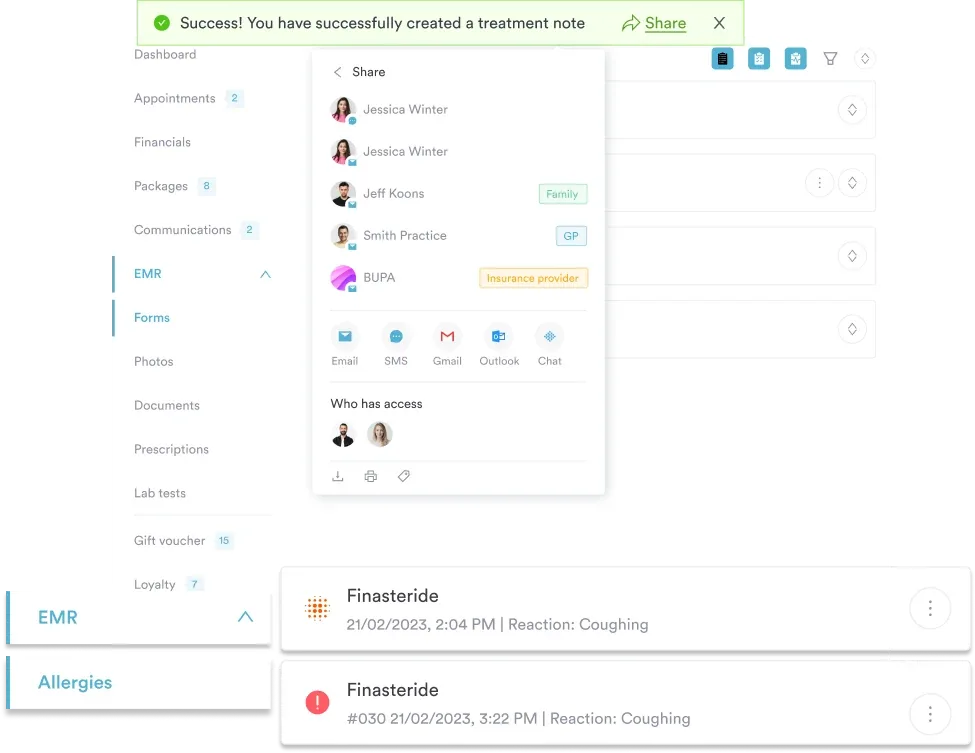
For practices where clinicians have flagged the burden of AI scribes for physicians as a factor in workflow efficiency, Pabau’s integrated approach means lab results, notes, and follow-up tasks stay connected rather than siloed.
Guidance on safer clinical documentation practices also applies here, particularly around how lab findings are worded in notes shared across a multidisciplinary team.
The absence of a definitive blood test for depression does not make blood work irrelevant to psychiatric diagnosis. It makes it a precision exclusion tool. A well-ordered panel eliminates treatable medical mimics, informs treatment decisions, and provides a baseline for longitudinal monitoring.
As biomarker research matures, practices that already have robust systems for recording and tracking lab results alongside clinical assessments will be best positioned to integrate new testing protocols. If you want to see how Pabau connects lab documentation, screening tools, and care plans in a single workflow, book a demo with the team.

Managing bipolar disorder alongside a depression workup? Bipolar Treatment Plan gives clinicians a structured framework for treatment planning.
Ready to grow your mental health practice? mental health practice marketing strategies Seven strategies help practices reach patients who need care but never receive treatment.
Supporting patients working through shame or guilt in therapy? Shame and Guilt Worksheet gives therapists a structured tool for sessions.
A blood test for depression is not a test that diagnoses depression directly. It is a panel of laboratory tests ordered during a depression workup to identify or exclude underlying medical conditions such as thyroid disorders, anemia, vitamin D deficiency, or B12 deficiency that can cause or worsen depressive symptoms. No single blood test can confirm a diagnosis of major depressive disorder.
Depression cannot currently be detected or confirmed with a blood test. Diagnosis relies on clinical evaluation using DSM-5 criteria, a psychiatric interview, and validated screening tools such as the PHQ-9. Blood tests support this process by ruling out medical conditions that mimic depression, but a normal blood panel does not exclude a depressive disorder.
Standard lab tests include thyroid function (TSH, T3, T4), complete blood count, vitamin D, B12, folate, iron studies (ferritin), fasting glucose, and inflammatory markers such as CRP. Some clinicians also order a morning cortisol to rule out Cushing’s disease. The specific panel varies by clinical presentation and patient history.
Yes. Researchers at Northwestern University identified nine RNA biomarkers in peripheral blood associated with major depressive disorder in a 2014 study published in Translational Psychiatry. Additional research is investigating inflammatory cytokine panels and metabolomic signatures. No FDA-approved or NICE-approved diagnostic blood test for depression is available for routine clinical use as of 2026, and most researchers estimate 5 to 10 years before clinical availability.
Low vitamin D levels are associated with depressive symptoms across multiple observational studies, with the link particularly consistent in seasonal affective disorder. The causal relationship is not definitively established by randomized controlled trials, so vitamin D deficiency is treated as a contributing factor rather than a diagnosis. Correcting a deficiency is straightforward and clinically worthwhile regardless of the ultimate causal question.
The DSM-5 requires five or more depressive symptoms present for at least two weeks, with at least one being depressed mood or loss of interest/pleasure (anhedonia). Symptoms must cause significant functional impairment. The NICE depression clinical guidelines align closely with DSM-5 criteria and provide a structured framework for severity classification and treatment selection in UK practice.