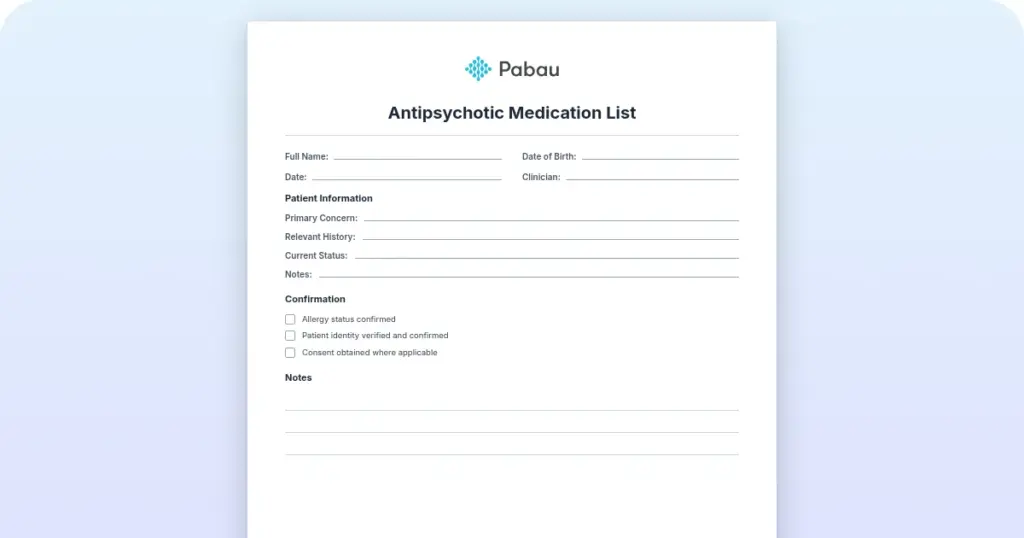
Antipsychotic medication list
An antipsychotic medication list is a structured reference that organizes psychi...

2
Last Updated: Oct 13, 2026

Shame focuses on the self (‘I am bad’) while guilt focuses on the behavior (‘I did something bad’) – this distinction is central to therapeutic work
The shame and guilt worksheet helps clients examine whether their emotions are proportionate and adaptive versus disproportionate and maladaptive
Justified guilt typically motivates constructive behavior change, while unjustified guilt perpetuates self-blame cycles that Pabau helps therapists track across sessions
Self-compassion exercises paired with the worksheet interrupt shame spirals and build emotional regulation skills
A structured clinical worksheet helping clients identify shame and guilt triggers, examine underlying thoughts, distinguish justified from unjustified emotions, and develop self-compassion-based coping strategies.
Download templateShame and guilt are two distinct emotions that often overlap in clinical conversations, yet understanding their differences is fundamental to effective therapeutic work.
A mental health practice that works with trauma, addiction recovery, or emotional regulation must help clients distinguish between these two states — and the shame and guilt worksheet does exactly that in a structured, evidence-based format.
The shame and guilt worksheet is a clinical tool designed for therapists and counselors to help clients identify and process two of the most challenging emotions in psychological work. Unlike shame, which involves a global judgment about the self (“I am bad”), guilt focuses on a specific behavior (“I did something bad”).
This worksheet guides clients through a structured exploration of their emotional experience. Clients learn to recognize shame triggers, examine the thoughts and beliefs underlying those feelings, and develop compassionate responses rather than self-punishing spirals. It draws on cognitive-behavioral therapy (CBT), acceptance and commitment therapy (ACT), and shame resilience theory. Assessment results kept on paper get filed and forgotten, so practice software for psychologists keeps them beside the notes.
The worksheet works best when introduced early in the therapeutic relationship, especially with clients who present with guilt-driven self-blame or shame-based withdrawal.
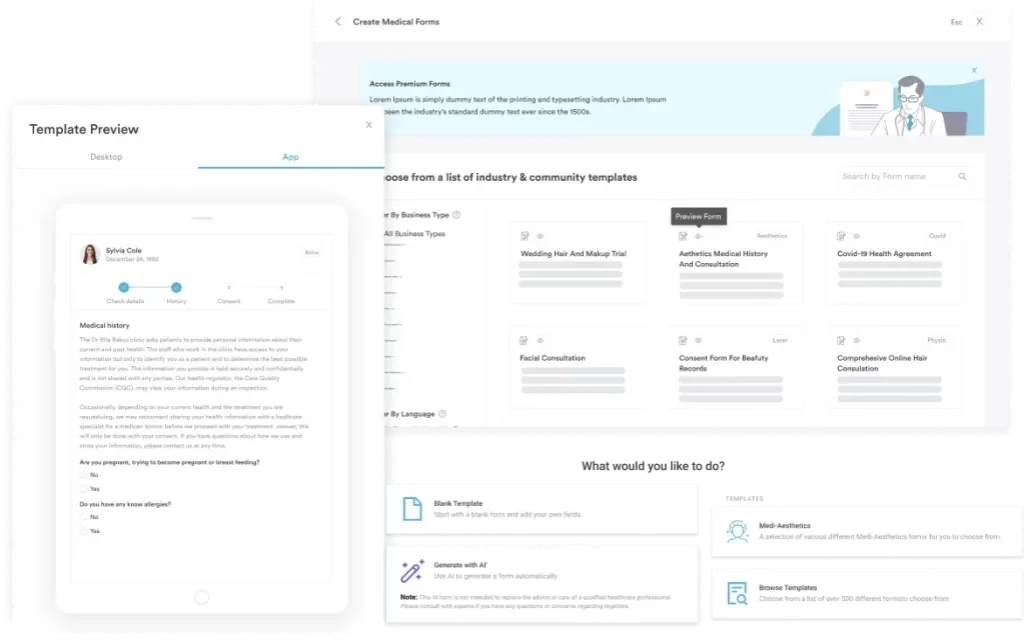
Therapists using digital forms can store completed worksheets in the client’s record, allowing for continuity across sessions and measurable progress tracking on shame and guilt resolution.
The distinction between shame and guilt is one of the most important concepts in therapeutic psychology. Understanding it helps clients develop healthier emotional responses.
This distinction helps clinicians assess which emotion is driving the client’s distress. Clients stuck in shame often need interventions around self-compassion and identity. Clients carrying guilt may benefit from reparative actions or behavioral experiments.
Telehealth tools make it easy to review this resource with clients face to face online.
One of the worksheet’s most powerful sections helps clients evaluate whether their guilt or shame is proportionate. Many clients carry guilt for situations outside their control or shame for traits they cannot change.
Therapists can use structured clinical notes to document these assessments, creating a longitudinal record of how the client’s shame and guilt patterns evolve across treatment.
Shame is uniquely self-sustaining. Once it activates, the internal processes keep it alive. The shame cycle typically moves through four stages: trigger, shame experience, withdrawal, and reinforcement.
Breaking this cycle requires intervention at multiple points. The worksheet helps clients recognize each stage so they can interrupt it. Shame researchers generally recommend intervening as early in the cycle as possible, before withdrawal has a chance to reinforce the belief that triggered it.
Self-compassion is the antidote to shame. When clients respond to their own pain with harshness, shame deepens. When they respond with understanding, shame begins to release.
The worksheet includes three evidence-based self-compassion techniques:
Each exercise helps clients interrupt automatic self-criticism and build tolerance for sitting with difficult emotions instead of avoiding them.
Therapists can reference these exercises across multiple sessions.
Shame is one of the strongest relapse triggers in addiction treatment. Clients in recovery often carry intense shame about their past behavior, and that shame can drive them back to substance use as an escape mechanism.
The shame and guilt worksheet adapts well for recovery populations. It helps clients distinguish between guilt for harms they caused (which can motivate reparation and healing) and toxic shame that says “I am unfixable” (which drives relapse). In recovery work, the worksheet becomes a tool for processing the “wreckage of the past” while building identity beyond addiction.
Recovery-focused therapists increasingly integrate worksheets into comprehensive therapy practice systems that track emotional progress alongside behavioral milestones.
Shame resilience is the capacity to recognize shame, understand its triggers, reach out for connection, and speak shame aloud. Research by Brené Brown and colleagues has shown that shame loses power when it’s brought into the light.
The worksheet operationalizes shame resilience through four key practices: recognizing shame moments early, practicing critical awareness (questioning shame-driven beliefs), reaching out to trusted others, and speaking the shame aloud. Each practice weakens shame’s grip and builds the client’s capacity to move through difficult emotions without acting from them.
These strategies are equally effective for trauma survivors, clients with perfectionist tendencies, and anyone navigating identity transitions.

Therapists using Pabau can store completed shame and guilt worksheets alongside session notes, track progress on emotional regulation goals, and reference client work across treatment.

Therapists often wonder when to introduce the shame and guilt worksheet. The best timing depends on the client’s readiness and presentation. Clients who present with self-blame, perfectionism, or trauma typically benefit early in treatment. Clients in acute crisis may need stabilization first.
Once introduced, the worksheet becomes a reference point throughout therapy. Clients return to it between sessions for reflection, therapists reference it during sessions to track patterns, and both use it as evidence of emotional growth as shame and guilt responses become more proportionate.
The shame and guilt worksheet is a foundational clinical tool that transforms how therapists and clients work with these complex emotions. By clarifying the distinction between shame and guilt, helping clients evaluate whether their emotions are justified, and building self-compassion practices, the worksheet addresses one of the most common sources of client suffering.
Download the free template today and integrate it into your clinical practice. Therapists who use structured emotional processing tools see faster progress on shame-related issues and better long-term outcomes. Schedule a demo to see how Pabau helps you manage client worksheets and track emotional progress across your entire caseload.

Working with attachment wounds alongside shame? Our attachment theory worksheet helps clients map the relational patterns that often sit underneath a chronic shame response.
Want a broader picture of what’s feeding a client’s distress? The wellness dimensions worksheet covers the areas of a client’s life worth checking alongside emotional processing work.
Need a lighter way to build connection in session? Empathy bingo turns perspective-taking into a structured group exercise that pairs well with shame-resilience work.
Shame is a global judgment about the self (“I am bad”), while guilt focuses on a specific behavior (“I did something bad”). Shame typically triggers withdrawal and isolation, while guilt often motivates reparative action. Understanding this difference is foundational to therapeutic work with shame and guilt emotions.
Justified guilt occurs when you caused harm that violated your values, take genuine responsibility for it, and feel a proportionate emotional response. Unjustified guilt often involves taking responsibility for events outside your control or feeling devastated over minor mistakes. The worksheet guides this evaluation through structured questions about responsibility, context, and proportionality.
Yes. Many therapists adapt it for group settings, where clients can work individually first, then share insights in a safe group container. Group work on shame is particularly powerful because clients witness that others share similar struggles, which helps break isolation — a key shame resilience factor.
Yes. Shame is one of the strongest relapse triggers in recovery work. The worksheet helps clients distinguish between guilt (motivation for reparation) and toxic shame (which drives relapse). Used consistently in addiction treatment, it improves long-term recovery outcomes by helping clients process the past without being paralyzed by it.