Patient financing: How to offer it and stay compliant
Patient financing lets patients spread the cost of treatment over weeks or month...

Last Updated: Oct 7, 2026

Pabau unifies scheduling, billing, and clinical workflows in one platform
Automated appointment reminders help clinics reduce patient no-shows
Customizable reporting dashboards track KPIs across multiple locations
Native payment processing eliminates third-party integration overhead
Role-based interfaces adapt to specialty-specific clinic workflows
Clinic owners evaluating clinic management software face a crowded market where most tools handle scheduling or billing but force staff to stitch together separate systems for everything else. That fragmentation is expensive: the CAQH Index, the annual benchmark of US healthcare administrative spending, identifies a $21 billion savings opportunity from automating manual administrative workflows.
Pabau consolidates scheduling, electronic health records, payment processing, marketing, and compliance tools into one platform built for aesthetics, physiotherapy, mental health, and primary care practices. The reasons clinics move to it map directly to the operational pain points fragmented systems create, from double-booked calendars across locations to manual payment reconciliation and missed recall opportunities.
Multi-location practices struggle with calendar fragmentation. A physiotherapy group with three sites typically manages separate appointment books, leading to double-bookings and missed availability. Pabau’s multi-location management synchronises calendars in real time. Staff at any location view enterprise-wide availability when booking patients.
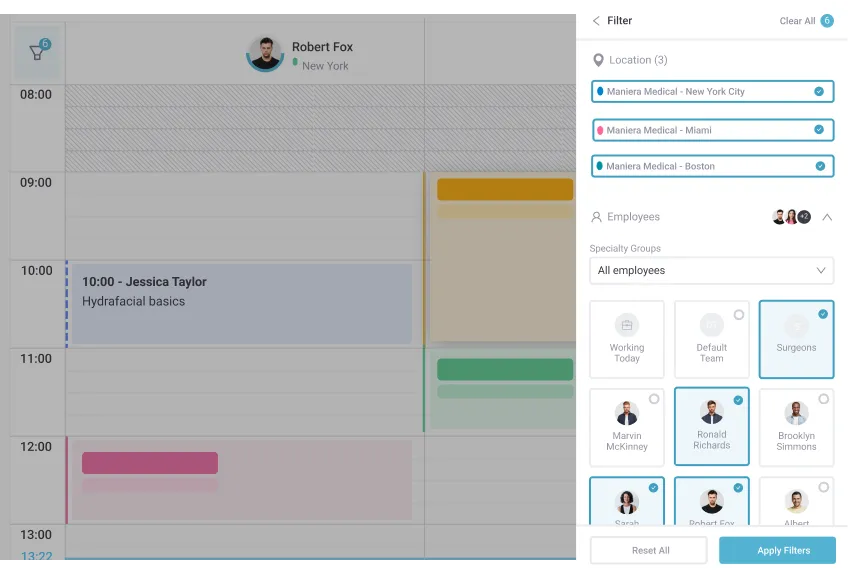
The platform supports location-specific resources, such as treatment rooms or medical devices, while maintaining centralised patient records. A dermatology practice can assign laser equipment to one clinic while tracking the same patient’s consultation history across all branches. This eliminates duplicate data entry and reduces scheduling conflicts.
Automated reminders integrate with the calendar system. When a patient books at Location A but later reschedules to Location B, the system updates SMS and email notifications without manual intervention. Pabau customers commonly report reduced no-shows after enabling automated reminders. Patient replies to those reminders arrive in one inbox, whichever location booked the appointment.
Traditional clinic software separates billing from appointment systems. Staff toggle between platforms to process payments, reconcile accounts, and track outstanding balances. Bringing those steps into one system is what the best payment reconciliation integrations for spas do, matching transactions automatically instead of by hand. Pabau includes native payment processing that connects directly to appointment and treatment records.
When a patient completes a Botox session, the practitioner closes the clinical note and triggers payment in one action. The transaction links to the patient’s financial history, treatment plan, and insurance claim if applicable. This reduces payment delays and manual reconciliation errors.
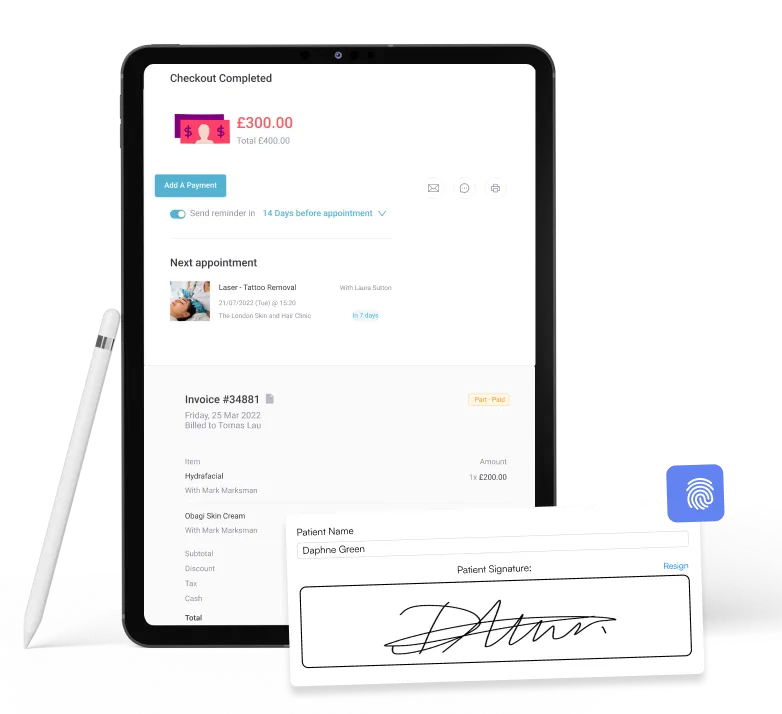
The platform supports multiple payment methods, including card readers, online portals, and instalment plans through integrations like Klarna. A medspa offering high-value treatments can approve financing at the point of consultation, removing friction from the purchasing decision. Payment data flows into financial reports without spreadsheet exports or data migration.
Manual administrative tasks can consume many hours per week of clinic staff time. Pabau’s automated workflows handle repetitive processes such as appointment confirmations, follow-up sequences, and recall campaigns.
A physical therapy clinic sets a rule: send pre-appointment forms 48 hours before the session. The system dispatches digital intake forms via email and SMS, tracks completion, and flags incomplete submissions on the staff dashboard. No receptionist intervention required.
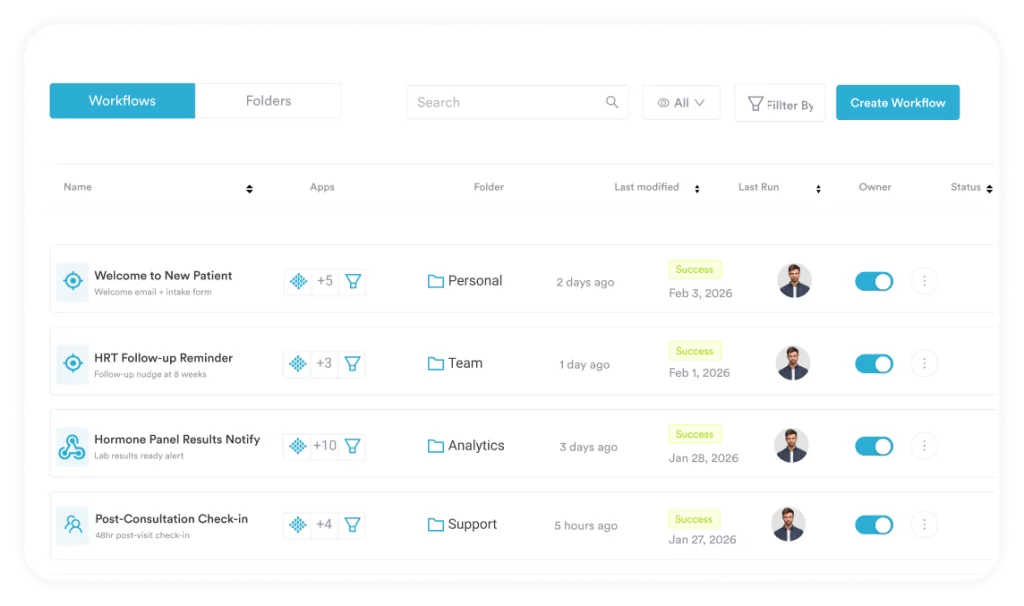
Post-treatment workflows trigger care instructions automatically. After a dermal filler procedure, the patient receives aftercare guidance, a satisfaction survey link, and a rebooking reminder at intervals defined by the clinic. These sequences run in the background, freeing staff to focus on patient interactions rather than email campaigns.
Campaign analytics show open rates, click-throughs, and conversion metrics. A wellness clinic tests two recall email templates and identifies which message drives more rebookings. Automated A/B testing reveals patient communication preferences without guesswork.
Generic reporting tools export raw data into spreadsheets, requiring manual pivot table construction. Pabau offers customizable dashboards that visualise key performance indicators in real time. Clinic owners select metrics such as revenue per practitioner, treatment conversion rates, or inventory turnover.
A multi-practitioner aesthetic clinic tracks each injector’s monthly revenue, average ticket size, and product usage. The dashboard compares performance across team members, highlighting top performers and identifying training opportunities. Filters segment data by location, service category, or date range.
Financial reports integrate payment processing data, insurance claims, and outstanding balances. Practice managers export compliance-ready reports for tax filing or investor updates without reconciling multiple systems. Custom fields allow clinics to track industry-specific metrics, such as units of Botox used or telehealth session counts.

Book a personalized demo to explore how Pabau consolidates scheduling, billing, and clinical workflows for multi-location practices.

One-size-fits-all platforms force dermatologists into the same interface as physiotherapists. Pabau configures role-based workflows tailored to clinical specialties. A psychiatrist’s patient record emphasises mental health assessments and medication tracking, while a medspa practitioner sees treatment protocols and product inventory.
Customizable forms adapt to specialty requirements. An occupational therapist builds an intake form with functional assessment scales, while a fertility clinic designs consent workflows for IVF procedures. Each specialty accesses tools relevant to their practice without navigating irrelevant modules.
Staff permissions control data access. Receptionists book appointments and process payments but cannot edit clinical notes. Practitioners view their own schedules and patient records but not financial dashboards restricted to practice owners. This granular control supports HIPAA compliance and operational security according to U.S. Department of Health and Human Services guidance.
Software access controls are one piece of clinic security. Practices weighing broader premises safety can see how Pabau supports clinic safety and security.
Remote consultations became standard during 2020-2021, but many clinics cobble together separate video platforms and EMR systems. Pabau embeds telehealth capabilities within the patient record. A therapist schedules a virtual session the same way they book an in-person appointment.

During the video call, the practitioner accesses the patient’s medical history, updates clinical notes, and prescribes medications without switching applications. The session logs to the treatment timeline, maintaining continuity between virtual and physical visits.
Payment processing extends to telehealth. Patients pay for virtual consultations through the same portal used for in-clinic services. Insurance claims capture telehealth billing codes automatically, reducing administrative burden for practices offering hybrid care models.
Enable pre-session form completion for telehealth appointments. Patients fill intake questionnaires before the video call starts, giving practitioners immediate context and reducing consultation time by 5-8 minutes per session.
Paper consent forms create storage headaches and data entry duplication. Pabau’s digital forms replace clipboards with tablet-based intake. Patients complete medical histories, consent declarations, and insurance information on-screen. Responses save directly to their digital record.
Practices still relying on clipboards risk more than storage headaches. Paper intake is a measurable reason patients choose a different practice.
Custom form builders accommodate specialty-specific requirements. A dermatology practice designs a mole-mapping consent with anatomical diagrams, while a chiropractic clinic creates pain assessment scales. Conditional logic shows or hides questions based on previous answers, streamlining patient experience.
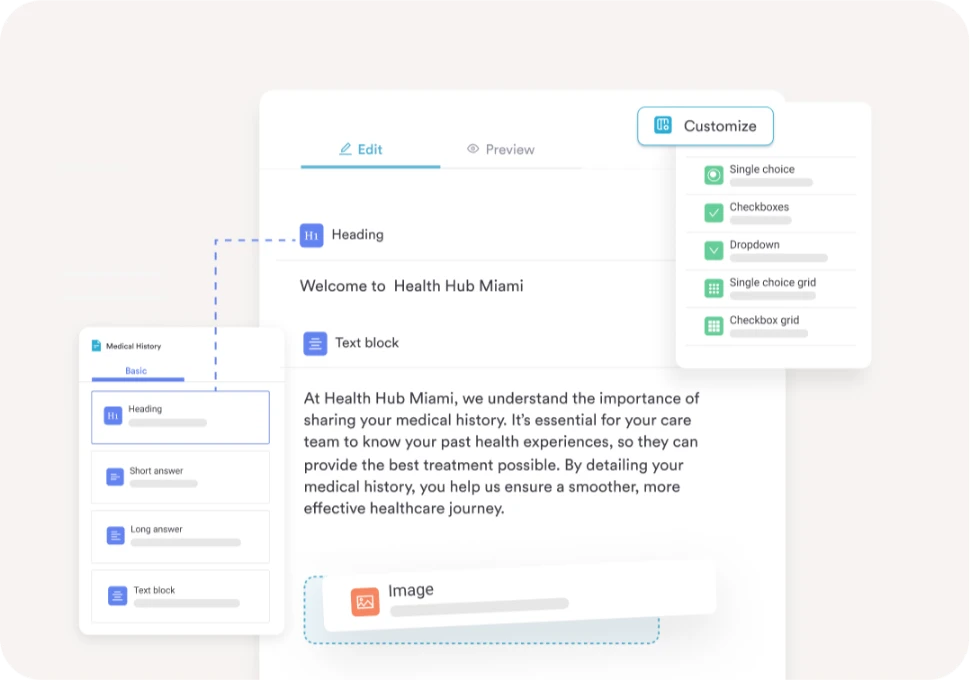
Electronic signatures comply with regulatory standards. Patients sign consent forms on tablets or smartphones, generating timestamped audit trails. This eliminates the risk of lost paperwork and supports compliance during inspections or legal reviews.
Medical spas and dermatology clinics carry thousands of pounds in inventory. Tracking product usage manually leads to stockouts or overstocking. Practices building a reorder routine from scratch can start with a medical office supplies list that groups each consumable by category. Pabau’s inventory management connects stock levels to treatment records.
When a practitioner administers 1ml of Juvederm during a filler appointment, the system deducts that unit from inventory in real time. Low stock triggers automatic reorder alerts based on thresholds set by the clinic. A medspa manager receives notifications when Botox supplies drop below 10 vials, preventing appointment cancellations.
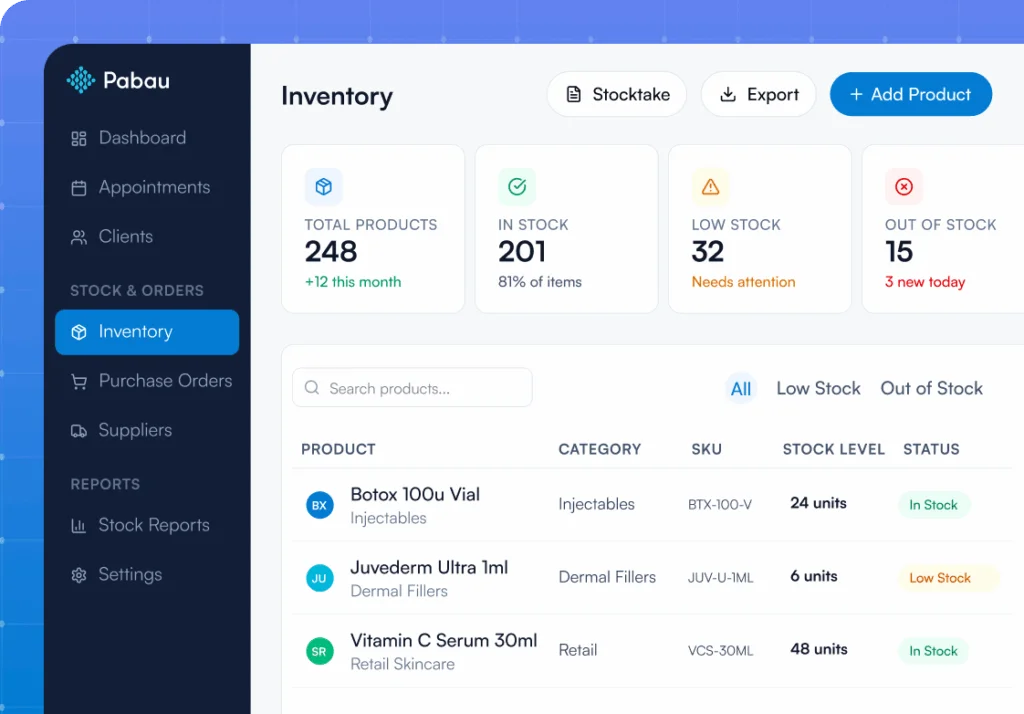
Batch tracking supports product recall compliance. If a manufacturer recalls a specific lot of hyaluronic acid, the clinic identifies which patients received that batch and contacts them proactively. This capability is critical for regulatory adherence in aesthetics and regenerative medicine practices.
Reception staff spend hours answering scheduling calls and balance enquiries. Pabau’s patient portal shifts routine tasks to self-service. Patients log in to book appointments, view treatment histories, download invoices, and update contact information without phone calls.
The portal displays upcoming appointments with one-click rescheduling. A busy professional reschedules their physiotherapy session at 11pm without waiting for clinic hours. This flexibility improves patient satisfaction while reducing administrative workload.
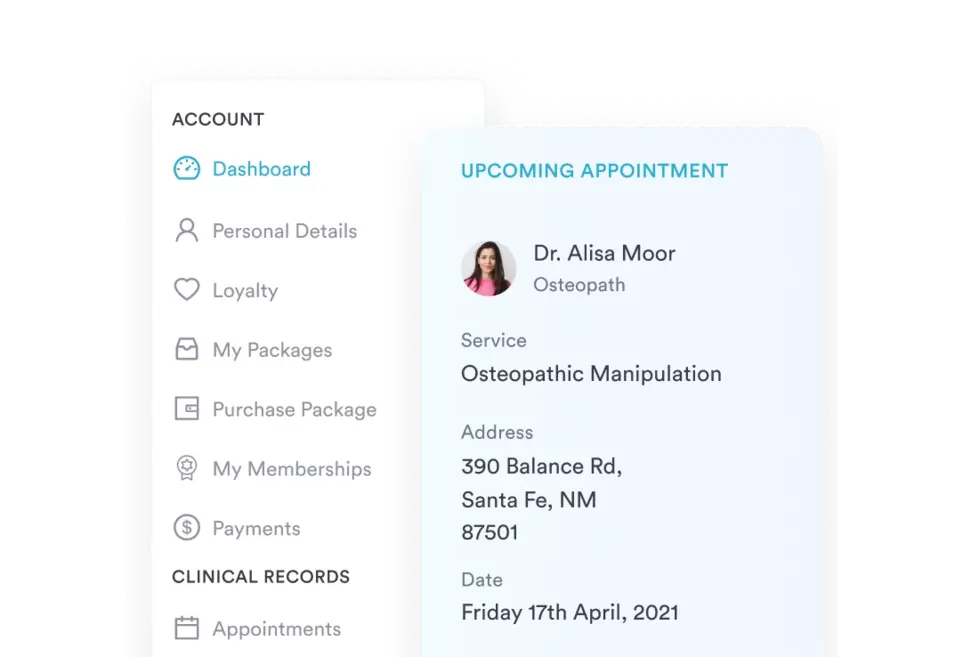
Secure messaging allows patients to ask non-urgent questions between appointments. Patients can upload shared documents and view before-and-after photos, lab results, and aftercare instructions, while clinicians share progress photos and results back through the portal’s secure messaging. These exchanges stay within HIPAA-compliant communication records.
Patient retention costs less than new patient acquisition, yet many clinics lack systematic recall campaigns. Pabau includes marketing automation for targeted communication. A clinic defines rules: send a rebooking reminder six months after a patient’s last Botox appointment.
Segmentation targets specific patient groups. A wellness clinic promotes a new IV therapy package exclusively to patients who previously purchased vitamin drips. Email templates customise with merge fields, inserting patient names and preferred practitioner details automatically.
Campaign performance metrics track open rates, click-throughs, and conversion to bookings. A practice manager might find, for example, that SMS reminders convert better than emails for last-minute appointment availability, then prioritise SMS for urgent offers in future campaigns.
The Pabau blog covers deeper walkthroughs of each workflow above, from inventory batch tracking to portal setup for specific specialties.
The real cost of running a clinic on disconnected tools is rarely the subscription fees. It is the staff hours lost to manual reconciliation, the no-shows that slip through without reminders, and the revenue that leaks when recall campaigns never go out. Pabau closes those gaps by keeping scheduling, native payment processing, automated reminders, and specialty-specific patient records in one system, so work that used to span five browser tabs happens in a single place, with consistent reporting and compliance controls across every location. Each of those gaps maps to a specific decision point, which is exactly why clinics choose Pabau over running a practice across disconnected tools.
Book a demo to see how Pabau handles your clinic’s scheduling, payments, and patient communication in one place before you commit to a switch.

Looking to improve patient scheduling efficiency? Medical Scheduling Software explores calendar optimisation strategies for multi-practitioner clinics.
Choosing an EHR system for your practice? EHR selection process outlines a five-step guide to help practice owners avoid a costly mistake.
Evaluating software for a specific specialty? Medical Spa Software details feature requirements for aesthetics-focused practices.
Pabau supports medical spas, dermatology practices, physiotherapy clinics, mental health providers, chiropractic offices, and primary care practices. The platform adapts to specialty-specific workflows through customizable forms and role-based interfaces.
The platform synchronizes calendars across all clinic locations in real time. Staff view enterprise-wide availability when booking appointments, and patients can reschedule between locations without manual coordination. Automated reminders update automatically when appointments move between sites.
Yes, Pabau connects with accounting platforms like Xero and QuickBooks. Financial data from payment processing, invoicing, and insurance claims exports directly to accounting systems, eliminating manual data entry and reconciliation errors.
Pabau includes online booking functionality through the patient portal. Patients select available time slots, choose their preferred practitioner, and confirm appointments without phone calls. The system sends automated confirmation and reminder messages.
The platform aligns with HIPAA requirements for U.S. practices and GDPR for UK and European clinics. Security features include role-based access controls, audit trails, encrypted data storage, and patient consent management tools designed for healthcare regulatory environments.