CRM for chiropractors: how to manage patients, bookings and marketing
A CRM for chiropractors is a patient relationship management system built around...

Last Updated: Oct 13, 2026

The Proust Questionnaire is a 35-question self-reflection tool first answered by French author Marcel Proust, now used in therapy, coaching, and creative writing.
It began as a Victorian parlor game and reached a mass audience through Bernard Pivot’s television adaptation and Vanity Fair’s celebrity interviews.
The questions explore love, happiness, fear, and personal ideals, which makes them useful for building rapport early in a course of treatment.
The full 35-question version suits deep individual work, while Pivot’s 10-question variant fits short sessions and group settings.
A printable form carrying all 35 questions in their canonical order, a responder information field, and writing space under every question. Hand it to a client before a session, or work through it yourself.
Download templateThe Proust Questionnaire is a set of 35 questions about happiness, fear, love, and identity. Marcel Proust answered it twice as a young man, and his replies turned a parlor game into a lasting portrait of a personality.
Therapists, coaches, and writers now use the same questions to open conversations a standard intake form rarely reaches. This page carries the full list, Bernard Pivot’s shorter version.
The Proust Questionnaire is 35 open-ended questions about personality, values, fears, and ideals. There is no scoring rubric and no norm table, so nothing is graded. Answers are read as text.
Each question looks simple. “What is your greatest fear?” and “What is your most treasured possession?” both take seconds to read and far longer to answer honestly. Clinicians use the list to build rapport quickly, surface what a client values, and hear their priorities without diagnostic language.
The format grew out of 19th-century salon culture, where educated Europeans played confession games as parlor entertainment. Players wrote introspective answers in an album and compared them. Marcel Proust, the French modernist novelist, filled in two of those albums. He answered the first at 13 and the second around the age of 20.
Proust’s replies dwell on beauty, loss, and human connection. Those themes later shaped his masterwork, In Search of Lost Time, and his answers gave the parlor game a literary afterlife.
In the 1990s, French television host Bernard Pivot built a condensed 10-question version for his talk show Bouillon de Culture. Celebrity answers became cultural events in their own right. Vanity Fair has since run the questionnaire with figures from entertainment, politics, and the arts. That coverage keeps it in front of general readers and mental health practitioners alike. Client sessions produce more data than a paper file holds, so software for psychology practices keeps it retrievable.
Below is the canonical list, in the order used on the downloadable PDF. Clinicians work through all 35 for in-depth intake assessments, and individuals use the same order for self-reflection.
A good patient management system files each completed scale under the right patient automatically.
The questionnaire travels well across settings. These are the four uses that come up most often in practice.
Personal journaling and self-reflection: People working through identity questions or a life transition use the list as a guided journal prompt. Spreading all 35 answers over several sessions builds a self-portrait that often exposes patterns the writer had never named.
Therapeutic assessment: Therapists introduce the questions at intake, or later when they start exploring core beliefs. Replies often illuminate the presenting problem faster than a standard form, showing where values and fears meet the current difficulty.
Coaching and personal development: Coaches use the questions to clarify goals and spot where stated values and daily choices diverge. Pairing them with an ikigai worksheet gives a client a second angle on what they want their work to mean.
Team building: Some workplaces run a condensed version so colleagues can hear one another’s values and motivations. Answers stay voluntary, which keeps the exercise from feeling like an audit.
Fiction writers answer the 35 questions in character. Doing so generates voice, backstory, and motivation that hold together under pressure. A writer building a detective answers “What is your greatest regret?” as the detective, and the reply shapes how that character behaves in a crisis.
Vanity Fair‘s long-running celebrity feature made the questionnaire a cultural touchstone. Margaret Atwood, Aretha Franklin, Antonio Banderas, and Oprah Winfrey have all answered it in print.
Published answers are useful in the room as well. Clients who have read a few tend to arrive less guarded.
Pivot’s adaptation came from the constraints of television, which needed self-reflection to fit inside an interview slot. His questions favor breadth over depth and produce answers that play well on screen. The 10 questions are:
The Pivot version trades philosophical depth for conversational warmth. The full 35 questions suit deep individual work. Pivot’s version fits rapid rapport-building, or a group with little time to spare.
Most resources publish the questions and stop there. These four habits make the answers worth reading again a year later.
Resist the urge to curate: First responses are usually the truest ones. Some therapists set a 20-second timer per question so clients bypass their own editing.
Notice what you avoid: Vagueness, deflection, or a joke often marks the edge of something. A client who laughs through “What is your greatest fear?” has shown you where the work is.
Revisit answers over time: The strongest use of this questionnaire is longitudinal. Answering the same 35 questions every 12 months shows how identity and priorities shift, and what has stayed stuck.
Use it as a bridge to dialogue: In couples therapy, both partners can answer separately and then compare. The format moves the conversation toward underlying values instead of the surface argument.
Practitioners fold the questions into intake when the presenting problem is bound up with identity. Depression after a role loss, anxiety tied to misaligned values, and conflict over unspoken priorities all show up in the answers.
Because clients write in their own words, the record keeps their voice rather than the clinician’s summary. That makes it a useful clinical documentation tool for progress tracking and for handovers between team members.
Some practitioners file the answers alongside structured clinical notes, keeping the qualitative material and the formal record in parallel. The questionnaire sits beside the note rather than replacing it.
Most practices hand this questionnaire over on paper. The completed sheets then sit in a folder, out of reach when a clinician wants to compare this year’s answers with last year’s.
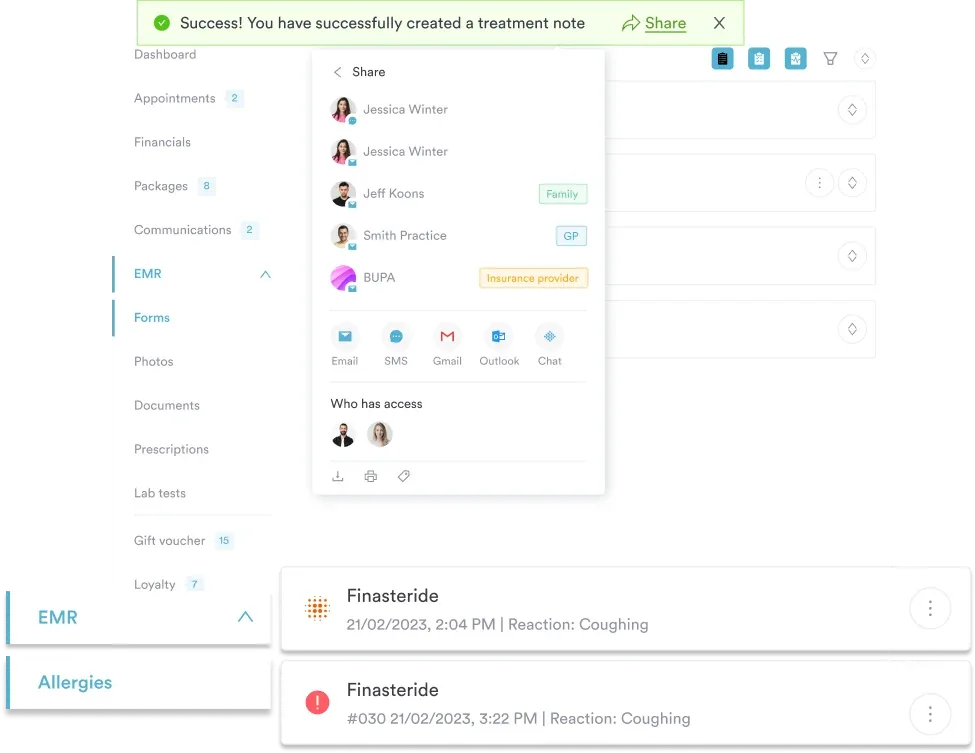
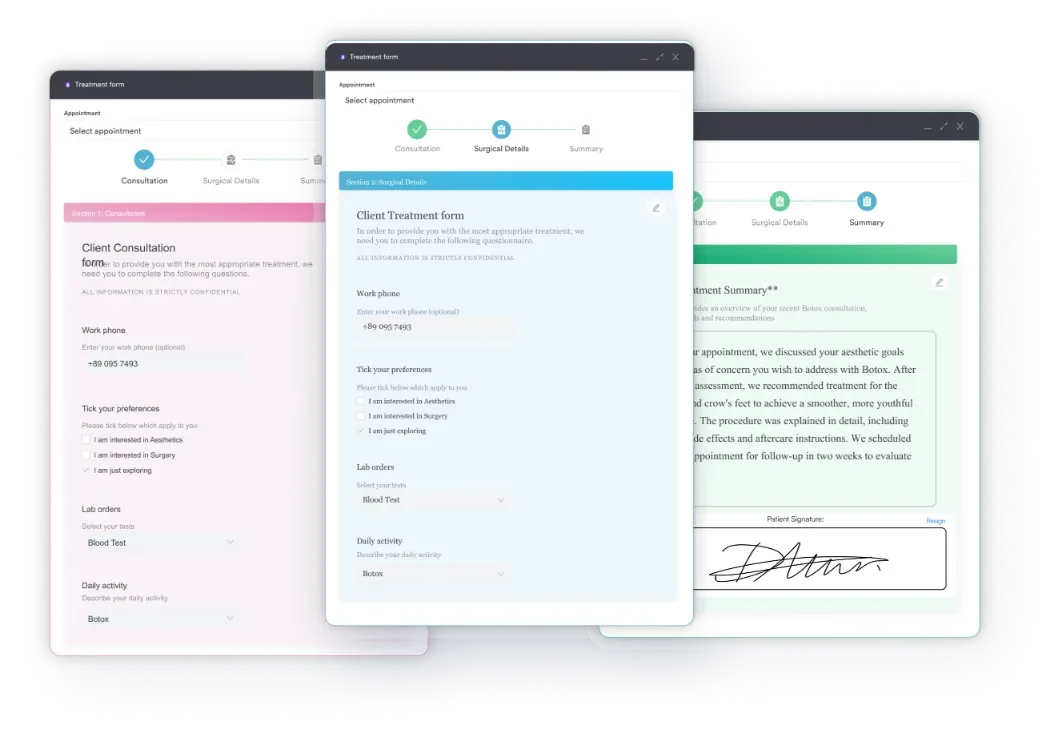
Practice management software like Pabau sends the same 35 questions as a digital form before the appointment. Answers arrive already attached to the client record, so nothing needs retyping or scanning afterwards.
Because the form is stored with the rest of the file, a therapist can reopen the answers a year later and run the questionnaire again. Progress becomes visible across appointments instead of living in a drawer.

Pabau’s digital forms deliver the Proust Questionnaire before the session and file every answer in the client record. Your team spends less time chasing paperwork and more time reading the responses.

The questionnaire earns its place because it asks things a standard intake form never will. Its value comes from how honestly people answer, and that depends on how you introduce it.
Give clients room and time, keep what they write, and bring it back out later. One set of replies read twelve months apart tells you more than either sitting alone.
Download the template above and answer all 35 yourself before you hand it to anyone else. Book a demo to see how Pabau delivers assessments like this one and keeps every answer in the client record.

Working on safety planning with a client? Suicide prevention worksheet gives you a structured plan to use when an answer raises real concern.
Need a CBT tool for the same client? Thought record worksheet turns the patterns these questions surface into a record of thoughts, evidence, and reframes.
Working with clients who hold stress in the body? Somatic experiencing exercises sets out step-by-step protocols for settling the nervous system in session.
Tracking a client’s sleep patterns? Sleep diary template turns two weeks of printable entries into a sleep efficiency score you can act on.
Setting up a new coaching client? Coaching intake form collects goals, history, and consent before the first session starts.
The Proust Questionnaire is a set of 35 questions about personality, values, fears, and identity. It is named after French author Marcel Proust, who answered two versions of it as a young man. Therapists, coaches, and writers now use it for self-discovery and rapport-building.
The 35 questions cover happiness, fear, values, regret, love, achievement, and identity. They run from your idea of perfect happiness through to your motto. The full list appears above, and the PDF follows the same order.
Answer intuitively rather than deliberating, because the first instinct is usually the most revealing. There are no right or wrong answers, so write without self-censorship. Many clinicians spread the questions over several sessions and revisit the answers later.
It began as a Victorian parlor game played in confession albums. Marcel Proust answered it at 13 and again around 20, and his replies made the game famous. Bernard Pivot ran a 10-question adaptation on Bouillon de Culture in the 1990s, and Vanity Fair later made it iconic.
Yes. The full 35-question template is available as a free PDF at the top of this page. It prints on standard paper with writing space under each question, so it works for clinical sessions, coaching, journaling, and workshops.
Bernard Pivot condensed the questionnaire into 10 questions for his television show Bouillon de Culture. His version focuses on favorite words, sounds, and professions rather than existential themes. It takes minutes to complete, which suits interviews and group settings.