GLP-1 diet plan
A GLP-1 diet plan is a structured eating framework for patients taking semagluti...

2
Last Updated: Oct 13, 2026

A vital signs record is a standardized clinical form used to track blood pressure, heart rate, temperature, respiratory rate, and oxygen saturation across patient visits.
Essential fields include date, time, and measurements for each vital sign in their correct units (mmHg for BP, bpm for HR, °F or °C for temperature).
Normal ranges vary by age group and clinical context. Adults typically run below 120/80 mmHg BP, 60-100 bpm HR, 98.6°F temperature, 12-20 breaths/min RR, and 95-100% SpO2.
Digital vital signs capture via practice management software like Pabau eliminates transcription errors and integrates measurements directly into patient records.
A comprehensive clinical documentation form covering patient details, blood pressure, heart rate, temperature, respiratory rate, oxygen saturation, pain score, and weight. Includes space for clinical notes and follow-up actions.
Download templateAccurate vital signs tracking is the foundation of clinical decision-making. Whether you work in primary care, physical therapy, mental health, or sports medicine.
This guide covers what belongs in a vital signs record, how to document measurements correctly, normal reference ranges by age group, and why practice management software eliminates the transcription burden of paper forms. Download the free template to get started today.
A vital signs record is a standardized clinical document that systematically captures a patient’s physiological measurements at a point in time. It serves as the objective foundation for clinical assessment, monitoring trends, and detecting abnormalities that warrant intervention.
Home health aides, nurses.
From a compliance perspective, comprehensive vital signs documentation satisfies regulatory standards (CQC in the UK, state medical board requirements in the US) and provides a legal record of clinical care. Accurate records also reduce liability exposure by demonstrating that practitioners observed and acted on clinically significant findings.
A complete vital signs record captures the following core fields, each with specific clinical rationale:
The patient care documentation workflow becomes smoother when every field is present and labeled consistently, reducing the cognitive load for busy clinicians and ensuring data completeness for follow-up.
Record as systolic/diastolic in mmHg (e.g., 118/76). Normal adult blood pressure is less than 120/80 mmHg per American Heart Association (AHA) guidelines; elevated is 120-129/less than 80 mmHg; Stage 1 hypertension is 130-139/80-89 mmHg.
Document in beats per minute (bpm). Normal resting adult heart rate ranges from 60-100 bpm. Tachycardia (>100 bpm) and bradycardia (<60 bpm) warrant investigation, especially if the patient reports symptoms. Rate says nothing about pump strength, so for that see the normal ejection fraction by age chart.
Record the route (oral, axillary, rectal, tympanic) and reading in both Fahrenheit and Celsius when possible. Normal is approximately 98.6°F (37°C), though research from the National Institutes of Health suggests the normal range is 97-99°F. Fever is generally defined as ≥100.4°F (38°C).
Count breaths per minute (bpm) at rest. Normal adult respiratory rate is 12-20 breaths/min. Tachypnea (>20) suggests respiratory distress or systemic illness; bradypnea (<12) may indicate over-sedation or neurological compromise.
Measure via pulse oximetry, expressed as a percentage. Normal SpO2 in healthy adults is 95-100%. Below 90% is considered hypoxic and requires clinical attention. Patients with chronic obstructive pulmonary disease (COPD) may have a lower baseline and still be clinically stable.
Vital sign norms shift significantly across the lifespan. Always compare individual readings against age-appropriate reference ranges rather than fixed adult thresholds.
Older adults have a higher prevalence of elevated blood pressure and hypertension, but the same AHA thresholds apply regardless of age. A lower baseline body temperature is also common in this group, reflecting a slower metabolic rate.
Use this table as your reference anchor when interpreting individual readings.
Accurate documentation requires a systematic approach. Follow these steps during every vital signs measurement:
Even experienced clinicians can fall into documentation traps. Watch for these frequent mistakes:
A structured HIPAA-compliant documentation system prevents most of these errors by enforcing field completion and timestamping automatically.

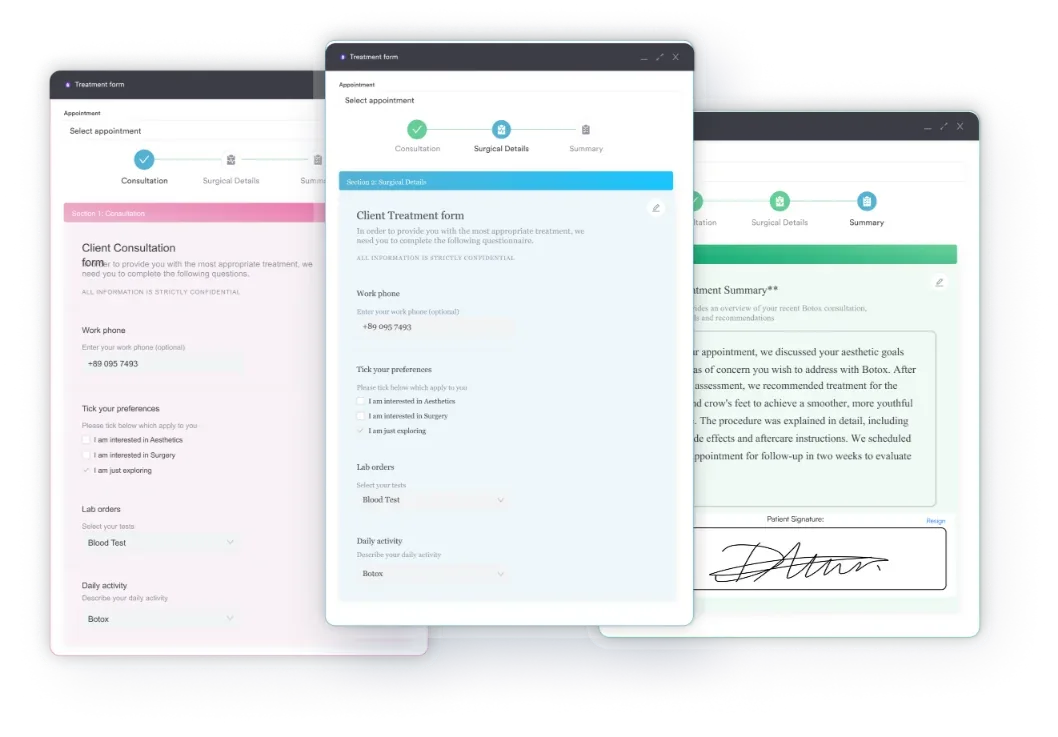
Eliminate paper forms and transcription errors. Pabau’s digital vital signs recording integrates directly into patient records with one-click data entry.

Paper vital signs records are fast to create but slow to act on. Clinicians must manually transcribe data into the patient’s chart, risk transcription errors, and lack immediate visual flagging of abnormal values. Electronic intake forms keep the answers searchable, which paper copies never are.
Mental health providers, sports medicine practices, and primary care offices increasingly use digital vital signs capture within their patient records integration system to streamline this workflow.
A well-designed vital signs record is the backbone of safe clinical monitoring. Whether you print the free template or integrate vital signs capture into your practice management software, consistency and accuracy are non-negotiable.
Pabau’s digital vital signs form removes the transcription burden and ensures every measurement is timestamped, flagged for abnormalities, and instantly available to the entire clinical team. Book a demo to see how digital vital signs capture integrates with your patient records.

Need a broader intake tool for urgent visits? Emergency medical form captures vital signs alongside injury and incident details for acute encounters.
Need a broader learning assessment tool? ATI active learning template helps clinicians structure cognitive assessments and document learning patterns for targeted support.
Charting for an oncology patient? cancer nursing care plan covers assessment, NANDA-aligned diagnoses, treatment goals, interventions, and outcome evaluation for oncology care.
Need a different charting format? DAR notes guide shows the Data, Action, Response format with three worked examples and a free template.
Assessing burn patients? Body burn percentage chart tracks total body surface area alongside standard vital signs monitoring.
Include date and time, blood pressure (mmHg), heart rate (bpm), temperature (°F or °C with route), respiratory rate (breaths/min), oxygen saturation (%), pain score, weight, and a notes field for context.
Blood pressure below 120/80 mmHg, heart rate 60-100 bpm, respiratory rate 12-20 breaths/min, temperature about 98.6°F (37°C), and oxygen saturation 95-100%. Always interpret readings against the patient’s own baseline.
Typically at every clinical encounter, to establish a baseline and monitor trends. Frequency increases in acute care, post-treatment follow-up, or for chronic conditions, depending on your practice’s protocols.
A chart is a visual graph of trends over time; a log is a tabular record with columns for date, time, and each measurement. Both serve the same purpose in different formats.
Yes. Ranges vary significantly by age: infants may have heart rates of 100-160 bpm (versus 60-100 in adults) and respiratory rates of 30-60 breaths/min. Always use age-appropriate reference ranges for pediatric patients.
Yes, if your workflow includes prompt digital transcription into the patient’s chart. However, capturing data digitally at the point of care eliminates transcription errors and makes readings immediately available for clinical decisions.
First replicate the measurement (BP and HR can be falsely elevated by anxiety), assess for symptoms, compare to the patient’s baseline, and document your decision. If clinically significant, escalate or refer immediately.