Postural assessment: Free template and step-by-step guide
A postural assessment is a structured clinical evaluation of how a patient’...

Last Updated: Oct 13, 2026

A fever is defined as a temperature of 100.4°F (38°C) or higher. Normal body temperature ranges from 97-99°F (36.1-37.2°C).
Fever temperature thresholds vary significantly by age group. Newborns under 3 months with a rectal temperature ≥100.4°F (38°C) require immediate medical evaluation (AAP guideline).
Severity classification ranges from low-grade fever (99-100.3°F) to hyperpyrexia (>106.7°F / 41.5°C), each requiring different clinical actions.
Practice management software like Pabau helps practices document vital signs systematically and flag fever alerts for follow-up care workflows.
A printable fever-tracking and intake form for a single patient visit. It includes fields for patient and emergency-contact details, medical history, current medications and allergies, one temperature-log entry (date, time, temperature, and symptoms), and a physician’s signature line.
Download templateA fever is a temporary rise in body temperature above the normal baseline. The medical definition of a fever is a core body temperature of 100.4°F (38°C) or higher, though this threshold varies slightly by age group and measurement method. Understanding the distinction between normal temperature and fever is essential for accurate patient assessment and appropriate clinical decision-making.
Normal body temperature averages 98.6°F (37°C), but clinically acceptable ranges span 97-99°F (36.1-37.2°C) when measured orally. This natural variation depends on time of day, measurement site, activity level, and individual physiology. According to Mayo Clinic, a fever is a sign that something unusual is occurring in the body, often in response to infection or inflammation.
The fever temperature chart by age group is the cornerstone resource for clinical triage. Fever thresholds and recommended actions differ significantly across newborns, infants, children, adolescents, and adults because immune response maturity and risk stratification vary by developmental stage. A temperature that warrants watchful waiting in a healthy adult may demand emergency evaluation in a newborn.
Note: This table uses oral (mouth) temperatures as the standard. Rectal readings are 0.5-1°F higher; axillary (armpit) readings are 0.5-1°F lower. Adjust accordingly when interpreting readings from different sites.
Fever severity classification helps clinicians and patients understand the urgency of action. Per Cleveland Clinic, clinical significance is tied to the temperature range and accompanying symptoms rather than the number alone. Severity tiers guide treatment decisions and when to escalate care.
Pairing this scale with digital measurement tracking turns individual scores into longitudinal trend lines your whole team can read.
Temperature measurement accuracy depends on the method chosen and patient age. Different thermometer types and sites yield different readings, so clinicians must understand which method suits each patient group and how to interpret the results. The fever temperature chart requires clear documentation of which measurement method was used so readings are interpreted correctly.
Matching the thermometer method to the patient’s age and condition, per CHOC’s fever guide, helps ensure consistent, comparable readings for monitoring fever trends over time.

Fever itself is not a disease but a symptom of the body’s immune response. The decision to seek medical care depends on the patient’s age, the accompanying symptoms, fever duration, and how the patient is functioning. Use this guidance to help patients and clinics determine when urgent or emergency evaluation is warranted.
Seek immediate emergency care if:
Call your pediatrician or primary care provider if:
Fever is a natural protective response, and many low-grade fevers resolve without active treatment. However, patient comfort and symptom management are important, and some clinical scenarios (immunocompromised status, risk of febrile seizures in young children) warrant more active fever management. Clinicians should share these evidence-based steps with patients to support safe at-home fever care.
This closes the loop between office visits and home care.
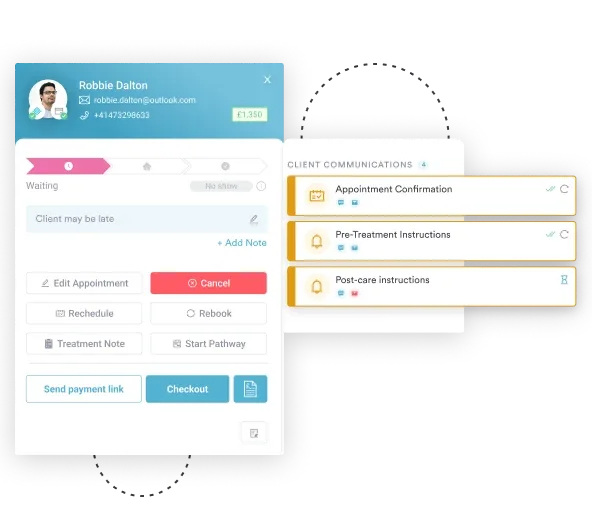

Pabau’s digital forms and client records let practices capture temperature readings systematically, flag fever thresholds by age group, and automate follow-up workflows for patients with persistent symptoms.

A standardized fever temperature chart by age group is essential for safe patient triage and consistent documentation. When all clinicians in a practice use the same reference thresholds and severity classifications, patient safety improves and mismanagement is less likely.
Printable charts posted in waiting rooms and exam rooms — often alongside a height-weight chart for pediatric growth tracking — also educate patients about appropriate care-seeking behavior, reducing unnecessary urgent visits and emergency department overuse.
The downloadable fever temperature chart template is a printable patient intake and tracking form. It covers patient and health history, a single temperature-log entry, and a physician sign-off line, and is designed to standardize documentation during visits or for patients tracking a fever at home.
Fever is a common symptom across all age groups, but the clinical significance and required action vary dramatically depending on age, accompanying symptoms, and fever duration. A fever temperature chart provides the reference point clinicians need to assess risk quickly and communicate with patients about when to seek care.
Using a standardized chart in your practice — whether printed for the office or sent digitally to patients — improves triage accuracy, reduces inappropriate care escalation, and helps patients manage mild fevers confidently at home. Book a demo with Pabau to see how digital forms can integrate this fever assessment into your routine vital signs documentation and automated follow-up workflows.

Tracking blood pressure at home as well? This blood pressure log template logs daily systolic, diastolic, and pulse readings with a fresh sheet for each day.
Need a quick reference for blood type instead? This blood type chart covers ABO and Rh classifications, transfusion compatibility, and population frequency data by ethnicity.
Standardizing the chest exam that often follows? This chest exam template gives systematic technique guidance, normal-findings tables, and a SOAP note structure.
A fever is a core body temperature of 100.4°F (38°C) or higher measured rectally. Oral readings ≥100.4°F and axillary (armpit) readings ≥99.4°F also indicate fever, since the measurement method affects interpretation. In adults 65+, a fever ≥100°F warrants evaluation because their baseline temperature runs lower.
An oral temperature of 101°F is a moderate fever, not high — high fever begins around 102°F. In an otherwise healthy adult, 101°F rarely needs emergency care but should be monitored. Seek evaluation if it persists beyond 7 days, exceeds 104°F, or comes with severe symptoms.
At 102°F, a fever sits at the top of the moderate range, bordering high, and warrants evaluation in adults — especially if the patient has other symptoms, is immunocompromised, or is pregnant. In children, call the pediatrician. It is not an emergency on its own, but persistent high fever or systemic symptoms (stiff neck, severe headache, rash) require urgent care.
A fever in Celsius is 38°C (100.4°F) or higher; normal is about 37°C (98.6°F). Low-grade fever is 37.2-37.9°C, moderate is 38-38.9°C, high is 39-40°C, and hyperpyrexia (a medical emergency) is above 41.5°C.
Seek emergency care for a fever above 104°F (40°C), or for any fever with severe symptoms — stiff neck, confusion, difficulty breathing, chest pain, severe rash, or signs of sepsis. A fever of 102-104°F in an otherwise healthy adult usually warrants a call to primary or urgent care rather than the emergency department, unless systemic symptoms are present.