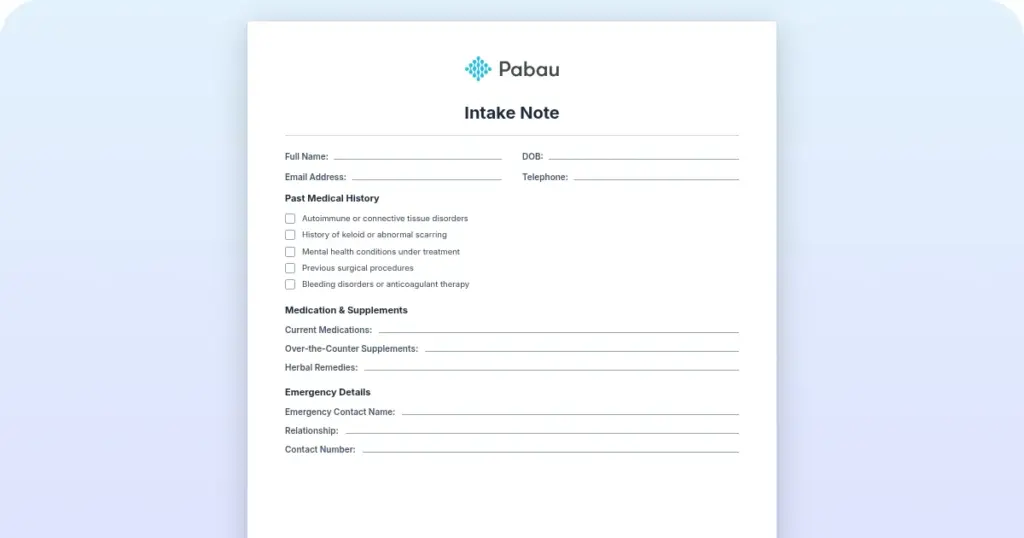
Intake note template
An intake note is the clinical record a therapist or counselor writes at the sta...

1
Last Updated: Oct 22, 2026

A relationship workbook is a structured therapeutic tool that guides couples through exercises designed to improve communication, resolve conflict, and deepen emotional connection.
Therapists assign workbook exercises to help couples practice new relationship skills between sessions and accelerate progress in couples therapy.
Free printable relationship workbook PDFs typically include communication prompts, conflict resolution worksheets, intimacy-building activities, and goal-setting exercises.
Sequence matters, so communication work comes first, conflict resolution follows, and intimacy exercises wait for readiness.
Practice management software like Pabau lets therapists share the workbook, track completion, and follow up without switching tools.
A therapeutic resource of structured exercises for couples to strengthen communication, resolve conflict, and build emotional intimacy. Includes guided worksheets, reflection prompts, and activities you can assign inside a therapy session.
Download templateCouples therapy works best when clients practice new skills between sessions. A structured workbook turns that practice into something you can assign, review, and build on. Software built for therapists keeps the workbook inside your clinical workflow instead of on a handout that gets lost. This guide covers what a relationship workbook contains, how to phase the exercises across sessions, and how to track completion.
A relationship workbook is a structured therapeutic resource that guides couples through evidence-based exercises designed to improve communication, manage conflict, and deepen emotional intimacy. Unlike general self-help books, it includes interactive worksheets, reflection prompts, and step-by-step activities that couples complete together or individually between sessions.
The workbook format differs from a single worksheet. A worksheet covers one skill, such as active listening. A workbook integrates several exercises across communication patterns, conflict resolution, emotional expression, and relationship goals. Many are grounded in evidence-based couples therapy frameworks like the Gottman Method, which focuses on conflict patterns and friendship within the relationship.
Therapists use relationship workbooks to connect the therapy session to home life. Couples therapy research suggests that structured between-session assignments help couples progress faster than session time alone.
Assigning workbook exercises serves several clinical purposes:
Assigning a workbook also signals that couples therapy is an active partnership. Clients feel invested in their progress when they engage with structured materials between sessions.
The free PDF above covers the areas couples struggle with most. Its exercises fall into three groups.
Poor communication is one of the most common complaints couples bring to therapy. These exercises train active listening, clear expression of needs, and validation of a partner’s experience. Typical prompts have one partner speak while the other reflects back what they heard. Others replace blame language with “I feel” statements, or set up a structured weekly check-in. If a couple needs more repetition on one skill, a standalone couple communication worksheet drills it without the rest of the workbook.
Conflict resolution worksheets give couples a step-by-step frame for disagreements that would otherwise escalate. The steps usually run in this order:
Couples learn that how they manage conflict matters more than the conflict itself. A single conflict resolution worksheet works well when one recurring argument needs its own dedicated session of homework.
Emotional intimacy exercises move couples past logistics and small talk. The activities include vulnerability prompts for sharing fears and hopes, appreciation rituals on a daily or weekly rhythm, and trust repair after conflict. Many couples find these exercises restore the closeness that brought them together.
The workbook is a free download from the box above. Once you have the file, you can:
Printed or digital, consistency matters more than the format. Couples respond best when each assignment comes with clear instructions. Say what to do, how long it should take, and what you will discuss next session.
Assigning a workbook is more than handing over a PDF. Here is how therapists structure the exercises for maximum impact:
How a couple approaches the workbook is often as informative as what they write in it. A couple who skips the assignment may be ambivalent about therapy. One who completes it superficially may be resisting vulnerability. A couple who digs in is showing genuine commitment to change.
Sequencing matters as much as selection. The plan below phases the workbook across the first month of therapy. The intimacy work stays back until the couple is ready for it.
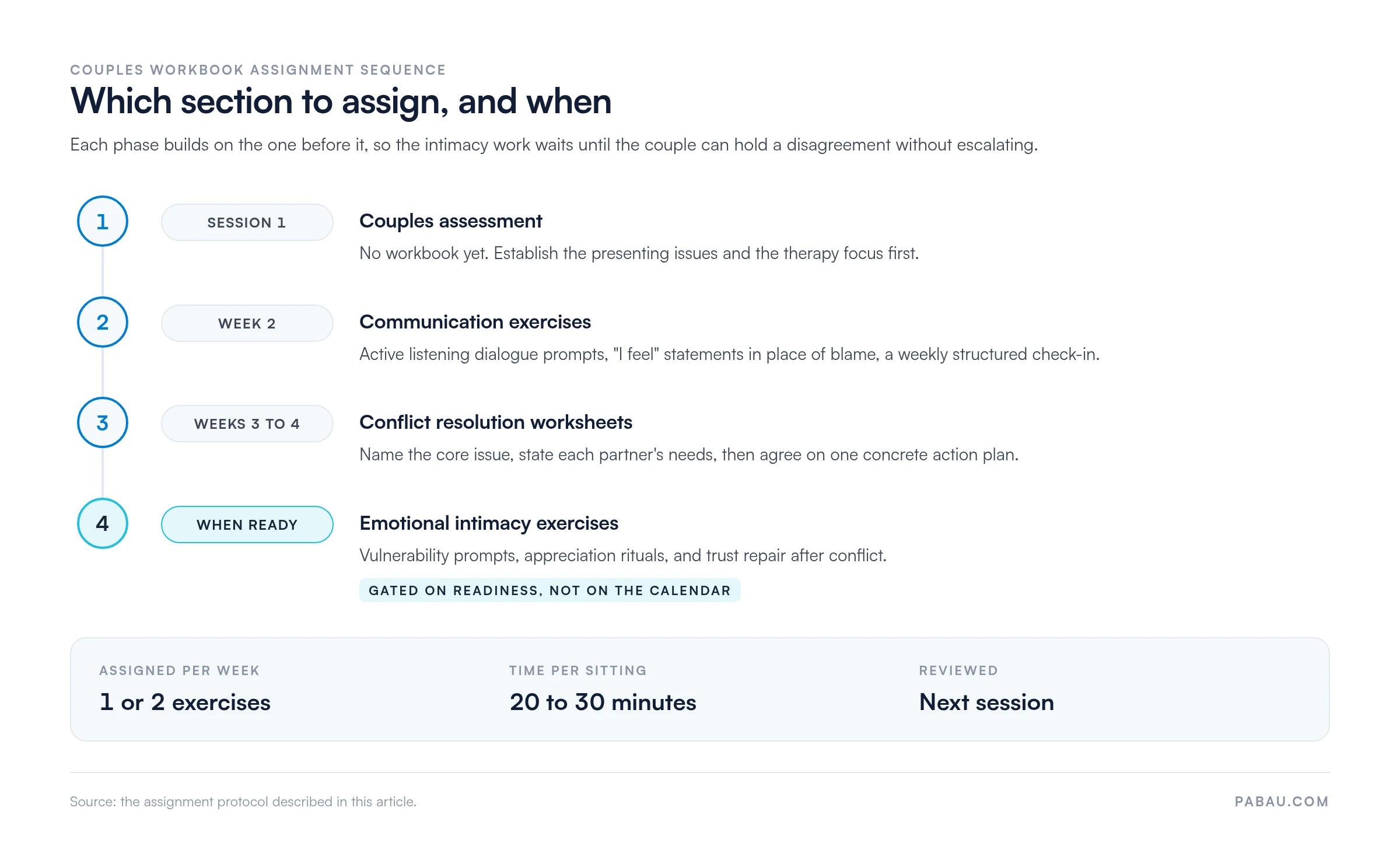
Standardize the protocol across your caseload rather than deciding session by session. Consistent sequencing tells couples what to expect and builds a sense of progression through therapy. It also makes a stalled couple easy to spot, because you know which section they should be on.
Handing out a workbook by hand does not scale. Printing copies, emailing PDFs, and tracking who finished what turns into a second job as your caseload grows.
Practice management software like Pabau handles the distribution and the follow-up in one place. Its digital forms let you send the workbook straight from the client record. Clients open it in their portal, complete the worksheets on screen or in print, and you see the status without chasing anyone by email.
The client portal also keeps every resource attached to the therapy record. Historical workbooks and completed exercises stay available for continuity of care or a later review.
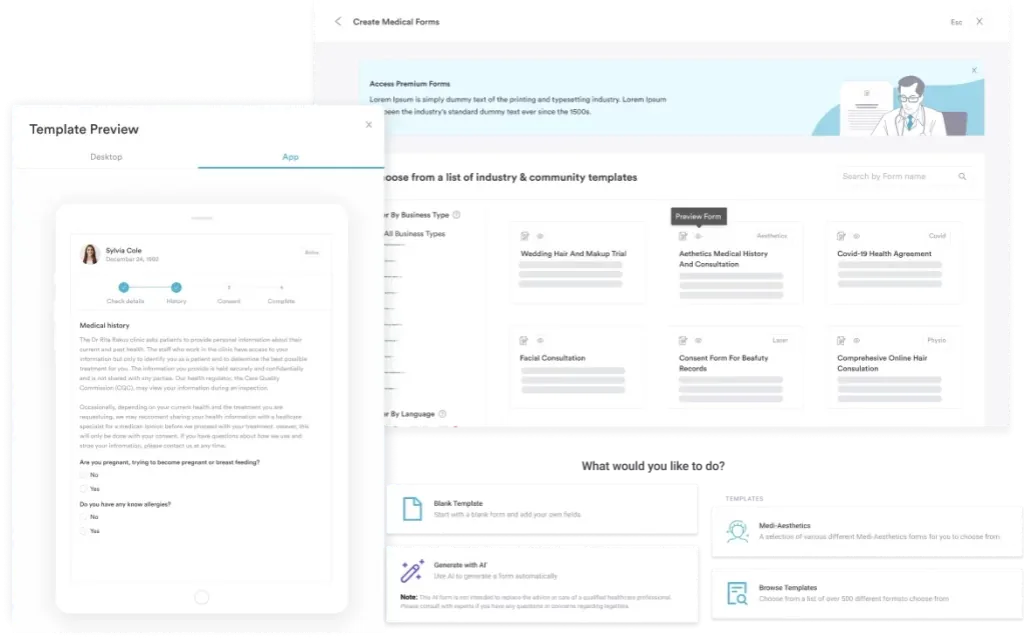
That saves admin time and improves accountability. You can see at a glance who has opened and completed an assignment. That lets you follow up before the next session rather than after it.

Practice management software like Pabau lets therapists share relationship workbooks, track completion, and file the feedback in the client record. You do not forward emails or keep a separate spreadsheet.

The workbook itself is the easy part. What decides whether couples therapy moves is whether the exercises get assigned in a sensible order, completed, and discussed at the next session.
So download the PDF and pick the section that matches where the couple is now. Hold the intimacy work until they can manage a disagreement. The trade-off worth remembering is volume against depth. Two exercises a week that get talked through beat a full workbook nobody opens.
Book a demo to see how Pabau sends the workbook, tracks who completed it, and files the responses against each couple’s therapy record.

Need a shorter tool for one couple’s issue? Couples therapy worksheets cover a single skill when a full workbook is too much.
Working with a couple on limits and expectations? The marriage boundaries worksheet gives them a structured way to name what each partner needs.
Want something clients can tick off between sessions? This relationship boundaries checklist turns boundary work into a short, concrete task.
Need an intake tool for a new couple? The relationship questionnaire captures a baseline before you assign any exercises.
Documenting what you assigned and what came back? SOAP notes for therapy show how to record homework and client progress.
A relationship workbook is a structured therapeutic tool containing exercises on communication, conflict resolution, and emotional intimacy. It helps couples practice skills learned in therapy at home, accelerate progress between sessions, and build accountability for change.
A workbook can guide self-directed couples, but it works best when a licensed therapist assigns and reviews it. A therapist contextualizes the exercises to the couple’s specific dynamics and addresses barriers during sessions.
Therapists usually assign one or two focused exercises per week, taking 20 to 30 minutes to complete. More frequent assignments risk overwhelming couples, and less frequent work reduces the reinforcement effect. Consistency and depth matter more than volume.
A worksheet addresses a single skill, such as active listening. A workbook integrates several exercises across communication, conflict, intimacy, and relationship goals. Workbooks give you a curriculum, and worksheets are targeted interventions.
Yes, the workbook above is free to download as a PDF. It includes communication exercises, conflict resolution worksheets, emotional intimacy activities, and reflection prompts for therapists to assign in couples sessions.