Monika Lazarevska

Hypomania test (HCL-32): Free printable screening PDF
What is a hypomania test used for in clinical practice? A hypomania test is a cl...

Last Updated: Oct 29, 2026
Free PDF 4 pages, print-ready Clinician-reviewed
The reasons for living inventory is a self-report questionnaire that asks what keeps a person from acting on suicidal thoughts. Marsha Linehan and colleagues published it in 1983, and the long form rates 48 reasons on a 1 to 6 scale.
Those ratings fall into six subscales, from survival and coping beliefs to moral objections. Most risk tools count warning signs, so this one shows the other side of the picture. That matters because a safety plan holds up best when it rests on reasons the patient already holds. What follows covers each version, how to score it, the mistakes that skew results and a checklist for first use.
A four-page, 48-item form with patient and session fields, the 1 to 6 rating key, and every item grouped under its six subscales.
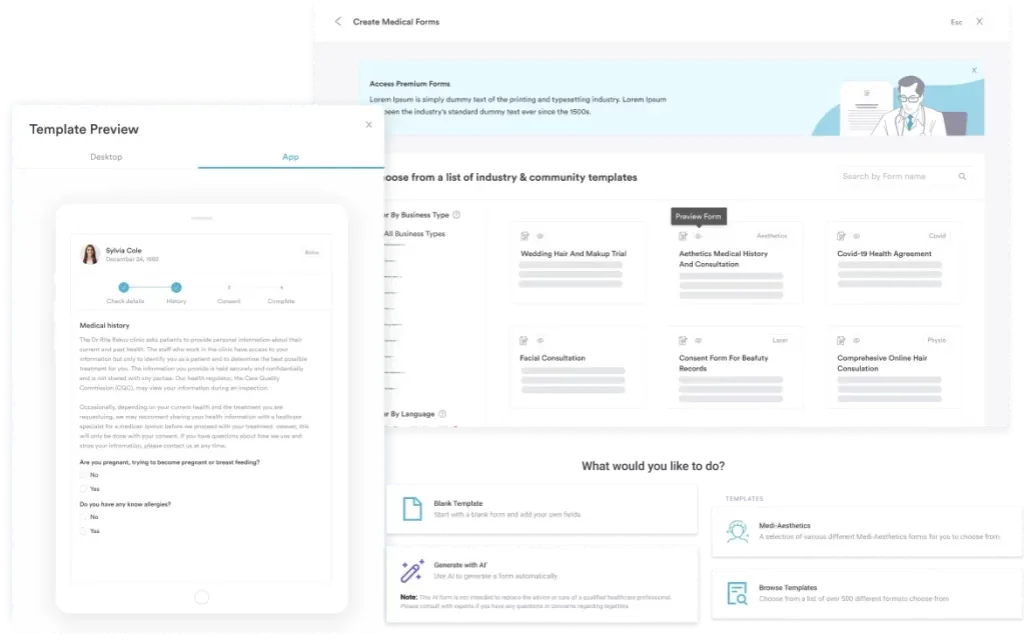
Start from scratch, or upload this PDF or any form you already use, and Pabau's AI Form rebuilds it with tick boxes, text fields and a signature. Attach it to the treatment once, and every patient gets it on time.
AI Form rebuilds the consent, history and aftercare forms you already use. You review each one, then publish.
Patients complete forms on their phone before they arrive, so the front desk stops retyping paper.
Every signed form is versioned and attached to the treatment record, ready when you need it.
Set how long a consent stays valid. Returning patients skip forms they have already signed.
Supports HIPAA and GDPR compliance AES-256 encryption 4.8 on G2 4.7 on Capterra Trusted by 4,000+ practices worldwide

The reasons for living inventory measures the protective beliefs that keep a person from acting on suicidal thoughts.
The original long form has 48 items, and the Brief RFL has 12 items, two per subscale.
Each long-form item is rated from 1 to 6, and results are reported as means for six subscales.
No validated cutoff score exists, so read the results alongside a structured risk assessment.
The 24-item RFL-YA-II for young adults was validated in a US college-student sample.
If a patient is in immediate danger, call or text the 988 Suicide & Crisis Lifeline in the US. Elsewhere, contact your local emergency services.
Marsha Linehan and colleagues developed the reasons for living inventory in 1983. The original paper is indexed in APA PsycNET.
Most suicide assessments look for danger signs. Linehan’s team asked the opposite question: what keeps a person going when suicidal thoughts appear? The inventory lists those reasons, such as coping beliefs, duty to family and concern for children.
Each reason is a protective factor that can counter suicidal thinking in the moment. Since 1983, the inventory has been shortened and adapted, so your first choice is which version to use.
The reasons for living inventory has several adaptations. Each one suits a different age group, population or time budget.
Long form (RFL)
48
Six
Full assessment of adults in clinical settings (Linehan et al., 1983)
Brief RFL
12
Six, two items each
Adults, when time is limited
RFL-A
32
Five
Adolescents (Osman et al., 1998)
BRFL-A
14
Five
Adolescents, when time is limited (Osman et al., 1996)
RFL-YA
32
Five
Young adults, the original version (Gutierrez et al., 2002)
RFL-YA-II
24
Four
Young adults, validated in a US college-student sample (Pirani et al., 2020)
College Student RFL (CSRLI)
46
Six
College students (Westefeld et al., 1992)
RFL-OA
69
Five content areas
Older adults (Edelstein et al., 2009)
The University of Washington BRTC hosts the 48-item form and its scoring instructions, free for clinical, research and educational use. Use the wording as published and keep the attribution to Linehan and colleagues.
The 48-item long form groups its items into six subscales, each rated on the same 1 to 6 scale. In the Pabau PDF, the items run in subscale order under headings, so the numbers below double as a scoring key.
That layout differs from the published form, which mixes items from different subscales and shows no headings. Labels such as “Fear of suicide” and “Moral objections” in front of the patient can influence their answers. So scores from the Pabau PDF may not compare cleanly with published research. If you need standard administration, use the BRTC version and its own scoring key.
The split is far from even. As the chart shows, survival and coping beliefs holds half the form, so it pulls the full-scale mean toward its own score.
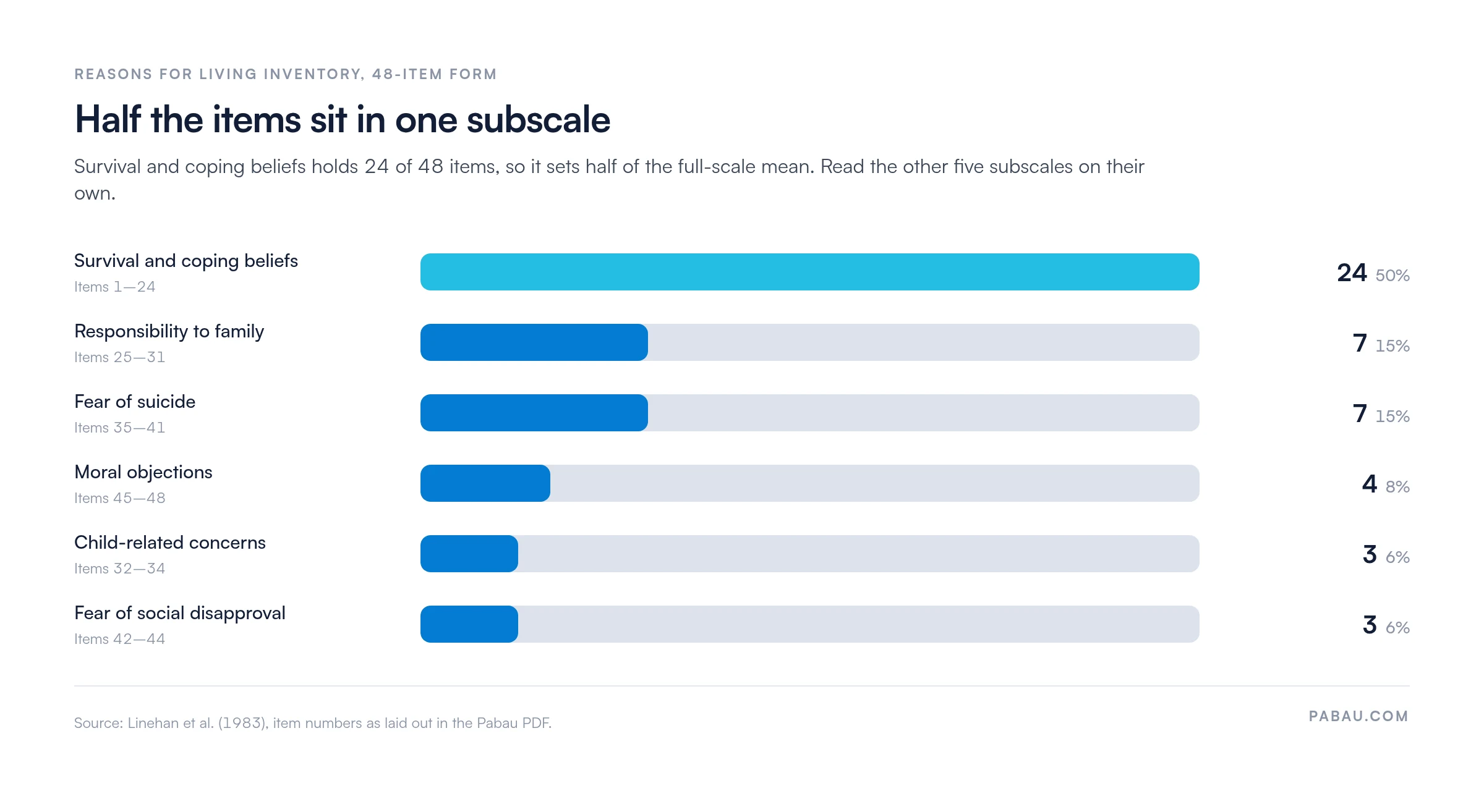
The Brief RFL keeps the six subscales but uses only two items for each. Score it with its own 12-item key, not the long-form numbers above. The RFL-YA-II differs again, with four subscales of its own.
To score the inventory, average the ratings within each subscale, then average all 48 ratings for a full-scale score. Here is the walkthrough.
Item 32 in the PDF shows the subscale name instead of the item. Read the item aloud to the patient: “The effect on my children could be harmful.”
Higher means show stronger endorsement of that protective factor. No validated cutoff score exists, so treat any low, moderate or high bands with caution.
Say a patient rates the four moral objections items 6, 5, 6 and 3. Those ratings add up to 20. Divided by four items, the subscale mean is 5.0, which signals strong endorsement.
Even so, the 3 on item 48 deserves a question, because it shows which belief carries less weight. These ratings are made up for illustration.
The arithmetic is simple, yet a few habits still distort the picture. Watch for these five.
Choose a version validated for the patient’s age group rather than the adult long form. For adolescents, that means the 32-item RFL-A or the 14-item BRFL-A.
For young adults, the RFL-YA-II has 24 items across four subscales. It revises the original RFL-YA, which has 32 items and five subscales. The RFL-YA-II validation study used US undergraduates, with samples of 778 and 290 students.
So the evidence covers a US college-student sample, not young adults in general. Don’t assume adult norms or wording carry over to younger patients.
Ask the patient to name their reasons in their own words before you read subscale labels aloud. Their wording often works better in a safety plan than a clinical category does.
Clinicians use the inventory to find the reasons a patient already holds for not acting on suicidal thoughts. These four questions cover how it fits into care.
When should you give it? Give it at intake for a baseline, during a risk review, and whenever you update a safety plan.
What should it sit alongside? Pair it with a structured tool, such as a suicide risk assessment checklist, and the patient’s history. The inventory adds protective-factor detail, but it does not predict suicide on its own.
How do the results feed the safety plan? Copy the reasons the patient rated highest into the plan, in their own words. The Stanley-Brown safety plan asks what is most worth living for, so the two fit together.
What pairs well with it? The Beck hopelessness scale measures the opposite pull. Comparing the two over treatment shows whether hope and protective beliefs move together.
A short check before the session saves a rescore later.
Paper copies of the inventory tend to travel. The form gets scored at one desk, filed at another, and retyped into the notes later.
Pabau, the practice management platform we build, sends the questionnaire as a digital form before the session. Through its patient intake software, the patient answers at home, and the ratings land in their record. Send it only when a clinician will review it the same day, with crisis contacts such as 988 in the US.
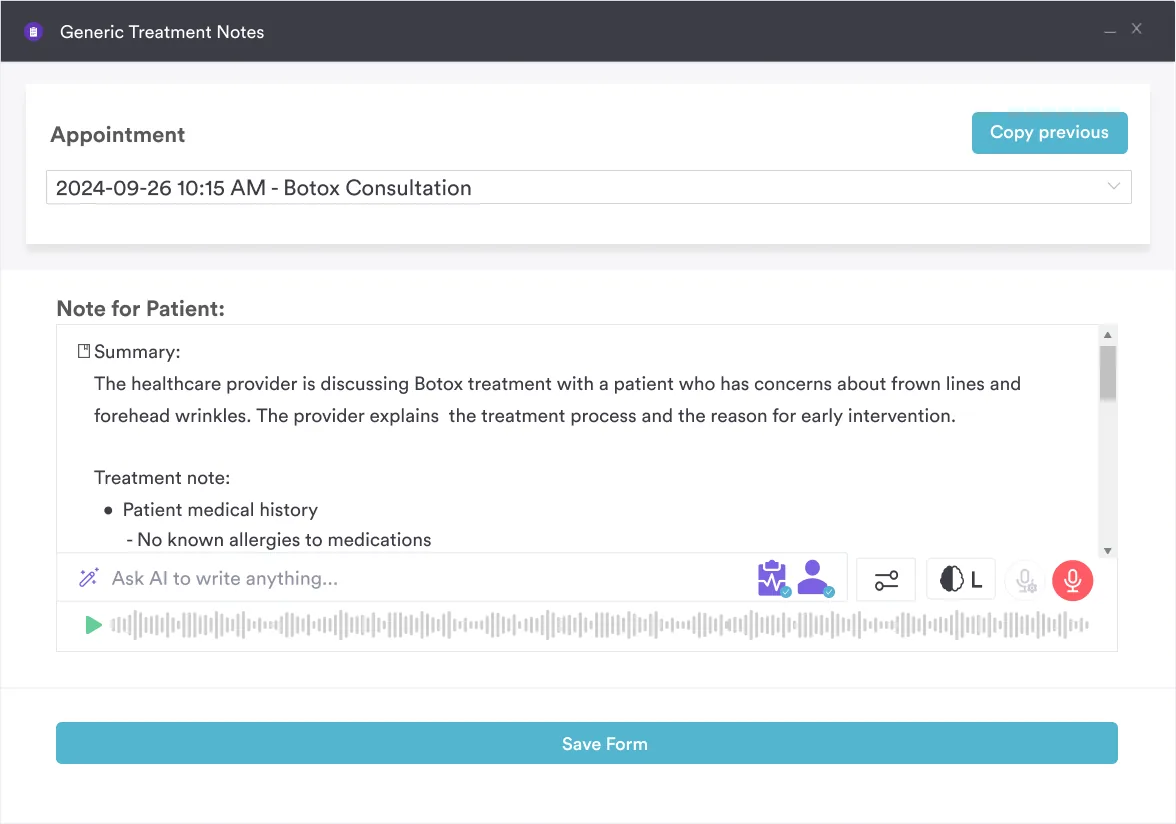
After the session, Pabau Scribe, our AI scribe, drafts the clinical note from the conversation. The clinician reviews and signs every draft. Both tools are part of Pabau’s therapy practice management software, so one record holds the scores and the note.

Pabau brings digital forms, patient records and clinical notes into one workflow. Our team can show you how it fits your practice.

The reasons for living inventory earns its place when the answers change what happens next. A score on its own sits in a file. Reasons written into a safety plan give the patient something to reach for.
So pick the version that fits the patient, average rather than sum, and pair it with a risk tool every time. The trade-off is time, since the long form takes longer and the Brief RFL gives less subscale detail.
Book a demo to see how Pabau keeps each patient’s assessments and session notes in one record.

Need a structured mental health assessment? Psychiatric evaluation template offers a framework for comprehensive assessments.
Assessing self-harm as well? Self-harm assessment template walks through the questions and records a self-harm review needs.
Weighing a no-suicide contract? No-suicide contract explains the form and what to pair it with.
Working in psychiatry? Psychiatry EMR software explains how Pabau supports psychiatric workflows.
No validated cutoff exists. Researchers report subscale and total means rather than a pass mark. Some online worksheets add low, moderate and high bands, but those bands are not part of the published scoring. Read the means against the patient’s history instead.
Yes. Osman and colleagues built two adolescent forms, the 32-item RFL-A and the 14-item Brief RFL-A (BRFL-A). Use one of them, or another age-validated form, rather than giving the adult long form to a teenager.
Yes. The University of Washington BRTC hosts the 48-item form free for clinical, research and educational use. The Pabau PDF on this page is also free to download. Use the wording as published and keep the attribution to Linehan and colleagues.
No. A high score shows strong protective beliefs, but it does not rule out risk. Warning signs, recent events and access to means still need a direct assessment.