Despina Petrushevska

Values exploration worksheet
Download your free values exploration worksheet A two-page printable form that o...

1
Last Updated: Nov 6, 2026
Free PDF 3 pages, print-ready Clinician-reviewed
A 7-day PCOS diet plan PDF gives dietitians and nutritionists a structured starting point for the dietary management of polycystic ovary syndrome. It sets out a food pattern, a week of meals, a shopping list and a daily tracker the patient fills in. Diet cannot cure PCOS, but a consistent lower-glycemic eating pattern can support insulin sensitivity, weight management and cycle regularity alongside medical care. This guide covers the evidence behind the plan, the foods to build meals around and how to adapt it. It closes with the safety checks to make before handing it to a patient.
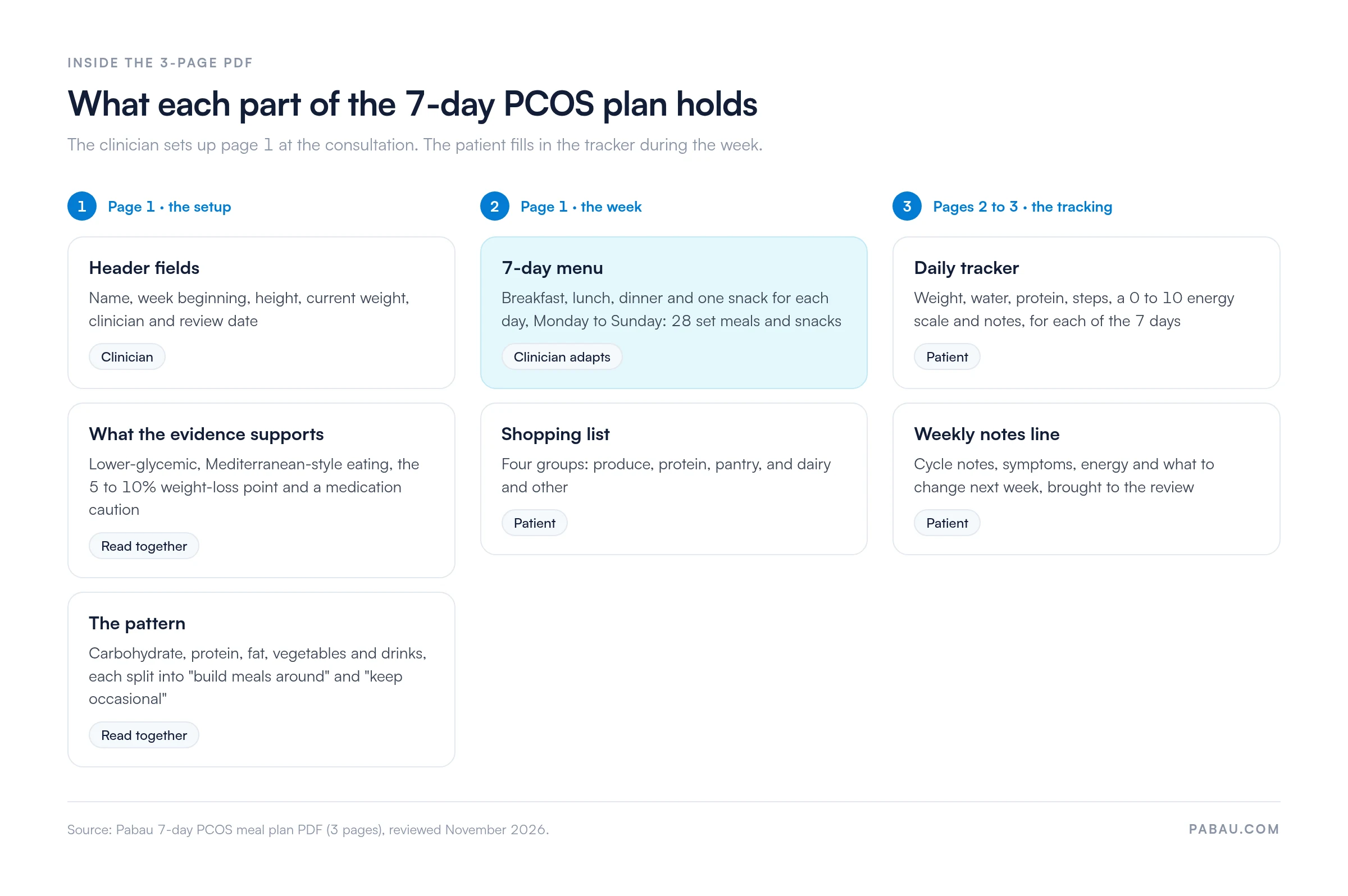
A 3-page 7-day PCOS meal plan with a food pattern by group, a day-by-day menu and a shopping list. Its daily tracking sheet covers weight, water, protein, steps and energy.
Start from scratch, or upload this PDF or any form you already use, and Pabau's AI Form rebuilds it with tick boxes, text fields and a signature. Attach it to the treatment once, and every patient gets it on time.
AI Form rebuilds the consent, history and aftercare forms you already use. You review each one, then publish.
Patients complete forms on their phone before they arrive, so the front desk stops retyping paper.
Every signed form is versioned and attached to the treatment record, ready when you need it.
Set how long a consent stays valid. Returning patients skip forms they have already signed.
Supports HIPAA and GDPR compliance AES-256 encryption 4.8 on G2 4.7 on Capterra Trusted by 4,000+ practices worldwide

A 7-day PCOS diet plan PDF is a structured meal template, not a cure or treatment for PCOS.
Low-glycemic, anti-inflammatory and high-fiber choices are the core dietary principles behind the plan.
No single diet is proven superior for PCOS, so the menu is adapted to each patient.
Document each patient’s preferences, restrictions and medication status before issuing the plan.
Pabau’s digital forms can collect intake and consent before the plan is issued, and follow-ups stay on one patient record.
A 7-day PCOS diet plan PDF is a clinical planning tool built around the dietary patterns that the evidence supports for polycystic ovary syndrome. The plan does not promise hormone normalization or fertility outcomes.
PCOS affects an estimated 10 to 13% of reproductive-aged women, according to the World Health Organization’s PCOS fact sheet. Insulin resistance is common in the condition, which is why many clinicians start with eating patterns that reduce blood sugar spikes.
Low-glycemic and Mediterranean-style patterns are commonly used and can support insulin sensitivity, but no single diet is proven superior. The 2023 international evidence-based PCOS guideline finds that any healthy eating pattern can help, with reduced energy intake where weight loss is the goal. Clinicians who choose the Mediterranean route can pair the plan with a Mediterranean diet grocery list.
Even a small weight loss can make periods more regular, according to ACOG’s patient guidance on PCOS. The international guideline treats a loss of 5 to 10% of body weight as clinically meaningful for people with excess weight. Diet is one of several tools for reaching that range, alongside activity and medical management.
A PCOS meal plan works best when its food groups are easy to recognize. The table below summarizes what the template favors and what it asks practitioners to limit.
Processed foods and refined carbohydrates tend to worsen insulin resistance, which is why the plan keeps them to occasional use. High-fiber foods support blood sugar regulation and gut health.
The template is designed for practitioners to adapt rather than hand out unchanged. Each day lists breakfast, lunch, dinner and a snack, and the tracker pages give the patient a notes line for every day. The clinician sets up the first page at the consultation, while the patient completes the rest during the week.
A nutrition assessment form captures the medical history, medications and diet recall that the first step depends on.
Dietitians, registered nutritionists and women’s health clinicians are the main users of this template. Gynecology and fertility teams may also use it as a lifestyle component within a wider treatment plan.
Because PCOS presents differently in each patient, the plan should be treated as a starting structure. Practitioners should document why each change was made.
A written plan gives patients a concrete reference point between appointments. It also gives the clinician a documented record of what was advised, which supports consistent care.
Documentation stays comparable across patients and reviews when the same fields are completed each time. That makes progress easier to evidence at follow-up.
The plan must not suggest stopping metformin, oral contraceptives or other prescribed treatment. Patients with diabetes, eating disorders, pregnancy or a history of disordered eating need individual clinical review before any calorie or food restriction.
Supplements such as inositol or berberine are not part of this plan and should be discussed with a prescriber first.
In the UK, NICE is developing its first guideline on PCOS, which was renamed polyendocrine metabolic ovarian syndrome (PMOS) in May 2026. The NICE PMOS guideline project consulted on draft guidance in mid-2026, and final guidance is expected in January 2027. Practitioners in other regions should follow their own national clinical guidance.
Diet supports symptom management and does not reverse PCOS. The Endocrine Society’s clinical practice guidelines remain the reference point for medical treatment decisions.
Many people find a rigid eating pattern hard to sustain, so small, repeatable changes tend to last longer. Three habits make the week easier to follow.
Ask patients to bring the completed tracker pages to the first review. Compare them with the menu to see which changes are realistic, then adjust the menu rather than the patient’s expectations.
Pabau, the practice management platform we build, is used by practices that deliver dietary and lifestyle support. Pabau’s digital forms can collect intake and consent before the plan is issued, so the dietitian adapts the menu against a complete history.
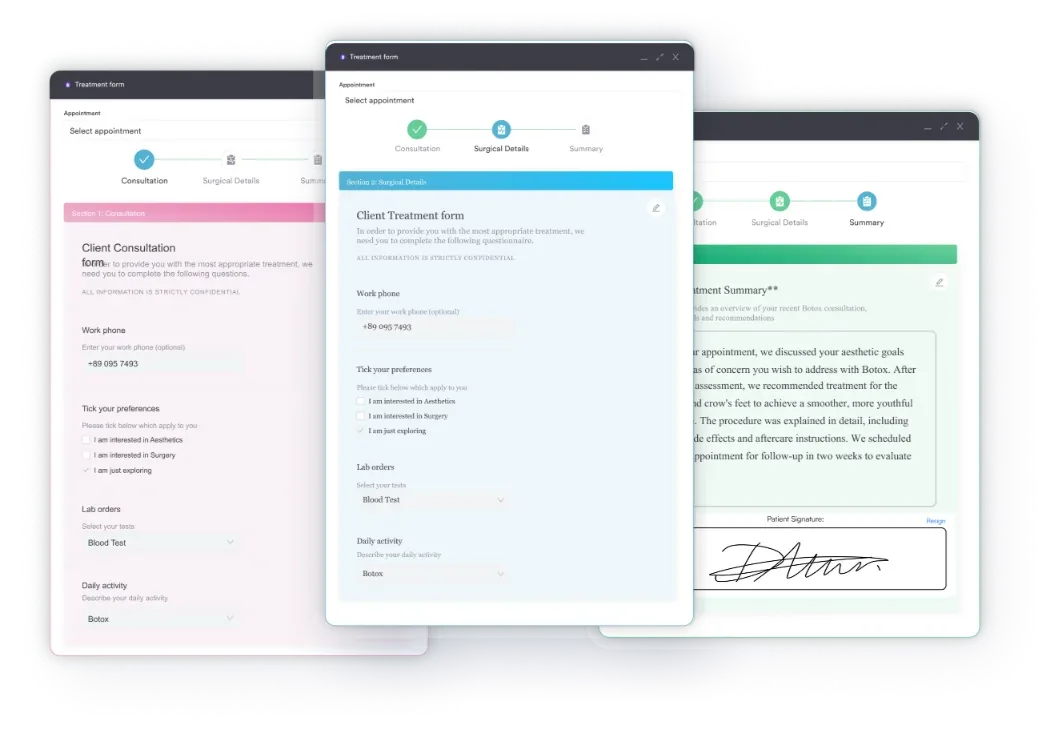
Follow-up reminders and progress notes sit in the same patient record, which keeps the dietary plan connected to the wider care pathway. At the one-week review, the clinician can note what the tracker showed next to the original intake.
Practices that run structured weight programs can see the wider workflow in our weight loss clinic software.

Pabau keeps dietary plans, intake forms and follow-ups in one patient record, so practice teams can see progress without rebuilding notes.

Treat the 7-day plan as the first draft of a patient’s diet, to be adjusted at every review. Its menu, food pattern and tracker give that first review something concrete to discuss.
Keep medication decisions with the prescriber, and change the menu wherever the tracker shows the patient struggling. A plan the patient still follows in week three does more for insulin sensitivity than a stricter one dropped after a few days.
Book a demo to see how Pabau keeps PCOS intake forms, plans and follow-up notes on one patient record.

Patient asking about cutting carbohydrates? Lower carb meal plan sets out a structured week for patients managing blood sugar.
Prefer an anti-inflammatory week? Anti-inflammatory meal plan pairs anti-inflammatory food choices with a sample 7-day menu.
Cutting added sugar first? Sugar-free diet food list gives patients a two-page checklist of sugar-free foods in five groups.
Building a custom week from scratch? Meal planning template lets you assign meals to days before the patient shops.
A 7-day PCOS diet plan PDF is a downloadable meal template that lays out breakfast, lunch, dinner and snacks for one week. It is a planning tool for clinicians, not a treatment for PCOS.
Low-glycemic and Mediterranean-style patterns are commonly used and can support insulin sensitivity, but no single diet is proven superior. A healthy, reduced-energy pattern the patient can sustain matters most, so tailor it with a clinician.
Diet can help manage some symptoms, but it does not cure PCOS. Most patients need a combined plan that includes medical review.
A reduced-carbohydrate pattern can suit some patients with insulin resistance. It should be individualized and monitored, not applied as a fixed rule.