Trauma response test: Free template for clinicians
A trauma response test is a structured screening questionnaire that helps clinic...

5
Last Updated: Oct 15, 2026

Postpartum depression reaches about 1 in 7 mothers and can start any time in the first 12 months.
A score of 10 or above on the EPDS or the PHQ-9 calls for a full clinical assessment.
The handout needs eight parts, from the baby-blues comparison through to the 988 crisis line.
About 1 in 10 fathers develops postpartum depression, so the page should speak to partners too.
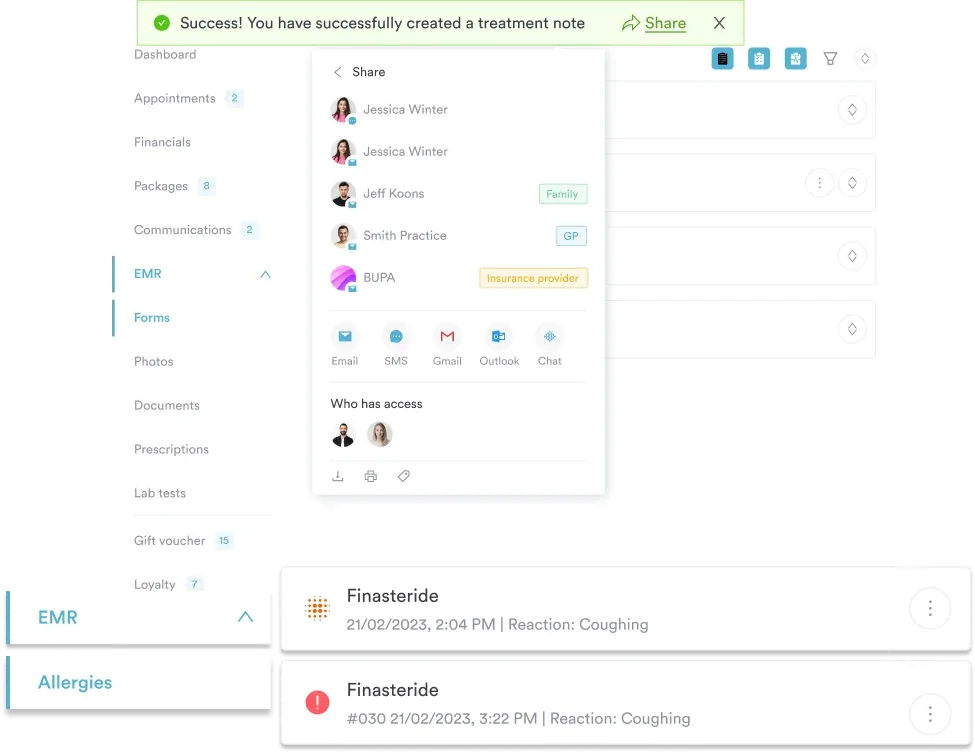
Pabau scores screening questionnaires automatically and files the result against the patient record.
A three-page handout for new parents covering what postpartum depression is, how it differs from the baby blues, and the symptoms to watch for. It also carries EPDS and PHQ-9 thresholds, treatment and breastfeeding notes, self-help steps, and the 988 crisis line.
Download templateA postpartum depression handout gives a new parent language for what she is feeling, plus a number to call. Postpartum depression reaches roughly 1 in 7 mothers, and it can begin any time in the first 12 months after delivery.
Patients rarely hear about that 12-month window. A mother who felt steady at six weeks reads a low mood at seven months as plain exhaustion. She waits, and the practice loses months of treatment time.
A page that names the symptoms, prints the EPDS and PHQ-9 thresholds, and lists the crisis numbers keeps that door open all year. Below is what belongs on it, and where it fits in your care pathway.
Postpartum depression is a mood disorder that develops after childbirth and does not lift on its own. ACOG separates it clearly from the temporary baby blues.
Patients describe persistent sadness, hopelessness, exhaustion, broken sleep, and trouble bonding with the baby. Severe cases include thoughts of self-harm, or of harming the infant.
Open the handout with that definition in plain language. Say that PPD is a medical condition, and that treatment works well. Put the 12-month onset window on the same page. A mother who felt fine at two weeks still sits inside the risk period.
Before the handout goes to print, check that the opening block states all six of these points:
Eight components cover the ground, and each one earns its place on the page.
Write every section for scanning, because a parent with a newborn reads in 30-second bursts. Digital intake forms can capture the mental health history that feeds straight into the handout conversation.
Patients confuse the two constantly, and the confusion costs weeks. Put a side-by-side comparison in the handout so a mother can place herself on it.
The same table gives you the language to document the distinction at the postpartum visit.
Note in the record which side of that line the patient sits on, and on what date. If the mood disturbance runs past two weeks, that note starts your PPD assessment trail.
Practice management software like Pabau keeps the note, the score, and the handout in one patient file.
Split the symptom list into emotional, physical, and behavioral groups. A parent who dismisses low mood as new-parent stress will often recognize herself in the physical group instead.
Emotional symptoms: persistent sadness, anxiety, irritability, and feeling overwhelmed. Parents also describe detachment from the baby or partner, loss of interest in activities they used to enjoy, and guilt. Intrusive thoughts about harm belong in this group.
Physical symptoms: extreme fatigue beyond normal sleep loss, appetite or weight changes, and body aches or headaches. Trouble sleeping even when the baby sleeps, agitation, and restlessness round out the picture.
Behavioral symptoms: withdrawing from family and friends, skipping personal care, and struggling to concentrate or decide. Reduced sexual desire and difficulty caring for the baby also sit here.
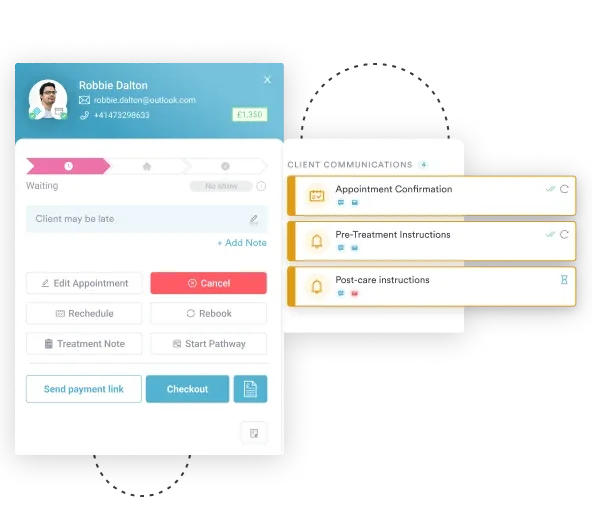
Automated reminders can prompt the 6-8 week screening for every postpartum patient on your list. Nobody has to remember it, and nobody gets skipped because the visit ran late.
Risk stacks, and patients need to see that written down. A mother who planned the pregnancy and felt ready can still develop PPD. Naming the risk factors in print removes the sense that she brought it on herself.
Capture the same factors at intake and flag high-risk patients before delivery. Preventive support during prenatal visits costs far less than a crisis call at four months.
Both tools set the same action threshold, which makes this part of the handout easy to write. Explain what each one measures, so patients understand why you are asking the questions.
Edinburgh Postnatal Depression Scale (EPDS): 10 items, scored 0 to 30. A score of 10 or above points to probable PPD and calls for a full clinical assessment. The EPDS asks about mood, anxiety, and intrusive thoughts specific to the postpartum period.
Patient Health Questionnaire-9 (PHQ-9): 9 items, scored 0 to 27. A score of 10 or above suggests moderate to severe depression and indicates a need for treatment. The PHQ-9 is more general, and most primary care teams already run it.
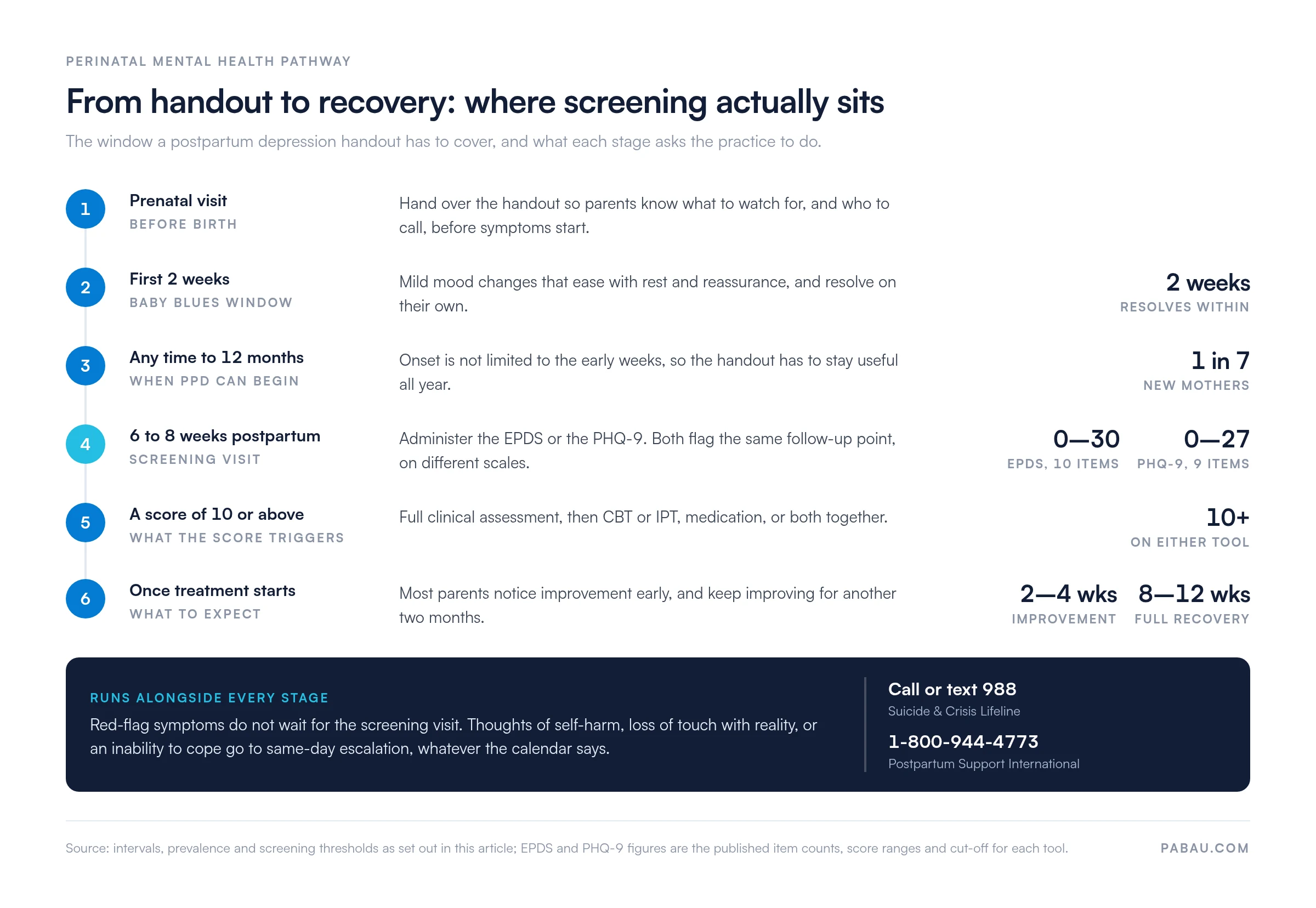
Anxiety often travels with postpartum depression, so many teams screen for both at the same visit. Our PHQ-9 and GAD-7 template carries the printable version of that pair. The timeline below places both tools in the wider pathway, from the prenatal handout through to recovery.
Measurements tracking scores EPDS and PHQ-9 responses automatically and files the result against the patient record. Every Pabau subscription includes it, so a flagged score reaches the clinician the same day the questionnaire comes back.
Say so on the page, in those words. Mothers who believe PPD is permanent delay the call that starts treatment. NIMH leads with the same message in its perinatal depression guidance. Then set out the three routes and what each one involves.
Psychotherapy: cognitive behavioral therapy (CBT) and interpersonal therapy (IPT) are first-line treatments for PPD. Both reduce symptoms and lower the risk of relapse. Weekly sessions with a therapist trained in perinatal mental health work best.
Medication: SSRIs such as sertraline and paroxetine are considered compatible with breastfeeding. Ask the patient to weigh her own risks and benefits with an obstetrician or psychiatrist. Starting medication does not mean stopping breastfeeding, and the handout should say that plainly.
Combination treatment: many mothers do best on therapy plus medication. Improvement usually starts 2 to 4 weeks after treatment begins, with fuller recovery around 8 to 12 weeks.
Paternal postpartum depression affects roughly 10% of fathers in the baby’s first year. A short partner section lets you screen the whole household from one handout.
Sleep loss, money worries, relationship strain, and biological changes all play a part. Symptoms in fathers often read as irritability, withdrawal, heavier drinking, or less time with the baby. Work stress usually gets the blame.
Give clinicians a line to open with. “Partners often notice mood changes after a baby arrives too. If you feel low, irritable, or disconnected, we can screen and support you as well.” The offer takes 15 seconds and catches cases that never reach a doctor.
Some symptoms cannot wait for the next appointment. Print them in a bordered box near the top of the handout, not buried on the back page.
Crisis resources: print the 988 Suicide & Crisis Lifeline (call or text 988), the Postpartum Support International HelpLine on 1-800-944-4773, and your local emergency number. Put them on the front page as well, where a shaking hand can find them.
Handing it over is step one. The page only changes outcomes when it is tied to an action someone has already booked.
Timing: give it out at a prenatal visit, so the mother knows what to watch for. Give it again at the 6-8 week visit, when you run the screening.
Customization: add your practice’s mental health contacts, preferred therapy referrals, and local support group times before you print.
Documentation: record that you reviewed the handout and what the patient said about it. A date and one sentence is enough.
Follow-up: book the next check-in before she leaves the room. A screening reminder that lands three months later still finds her inside the risk window.
Before you hand a copy to anyone, check three things:
Most practices run PPD screening on memory and paper. Someone prints the EPDS, the mother fills it in, and a clinician adds up the score by hand. The sheet then sits in a folder, unlinked to the visit note.
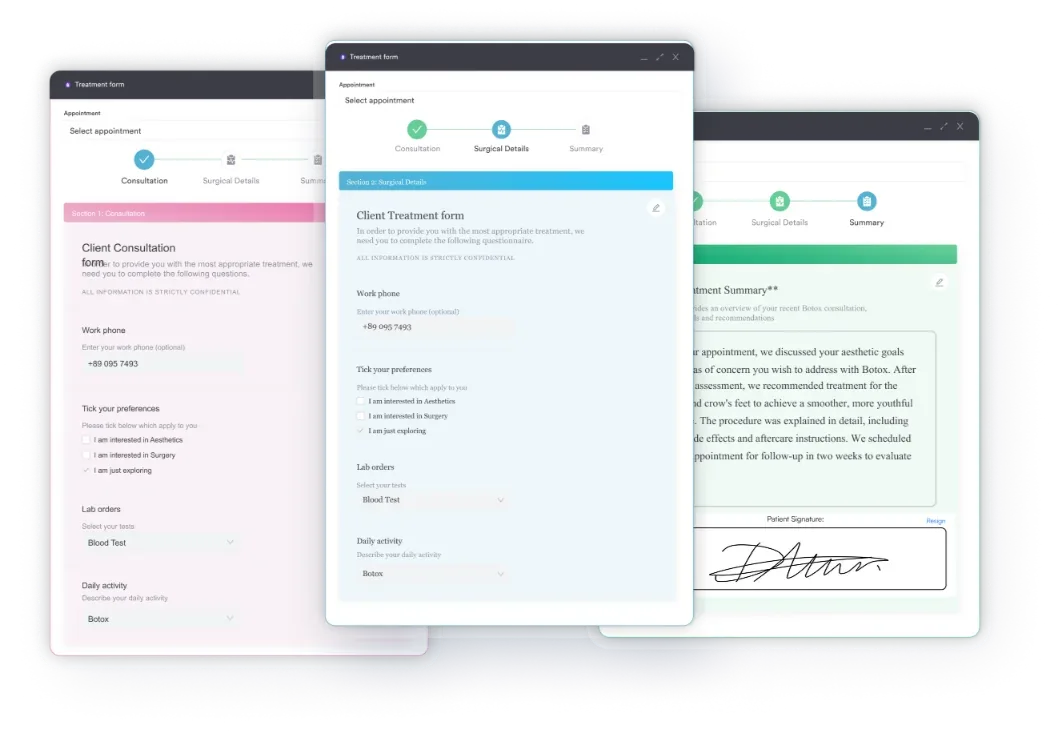
Pabau runs the same job as one workflow. The questionnaire goes out with the appointment reminder, the answers score themselves, and the result files against the patient record. A score of 10 or above flags for review that day.
Perinatal care also crosses two desks. One team screens, and another treats. Pabau covers both, from obstetric follow-up through to therapy practice management, so the referral, the notes, and the scores stay on one timeline.
You end up with fewer missed screenings and a record that stands up at audit. Every Pabau subscription includes the forms, the automation, and the reporting, with no feature tiers.

Pabau sends the 6-8 week questionnaire with the appointment reminder, scores EPDS and PHQ-9 responses automatically, and files the result against the patient record.

The handout is a small artifact with a long reach. It carries the fact patients rarely hear, that the risk runs a full 12 months. It also puts a phone number within reach on the worst night.
Print it, hand it over twice, and tie it to a screening that is already booked. Skip that last step and the page becomes decoration. Do it, and a mother who would have waited until month seven gets treated at week eight.
The trade-off worth remembering is administrative, not clinical. Screening only holds up when someone owns the reminder, the score, and the note. Book a demo to see how Pabau handles all three for perinatal patients.

Screening for anxiety at the same visit? The PHQ-9 and GAD-7 template puts both questionnaires on one printable form.
Need a two-question pre-screen? The PHQ-2 template is the short version most teams run before the full PHQ-9.
Patient scoring in the red-flag range? The mental health safety plan walks you through building a plan with her before she leaves.
Writing the self-help section? Coping skills for depression covers the daily techniques worth printing on the handout.
Tracking recovery between visits? The daily mood chart gives the patient a simple way to log mood between appointments.
Yes. The American Academy of Pediatrics recommends maternal depression screening at the 1-, 2-, 4- and 6-month well-child visits. That schedule catches cases that start after the postpartum visit is over.
Postpartum psychosis is rare, affecting 1 to 2 births per 1,000, and it usually starts within the first two weeks. Symptoms include hallucinations, delusions, and severe confusion. It is a medical emergency that needs same-day psychiatric care.
Yes. Post-adoption depression is documented, and non-birthing partners develop it too. Neither group goes through the hormone shift of childbirth, so screening rests on the symptom picture rather than on delivery timing.
Usually. The USPSTF gives perinatal depression screening a Grade B recommendation, so most commercial plans cover it as preventive care. Check your payer’s rules on which screening code to report.
Aim for a sixth to eighth grade reading level, the usual health literacy standard for patient materials. Short sentences, plain words, and white space matter more than the exact score.