Health appraisal form
A health appraisal form is a record a licensed provider signs to document someon...

3
Last Updated: Oct 13, 2026
Psychiatry billing software decides whether your practice gets paid accurately, on time, and without constant denial rework. ICANotes is the faster route for a solo or small behavioral health practice, because psychiatric CPT codes, payer rules and note templates arrive pre-configured.
Pabau, the practice management platform we build, is the stronger fit once a practice adds clinicians, locations or a second specialty. One subscription then covers billing, scheduling and clinical records across every discipline, instead of a separate system for each.
They price differently too. ICANotes bills per clinician, so its monthly cost climbs with every hire, while Pabau moves up a user band. This comparison covers billing workflow, CPT code support, telepsychiatry rules and published pricing. It also covers EHR integration and practice fit, so you can make the call for your own setup.

Psychiatry billing software manages CPT code submission, insurance claims, ERA posting, and denial follow-up for psychiatric practices.
ICANotes ships with psychiatric CPT codes and note templates pre-configured, while Pabau offers broader practice management with configurable billing workflows.
Telepsychiatry billing often requires payer-specific place-of-service and modifier support, including POS 02 or 10 and modifier 95 where payers require it.
ICANotes publishes $55 to $213 per clinician each month, while Pabau’s US plans run $104 to $386 by user count.
Pabau suits multi-specialty or growing practices, while ICANotes suits solo and small groups working only in psychiatry and behavioral health.
Psychiatry billing software handles insurance claim submission, CPT code validation, ERA and EOB posting, and patient statements for psychiatric and behavioral health practices. It sits between clinical documentation and revenue cycle management, connecting what clinicians document to what payers reimburse.
General medical billing software handles broad CPT code sets, but rarely ships with psychiatric codes pre-loaded or pre-validated against behavioral health payers. Psychiatry-specific platforms solve that at the cost of clinical flexibility. Your choice depends on whether you need psychiatric workflow configured out of the box, or broader operational infrastructure with billing as one part.
Four capabilities separate purpose-built psychiatry billing software from general tools. Verify each one before you commit to a platform.
The table below compares Pabau and ICANotes across the billing and clinical features that matter most to psychiatric practices. Feature data comes from documentation published on each platform’s website. Claims marked with ⚠️ carry a qualification.
The claims lifecycle in a psychiatric practice runs from documentation through code selection, claim scrubbing, payer submission, ERA posting, and denial follow-up. How each platform handles that cycle decides how much manual work your billing team absorbs.
ICANotes was built specifically for behavioral health billing. The platform connects to a clearinghouse, pre-validates psychiatric CPT codes against payer rules before submission, and offers ERA posting through that clearinghouse. Denial management tools let billers spot patterns by payer and by code.
Some reviewers do report friction with the clearinghouse connection, and with denials that fail to post back to the patient account. Ask for a walkthrough of denial posting during the demo.
Pabau provides invoicing, insurance billing, and payment collection inside one practice management environment. Its claims management software handles claim creation, submission, and reconciliation. The workflow is configurable, which suits practices running several service lines. Psychiatric payer rules and CPT code sets do need configuring first, rather than arriving ready to bill.
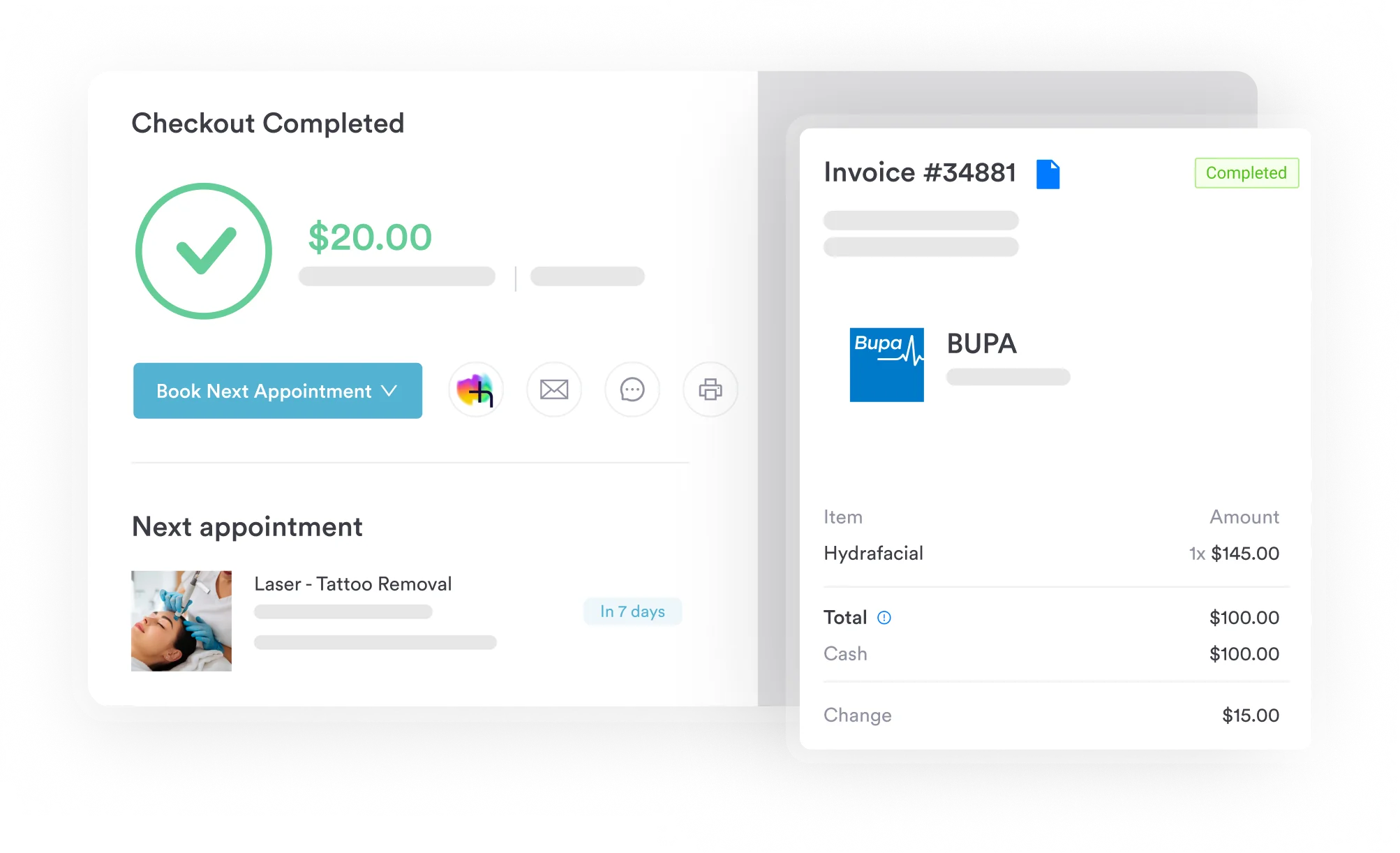
For a solo psychiatrist seeing 20 to 30 patients a week, the pre-configured ICANotes workflow means faster time to billing. For a group running psychiatry alongside general medicine or another specialty, Pabau avoids keeping a separate system per discipline.
Psychiatric billing relies on a specific CPT code set that general medical billing platforms rarely configure by default. The six codes below cover most outpatient psychiatric encounters, and each one has to match the documentation behind it.
The “configurable” label on Pabau is not a weakness for every practice type. A psychiatric NP who also provides integrative medicine or primary care benefits from one system that carries several CPT code sets. A solo psychiatrist doing only evaluation and therapy will find ICANotes faster to deploy.
Telepsychiatry billing adds another layer. Since the COVID-19 Public Health Emergency ended in May 2023, payers have applied varying place-of-service rules. POS 10 covers telehealth in the patient’s home and POS 02 covers other sites, and reimbursement differs by payer and service type. Modifier 95 is payer-dependent, and Medicare generally does not require it alongside POS 02 or 10.
ICANotes builds telepsychiatry billing into the platform with modifier support, though telehealth itself is a paid add-on. Pabau’s telehealth software supports virtual appointment types and the billing workflows behind them. Check modifier-level automation against your own payer mix before you commit either way.
Both vendors publish list prices, and they are built on different units. Practices billing Medicare should also weigh reimbursement against subscription cost, using the CMS fee schedules.
| Plan | Users | Price (US) |
|---|---|---|
| Solo | 1 user | $104 / month |
| Team | 2–3 users | $187 / month |
| Medium | 4–5 users | $271 / month |
| Group | 6–15 users | $386 / month |
| Enterprise | 16+ users, multi-location | Custom quote |
Pabau’s pricing is based on location and number of users, so the subscription scales as the practice grows. Every plan includes every feature, including billing workflows, scheduling, clinical documentation, and reporting. The core subscription carries no per-claim fees.
| Plan | Price per full-time clinician | What it covers |
|---|---|---|
| Notes only | $55 / month | Unlimited notes, non-prescribers only |
| Non-prescribing | $75 / month | Adds scheduling, portal and billing tools |
| Prescribing | $213 / month | Adds e-prescribing and lab orders |
| Telehealth add-on | $20 / user / month | Optional; AI Scribe is a further $49 per user |
| Activation | $99 one-off | Charged on sign-up |
ICANotes charges per clinician, and part-time tiers run lower with a monthly note cap. Telehealth and the AI Scribe sit outside the subscription as paid add-ons. Claims, statements and text reminders are quoted by sales rather than listed, so ask for those figures before you compare the two platforms.
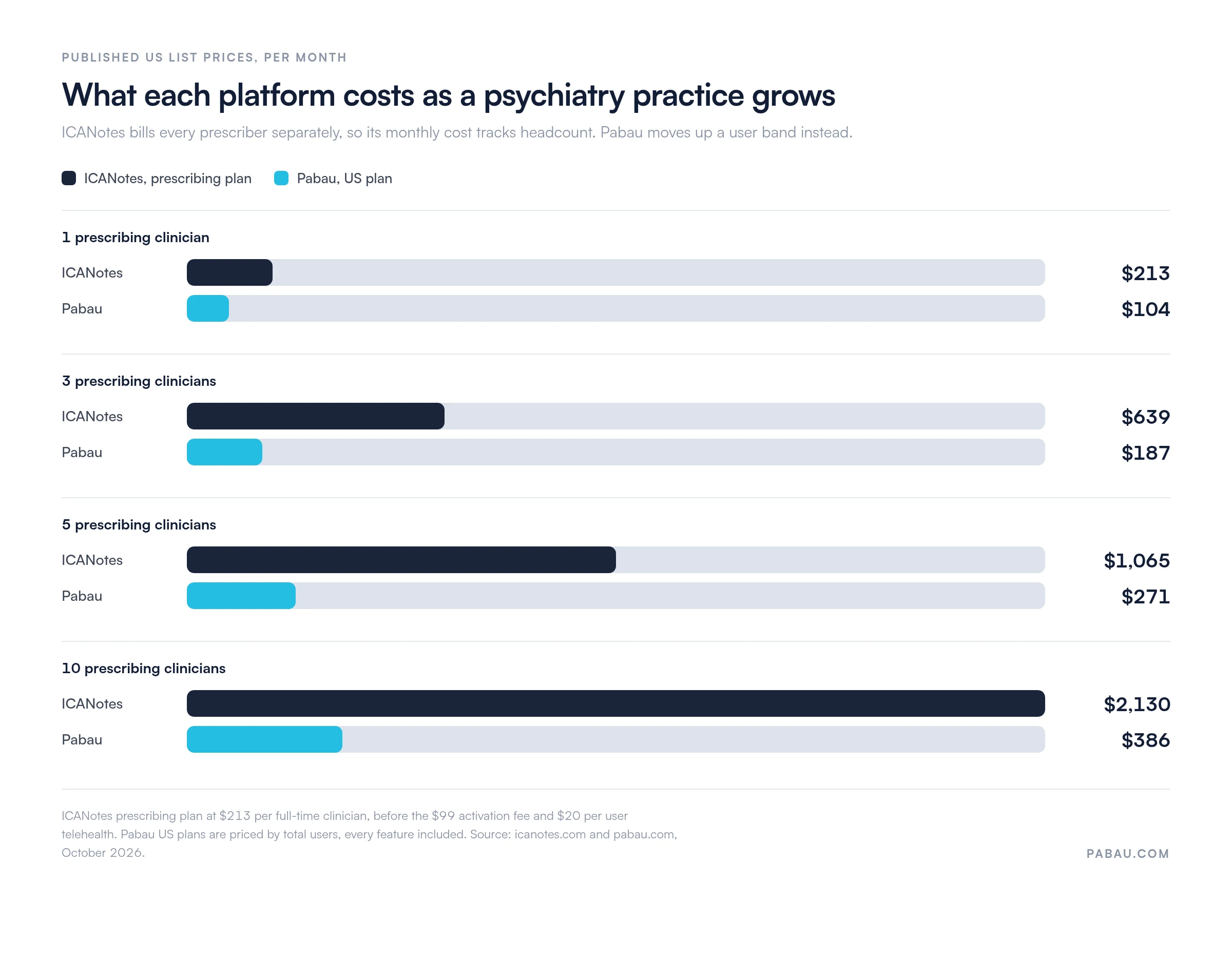
Total cost of ownership is where the two models separate. Pabau’s pricing is based on location and number of users, with every plan including every feature, while ICANotes bills each prescriber individually. The chart below runs both published US price lists out across practice sizes.
The link between documentation and billing is where psychiatric practices feel the most friction. When a clinician finishes a note, the billing code should flow into the claim without manual re-entry. Both platforms connect the two, by different routes.
ICANotes provides psychiatric-specific clinical templates: mental status examinations, progress notes structured around presenting problems, treatment plans with goal tracking, and medication management records. Those templates are tightly coupled to billing code selection, so what gets documented and what gets billed stay close together.
Pabau connects clinical notes, treatment plans, and patient records to invoicing and billing. Its digital intake forms are customizable, so a psychiatric practice can build MSE-structured forms and consent workflows around its own protocols. The trade-off is setup time, since the ICANotes templates are ready on day one.
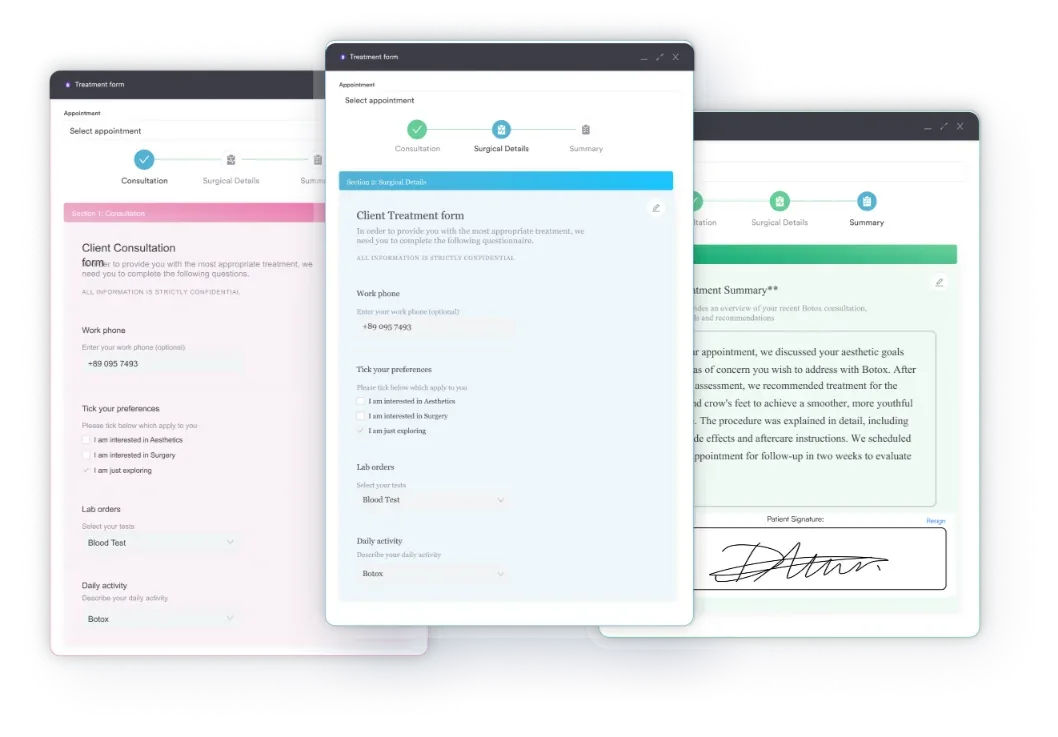
Pabau’s psychiatric evaluation template is a useful starting point for documentation structure. It sets out the components of a compliant evaluation record. Scheduling is tied to billing records on both platforms, with appointment types, provider calendars and no-show tracking.
Psychiatric records are among the most sensitive categories of protected health information. Many states layer extra protections on top of HIPAA. Separate confidentiality requirements come from 42 CFR Part 2, which covers substance use disorder records documented alongside psychiatric notes.
ICANotes is built for behavioral health and confirms HIPAA-compliant architecture with a BAA available. Pabau runs HIPAA-compliant infrastructure, and its compliance management software covers audit trails, access control and records retention. Both vendors offer Business Associate Agreements, which HIPAA requires of any software vendor handling PHI.
Practices handling substance use disorder records should ask each vendor whether the platform supports 42 CFR Part 2 consent segmentation. Not every behavioral health platform addresses that requirement explicitly, so get the answer in writing before signing.
Practice fit decides this comparison more than feature counts do. A practice that runs talk therapy alongside psychiatry needs therapy practice management that covers both caseloads in one system. A prescriber-only practice can run something narrower and deploy it faster.
Put simply, a practice that does only psychiatry and therapy gets billing faster with ICANotes. A practice that is growing, multi-disciplinary, or needs more than a billing and notes tool will get more out of Pabau. Our psychiatry EMR software page covers those clinical and operational features in more detail.
Verified review data for Pabau sits on Capterra, where the platform holds 4.7 out of 5 from 651 verified reviews. Reviewers highlight ease of use and the breadth of the practice management features, alongside an initial learning curve during onboarding.
ICANotes holds about 4.1 out of 5 from roughly 130 verified reviews on its Capterra profile. Recurring complaints concern billing and the clearinghouse connection, including denials that do not post back to the patient account. Praise centers on the psychiatric template library and the speed of charting.
Weigh recency and specialty relevance when you read either profile. A behavioral health practice should look for Pabau reviews written by mental health or multi-specialty practices. Averaging across the aesthetic practices that also use the platform tells you less.
Most psychiatric practices split this work across systems. The note lives in one place and the invoice in another, so someone retypes the code before the claim goes out. Every retype is a chance for the claim to come back.
In Pabau, the appointment, the clinical note, the invoice and the claim share one patient record. A clinician signs the note, and the charge carries its CPT and ICD-10 codes already attached. Billing picks it up the same day, and the A/R report shows what is still outstanding by payer.
Every subscription includes the full platform, so scheduling, forms, invoicing, insurance billing and reporting arrive together. A practice adding a therapist or a second location moves up a user band instead of buying another system. Onboarding is structured rather than self-serve, so the psychiatric code sets and payer rules get configured with you.

Pabau brings scheduling, clinical documentation, invoicing, and insurance billing into one system. Book a demo to see how it fits your practice.

Specialization and breadth pull in opposite directions here. ICANotes removes the setup problem for a practice that does only psychiatry, and that head start is worth paying for in year one.
The arithmetic changes as clinicians join. At five prescribers the published monthly difference runs close to $800, and that is before telehealth, the AI Scribe and quoted claims fees. Configuration time stops looking expensive at that point.
So buy for the direction your practice is heading, not for today’s headcount. If psychiatry stays the whole business, take the specialist tool. If it is one service among several, take the platform that carries the rest. Book a demo to see how Pabau handles psychiatric claims, notes and invoicing in one system.

Need a structured psychiatric documentation framework? Psychiatric evaluation template covers the components of a compliant psychiatric record, from chief complaint through mental status examination.
Still choosing an EHR for the clinical side? Psychiatry EHR walks through the charting, prescribing and scheduling features a psychiatric practice relies on daily.
Evaluating mental health EMR options more broadly? Mental health EMR software outlines how Pabau supports behavioral health practices across documentation, scheduling, and billing workflows.
Want the note itself to carry the billing detail? Progress notes for psychotherapy gives you a session-note structure that supports the code you submit.
The best psychiatry billing software depends on your practice type. ICANotes leads for solo and small behavioral health practices that want psychiatric CPT codes and clinical templates pre-configured. Pabau fits multi-specialty or growing group practices that need billing, scheduling and practice management in one system. Both are HIPAA-compliant and support insurance claim submission.
Psychiatry-specific platforms like ICANotes ship with psychiatric CPT codes pre-loaded and validated against behavioral health payer rules. That set covers 90791, 90834, 90837, 90847 and 90853. General-purpose platforms like Pabau support CPT code entry and billing configuration, but need initial setup for psychiatric code sets and payer rules.
ICANotes publishes $55 a month for notes only, $75 for non-prescribing clinicians and $213 for prescribers, per full-time clinician. A $99 activation fee applies, and telehealth adds $20 per user each month. Pabau’s US plans run from $104 a month for a solo setup to $386 for 6 to 15 users. Pricing is based on location and number of users, and every plan includes every feature.
Yes. Both Pabau and ICANotes support insurance claim submission through a clearinghouse, with ERA and EOB posting to reconcile payments. ICANotes ships with behavioral health clearinghouse connections configured, though some reviewers report friction there. Pabau’s claims workflows need configuring for psychiatric payer rules, then cover the same claims lifecycle.
Yes. Both platforms support solo practitioners and small group practices. ICANotes suits solo psychiatrists and small behavioral health practices, because its psychiatric configuration arrives ready to use. Pabau works for small practices that also want scheduling, patient communications and multi-discipline clinical documentation alongside billing.