Key Takeaways
ClearSilk is a 1064 nm Nd:YAG non-invasive laser used for skin rejuvenation, redness reduction, and collagen stimulation across all Fitzpatrick skin types.
Typical treatment series is 3-6 sessions spaced 2-4 weeks apart, with minimal downtime and immediate post-treatment care compliance essential for results.
Informed consent must document contraindications, Fitzpatrick type, treatment expectations, and post-care instructions to protect both patient safety and practice liability.
Pabau’s digital consent forms and treatment records keep all ClearSilk documentation organized, linked to client profiles, and audit-ready for compliance verification.
Download your free ClearSilk laser treatment template
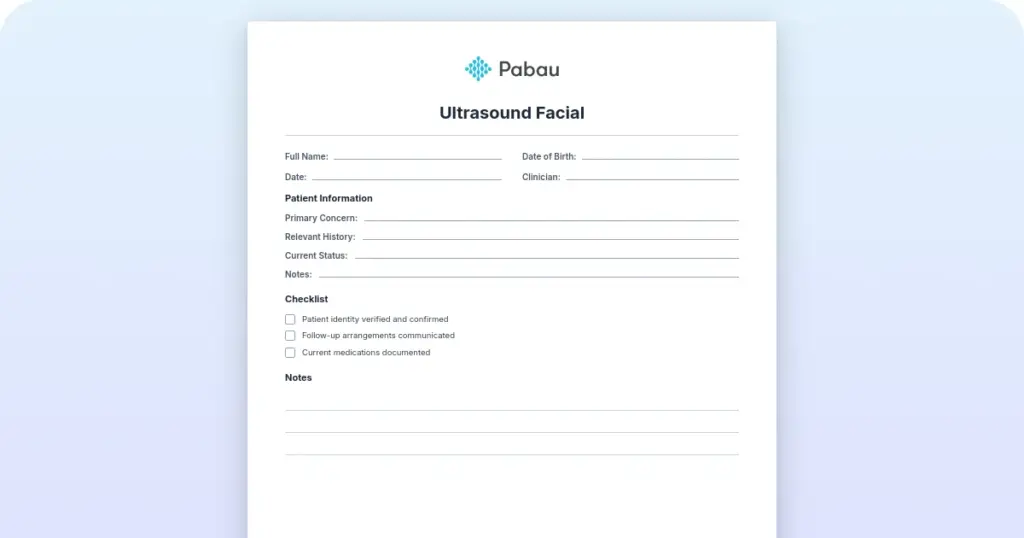
ClearSilk consent form and treatment template
A downloadable consent form covering treatment overview, risks and benefits, medical history screening, and photo consent for ClearSilk laser sessions. Use it as your starting point, then add any extra screening fields your practice needs, like Fitzpatrick typing or medication history.
Download templateA patient books in for ClearSilk expecting a quick, no-downtime laser session, and that’s usually exactly what they get. What trips practices up isn’t the treatment itself. It’s everything wrapped around it: screening for contraindications, capturing informed consent, and documenting the session properly. Get that paperwork right before the laser handpiece ever touches skin, and the rest of the appointment runs itself. The template below gives your practice a starting point for that consent process, alongside the clinical details you need to talk patients through it with confidence.
What is ClearSilk laser treatment?
ClearSilk is a non-ablative laser system made by Sciton. It uses a 1064 nm neodymium-doped yttrium aluminum garnet (Nd:YAG) wavelength to stimulate collagen production and rejuvenate skin. Unlike ablative lasers, which remove the surface of the skin, ClearSilk delivers controlled thermal energy deep into the dermis. That triggers a healing response that builds new collagen over the following weeks.
It’s FDA-cleared for aesthetic use and works across all Fitzpatrick skin types (I-VI), which is one reason so many med spas and aesthetic practices running laser clinic software offer it to such a broad range of patients.

The name “ClearSilk” points to the result Sciton designed for: visible improvement with close to zero post-treatment downtime. That makes it popular with working professionals and anyone who can’t afford a long recovery. Sessions run 20-30 minutes, and patients typically return to daily activities right away, though sun protection and a simple skincare routine matter for the best outcome.
Because eligibility varies by skin type and medical history, most practices pair the treatment with intake and consent software so screening happens before a patient ever sits in the chair.
How ClearSilk works: The 1064 nm Nd:YAG mechanism
Understanding the physics behind ClearSilk matters for patient education and informed consent. The 1064 nm wavelength travels deep into the dermis without damaging the epidermis on the way in. Once there, it heats water and collagen in the dermal tissue, causing controlled thermal injury that kicks off the body’s natural wound-healing response.
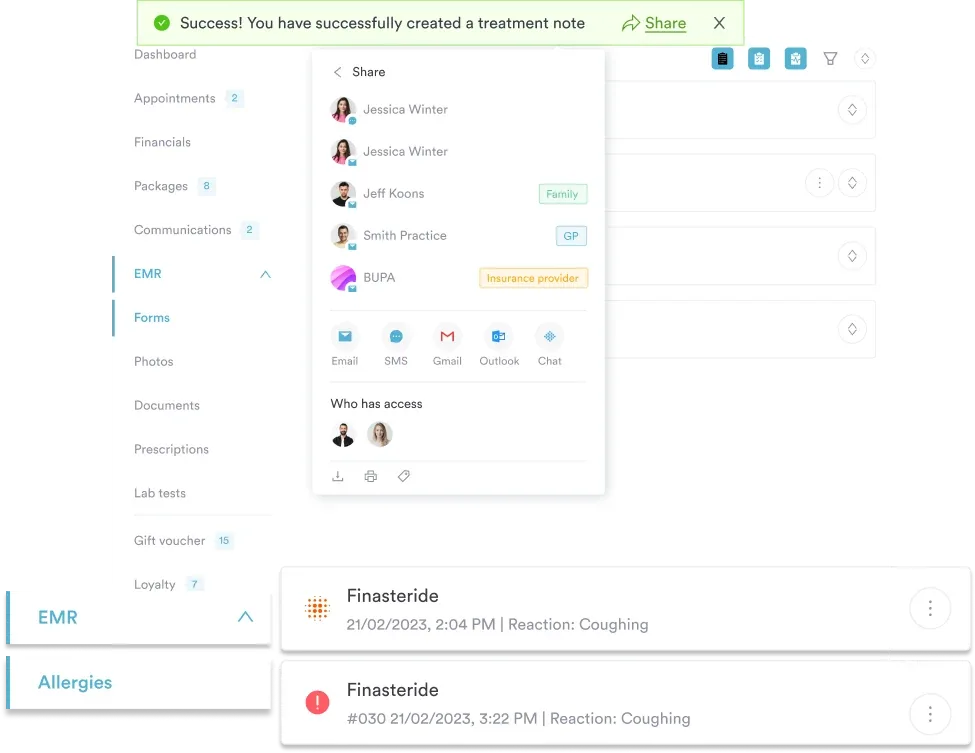
Fluence and pulse settings change by Fitzpatrick type and treatment area, so it helps to log the exact numbers used at each visit. Treatment-note software keeps that history consistent when more than one practitioner is running the device.
- Collagen remodeling: Heat triggers immediate collagen contraction, then long-term neocollagenesis (new collagen formation) over the following 12 weeks.
- Melanin interaction: The 1064 nm wavelength has comparatively low melanin absorption, so it passes through epidermal melanin with little competing absorption and reaches the hemoglobin-rich vascular targets deeper in the dermis. That’s why ClearSilk works well on vascular redness, and why burn and hyperpigmentation risk stays lower across darker skin tones.
- Non-ablative profile: The epidermis stays intact, so downtime is minimal, typically mild redness that resolves within hours to a day or two.
- Cumulative improvement: Results build across sessions, with peak collagen remodeling around 12 weeks after the final treatment.
What conditions does ClearSilk treat?
ClearSilk’s versatility is one of its biggest clinical advantages. It addresses a wide range of concerns, and each one should show up clearly in your consent form and clinical notes.
- Facial redness and rosacea: The vascular benefits of 1064 nm energy make ClearSilk effective for chronic redness, vascular lesions, and rosacea-type symptoms.
- Enlarged pores: Collagen stimulation tightens skin and reduces pore appearance, with results improving across the treatment series.
- Uneven skin tone and melasma: Melasma needs careful sun protection as part of any treatment plan, and ClearSilk isn’t a primary melasma treatment. It can still improve mixed hyperpigmentation through collagen remodeling.
- Fine lines and skin texture: Collagen rebuilding smooths fine lines and improves texture. Results are subtle after one session but build up across a full series.
- Post-inflammatory hyperpigmentation: A lower-risk option for certain pigmentation concerns, though skin type and recent sun exposure still need checking beforehand.
Who’s a good candidate for ClearSilk?
Not every patient is a good ClearSilk candidate. A thorough consultation before treatment is what catches contraindications and sets realistic expectations. Your consent form should capture Fitzpatrick skin type, medical history, current medications (especially photosensitizing agents), and any active skin conditions.
- Fitzpatrick types I-VI: ClearSilk works across all skin types, though darker skin (IV-VI) benefits from lower fluence settings to reduce hypopigmentation risk.
- Excellent candidates: Patients with Fitzpatrick I-III, mild-to-moderate redness, and healthy skin without active acne or a recent chemical peel.
- Relative contraindications: Recent sun exposure or sunburn, active herpes simplex lesions, current retinoid use (typically paused 3-5 days pre-treatment), and unrealistic expectations about downtime or results.
- Absolute contraindications: Pregnancy, active skin infection, a history of abnormal scarring or keloids, Accutane use within the past 6 months, and uncontrolled photosensitive disorders.
What a ClearSilk treatment session actually looks like
Walking patients through what happens next cuts down on anxiety and keeps compliance high. Your documentation should mirror these steps, so every practitioner runs the same protocol.
- Consultation and screening: Assess medical history, contraindications, Fitzpatrick type, and treatment goals. Document findings in your consultation template.
- Informed consent: Get written consent covering risks, benefits, realistic outcomes, and post-care requirements. Add a photo release if before-and-after images are planned.
- Skin prep: Cleanse the skin thoroughly. Remove sunscreen, makeup, and any other topical products. Some practitioners apply a cooling gel or numbing cream first, though it’s rarely needed.
- Laser passes: Deliver one to two passes with the laser handpiece, using an overlapping technique across the treatment area. Fluence and pulse width change by Fitzpatrick type and skin condition. A session runs 20-30 minutes.
- Post-treatment cooling: Apply cooling gel or a cold compress to calm redness. Most of it fades within 1-2 hours.
- Aftercare instructions: Hand over written post-care guidance covering SPF 30+ sunscreen, gentle skincare, and activity limits (see the template section below).
ClearSilk before and after: What results can patients expect?
Setting a realistic timeline upfront heads off most post-treatment complaints. Document expected outcomes in the consent form and in any follow-up messages.
- Immediate post-treatment (0-24 hours): Mild redness, maybe a little warmth. Skin can feel tight. No peeling or visible injury.
- Days 1-7: Redness fades and subtle tightening begins. No flaking or major texture change yet.
- Weeks 2-12: Collagen remodeling builds gradually. Patients notice improvement in fine lines, pore size, and overall radiance, peaking around week 12.
- Typical series: 3-6 sessions spaced 2-4 weeks apart give cumulative, lasting results. A single treatment gives modest improvement, so a full series is what delivers a visible change.
- Longevity: Results usually last 6-12 months. Annual maintenance sessions help sustain the collagen stimulation.
Store before-and-after photographs in the patient’s record so progress is easy to reference in future consultations.
Recovery and downtime after ClearSilk treatment
ClearSilk’s minimal-downtime profile is a real selling point, but patients still need to follow post-care instructions for the best, safest results. Automated aftercare emails help that guidance actually stick.
- Downtime: Zero to minimal. Patients can go back to work, exercise, and most daily activities right away, and makeup can typically go on the same day, in keeping with ClearSilk’s no-downtime design.
- Sun protection (critical): SPF 30+ daily for at least 48 hours, ideally 1-2 weeks. Skipping this is the leading cause of post-inflammatory hyperpigmentation.
- Moisturizer and gentle cleansing: Use fragrance-free, non-irritating products for 72 hours post-treatment. Avoid harsh actives like retinoids, vitamin C serums, and acids.
- Avoid heat and sweat: Skip hot showers, saunas, and strenuous exercise for 24-48 hours to keep redness from flaring up.
- Avoid topical irritants: Pause retinoids, benzoyl peroxide, and chemical exfoliants for 3-5 days post-treatment.
- No other treatments: Skip additional laser treatments, chemical peels, or microdermabrasion for 2 weeks after ClearSilk.
ClearSilk vs BBL: What’s actually different
Patients and practitioners often ask how ClearSilk stacks up against Broad Band Light (BBL) platforms. Knowing the real differences helps with patient selection and informed consent. Tailored treatment planning weighs both options against skin type and goals.
Key takeaway: ClearSilk excels for vascular concerns and darker skin types. BBL works better for pigmented lesions and sun damage on lighter skin. Many practices offer both and choose based on patient presentation and goals.
How much does ClearSilk cost?
Pricing transparency in your consultation and consent process builds trust. Costs vary by geography, practice overhead, practitioner qualifications, and treatment area size.
- Single session: £150-400, depending on treatment area (full face typically £250-350).
- Package pricing: A three-session series runs £400-900, and a six-session series runs £750-1,800. Many practices offer 10-20% discounts for prepaid packages.
- Maintenance treatments: Annual single sessions at £150-350 sustain results.
- Add-ons: Numbing cream, post-treatment skincare, and topical products are often offered separately, so list them individually in your pricing structure.
Your compliance documentation should spell out pricing clearly, so patients aren’t surprised later and financial consent stays on record.
What your ClearSilk consent form should include
A solid consent form protects your patients and your practice if anything about the treatment gets challenged later. Whatever form you use, whether it’s the template above or one you’ve built yourself, make sure it covers these elements:
- Patient demographics and contact: Full name, date of birth, contact details.
- Fitzpatrick skin type assessment: Clinician-assessed skin type (I-VI) documented pre-treatment.
- Medical history screening: Current medications (especially photosensitizers), allergies, pregnancy/breastfeeding status, history of keloid formation, recent chemical peels or laser treatments.
- Contraindication checklist: Absolute contraindications (pregnancy, active herpes, recent Accutane use) and relative contraindications (recent sun exposure, active acne, retinoid use).
- Treatment description: Plain-language explanation of how ClearSilk works, expected sensation during treatment, and realistic timeline for results.
- Risks and benefits: Common side effects (erythema, temporary dryness), rare complications (hyperpigmentation, scarring with improper aftercare), and expected benefits.
- Photographic consent (if applicable): Explicit permission to take before-and-after photos and how they will be used and stored.
- Post-care acknowledgment: Patient signature confirming they understand aftercare instructions, particularly sun protection requirements.
- Signature blocks: Patient signature and printed name, clinician signature and title, date of treatment.
If you’re starting from the downloadable template above, check it against this list before rolling it out to your team. Templates vary, and some skip fields like Fitzpatrick typing or medication history that your practice may still want on record.
Pre- and post-treatment instructions for ClearSilk patients
Pre-treatment (3-7 days before appointment):
- Avoid sun exposure and use SPF 30+ daily.
- Discontinue retinoids, vitamin C serums, and exfoliating acids 3-5 days before treatment.
- Avoid tanning beds and self-tanning products for 1 week prior.
- Do not wax, pluck, or use depilatory creams on the treatment area for 2 weeks prior.
- Tell the clinician about any new medications or supplements, especially photosensitizing drugs.
- Arrive with clean skin. Remove makeup and sunscreen before the appointment.
Post-treatment (immediately and ongoing):
- Apply a cool compress or cooling gel for 15-30 minutes post-treatment to minimize redness.
- Use SPF 30+ sunscreen daily for a minimum of 48 hours, ideally 1-2 weeks post-treatment.
- Apply fragrance-free moisturizer 2-3 times daily for 5-7 days.
- Avoid hot water, steam, saunas, and strenuous exercise for 24-48 hours.
- Skip retinoids, acids, benzoyl peroxide, and vitamin C products for 3-5 days.
- Avoid other laser treatments or chemical peels for 2 weeks.
- Sleep on clean pillowcases, and avoid touching or picking at treated skin.
- Contact the clinician if unusual blistering, prolonged redness, or signs of infection show up.
Managing ClearSilk treatments with practice software
Practices managing multiple ClearSilk patients across a treatment series get real value from structured software workflows. Practice management software like Pabau tracks consent status, appointment series, and treatment notes in one record, instead of scattered folders and spreadsheets.
Good medical spa software should support:
- Digital consent storage and e-signature capture, tied automatically to the patient record.
- Appointment series tracking, so staff can see where each patient sits in a 3-6 session package.
- Treatment notes that log laser parameters and patient response per session.
- Encrypted, HIPAA-compliant before-and-after photo storage.
- Automated post-treatment instruction emails sent right after the appointment.
- Compliance audit trails covering every consent and treatment record.
That kind of integrated workflow cuts the manual documentation load and keeps care consistent across every practitioner on the team. Skin With Bea Esthetics, a med spa in Scottsdale, automated its pre-care and consent forms this way so paperwork stopped eating into appointment time.

Ready to streamline your ClearSilk documentation?
See how Pabau's consent forms and treatment record system simplifies compliance and patient management for laser practices.

Conclusion
ClearSilk holds up as a safe, effective, non-invasive laser option for aesthetic practices, but none of that matters if the consent and documentation side falls apart. The template above covers the basics: patient screening, contraindication checks, risk and benefit disclosure, and pre- and post-care instructions. Standardize that process inside practice management software, and you cut liability exposure, get more consistent aftercare compliance, and free up time that used to go into paperwork. Book a demo to see how Pabau handles consent and treatment tracking for a laser practice like yours.
Continue your research
Running PDRN or injectable treatments alongside lasers? AMI Eyes consent template covers screening and aftercare for periorbital PDRN treatments.
Also handling surgical consultations? Cheekbone reduction intake form walks through pre-op screening and post-op care for that procedure.
Need a consent form for a different injectable? Bocouture consent template gives you a ready starting point for that brand.
Offering dermaplaning alongside ClearSilk? Dermaplaning consent form covers screening and aftercare for that treatment too.
Running chemical peels in the same practice? Blue Peel protocol guide walks through screening and post-peel care.
Frequently asked questions about ClearSilk
Is ClearSilk safe for all skin types?
Yes, ClearSilk is safe for Fitzpatrick skin types I-VI because the 1064 nm wavelength penetrates below melanin without damaging the epidermis. Darker skin types (IV-VI) require lower fluence settings and careful post-treatment sun protection to minimize hypopigmentation risk, but the treatment is well-established across all skin types with proper technique.
What is the difference between ClearSilk and BBL?
ClearSilk uses a single 1064 nm Nd:YAG laser for collagen stimulation and redness, and works especially well on darker skin. BBL uses a broader 420-1400 nm range and suits pigmented lesions and sun damage on lighter skin better.
Is there any downtime with ClearSilk?
No. ClearSilk is non-ablative, so the skin surface stays intact. Most patients see mild redness that fades within a couple of hours, and they can go straight back to work or exercise. Makeup can typically go on the same day.
Does ClearSilk hurt?
Most patients describe it as mild warmth or a light snapping feeling, not pain. Numbing cream is optional and rarely needed. Sessions run 20-30 minutes, and any discomfort fades as soon as the laser passes end.
Can ClearSilk treat areas beyond the face?
Yes. It’s commonly used on the neck and décolletage as well as the face, wherever redness, uneven tone, or fine lines need addressing. The same fluence and pulse adjustments apply based on skin type.
Can ClearSilk be combined with other treatments?
Many practices pair it with injectables or microneedling, spacing sessions a couple of weeks apart so the skin fully recovers between treatments. Your practitioner should sequence any combination based on your treatment plan and skin response.