GLP-1 diet plan
A GLP-1 diet plan is a structured eating framework for patients taking semagluti...

2
Last Updated: Oct 13, 2026

A pediatric burn chart sizes a child’s burn using age-specific body surface area percentages rather than adult values.
The Lund-Browder chart is the reference standard, because a child’s head is proportionally larger and the legs smaller.
Applying the adult Rule of Nines to a child skews the TBSA figure, and every fluid calculation that follows it.
Burns over 10 percent TBSA usually need a specialist burn center, and facial, circumferential, or suspected non-accidental injuries go regardless.
Digital forms attach the completed chart to the client record, so the numbers travel with the referral.
Four age-banded body diagrams, the Lund-Browder percentage table, depth classification prompts, and a fluid resuscitation calculation box. Print it, laminate it, and keep it wherever children are first assessed.
Download templateAssessing a burn in a child asks for speed and precision at the same time. Children’s proportions shift as they grow, so an adult assessment tool applied to a toddler returns the wrong number. A pediatric burn chart tells you how much of a child’s body surface area (TBSA) is burned. That figure then drives the fluid volumes and the referral decision.
This guide covers the Lund-Browder method, the age-banded percentages behind it, and the depth classification that decides what counts toward TBSA. It also puts a number on what the adult Rule of Nines gets wrong in a small child.
A pediatric burn chart is a burn assessment form built around a child’s proportions. It pairs a body diagram with age-specific percentage tables, so you can shade the burned area and convert it into a TBSA figure. That figure decides treatment urgency and fluid resuscitation volume.
It gives you one structured way to record and total the burn, much as patient intake forms standardize the rest of the clinical record.
Children are not small adults. A newborn’s head is about 19% of total body surface area, while an adult’s is 9%. Their legs run the other way, taking up proportionally less. Use an adult tool on a child and you will misjudge severity in one direction or the other. The pediatric chart corrects for those differences with age-adjusted tables.
Every emergency department and pediatric ward should keep one printed and laminated, within reach of the bedside.
The Rule of Nines is a quick mental calculation for adult TBSA. Head and neck are 9%, each arm 9%, chest 18%, abdomen 18%, each leg 18%, and the perineum 1%. It holds up in adults because adult proportions barely move.
In children, it fails, and the size of the error changes with age.
Use the adult rule on a toddler with burns to both legs and you overestimate TBSA by 8 percentage points. Run it on a scalded infant’s head instead and you underestimate by roughly 10. The Lund-Browder chart removes the guesswork with age-banded percentages.
Those percentage points turn into milliliters fast. Take an 18-month-old weighing 11 kg with scalds to both legs, and work the Parkland formula at 4 mL per kilogram per percent TBSA:
That is 352 mL of extra fluid for a child who weighs 11 kg, on top of maintenance. Over-resuscitation carries its own risks, including edema and compartment pressure. The chart is what keeps the first number honest.
The Lund-Browder chart is the evidence-based reference for pediatric TBSA estimation. It has two parts. One is a body diagram showing anatomical regions. The other is a percentage table with columns for newborn, 1, 5, 10 and 15 years, plus adult.
Shade every burned area on the diagram, then read across the age column that matches the child. Total the percentages for each shaded region to get TBSA burned. Only partial-thickness and full-thickness burns are counted, so superficial burns stay out of the total.
Age-specific body surface area percentages (Lund-Browder):
Watch how the percentages migrate as the child grows. An infant’s leg is 13.5% of TBSA, and by 15 it has reached the adult 18%. The same table is printed on every pediatric burn chart, so it stays in front of you during the assessment.
Work through the form in the same order every time. Recording it in your medical records system keeps that order consistent across the whole team.

Write the TBSA figure somewhere it cannot be missed, because fluid calculations and referral decisions both hang off it. One mistake at this step follows the child through the next 24 hours.
Burn severity is classified by depth, and depth decides what enters the TBSA total.
The partial versus full thickness call is the one that changes the plan. Partial-thickness burns heal with wound care and close infection control, while full-thickness burns usually need surgery. Record the depth split, not only the total, so the receiving team can triage.
The downloadable template carries separate body diagrams for four age bands:
Each diagram sits on the same sheet as its own percentage table, which makes it hard to shade one age band and total another. The regions are labelled the same way throughout, so a team that trains new staff on a body regions worksheet will recognize every landmark.
Once TBSA is calculated, the referral thresholds decide whether the child needs a specialist burn center. Standard pediatric criteria combine TBSA, burn location and the child’s age.
Most specialist burn services sit inside plastic surgery departments, and they want the depth breakdown as well as the headline percentage. Send the reasoning with the child. A short diagnosis letter can carry the TBSA, the depth split and the mechanism of injury.
Smaller burns come back to general practice for dressing changes and scar review. The original chart needs to travel with the child in both directions. Clear documentation supports continuity of care and protects you if the assessment is questioned later.
In most departments the burn chart is paper. It gets photographed, filed, and then hunted down at the follow-up appointment. Practice management software like Pabau moves that whole loop into the patient record, where the assessment is already being written.
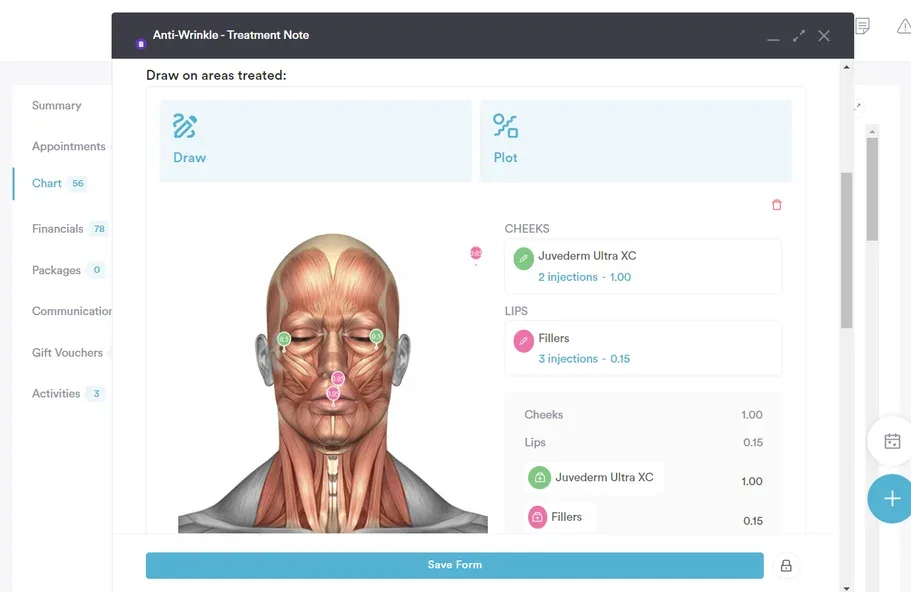
Digital forms let a clinician complete the burn chart in the record itself and attach the shaded diagram. TBSA, depth and the referral decision are stored as one structured note. Nothing is transcribed twice, so the number the receiving team reads is the number you recorded.
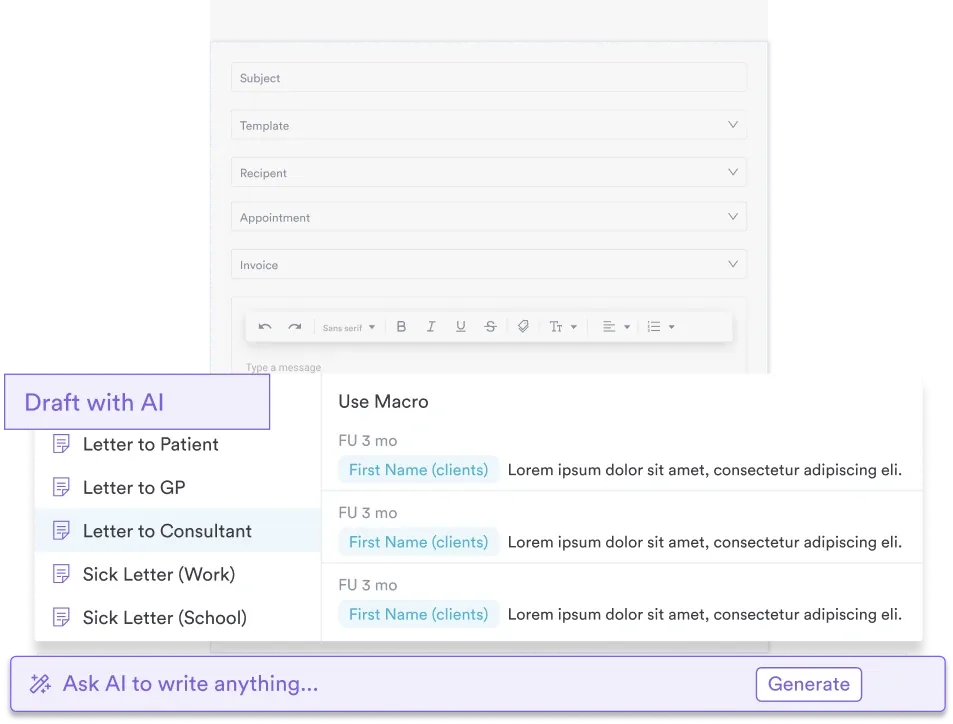
Pabau Scribe, our AI scribe, writes the assessment up while you are still with the child. Follow-up wound checks continue in the same clinical progress notes. Three things change day to day:

Pabau’s digital forms hold the completed burn chart in the client record, then carry TBSA and depth straight into the referral letter. Wound reviews and photographs stay attached to the same assessment.

The chart earns its place in the first ten minutes, before anyone has calculated a fluid rate. Get the age band right and the rest of the resuscitation has a sound foundation. Get it wrong and every downstream number inherits the error.
So print the template, laminate it, and put it where a child would actually be assessed. Then decide where the completed chart lives afterwards, because a photograph in someone’s phone gallery is not a clinical record. Book a demo to see how Pabau keeps pediatric burn assessments, referrals and follow-up in one place.

Need the wider clinical picture too? History and physical form captures the background a burn chart leaves out.
Handing over mid-shift? Nurse brain sheet keeps fluids, observations and pending referrals on one page.
Writing plans for acute pediatric events? Seizures nursing care plan shows how to structure interventions and expected outcomes.
Heading to theater for grafting? WHO surgical safety checklist covers the checks before grafting or escharotomy.
A pediatric burn chart measures the total body surface area (TBSA) burned in a child. That figure guides fluid resuscitation, wound care decisions and referral to a specialist burn center. It is a first-line emergency assessment tool.
The Lund-Browder chart gives age-specific body surface area percentages, so it follows how a child’s proportions change with growth. The Rule of Nines uses fixed adult percentages and misestimates TBSA in children. Lund-Browder is the reference standard for pediatric assessment.
Burns covering 10 percent TBSA or more usually trigger referral to a specialist burn center. Circumferential burns, facial burns, hand or genital involvement and suspected non-accidental injury are referred whatever the percentage. Children under 2 are referred at a lower threshold.
Most units apply the Parkland formula, which is 3 to 4 mL per kilogram per percent TBSA over the first 24 hours. A 20 kg child with a 20 percent burn receives 1,200 to 1,600 mL. Rates are then adjusted against urine output and vital signs, so confirm the current protocol with your burn center.
Superficial first-degree burns are excluded from the TBSA total. Only partial-thickness and full-thickness burns are counted. The distinction shapes treatment as well as arithmetic, since superficial burns are usually managed as outpatient care.