Antipsychotic medication list
An antipsychotic medication list is a structured reference that organizes psychi...

2
Last Updated: Oct 13, 2026

A parallel parenting plan is a detailed custody agreement for high-conflict parents who need minimal direct contact.
The plan covers five core elements: custody schedule, communication rules, decision-making authority, transition procedures, and dispute resolution.
Parallel parenting removes shared decision-making, so each parent decides independently within their own assigned domains.
A court can enforce the plan once it is filed as part of a custody order.
Therapists and family counselors use the filed plan as a fixed reference point for notes and session goals.
The template covers custody and visitation schedules, permitted communication methods, decision-making domains, exchange logistics, and a step-by-step dispute resolution process. Every section has prompts you can complete and file with the court.
Download templateA parallel parenting plan is a custody agreement that keeps two hostile parents apart while both stay involved in raising the child. It fixes the schedule in writing, limits contact to one channel, and gives each parent sole authority over specific decisions.
Conflict rarely ends because a judge tells it to. What changes the outcome is the level of detail in the document. Every time and place agreed in advance is one fewer thing to argue about later.
This guide walks through each element of the plan, how it differs from co-parenting, and how to make it enforceable in court. It also covers what therapists and family counselors should document when a parallel plan is already in place.
A parallel parenting plan is a formal, detailed custody agreement written for high-conflict separated or divorced parents. Traditional co-parenting depends on cooperation and frequent communication. A parallel plan works the other way around. It minimizes contact between the parents and still keeps both legally and physically involved in their children’s lives.
The purpose is to reduce conflict through clear, enforceable rules on parenting responsibilities, communication methods, and decision-making authority. Each parent then operates as independently as possible within their own parenting time, which removes most of the ongoing negotiation.
A parallel parenting plan becomes legally binding once it is filed with the court as part of a custody order. Either parent can then petition the court when the other breaks its terms. These plans carry far more detail than standard custody agreements, because vague wording is where conflict starts.
Understanding the distinction between parallel parenting and cooperative co-parenting helps parents recognize which approach suits their situation.
Parallel parenting is a practical response to a relationship that cannot sustain negotiation. Removing the expectation of agreement cuts the number of moments where conflict can flare. The child then sees fewer arguments, which is usually what a judge weighs most heavily.
A parallel parenting plan suits separated or divorced parents whose contact reliably turns into conflict. Four situations account for most plans.
Therapists and counselors working with these families use the filed plan as a fixed reference point. A therapy practice can store it alongside the client file, so every clinician works from the same schedule and the same limits.
That structure also reduces the crisis calls that arrive between appointments. A baseline anxiety score at intake, taken with the Taylor Manifest Anxiety Scale, shows months later whether the arrangement is settling or not.
A workable plan addresses every point of contact between the two households. The five elements below form the backbone of any enforceable plan, and each one appears as a section in the downloadable template.
Define week-to-week custody with exact dates and times. Specify which parent has the child from Monday to Friday, on weekends, on holidays, and during vacation periods.
Skip vague percentages such as “50/50” or “60/40.” Write it out instead: “Parent A has custody Monday 3pm through Thursday 3pm, plus alternate weekends from Friday 6pm to Sunday 6pm.”
Specify which communication methods are permitted and which are forbidden. A workable clause covers four points.
Divide decision-making by domain. Example: “Parent A has sole decision-making authority for education and extracurricular activities. Parent B has sole authority for medical treatment and religious upbringing.” This eliminates the need for ongoing negotiation and prevents disputes.
Spell out exactly how each handover works, down to the address and the waiting rules. For example: “Exchanges take place at the Family Transition Center, 123 Main Street, every Monday and Thursday at 3pm. The receiving parent waits outside, and no in-person conversation occurs. If a parent is late, the other waits 15 minutes and then keeps the child.”
Neutral logistics leave nothing to negotiate at the curb. A named place and a fixed waiting rule also give either parent something specific to report if the other ignores it.
Define what happens if parents disagree. Example: “Step 1: Written communication via email explaining the dispute. Step 2: If unresolved within 7 days, mediation with a court-appointed mediator. Step 3: If mediation fails, either parent may petition the court for modification.” Having a preset escalation prevents ad-hoc conflict.
Record the outcome of each mediation session in a meeting summary while the detail is fresh. Those notes are what either parent will rely on if the dispute reaches a hearing.
Once you have completed these five elements in the template, have a family law attorney review the draft. State statutes differ, and a short review before filing is what makes the plan enforceable where you live.
Reduces ongoing conflict. By eliminating the need for shared decision-making and limiting communication, a parallel parenting plan removes the constant negotiation that fuels high-conflict relationships. Parents no longer debate every parenting choice.
Protects children from exposure to parental conflict. Children in high-conflict custody arrangements absorb the stress of every dispute they witness. A parallel plan cuts the number of those moments and gives the child a steadier routine. Therapists often pair that routine with a guided imagery script the child can use before an exchange.
Clarifies each parent’s responsibilities. Clearly defined decision-making authority and parenting time prevent arguments about who decides what. Both parents know exactly what they control.
Provides legal enforceability. Unlike informal custody agreements, a documented parallel parenting plan filed with the court becomes enforceable. If one parent violates its terms, the other can petition for court intervention.
Creates a roadmap for modification. Life circumstances change. A well-drafted parallel plan includes procedures for requesting modifications through court petition, making it adaptable rather than rigid.
Document every exchange, communication, and disagreement in writing. Use only email or written records (never phone calls or in-person conversations for important matters). This creates a paper trail courts will respect if disputes arise, and it discourages hostile behavior because every interaction is recorded.
Some parents show narcissistic traits such as manipulation, boundary violations, lack of empathy, or a need to control. A standard parallel parenting plan needs extra protections in those cases.
Therapists supporting these families should expect emotional resistance to the structure itself. The narcissistic parent in particular tends to push back against any limit on their control. Informed consent frameworks help clinicians establish boundaries around what they can and cannot fix in therapy.
The other parent usually arrives with distorted expectations of how the arrangement will go. A thinking traps worksheet gives that work a structure between sessions, so each week starts from written evidence instead of the latest argument.
A parallel parenting plan is only enforceable when it is filed with the court as part of a formal custody order. This requires specific steps.
The National Council of Juvenile and Family Court Judges publishes guidance on custody orders in high-conflict cases. Plans that follow state statutory requirements are easier to enforce, because judges can act on clear, specific language.
Circumstances change. A parent relocates for work, a child’s needs shift, or the original schedule stops matching school hours. Either parent can request a modification through the court.
The requesting parent files a petition showing a “material and substantial change in circumstances,” which is the legal standard in most states. Job loss, relocation, a new developmental stage, or a health crisis all qualify. The court reviews both parents’ proposals and approves the changes that serve the child’s best interest.
Agreed modifications move quickly, while a disputed one goes to a hearing. When a child’s behavior changes after a schedule change, a functional behavior assessment documents the pattern a judge will want to see.
Dedicated co-parenting platforms reduce direct contact and create the documented communication trail a parallel arrangement depends on.
These tools remove the temptation for direct communication, which is what usually escalates conflict. Automated workflows do the same job on the clinical side, sending each reminder without a staff member having to make the call.
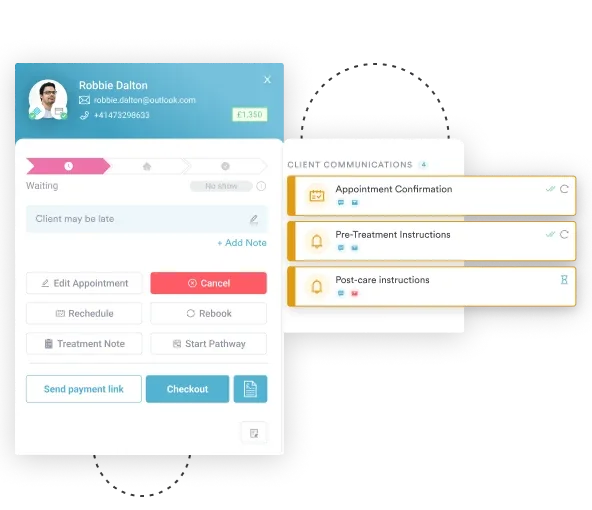
A therapist supporting a parallel parenting arrangement carries a heavy documentation load. In a psychology practice, each parent may need separate notes, separate consent records, and separate appointment reminders. Kept on paper or split across two inboxes, that record is hard to produce when a court asks for it.
Practice management software like Pabau holds each family’s records in one place, with individual client files, session notes, and signed consent forms. Automated reminders reach the right parent for the right appointment. You are not left relaying schedule changes between two people who avoid each other.
Every note is timestamped and stored against the client record on HIPAA compliant software. When a parent or an attorney requests a summary of care, you can produce a clean history in minutes instead of rebuilding it from memory.

Pabau keeps session notes, consent forms, and care plans for every family member in one place. Automated reminders reach the right parent, so schedule changes never have to run through you.

A parallel parenting plan asks for far more detail than most parents expect to write down. That detail is the whole point. Specificity is what a judge can enforce, and it stops a disagreement over a pickup time from becoming another hearing.
Complete the template above, have a family law attorney check it against your state’s statutes, then file it with your custody order. Set a review date each year, because a schedule that suits a six-year-old rarely suits a teenager.
For practices supporting these families, the plan only holds up if the records behind it do. Book a demo to see how Pabau keeps family session notes, consent forms, and reminders in one place.

Referral asking for structured personality data? MMPI-2 interpretation guide covers the clinical and validity scales for this 90-minute personality assessment.
Measuring how isolated a client feels? The Social Connectedness Scale scores the sense of belonging that a long custody conflict tends to erode.
Sensing an unusual pull toward you as the therapist? Transference in therapy explains the signs, from early arrivals and gifts to sudden coldness, and how to manage it.
Setting boundaries in family sessions? Group Therapy Informed Consent covers confidentiality limits, ground rules, and boundaries to agree before the first session.
A parallel parenting plan minimizes direct contact and gives each parent sole authority over specific domains, such as education or medical care. Co-parenting instead requires ongoing communication and joint decisions. Parallel parenting is built for high-conflict situations where cooperation is not workable.
Yes. When a parallel parenting plan is filed with the court as part of a custody order, it becomes legally binding and enforceable. Either parent can petition the court if the other violates its terms.
A parallel parenting plan covers the custody and visitation schedule with exact dates and times. It also sets communication guidelines, decision-making authority by domain, and exchange procedures. Holiday schedules, emergency protocols, and a dispute resolution process complete the document.
Very detailed. Vagueness in a parallel plan invites conflict and disputes. Specify exact times, locations, communication methods, and decision-making boundaries. The more specific the plan, the less room for disagreement.
Yes. Either parent can petition the court for modification if circumstances change substantially (job loss, relocation, child’s age-related needs). The plan should include procedures for requesting modifications and the standards courts will consider.
Dedicated co-parenting apps such as OurFamilyWizard or TalkingParents work best. They create timestamped records, discourage hostile messages, and supply evidence if a dispute escalates. Phone calls and in-person meetings are worth avoiding in high-conflict situations.