GLP-1 diet plan
A GLP-1 diet plan is a structured eating framework for patients taking semagluti...

2
Last Updated: Oct 13, 2026

A medication schedule records what a patient takes, how much, and when, so doses are not missed or repeated.
The free template on this page is a one-page clinical form that covers a single scheduled medication, so print one sheet per medicine.
Each sheet holds day, time, scheduled medication, dosage, frequency, and remarks, under a patient information block for name, date of birth, and contact details.
Use the remarks line for food rules, warnings, and the next refill date, because the form has no separate column for them.
Practice management software like Pabau keeps the same medication list inside the patient record, so every clinician works from the current version.
A printable one-page clinical form for a single scheduled medication. It covers day, time, scheduled medication, dosage, frequency, and remarks, with a patient information block for name, date of birth, contact details, and medical history.
Download templateMost patients take more than one medicine, and very few keep a written record of it. Doses get missed, doubled, or taken at the wrong time of day. The practice usually finds out at the next appointment. A written schedule is the cheapest fix available. The FDA asks patients to keep a current list and bring it to every visit.
The template above is a one-page clinical form, and each sheet covers one medication. That suits a new prescription, a short antibiotic course, or a dose being titrated. So a patient on four medicines gets four sheets, numbered and filed together.
A medication schedule is a written record of every medicine a patient takes, with the dose, the frequency, and the time each dose is due. It covers prescriptions, over-the-counter medicines, and supplements. Patients use it as a daily checklist, and clinicians use it as the reference list at every review.
A schedule says what should happen. A separate medication log records what did happen, dose by dose, once the patient starts ticking them off. Plenty of practices hand out both, because the plan and the proof answer different questions.
The value comes from having one version everyone trusts. When the schedule is current, the patient knows what to take and the prescriber sees the whole picture before adding anything new. An out-of-date sheet is worse than none, because it tells the patient to keep taking something that was stopped.
The form is a single page with one medication block on it, so each sheet describes one medicine. The block asks for six pieces of information.
Above the medication block sits a patient information header, which is what makes this a clinical form rather than a fridge chart. It asks for:
An additional notes box closes the page. The PDF is a print-and-write form rather than a fillable one, so plan on printing it or annotating it in a PDF reader.
There is no purpose column, no prescriber column, and no refill column, so anything of that kind goes in remarks or additional notes.
Work through the form with the patient beside you, or hand it over with the labels and let them copy the details across. Five steps get you a sheet you can file and trust.
Read the finished sheets back to the patient before they leave. Give them a copy, keep one in the record, and reprint the affected sheet whenever a prescription changes.
Here is what a full set looks like for a patient on metformin, lisinopril, a short antibiotic course, and a vitamin. Each row below is one printed sheet.
Three of the four doses land at 8:00 AM, so the patient has one morning routine instead of three. Only the antibiotic carries an end date, which is why the remarks line spells it out.
For a patient on several diabetes medicines, a diabetes medication list keeps the whole regimen on one page instead.
Two minutes of checking saves a phone call later. Run down this list while the patient is still in the room:
That last check matters most. Two versions in one house is how a dose gets taken twice.
Patients rarely think of these as medication, yet they change how prescriptions work.
Give each one its own sheet, or list them together on a single sheet titled “OTC and supplements” in the medication field. The items worth asking about directly:
A written schedule prevents errors because it replaces memory with a record that two people can check. The National Library of Medicine points out that medication errors happen at home as well as in the hospital, the office, and the pharmacy.
At home, that usually means a dose taken twice or skipped. A current sheet for each medicine helps by:
Medication reconciliation is the check that compares what a patient is actually taking against what is prescribed.
In the US, accredited organizations must record and pass on accurate medication information under the Joint Commission’s medication safety goal. Meanwhile in the UK, CQC inspections look for the same evidence at every care transition.
A stack of current sheets makes that check quick, because the patient’s version and the record’s version sit side by side. When you sit down to do the job properly, a structured medication review takes it further and questions whether each medicine still earns its place.
A sheet on the fridge or in a bag removes the guesswork about what is due and when. It also gives you something concrete to review in the appointment.
As a result, a patient who has quietly stopped a medicine usually says so. The sheet in front of them no longer matches what they take.
Group doses into a small number of fixed times, then write those times into the time field on each sheet. Fewer time slots means fewer chances to forget.
Anchor each slot to a meal or a routine the patient already has, and keep the spacing rules from the label intact. If you would rather see every medicine on one page by slot, a daily medication chart does that job.
Three daily doses usually sit at breakfast, lunch, and dinner. Shift the times to match the patient’s daily routine rather than the clock, then write the agreed times on every affected sheet.
Four daily doses are common for antibiotics and some pain medicines. Space them evenly so the drug level stays steady, and note the interval in the remarks line.
For an antibiotic course, four times daily often means every 6 hours, including overnight. Where the label allows waking hours only, agree the four times with the patient and write them down. Guessing at the interval is how a course stops working.
The form has no refill column, so write the next refill date in the remarks line for each medicine. Then set a phone alarm for that date, not just for the dose times. Plenty of missed doses happen because the bottle ran out three days earlier, not because the patient forgot to take it.
Knowing what to take is the easy part. These four habits do most of the work between appointments.
Habit stacking beats willpower. Pair the morning dose with breakfast, the midday dose with lunch, and the last dose with brushing teeth at night. The routine carries the reminder, so the patient is not watching the clock.
A weekly organizer with a compartment per day costs a few dollars at any pharmacy. Filling it once a week turns a daily decision into a Sunday task. It also shows at a glance whether a dose was taken.
Phone alarms work for patients with irregular days. Automated messages from the practice help during a short course or a new medicine, because the routine has not formed yet.
For older adults and patients with memory problems, one other person should know the schedule. Give the caregiver a copy of every sheet, and write their name on the caregiver care plan if you keep one. A missed dose then gets noticed the same day rather than at the next review.
Sheets usually fail for the same handful of reasons. All five are quick to prevent and slow to unpick later.
Reprint the affected sheet the same day the change happens, because an old sheet keeps telling the patient to take something they should have stopped. Hand over the new version and take back the old one.
The changes that always trigger an update:
Discharge is the riskiest moment on that list, because a hospital can start, stop, and change three things at once. So work through the discharge paperwork line by line against the sheets you already hold.
Involve the patient in every update. They know which medicines they quietly stopped and which supplements another provider suggested. Where several prescribers are involved, ask each one to confirm the list they are working from.
Any practice that prescribes or reviews medicines can use the form, and a few settings get more out of it than others.
Paper works for the patient at home, and it struggles inside a practice. A printed sheet lives in one chart, gets copied by hand into a note, and goes out of date the moment another prescriber changes something. Nobody can tell which copy is the newest.
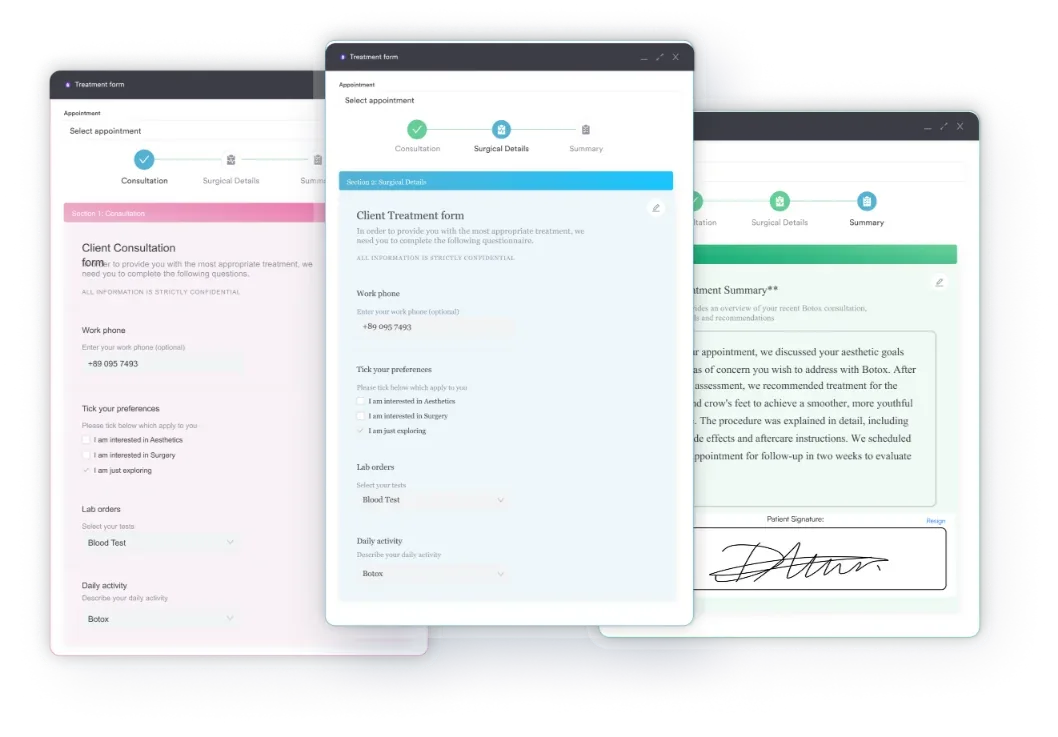
Practice management software like Pabau keeps the medication list in the patient record instead. Digital intake forms collect it before the appointment, so the details arrive typed rather than transcribed from a label at reception. Whoever opens the record next sees the same list, at any of your locations.
From there the review documents itself. Pabau Scribe, our AI scribe, drafts the note from the consultation, so a medication change is written up without retyping. Email and SMS follow-ups go out from the same record, and you can print or send an updated sheet whenever a prescription changes.
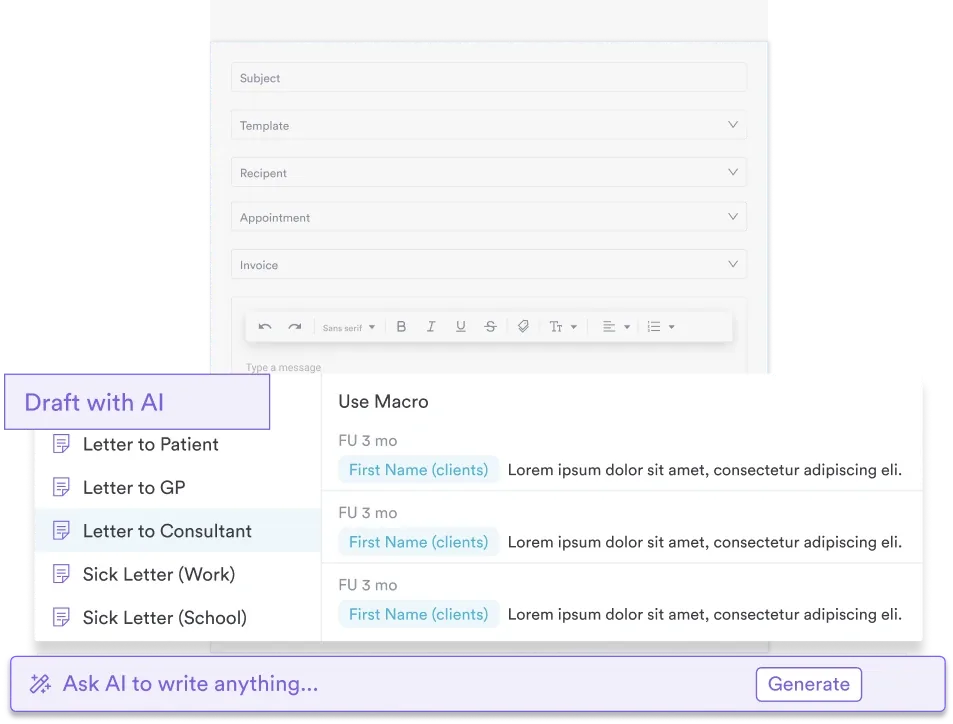

Pabau collects medications through digital intake forms and stores them in the patient record, so your whole team works from one current list.

Print the template, fill in one sheet per medicine, and put the food rules and refill dates in the remarks line. With the labels in front of you, that takes about ten minutes and covers most patients.
The trade-off with paper is upkeep. Every prescription change means a new sheet, and the copy at home is only as good as the last visit. For a practice tracking hundreds of patients, that upkeep belongs in the record rather than in a folder. Book a demo to see how Pabau keeps each patient’s medication list current and shared across your team.

Standardizing a cosmetic procedure workflow? Porcelain veneers consent and treatment forms standardize the veneer patient journey from candidacy screening onward.
Treating a patient whose doses cannot slip? Seizures nursing care plan covers the monitoring and safety steps that sit around anticonvulsant timing.
Tracking patient wellbeing beyond medication adherence? Quality of life assessment template measures wellbeing across physical, emotional, social, and psychological domains.
Caring for a patient in respiratory distress? Respiratory failure nursing care plan provides a structured framework for NANDA-I diagnoses and coordinated interventions.
Managing a patient with acute abdominal pain? Small bowel obstruction care plan organizes assessment data, nursing diagnoses, and interventions in one reference.
Take it as soon as they remember, unless the next dose is close. They should never double up to catch up. Check the label or ask the pharmacist, then note the missed dose in additional notes.
Right patient, right drug, right dose, right route, and right time. A written schedule captures the drug, the dose, and the time. The person giving the dose confirms the patient and the route.
A schedule is the plan a patient works from at home. A medication administration record, or MAR, is the signed proof that a named person gave each dose in a clinical setting.
An app suits patients who keep their phone close and update it. Paper wins where eyesight, memory, or a caregiver is involved. Many patients do best with both, so the fridge copy backs up the alarm.
It is a pharmacist review of everything a patient takes, supplements included. The current schedule is the starting list, so the pharmacist can check doses, timing, and interactions.