GLP-1 diet plan
A GLP-1 diet plan is a structured eating framework for patients taking semagluti...

2
Last Updated: Oct 13, 2026

A nutritionist meal plan is a personalized eating framework built by a qualified nutrition professional around one client’s health goals.
Only a registered dietitian nutritionist (RDN) or registered dietitian (RD) should write plans that treat a clinical condition such as diabetes.
A usable template carries a weekly grid, calorie and macronutrient targets, portion cues, a grocery list, and prep notes.
Repeat 20 to 30 percent of meals across weeks, because familiar food is what clients keep cooking.
Practice management software like Pabau stores each plan in the client record, so revisions and adherence notes stay together.
A printable 7-day grid with breakfast, lunch, dinner, and snack rows, plus calorie and macronutrient targets, portion cues, and a grocery list. The notes page covers modifications for weight loss, diabetes, and family plans.
Download templateA nutritionist meal plan is a written, week-by-week eating structure built around one client’s medical history, food preferences, and measurable goals. It turns your assessment into meals the client can shop for and cook.
A template carries most of that work for you. A reusable grid gives every client the same clear layout, and it cuts plan writing to roughly 15 minutes once the assessment is done.
This guide covers what belongs in the template and gives you a free PDF to use today. It also shows how to adapt the plan for weight loss, diabetes, and whole-family cooking, and where scope of practice limits who can write it.
A nutritionist meal plan is a structured eating guide written by a qualified nutrition professional for one client’s goals and conditions. Unlike a diet plan sold online, it starts from a clinical assessment. That assessment covers current intake, medical history, budget, cooking skill, and food preferences.
The Harvard T.H. Chan School of Public Health Nutrition Source frames evidence-based planning around macronutrient balance, nutrient density, and portion control. A meal plan turns that guidance into meals your client can prepare and eat.
“Nutritionist” is an unprotected title in many US states and in the UK. Only a registered dietitian nutritionist (RDN) or registered dietitian (RD) should create clinical meal plans. A written plan with named meals, portions, and macronutrient targets also improves adherence far more than verbal advice.
An effective template does two jobs. It gives your practice one consistent structure, and it gives each client the detail they need to shop, cook, and hit their targets.
Lay out a typical week, Monday through Sunday, with four eating occasions: breakfast, lunch, dinner, and snacks. Each entry names a food, a portion size, and a macronutrient breakdown in grams. That specificity stops clients from swapping in random meals midweek.
State the daily calorie range, for example 1,800 to 2,000 calories, and the macronutrient split in both percentages and grams. For a protein-led plan, a high-protein meal plan shows how those grams distribute across the day.
Use standard measures such as cups, ounces, and grams rather than “a handful” or “moderate.” Add a visual anchor where you can, like a 3 oz chicken breast being the size of a deck of cards. Most clients need that comparison to portion correctly at home.
Pull every ingredient out of the planned meals and group it by store section: produce, proteins, dairy, and pantry. A grocery list matched to the plan cuts both spend and midweek improvising.
Add short notes on batch cooking, such as roasting six chicken breasts on Sunday for Monday through Wednesday dinners. Cover storage safety, including refrigerating within two hours, and give simple reheating instructions.
Spell out the restriction and the reason behind it. For diabetes, note that carbohydrates are spread evenly across meals to keep blood glucose stable. A renal diet plan leads with sodium and potassium limits, so those numbers belong at the top of the notes.
Build a library of 10 to 15 base plans, covering weight loss, diabetes, heart health, vegetarian, family, and athletic clients. Customize one of those for each new client instead of starting from a blank grid. Practitioners who work this way save hours every month and keep clinical quality consistent.
Below is a simplified week, showing how the grid reads once it is filled in. A finished plan adds exact portions, macronutrient breakdowns, and the matching grocery list.
Treat this as a framework only. Your finished plan names exact portions, the daily calorie total, the macronutrient split, and any restriction. Our healthy meal plan shows the same grid filled in with serving counts.
Weight loss plans use the same grid. What changes is the daily calorie total, the macronutrient split, and the portion sizes.
A deficit of 500 to 750 calories a day supports 1 to 1.5 lbs of loss per week for most clients, without constant hunger. Weight loss practices that revisit the plan every two weeks catch a stall before the client gives up on it.
Frame weight loss as a goal the plan supports, never a promise. Results move with metabolism, activity level, hormonal status, and how closely the client follows the plan.
Diabetic plans need carbohydrate counting, consistent meal timing, and attention to glycemic load. The Academy of Nutrition and Dietetics recommends keeping carbohydrate intake consistent at each meal, commonly 45 to 60 grams for adults.
Practices running diabetes and metabolic health programs usually send a diabetes food list out with the plan. Clients can then swap foods without breaking the carbohydrate target.
Family planning adds a constraint. One base meal has to work for several people with different ages, activity levels, and clinical needs, with individual tweaks on top. Client engagement improves when a family eats one meal together instead of cooking twice.
A plan written for a child also needs a parent’s documented consent. Keep a signed consent form for minors in the record before the plan goes home.
Creating and delivering a personalized plan follows the same six steps every time. Structured intake and appointment scheduling get you the information you need before you start writing.
Start with current eating patterns, taken from a food diary or a 24-hour recall. Add medical history, medications that affect appetite or absorption, activity level, budget, cooking skill, and food preferences.
Record allergies and any cultural or religious requirements in the same place. A nutrition assessment template keeps that detail consistent from client to client.
Agree on goals you can measure, such as reducing HbA1c from 8.5% to 7.5% within three months. “Lose 1.5 lbs a week while holding muscle mass” works too. Vague goals like “eat healthier” give you nothing to build a plan around.
Use resting metabolic rate, activity level, and the agreed goal to set daily calories and macronutrients. The Mifflin-St Jeor equation plus an activity multiplier gives you a solid starting point. Reassess every two to four weeks and adjust.
Choose seven breakfasts, seven lunches, seven dinners, and three snacks that fit the targets, the client’s tastes, and their cooking skill. Repeat 20 to 30 percent of those meals across weeks. Familiar food is easier to shop for and far easier to stick with.
Compile every ingredient from the planned meals, organized by store section. Add batch-cooking notes, such as cooking eight chicken breasts on Sunday and portioning them for Monday through Thursday lunches. Check the client’s allergies and medications once more before the plan goes out.
Hand over the plan in writing and walk through it in a review conversation. Cover the meal structure, the targets, the portions, and any condition-specific notes. Answer the practical questions about substitutions, eating out, and social events.
Once the plan is written, delivery and follow-up decide whether it works. Digital intake forms collect health history, dietary preferences, and goals before the consultation starts. AI-powered documentation captures the clinical reasoning behind each revision while you talk.
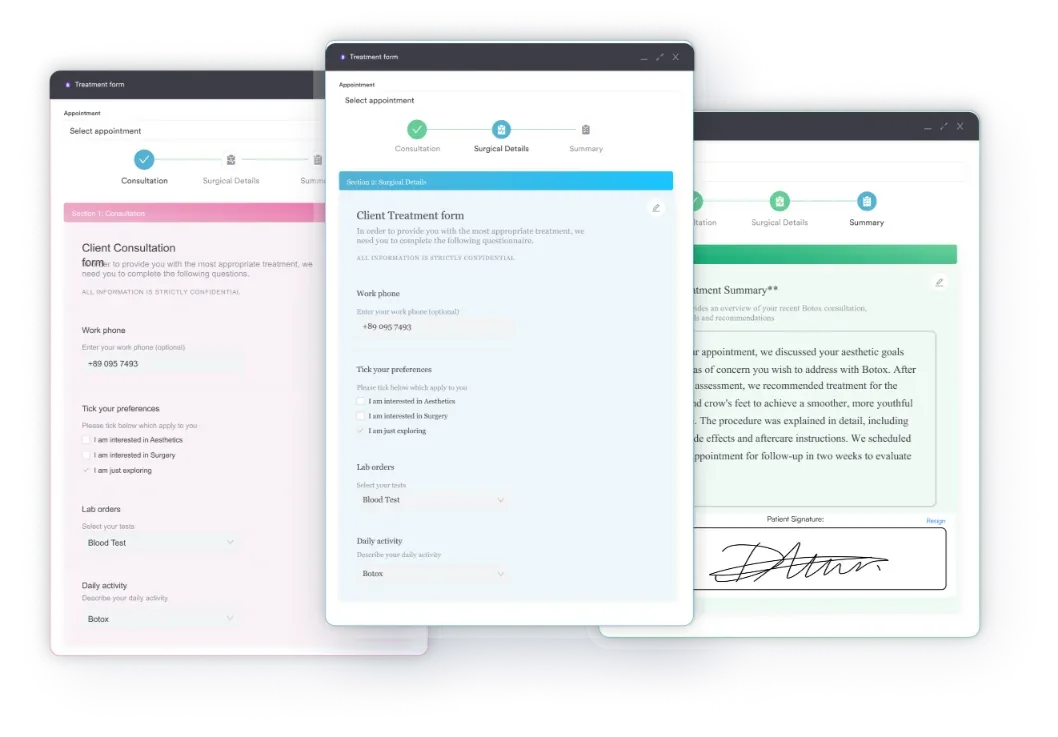
Follow up every two to four weeks and ask about barriers rather than compliance. “Which meals were hardest to stick to?” tells you more than “did you follow the plan?” Common fixes include swapping disliked foods, resizing portions, and adding restaurant equivalents.
Pushback usually surfaces in that review call, and difficult client conversations go better when you treat the plan as negotiable. A mindful eating worksheet helps clients who eat past fullness rather than off-plan.
Comprehensive client records hold medical history, past plans, and adherence notes in one file. Nobody rebuilds a plan from scratch at the next visit, and a colleague can pick it up mid-program without a handover call.
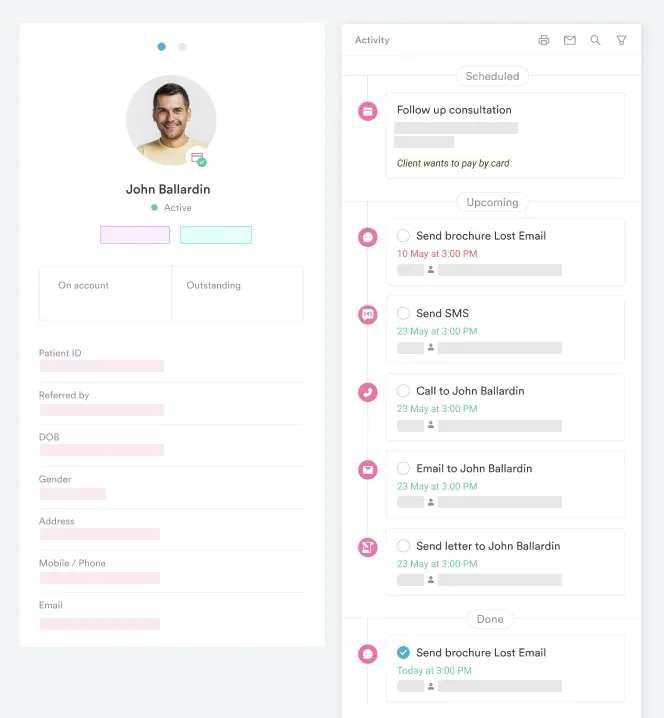
Most nutrition practices run the plan across four tools. Intake lives in one form builder and records in a second system. The plan sits in a document, and adherence notes land wherever the practitioner has a window open. Details go missing between them.
Practice management software like Pabau keeps the whole cycle in one client file. You collect the diet history, write the plan, send it, and log the follow-up without exporting anything or retyping a single answer.
You spend less of the week moving information between tools, and more of it with clients.

Pabau’s digital intake forms, client records, and client portal keep each meal plan, revision, and adherence note in one place. You write the plan once, send it in a click, and see the full history at the next review.

The plan that works is rarely the most sophisticated one. It is the plan your client can shop for on a Sunday and still be cooking from on a Thursday night.
So build the template once, then reuse it. Repeat familiar meals, keep the numbers explicit, and stay inside your scope when a condition needs medical nutrition therapy. Your writing time drops, and the plans get easier to follow.
The trade-off worth remembering is that no template survives first contact with a real week. Plan for revision, and store every version where you can find it. Book a demo to see how Pabau keeps meal plans, revisions, and adherence notes in one client record.

Need a fiber-led plan for a cholesterol or digestion client? High-fiber diet plan sets daily fiber targets and the foods that reach them comfortably.
Writing plans for residents in long-term care? Long-term care dietitian cheat sheet covers the texture, supplement, and documentation calls that come up on every round.
Screening for an underlying endocrine issue? endocrine review of systems form checks for cold intolerance, heat intolerance, polyuria, polydipsia, and polyphagia on one page.
Running a 30-day weight loss program? 30-day meal plan for weight loss extends the weekly grid across a month, with checkpoints for reassessment.
Managing a low blood sugar crash? hypoglycemia nursing care plan covers the NANDA diagnoses and 15-15 rule steps for glucose under 70 mg/dL.
Run a nutrition assessment covering medical history, food preferences, and activity level, then set measurable goals. Calculate calorie and macronutrient targets with the Mifflin-St Jeor equation plus an activity multiplier. Build a 7-day framework from your template, pull out the grocery list, and deliver the plan in a review consultation.
A complete plan includes the weekly meal structure, exact portion sizes, calorie and macronutrient targets, a grocery list, and prep notes. Add any condition-specific limits, such as diabetic carbohydrate caps or renal sodium reduction. Pabau’s client records store all of it together, so updates never sit in a separate document.
Reassess every two to four weeks. Check progress against the goals and ask what got in the way. Adjust portions, meals, or the macronutrient split based on what the client tells you. Regular reviews keep clients engaged and stop a stalled plan from being abandoned quietly.
Yes, when clients follow them. Written plans improve behavior change and health outcomes more than verbal advice alone. Success comes down to how well the plan fits the client’s life, how clearly it is written, and how consistently you follow up.
A registered dietitian (RDN/RD) holds a credential earned through formal education, supervised practice, and a national exam. The title “nutritionist” is unregulated in many areas. Both can write general meal plans, but medical nutrition therapy for a clinical condition is the dietitian’s remit.
Yes. The template above is free to download and use in your practice. Add your practice logo, swap the meal examples for food your clients actually eat, and include your contact details for questions between appointments.