Fun journal prompts for adults
Fun journal prompts for adults are short, open-ended questions that make sitting...

Last Updated: Oct 6, 2026
A nursing home report sheet is a one-page tool that organizes resident data, vitals, care tasks, and handoff notes for a single shift. Long-term care (LTC) and skilled nursing facility (SNF) nurses use it to carry the information the next clinician needs. The free template below covers every field, and the guide under it explains how to fill one in.
Most LTC nurses manage 15 to 30 residents per shift, which is more detail than anyone can hold in their head. The template is free, and you can adapt it to your facility’s workflow. Pairing a paper brain sheet with digital resident records gives you one handoff system, so fewer details get lost between shifts.
A ready-to-use sheet covering resident demographics, vital signs, activities of daily living, fall risk, skin integrity, medications due, code status, and handoff notes. It also leaves space for SBAR-format communication and pending physician orders.
Download template
A nursing home report sheet organizes vitals, ADLs, medications, fall risk, and code status into one document for shift handoff.
The free template covers the CMS documentation fields SNF nurses record, plus space for SBAR-format communication between nurses.
24-hour continuous sheets and per-shift handoff sheets suit different staffing models, so pick the one that matches your facility.
Practice management software like Pabau pairs with paper sheets, and its Care Plus add-on files each shift note in the resident’s record.
A nursing home brain sheet, also called a shift report sheet, is the bridge between one shift and the next. It holds the resident’s name, room number, code status, known allergies, active diagnoses, current medications, and latest vital signs. It also records recent changes in status and the care tasks still outstanding.
In long-term care, nurses document activities of daily living (ADLs), fall precautions, skin integrity, behavioral observations, and medication administration records (MAR). A well-built sheet moves that detail from one caregiver to the next without a phone call or a search through the chart. Fewer handoff errors follow.
CMS Conditions of Participation (42 CFR Part 483) require SNFs to keep comprehensive resident records and maintain continuity of care through shift changes. A structured report sheet is how most LTC facilities meet that standard at the bedside.
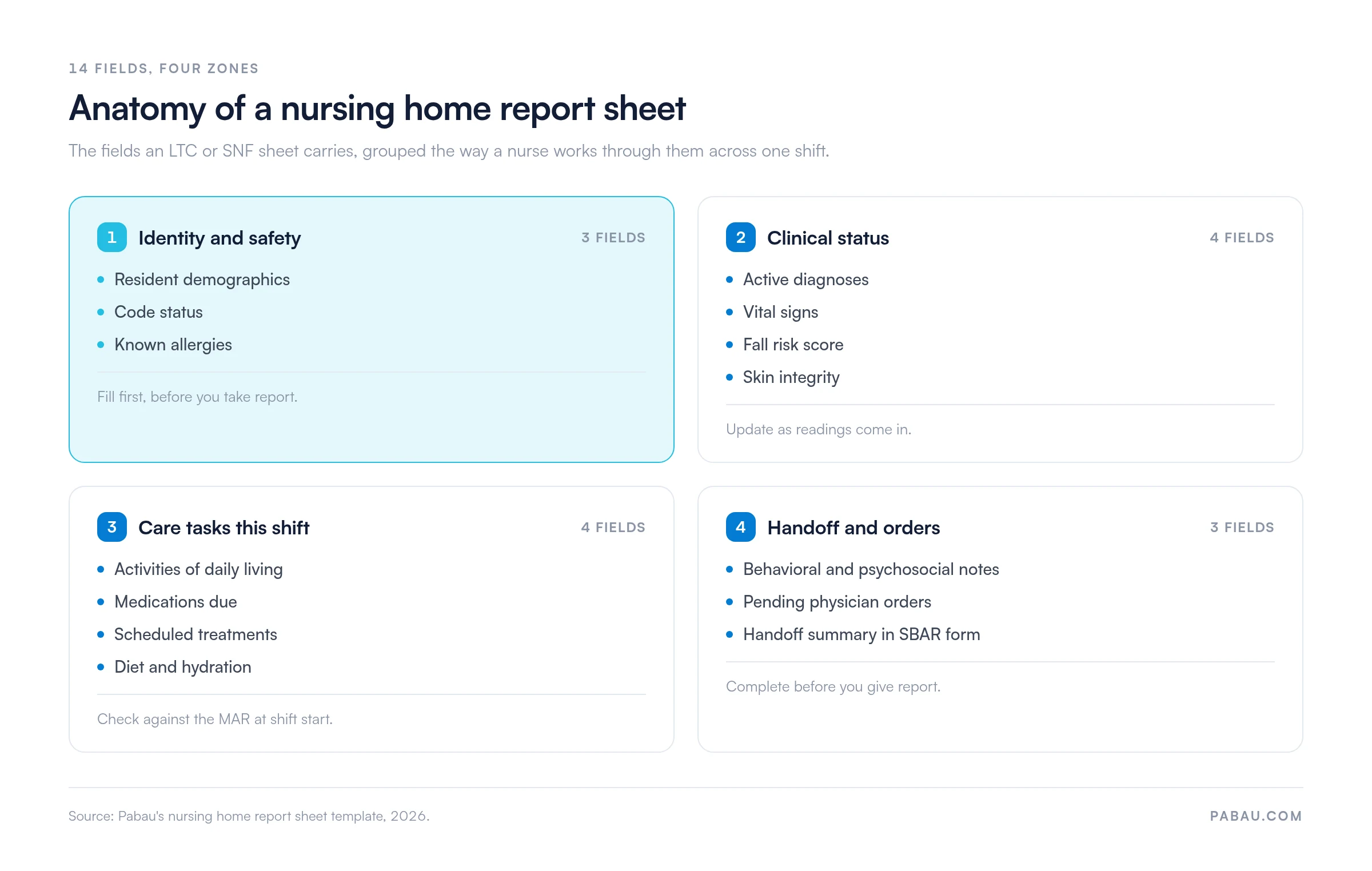
Every LTC sheet should capture the same core fields. Here is the standard checklist:
The template gives each field its own section, so no detail gets skipped at handoff. Grouped by the point in the shift when you reach for them, those 14 fields fall into four zones.
Not all LTC facilities document the same way. Some keep a rolling 24-hour sheet that tracks resident updates continuously through the day. Others use per-shift sheets that reset at each change. The difference decides which format suits your floor.
Most LTC facilities use per-shift sheets, because they match nursing shift patterns and leave room for SBAR notes. Facilities running continuous care models, or caring for higher-acuity residents, tend to do better with 24-hour tracking.
SBAR is a standard communication framework used across healthcare to structure handoff information. It stands for Situation, Background, Assessment, Recommendation. Building it into the sheet keeps shift changes consistent and makes calls to a physician easier to follow.
Many LTC facilities give one section of the sheet to SBAR notes, so every handoff follows the same structure. That reduces misunderstandings and supports Joint Commission and CMS standards. If you want more room than the sheet allows, the SBAR report template gives each part its own field.
A well-organized shift starts with filling out the sheet in your first 15 minutes. Read the prior shift’s notes, check the MAR, review new physician orders, and enter the most recent vital signs.
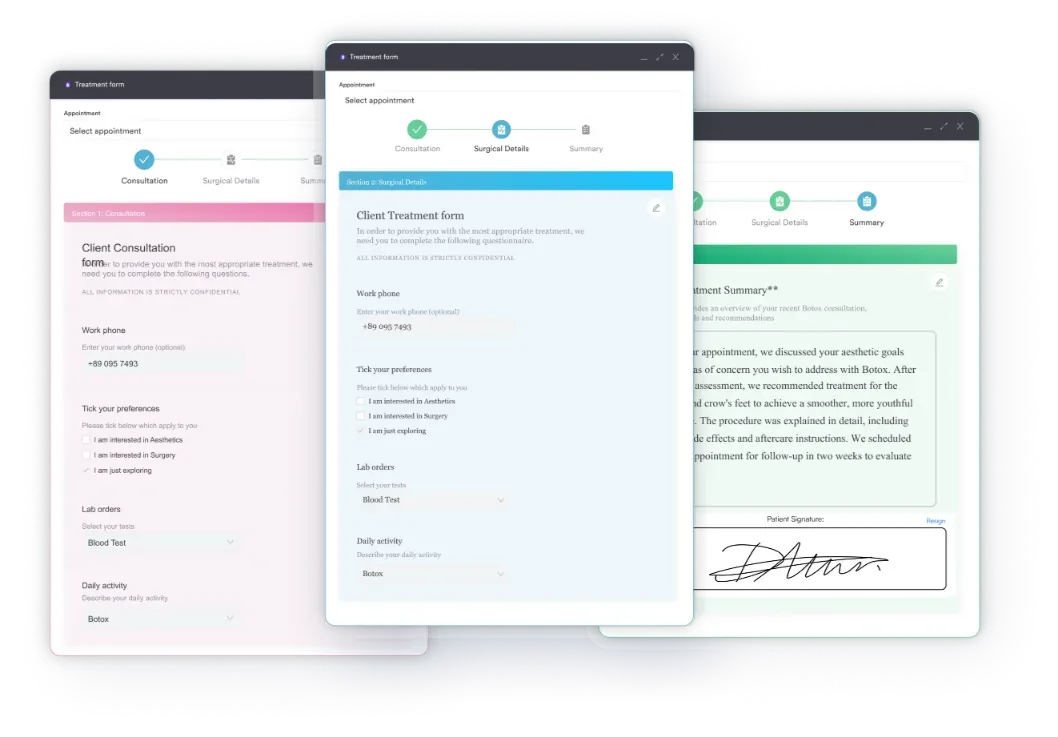
Pairing the paper sheet with forms your nurses complete on screen means the same detail reaches the resident’s permanent record. That saves a second round of typing at shift end.
CNAs and LPNs carry much of the shift coverage in LTC. RNs usually own the full sheet, but many facilities ask CNAs to complete the sections covering ADLs, behavioral observations, and skin checks.
A clear split of duties on the sheet prevents duplicate entries, and every team member knows which section belongs to them.
A completed sheet holds protected health information (PHI), so it has to be handled with the same care as the chart. A few rules cover most of the risk:
A digital record removes part of that handling risk. Compliance software for practices logs who opened a chart, applies retention rules, and keeps backups secure, which is work no paper sheet can do.
The template gives you a standard layout, and most facilities adjust it. Common changes include:
Involve your nursing staff in the design. Nurses know which fields they reach for first and which ones sit empty every shift. A short meeting to review the draft usually gets the sheet adopted quickly.
A paper brain sheet works for the shift in front of you. Building the permanent record is a separate job, and practice management software like Pabau handles it on screen. Care Plus, our patient care add-on, stores digital care notes with a timestamp and the author’s name attached.
That removes the transcription step at shift end, where notes get copied into the chart and detail drifts. Observations land in a searchable record with an audit trail behind them. It is the version a state surveyor asks to see.
Plenty of LTC facilities now run both formats. Nurses keep paper at the bedside for speed, then enter the notes digitally at handoff. The sheet stays quick to use, and the official record stays audit-ready.
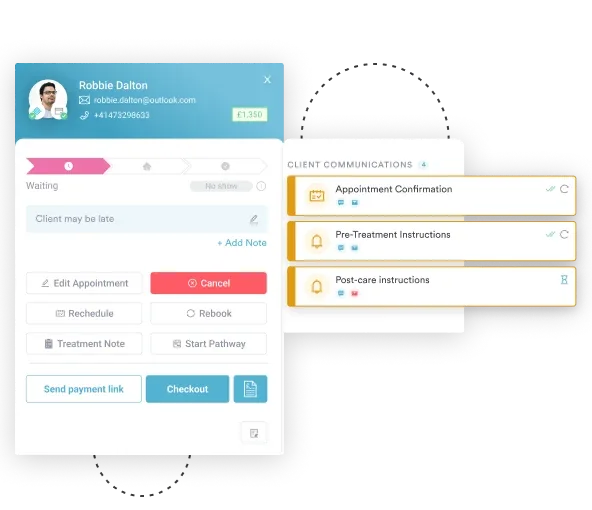

Resident records keep every shift entry in one chart, and Care Plus, our patient care add-on, adds digital care notes. Both cut the transcription work waiting for you at handoff.

Which sheet you use matters less than using the same one every shift. A format the whole floor fills in the same way is what makes a handoff quick and predictable, even with 30 residents on the list.
Download the template, show it to your nurses, and cut the fields they never reach for. Then decide where the permanent record lives, because a paper sheet alone will not satisfy a state survey. Book a demo to see how Pabau keeps shift notes and resident records in one chart.

Working one shift rather than a whole floor? The nurse brain sheet strips the layout back to one block per patient.
Need a handoff form for an acute unit? The nursing shift report covers the same ground on a hospital ward.
Handing over at the bedside? The bedside shift report structures the conversation in front of the resident.
Closing out your shift? The end-of-shift report captures what the next nurse needs before you leave the floor.
Want the rules behind the paperwork? Our guide to nursing documentation explains what has to be recorded, and when.
Hospital report sheets focus on acute changes during a single shift, such as labs, imaging results, and new orders. Nursing home sheets emphasize chronic disease management, ADL support, and continuity across many residents over days or weeks. LTC sheets also carry fall risk, skin integrity, and behavioral tracking that hospital sheets rarely prioritize.
Both approaches work. Per-shift sheets suit discrete handoff times and are easier to file. 24-hour sheets cut repetition, but they need careful time-stamping and can get cluttered. Choose based on your facility’s staffing pattern and documentation culture.
The RN usually owns the sheet, while LPNs and CNAs complete the sections tied to their role. CNAs document ADLs and behavioral observations. LPNs add medication times and clinical notes. The incoming RN reads all of it to get a full picture of resident status.
Yes, if it is handled securely. Paper containing PHI must be shredded at the end of the day, kept in secure areas, and never photographed or emailed. Many facilities treat the sheet as a working document only, with the official record held in the charting system.
No. A brain sheet is a shift-management tool, not a legal medical record. CMS requires nursing homes to maintain official resident records. Most facilities use the brain sheet through the shift, then enter final documentation into their EMR or care management system at the end of it.
Fill it in at shift start with baseline information, then update it as changes happen. Add vital signs, medication times, behavioral observations, and new orders as you go. The handoff you give at the end is then as current as the floor itself.