Chronic kidney disease nursing care plan
A chronic kidney disease nursing care plan is a structured document that guides ...

4
Last Updated: Oct 14, 2026

A nursing assessment is the systematic collection of subjective data the patient reports and objective data you observe, and it opens the ADPIE nursing process.
Four assessment types cover most practice: comprehensive at admission, focused during ongoing care, emergency for rapid stabilization, and time-lapsed for monitoring.
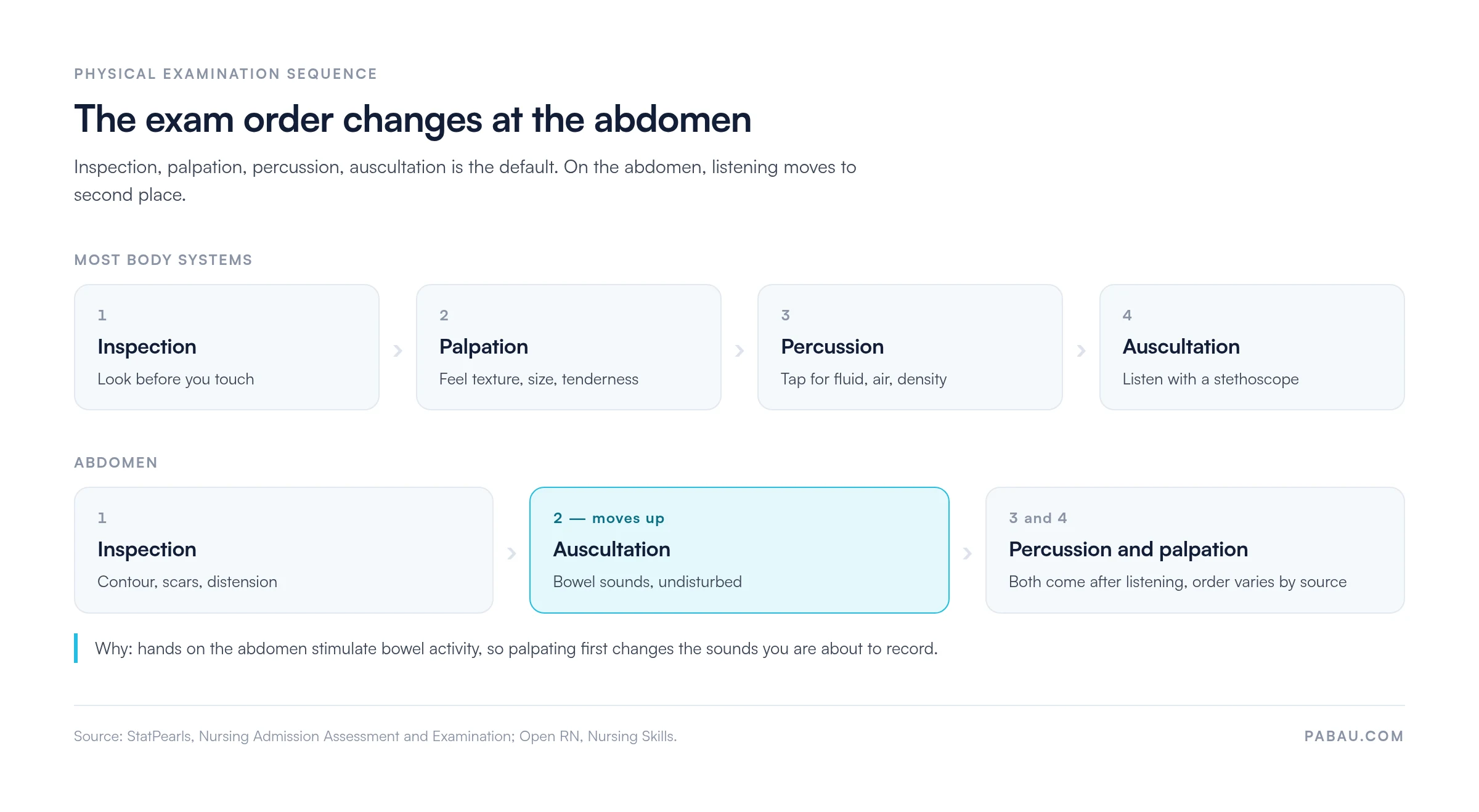
Physical examination runs inspection, palpation, percussion, then auscultation, but the abdomen is auscultated straight after inspection so bowel sounds stay undisturbed.
Digital assessment forms in practice management software like Pabau cut manual entry errors and keep findings in the client record.
A two-page clinical form covering client details, physical examination findings, current diet, medications, and consultant input. The second half summarizes health history, including major illnesses, hospitalizations, and injuries.
Download templateA nursing assessment is only as good as the structure behind it. This guide covers the four assessment types, the head-to-toe sequence, and the four examination techniques known as IPPA. It also covers the documentation rules that keep findings defensible, and the one exam-order exception that catches people out at the bedside.
Nursing assessments are the systematic process of gathering and evaluating patient data to guide clinical decisions. Assessment is the first phase of the ADPIE nursing process (assessment, diagnosis, planning, implementation, evaluation). It calls for subjective information, meaning what the patient reports about symptoms, history, and concerns. It also calls for objective data, meaning what you observe, measure, and examine.
The goal is a complete picture of a patient’s health at one point in time. That baseline lets you identify actual or potential problems, formulate accurate nursing diagnoses, and plan individualized care. A StatPearls chapter hosted by the National Center for Biotechnology Information (NCBI), part of NIH, defines it plainly. Assessment is the continuous collection, sorting, and documenting of patient data.
Different clinical situations demand different approaches. Four types cover most nursing practice, each with its own timing, scope, and documentation requirements. Naming varies between textbooks. OpenStax Fundamentals of Nursing lists five, splitting continuous monitoring into ongoing and time-lapsed assessment.
Emergency assessment compresses all of this into airway, breathing, circulation, and level of consciousness. Our emergency nursing assessment template sets out that shorter sequence for acute situations.
The head-to-toe examination is the most complete evaluation you will perform. It works through every body system in anatomical order, and it usually happens at admission or initial evaluation. Following a fixed sequence is what stops a system being skipped on a busy shift.
Assessment sequence:
Physical examination relies on four techniques applied systematically across body systems. Clinical Methods defines the physical examination as evaluating objective findings through observation, palpation, percussion, and auscultation. Nursing texts shorten those four to IPPA.
Documenting assessment data accurately is a legal and professional requirement. It protects patients and clinicians, and it keeps care continuous when the next shift takes over. Our guide to nursing documentation covers the formats most settings standardize on.
Key documentation principles:
Document assessment findings immediately after the physical examination. Delayed documentation introduces inaccuracies and makes specific details harder to recall, such as the exact size of a lesion or the character of a sound. Recording on a tablet or workstation at the bedside captures the detail while it is fresh. It also clears the charting backlog before the end of your shift.
Once the assessment is complete, the data shapes the nursing diagnosis. According to NANDA International (NANDA-I), nursing diagnoses are clinical judgments about actual or potential responses to health problems. They come straight out of assessment findings and set up the interventions that follow.
Here is how that works in practice. A patient reports feeling dizzy on standing, which is subjective data. You then measure a 20 mmHg drop in blood pressure between lying and standing, which is objective data. Together they support a diagnosis of risk for injury related to orthostatic hypotension. The assessment supplies the “related to” and “as evidenced by” parts, which is what makes the diagnosis specific to this patient.
Assessment quality decides what happens to the patient next. Thorough assessment catches problems early, reduces adverse events, and supports evidence-based care planning. Explaining findings as you go also brings the patient into the plan, which makes them more likely to follow it.
Structured workflows also cut documentation errors and save clinical time. Digital assessment forms built with patient intake software take the handwriting problem off the table entirely.
What a digital form does that paper does not:
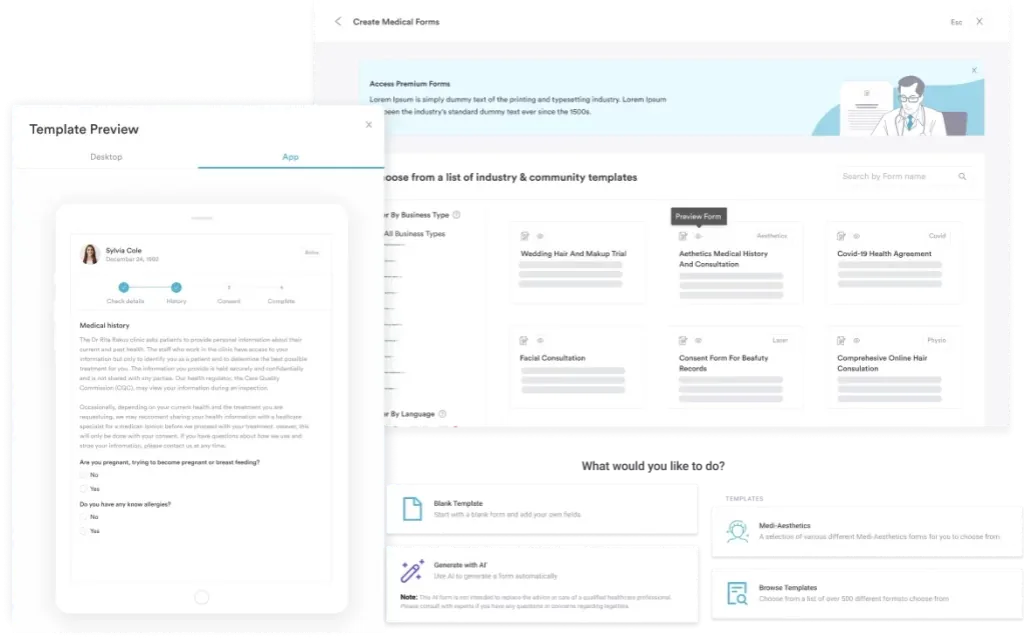
Assessment underpins safe care in every setting and specialty. Registered nurses, advanced practice nurses, students, and other clinicians who evaluate patients all work from an assessment framework to gather complete data.
A comprehensive assessment does not stop at the physical examination. Mental health, coping ability, support systems, and beliefs all shape how a patient responds to illness. Psychosocial assessment covers emotional state, cognition, family dynamics, financial resources, and social determinants of health. Those findings flag patients at risk of depression, anxiety, or social isolation.
Structured templates prompt you to cover psychosocial ground that a rushed encounter tends to skip. Screening tools such as the PHQ-9 for depression or the GAD-7 for anxiety sit inside a digital form, scored automatically, with significant results flagged. Physical, mental health, and social data then sit in one record instead of three.
Set up the environment first. Ensure privacy, keep your tone calm, and explain each step before you take it. A relaxed patient gives more accurate information and tolerates the examination better.
Open with broad questions. Start with something like “tell me about your main health concern today” before narrowing down. Open questions surface concerns you would not have known to ask about.
Work through the techniques in order. Inspection comes first, then palpation, then percussion, then auscultation. The abdomen is the exception. Hands on the abdomen stimulate bowel activity, so abdominal assessment is auscultated straight after inspection, before you percuss or palpate.
Validate findings with the patient. Share normal results as well as abnormal ones, and involve the patient when something needs following up. Saying “your blood pressure is a little high today, let’s talk about what might be behind that” makes them a partner in the plan.
Assessment opens ADPIE, but it does not finish there. Diagnosis, planning, implementation, and evaluation each throw up new data that sends you back to reassess. Capturing those changes as they happen keeps the care plan matched to the patient in front of you.
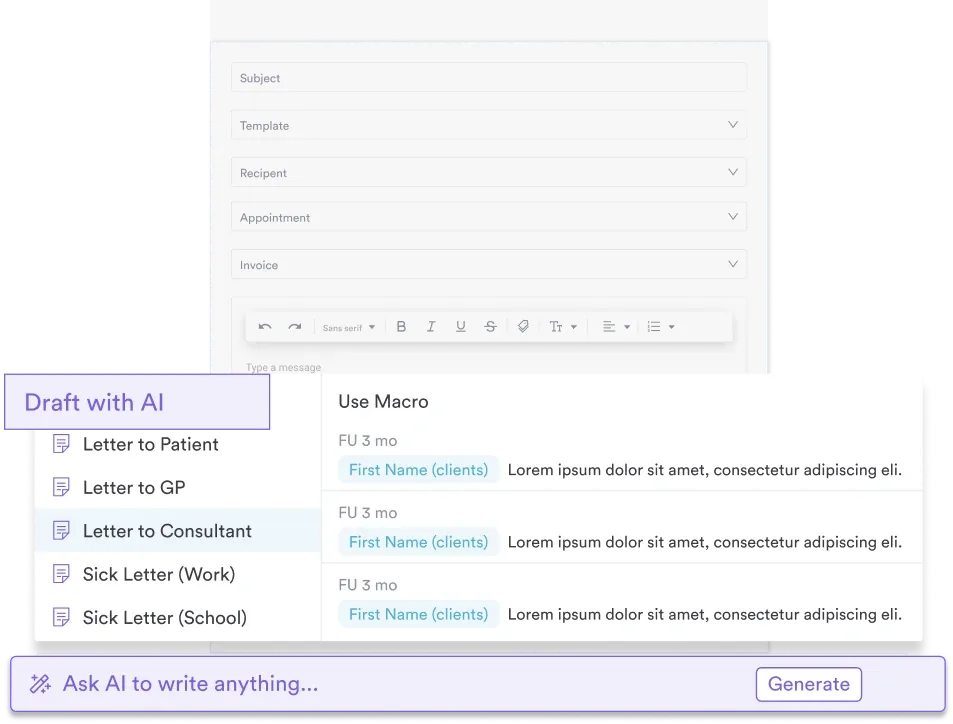
When a reassessment changes the plan, correspondence usually follows. A referral, a consultant letter, or a note to the family doctor all draw on findings you have already recorded once.
Paper assessments slow down whoever comes next. The form lives in one folder, the handwriting belongs to someone else, and a missed field only surfaces once the patient has gone home. Re-checking a finding usually means re-asking the patient.
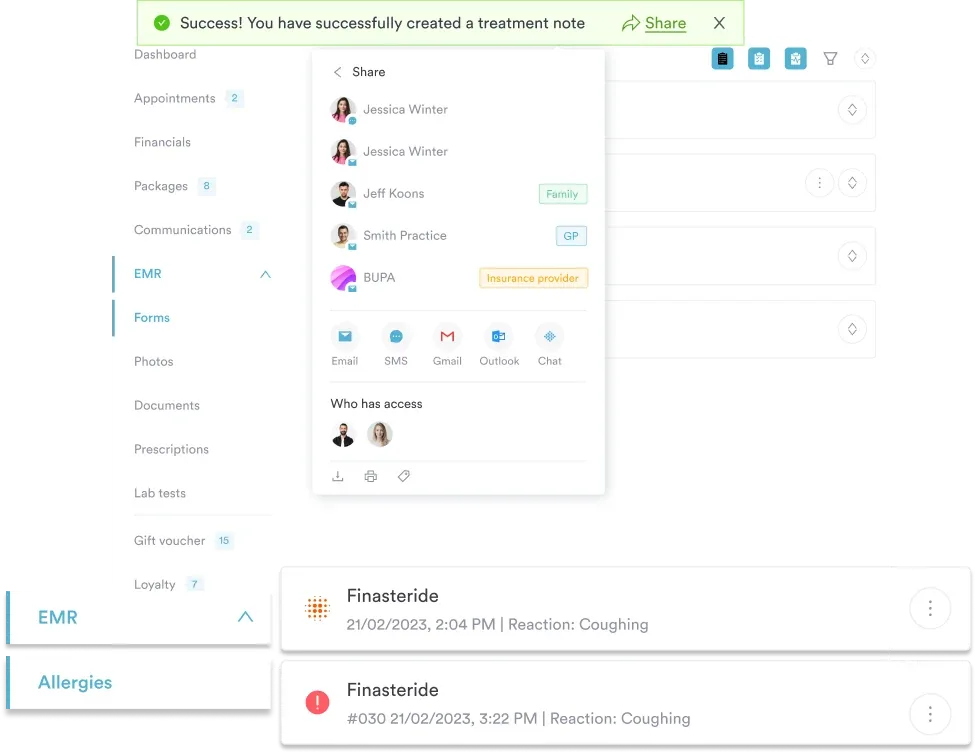
Practice management software like Pabau replaces that paper form with a digital version built from your own template. Findings save straight into the patient’s file, so comprehensive client records hold the assessment, the allergies, and the letters together.
Automated workflows take on the chasing. Reminders go out when a time-lapsed reassessment falls due, and pre-visit forms reach the patient before the appointment starts.
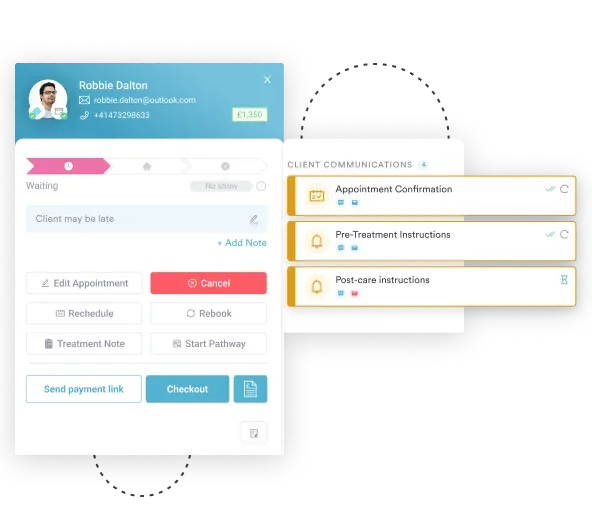
The outcome is less typing after hours and fewer notes rebuilt from memory. Every subscription includes the full feature set, so digital forms, records, and reminders are not something you buy separately.

Build your assessment form once, then let Pabau collect it, file it in the client record, and remind you when a reassessment falls due.

Assessment quality comes from structure more than from effort. Work from the same sequence and the same form every time, and less gets missed on a busy shift. That consistency is also what makes two assessments comparable a month apart.
Download the template, adapt the sections to your setting, and decide where the completed form will live. A form that ends up in a drawer helps nobody at the next visit. Book a demo to see how Pabau keeps assessment findings in the client record, ready for whoever sees the patient next.

Need the short version for an acute presentation? Emergency nursing assessment covers the airway, breathing, and circulation sequence used when time is short.
Want a full system-by-system checklist? Nursing review of systems gives you the prompts to work through each body system in turn.
Not sure how much detail a written note needs? Nursing documentation explains the standards your findings have to meet.
Tracking a patient across several shifts? Vital signs record keeps the baseline observations in one place for comparison.
Working on the abdominal examination? Gastrointestinal assessment walks through the sequence that starts with inspection and auscultation.
The four primary types are comprehensive, focused, emergency, and time-lapsed. A comprehensive assessment is the full health evaluation done at admission, and a focused assessment reviews one or two systems during ongoing care. Emergency assessment supports rapid stabilization, and time-lapsed assessment tracks progress against earlier findings.
A nursing assessment includes subjective data, objective data, and psychosocial evaluation. Subjective data covers reported symptoms, medical history, and concerns. Objective data covers vital signs and physical examination findings across the body systems. Documentation captures normal and abnormal findings alike, and guides the nursing diagnosis that follows.
A comprehensive assessment evaluates all body systems and gives a complete health picture, usually at admission. A focused assessment targets one or two systems, or a particular complaint, during ongoing care. It is quicker, and it suits situations where a full re-evaluation is not clinically indicated.
IPPA stands for inspection, palpation, percussion, and auscultation. Inspection is visual observation, palpation uses the hands to feel structures, percussion taps for fluid, air, or solid density, and auscultation listens with a stethoscope. The order changes on the abdomen, where auscultation comes before percussion and palpation.