Therapeutic interventions list
A therapeutic interventions list is a reference of evidence-based treatment tech...

1
Last Updated: Oct 13, 2026

The free non-violent communication worksheet is one page: a client information block plus four write-in boxes for situation, feelings, needs, and request.
It follows Marshall Rosenberg’s OFNR model, with the observation step labeled Situation so clients record facts rather than judgments.
The form carries no feelings or needs inventories, no signature line, and no therapist guidance notes, so bring the reference lists yourself.
Working through the four boxes in session moves a client from blame toward a specific request the other person can act on.
Practice management software like Pabau stores completed worksheets on the client record, so the work carries into the next session.
A single-page clinical form with a client information block for name, date of birth, gender, date of consultation, address, phone number, and email address. Four labeled write-in boxes then take the client through Situation, Feelings, Needs, and Request.
Download templateThe non-violent communication worksheet is a clinical tool that helps therapists, counselors, and other practitioners run more empathic conversations with clients. It comes from Marshall Rosenberg’s NVC framework, which moves a conversation away from blame and toward the needs sitting underneath it.
This guide covers what the downloadable form contains, how the OFNR steps work, and how to walk a client through them in session. It also carries feelings and needs reference lists, because the PDF does not print them.
The downloadable PDF runs to a single page and has two parts. The top is a client information block covering name, date of birth, gender, date of consultation, address, phone number, and email address.
Below that sit four large empty boxes, each with a single label. They are the client’s writing space, and they follow the OFNR sequence in order.
One naming difference is worth flagging. Rosenberg’s model calls the first step Observation, while the form labels that box Situation. Explain the swap when you hand the sheet over, so clients still separate fact from interpretation.
The form carries nothing else. There are no feelings or needs inventories printed on it, no signature line, and no therapist guidance notes. Bring the reference lists further down this page into the session yourself, printed or on screen.
Nonviolent communication is a structured framework for expressing yourself and listening to others with empathy and honesty. It treats all behavior as an attempt to meet a human need. Once those needs are heard, defensiveness tends to drop.
Psychologist Marshall Rosenberg developed the approach in the 1960s, and it has since spread through therapy, mediation, education, and workplace settings. For mental health practitioners it offers a concrete method for moving a client past reactivity.
The shift it produces is easy to see. A line like “you never listen to me” becomes “when you check your phone during our conversation, I feel unheard and disconnected.”
The speaker then adds the need and the ask. “I need to feel valued. Would you be willing to put the phone away when we talk?”
The worksheet is built around four components, known together as the OFNR model. Each step moves the conversation from surface emotion toward the need driving the conflict.
The power of the model is in its narrowness. Four questions give a client somewhere to put a feeling that would otherwise arrive as an accusation.
The hardest part for most clients is naming a feeling or a need accurately. Many people grew up without a wide emotional vocabulary, or they report thoughts and judgments as feelings. Reference lists remove that barrier.
These lists are not printed on the downloadable form, so keep this page open during the session or print the two tables below.
NVC feelings list
NVC needs list
Let the client point to a word rather than invent one. That small permission speeds up the work and normalizes talking about emotion in plain language.
The form works best inside your existing session flow rather than as homework you hand over cold. Here is the operational sequence.
Many therapists keep the sheet visible on the table and write it together. Others hand it over and let the client complete it between sessions, then review it at the start of the next appointment.
Workplace scenario (team conflict)
Before NVC: “you always ignore my ideas in meetings, and you think you are better than everyone.”
With NVC: “in the last three team meetings, I made a suggestion and you kept talking without responding. I felt dismissed and frustrated, because I need to feel heard. Would you be willing to acknowledge my input before moving on?”
Relationship scenario (couples therapy)
Before NVC: “you do not care about us anymore, and you are always on your phone.”
With NVC: “when you look at your phone while I am talking, I feel unimportant and alone. I need connection in our conversations. Would you be willing to leave the phone in another room at dinner?”
The second version names observable behavior, one emotion, one need, and one doable request. The other person has far less to defend against, because nothing in it is an accusation.
The worksheet travels well across settings. Family therapy benefits too, as parents and children step out of blame cycles.
Couples and relationship counseling is where the framework earns its keep. Many couples describe deep disconnection but have no shared way to bridge it. Naming behavior as an attempt to meet a need often restores some compassion on its own. A couple communication worksheet turns that compassion into structured prompts on conflict, connection and relationship goals.
Coaching practices use the same four steps to help clients communicate across a hierarchy.
When you record a completed worksheet in the clinical file, keep the entry focused on the therapeutic work. Leave out judgments about the client or a third party. Document the feeling and need the client identified, the request they built, and the next step.
Avoid recording your own view of whether their account is accurate. A worksheet captures one person’s experience of an interaction, and the file should say so. It is not an assessment instrument.
Completed sheets hold sensitive emotional and relational detail about people who are not your clients. Store them with the same protections as the rest of the record, and make sure your system encrypts data in transit and at rest. The APA record keeping guidelines set out the retention and confidentiality expectations that apply.
Therapists who teach the framework often report less strain. Sessions feel collaborative rather than adversarial once clients stop arguing about who is right.
The worksheet also contains the session. Instead of open-ended exploration that leaves both of you unsure where the hour went, the four boxes give the conversation a beginning and an end.
Clients and supervisors often ask how this compares with assertiveness training or cognitive behavioral work. Assertive communication focuses on stating your own needs clearly and holding your ground. NVC adds the assumption that the other person’s needs carry equal weight.
Cognitive behavioral approaches work on thoughts and behaviors. NVC works on feelings and universal needs, which is a different entry point into the same conflict.
None of these cancels the others out. Most practitioners run NVC alongside their primary modality and reach for it when connection, empathy, or conflict resolution is the goal of the hour. A guide to couple communication worksheets walks therapists through styles, conflict resolution and emotional connection in that work.
Most therapy practices hand out a paper worksheet, and the completed sheet ends up in a folder or a scan nobody opens again. The work the client did in session stops there.
Practice management software like Pabau turns the same four fields into a digital form attached to the client’s record. You send it ahead of the session, the client types their situation, feelings, needs, and request, and the answers land in the chart.
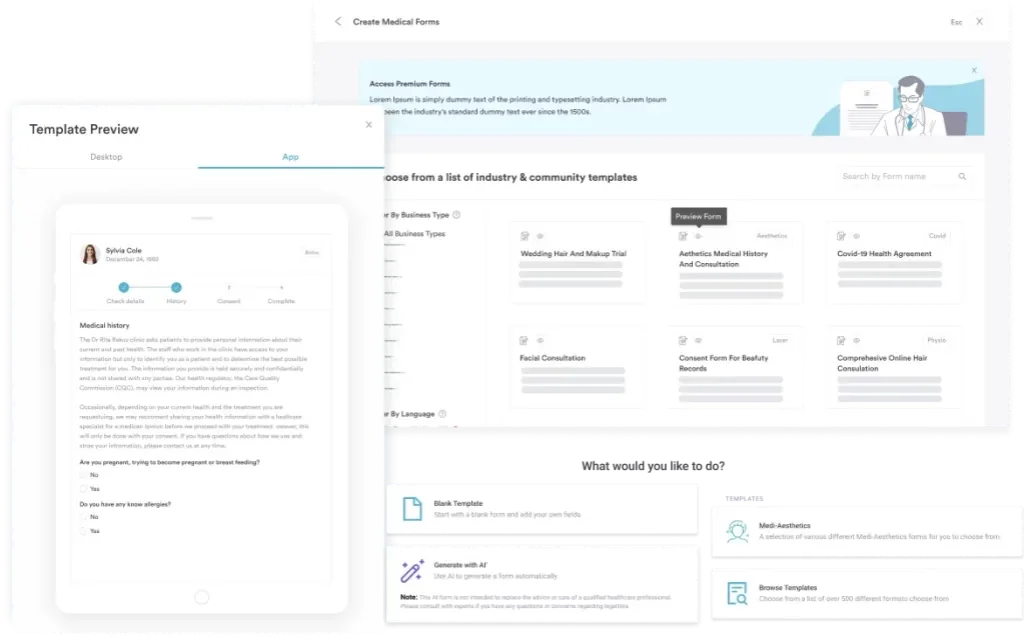
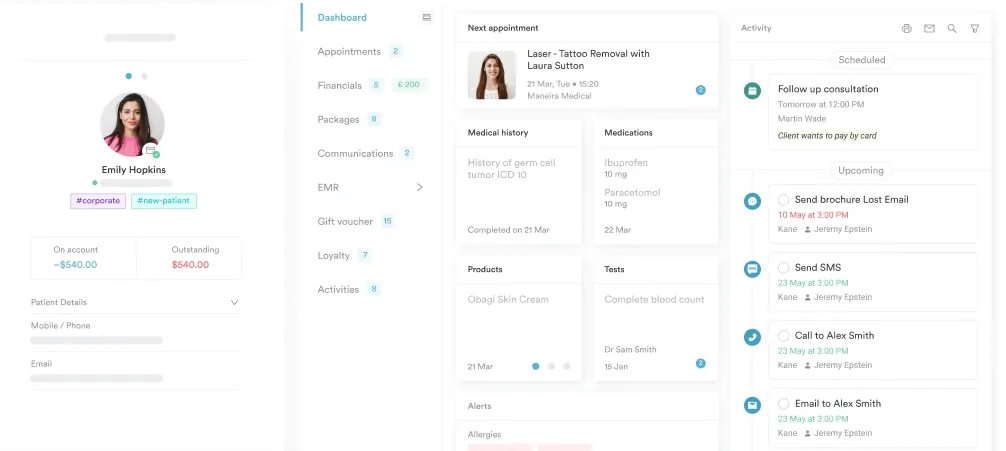
Because each entry is stored rather than filed, you can open last month’s worksheet beside today’s and see whether the requests changed. That comparison is what paper loses. Everything sits with the rest of the client record.
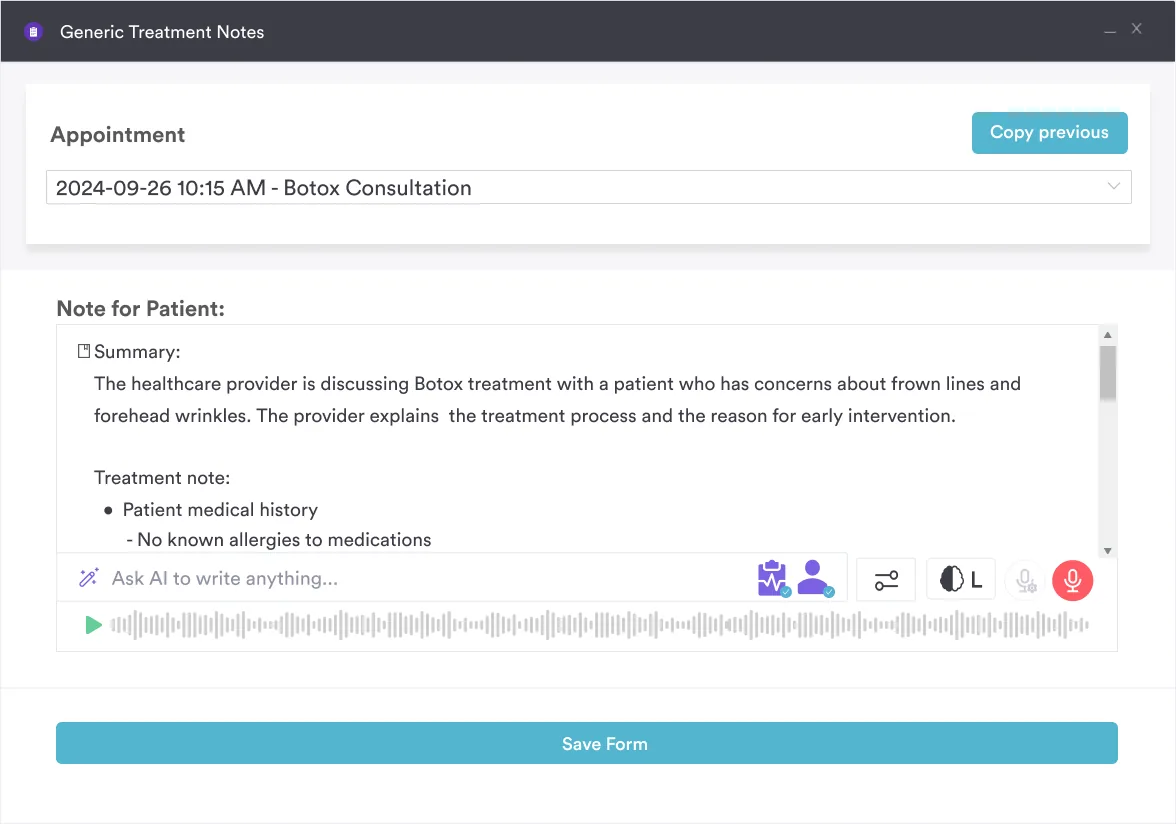
You are not splitting attention between the client and the keyboard.
Intake forms can ask about communication patterns at signup, so you know early where the framework will help.

Pabau turns paper worksheets into digital forms that save straight to the client record. Completed NVC sheets stay with the notes, goals, and progress you review next session.

The value of this worksheet is in its restraint. Four boxes and a short header give a client enough structure to slow down. They do not give so much that the client performs the exercise instead of doing it.
That restraint also means the sheet is not self-sufficient. Print the feelings and needs lists, explain why the first box says Situation, and it does the job it was built for.
Decide now where the completed sheets will live, because a worksheet in a drawer teaches nobody anything by week six. Book a demo to see how Pabau keeps NVC worksheets with the rest of a client’s clinical record.

Want the listening half of the same conversation? Reflective listening worksheet gives clients a structured way to show they have understood someone.
Need a second communication exercise? Active listening skills worksheet drills the attending and paraphrasing skills NVC assumes a client already has.
Bringing relatives into the work? Engaging families in speech therapy shows how to involve families in skill practice between appointments.
Writing up what happens next? Case management note keeps your record of agreed next steps consistent across a caseload.
Assessing personality traits during intake? Temperament test template captures a client’s behavioral patterns in minutes with a structured, evidence-grounded tool.
The PDF is one page. It has a client information block plus four labeled boxes for Situation, Feelings, Needs, and Request. It does not include feelings or needs inventories, a signature line, or therapist guidance notes.
The four steps are Observation, Feelings, Needs, and Requests. You describe what happened without judgment, name the emotion, identify the unmet human need, then make a clear and doable ask.
The form uses Situation as a plainer label for the same step. Rosenberg called it Observation. Tell clients the box wants facts they could film, not their interpretation of what happened.
Ask the client to describe a recent conflict, then fill the four boxes in order. Use the feelings and needs reference lists on this page to widen their vocabulary. Save the completed sheet to the client record for follow-up.
The evidence base is still developing. Studies report positive results in conflict resolution, couples work, and school settings. The framework lines up with social-emotional learning, attachment theory, and compassion-focused therapy. It works best when clients practice the structure between sessions.
The Center for Nonviolent Communication runs certified training, online courses, and free resources. Marshall Rosenberg’s book Nonviolent Communication: A Language of Life is the foundational text. Many practitioners fold NVC into training they already hold.