Patient follow up letter template
A patient follow up letter template lets your practice confirm a patient’s...

2
Last Updated: Oct 21, 2026
A ready-to-use assessment and tracking tool covering emotional trigger identification, a physical-vs-emotional hunger comparison, and CBT-based cognitive restructuring exercises. It also includes mood-food pattern logging and evidence-based coping strategy selection.
Most emotional eating content targets someone trying to stop snacking alone at night. This emotional eating worksheet is built for the clinical session instead. It turns a vague “I eat my feelings” complaint into documented triggers, a hunger-type comparison, and a coping plan you and the client track together.
The worksheet gives clients a structured framework to do exactly that. This guide covers what it includes, how to use it in session, who benefits most, and when to refer out for specialist support.
An emotional eating worksheet is a clinical assessment and self-reflection tool. It helps clients identify eating patterns driven by emotions rather than physical hunger. It serves three functions:
The worksheet differs from a simple food diary. A food log records what was eaten and when. An emotional eating worksheet records the emotional context instead:
This emotional narrative is what drives lasting behavior change. The worksheet is grounded in cognitive behavioral therapy (CBT), which links thoughts, feelings, and behaviors. By examining emotional triggers and eating responses together, clients build the awareness needed to interrupt automatic patterns.
Emotional hunger and physical hunger can feel similar in the moment, but they behave differently. The table below breaks down the signals that separate the two, so clients learn to pause and check before eating.
| What to check | Emotional hunger | Physical hunger |
|---|---|---|
| Onset | Comes on suddenly | Builds up gradually |
| Food choice | Craves one specific comfort food | Open to most foods |
| Fullness signal | Keeps eating past comfortably full | Stops once satisfied |
| Timing | Can strike soon after a meal | Rarely returns right after eating |
| Aftermath | Often followed by guilt or regret | Feels neutral, no guilt |
Using the emotional eating worksheet effectively takes clarity on the sections and intentional framing with the client. Here is a five-step workflow:
The full emotional eating worksheet can be completed in a session or as homework. Many practitioners use digital forms for intake and ongoing assessments. Health coaches often take the same approach with a life coach intake form at the first session.
The worksheet incorporates three core CBT mechanisms: thought awareness, emotional validation, and behavioral alternatives.
Research on CBT for emotional eating supports this structure. When clients identify and label emotions accurately, they are more likely to choose non-food coping responses in the moment. The worksheet is the external scaffold that builds this internal skill.
Effective coping strategies for emotional eating fall into six categories, all included in a comprehensive worksheet:
The worksheet helps clients build a personal coping toolkit: three to five strategies they have tested and can reliably use. Combining categories like this works better than generic, one-size-fits-all advice, and clients who need more structure can pair it with a distress tolerance skills worksheet.
An emotional eating worksheet is useful across multiple clinical roles and contexts:
The worksheet’s versatility is its strength. It works whether delivered in mental health practice software or printed, in individual therapy or group workshops, for adolescents or adults. The core mechanism stays the same: pause, identify, reflect, choose.
Left untracked, the effects of emotional eating build up slowly, but structured use of the worksheet delivers benefits fast. Clients who complete it consistently report greater awareness of their patterns within 2-3 weeks. Many notice fewer emotional-eating episodes within a few weeks of consistent tracking, even before other interventions start.
From a practitioner’s perspective, the worksheet cuts down on unstructured session time. Instead of asking “tell me about your eating,” you review a completed form, which speeds up assessment and prioritization. It also builds accountability: clients are more likely to practice coping skills once they have written them down and committed to them on paper.
Beyond individual outcomes, a standardized worksheet supports patient care management best practices and compliance across the practice. Documented evidence of the assessment and intervention supports audit trails, insurance billing where applicable, and quality-improvement tracking. If your practice uses digital assessment tools, completion and progress data can inform treatment planning and case conferencing.
A therapy practice management system files each completed worksheet under the client’s treatment plan.
The mood-food log turns the worksheet from a one-time assessment into an ongoing tracking tool. It’s a table where clients record date, emotion, food eaten, quantity, and the coping strategy used instead, once they are ready to look back.
The log reveals patterns that generic emotional-eating advice overlooks: some clients eat emotionally only at night, others only under work stress, some mainly when lonely. Personalized patterns are the foundation of lasting change. Over 4 weeks, a completed log often shows a clear shift: fewer blank rows, more coping strategies selected, and the client’s own handwriting showing progress.
Many practitioners photograph or digitize these logs between sessions, letting clients reflect on their own progress without extra re-entry work. If using a client portal for tracking, clients can submit mood logs electronically for you to review before the next visit. This speeds up the feedback loop and deepens the therapeutic alliance.
Emotional eating worksheets work well for mild to moderate patterns, but certain signs and symptoms of eating disorders call for a specialist referral instead. Red flags include:
A referral simply clarifies scope, consistent with the feeding and eating disorders category in the DSM-5. The worksheet remains valuable throughout: your role shifts to supporting the client through specialist treatment and reinforcing coping strategies within your scope.
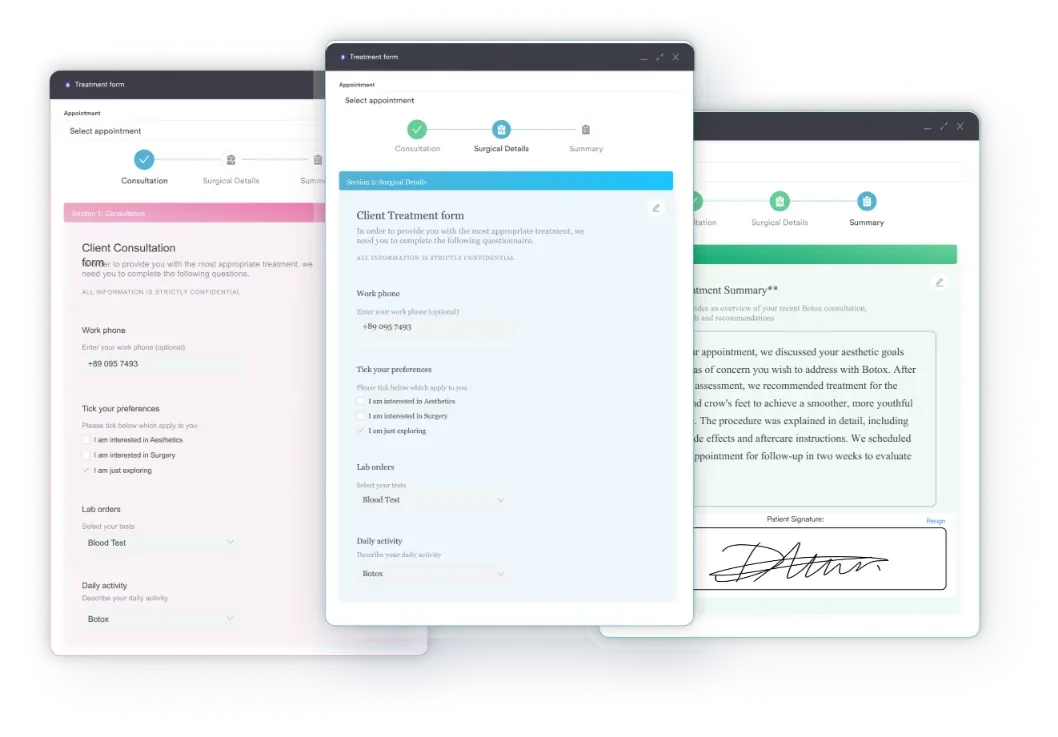
Delivering this worksheet on paper means printed copies and misplaced pages. It also means a mood-food log you can only review once the client brings it back to a session. Pabau’s digital forms send the worksheet straight to a client’s phone or inbox, so they can complete it between visits.
Once submitted, responses land in the client’s record instead of a stack of loose paper. The client portal lets clients log mood-food entries as they happen. You see the pattern building in real time, instead of waiting weeks for a paper log to catch up.
Automated follow-up workflows can prompt a client to complete the next worksheet section and flag when a coping-strategy review is due. They can also remind you to check in after a rough week, without adding another task to your list.
An emotional eating worksheet is a practical, evidence-based tool that bridges awareness and behavior change. It gives clients a structured way to identify emotional triggers, distinguish emotional from physical hunger, and practice alternative coping strategies. That turns a nebulous struggle into a manageable skill-building process.
The worksheet works best inside a broader clinical workflow. Pabau’s automated follow-up workflows help you schedule worksheet completion, track progress, and trigger timely coping-strategy reviews, all without adding to your administrative load. Book a demo to see how digital assessment tools can amplify the impact of your clinical interventions.
What is an emotional eating worksheet?
An emotional eating worksheet is a structured clinical assessment and tracking tool. It helps clients identify emotional eating triggers, distinguish emotional hunger from physical hunger, and develop evidence-based coping strategies. It typically includes sections for trigger identification, thought records, coping skill selection, and progress logging.
How do I identify my emotional eating triggers?
Emotional eating triggers are specific emotions or situations that prompt eating in the absence of physical hunger. Common triggers include stress, boredom, loneliness, sadness, or celebration. The worksheet guides you to reflect on recent eating episodes and identify the emotion that preceded them. Most people can name 2-4 core triggers within the first week of completing the worksheet.
What is the difference between emotional hunger and physical hunger?
Physical hunger builds gradually, can be satisfied by any food, and stops when your stomach is comfortably full. Emotional hunger comes suddenly, targets specific comfort foods, and typically does not resolve even after eating. Guilt or regret often follows. The worksheet includes a detailed comparison table to help you distinguish them in real time.
How can a worksheet help stop emotional eating?
A worksheet works by creating space between the emotional trigger and the eating response. By pausing to identify the emotion, write it down, and select an alternative coping strategy, you interrupt the automatic pattern. Many people notice fewer emotional-eating episodes within a few weeks of consistent tracking.
What CBT techniques are used for emotional eating?
The primary CBT techniques are thought awareness, emotional validation, and behavioral alternatives. Thought awareness identifies automatic thoughts that fuel emotional eating. Emotional validation means naming the specific emotion, and behavioral alternatives means choosing evidence-based coping strategies like movement, social connection, or creative expression. The worksheet provides structured templates for all three.
When should I seek professional help for emotional eating?
Seek professional help if you experience binge eating episodes, severe restriction alternating with binges, or significant untreated depression or anxiety. The same applies with complications from chronic disease, or no progress after 6-8 weeks of consistent worksheet use. A registered therapist, eating disorder specialist, or registered dietitian can assess whether emotional eating is primary or secondary to another condition.
How is stress eating different from emotional eating?
Stress eating is eating in response to a specific stressor, such as a work deadline or conflict. Emotional eating is eating in response to any emotion: stress, boredom, joy, or loneliness. Stress eating is a subset of emotional eating. The worksheet helps you identify whether your triggers are stress-specific or broader emotional patterns.
Can emotional eating lead to an eating disorder?
Emotional eating and eating disorders are distinct. Emotional eating is eating in response to emotions. It can become problematic over time, but it does not inherently meet the criteria for a clinical eating disorder. Untreated emotional eating may still escalate into binge eating disorder or other eating pathology, particularly alongside restrictive dieting or severe distress. Early intervention with a worksheet or professional support can prevent progression.
How can I curb emotional eating?
Curbing emotional eating starts with noticing the urge before acting on it. Name the feeling, wait five minutes, then choose a coping strategy from your list instead of reaching for food. Practiced consistently, this pause breaks the automatic link between emotion and eating.
Is an emotional eating worksheet the same as an eating disorder questionnaire?
No. An emotional eating worksheet tracks everyday emotional triggers and coping strategies. An eating disorder questionnaire screens for eating disorder symptoms that need specialist assessment instead. Use the worksheet for general awareness, and screen with a validated questionnaire if red flags appear.
Is boredom eating a form of emotional eating?
Yes, boredom eating is one of the most common forms of emotional eating. It happens when eating fills an empty stretch of time rather than answering physical hunger. The worksheet’s trigger checklist helps clients recognize it as it happens.
What causes compulsive eating?
Compulsive eating is usually driven by a mix of emotional triggers, stress hormones, and learned habits rather than a single cause. Common contributors include chronic stress, difficulty naming emotions, and using food as the default response to any strong feeling. This is the same mechanism behind emotional eating more broadly.
Is there an ICD-10 code for emotional eating?
Emotional eating itself has no dedicated ICD-10 code. Practitioners typically document it within a broader diagnosis instead, such as an eating disorder code (F50 category) or overweight and obesity (E66). The specific pattern then goes in the clinical notes.