CRM for chiropractors: how to manage patients, bookings and marketing
A CRM for chiropractors is a patient relationship management system built around...

Last Updated: Oct 13, 2026

The free medical terminology PDF on this page is an alphabetical glossary of 30 clinical conditions and symptoms.
Every entry carries a plain-language definition and an example sentence, so staff can see the term inside a patient note.
Medical terms are built from prefixes, suffixes, and root words, and the tables on this page show how to decode them.
Near-miss pairs such as dysphagia and dysphasia are easy to swap, so check the spelling before you sign the note.
Practice management software like Pabau keeps that vocabulary consistent across forms, notes, and claims, so records and coding agree.
An alphabetical reference sheet of 30 common clinical condition and symptom terms, from anemia to xerostomia. Each entry gives the term, a plain-language definition, and an example sentence showing how it is used in a patient note.
Download templateA referral letter arrives listing dyspnea, mild edema, and xerostomia in the history. Anyone who can’t decode those three words is guessing at what the patient presented with.
Clinical terms are compressed. One word can carry a location, a change, and a severity at once. Misread it and the wrong thing lands in the record, or the claim comes back denied.
The glossary above holds the 30 condition and symptom terms staff meet most often. The tables further down split terms into their parts, so you can work out the words the glossary leaves out.
Medical terminology is the standardized language clinicians, nurses, coders, and administrators use to describe anatomy, diseases, procedures, and treatments. It exists so that one record reads the same way to everyone who opens it, whatever their role.
Most terms come from Greek and Latin roots joined to prefixes, suffixes, and combining forms. An open medical terminology reference hosted on the National Library of Medicine’s NCBI Bookshelf works through those parts in detail. Learn how they fit together and unfamiliar words stop being obstacles.
For coders and billers, precise terminology decides how accurately a code is assigned. Practice management software like Pabau captures history in structured intake forms. New staff then meet the same terms in every record, from the first appointment onward.
The download is a glossary of whole clinical terms, not a word-parts worksheet. It lists 30 conditions and symptoms in alphabetical order. Each entry gives the term, a definition in plain language, and an example sentence from practice.
A definition on its own won’t tell you how to write the term. The example sentence shows it doing its job inside a note. That is what staff need when they have to type it.
Here is the full list, in glossary order.
Those 30 cover cardiovascular, respiratory, endocrine, renal, neurological, and skin presentations. Terms outside that set are worth adding to your own copy as you meet them.
The download takes one click. Use the blue button above to save the file. Then decide where your team will meet it. That might be the front desk, the treatment room, or your practice management system.
Some practices go further and keep the glossary next to the record itself. Storing it with your clinical record system means you can check a term without leaving the note in progress.
Prefixes sit at the front of a root word and change its meaning. They repeat constantly across clinical vocabulary. Learn the 20 to 30 most common ones and you can decode hundreds of terms you have never seen.
Suffixes close a term and usually name what is happening. That might be a disease, a condition, a procedure, or a finding. Attach different suffixes to one root and you get a family of related terms with very different meanings.
Root words carry the core meaning, usually the body part or system involved. Add a vowel, almost always an “o”, and the root becomes a combining form. That form links cleanly to a prefix or a suffix.
Learn 20 roots and the glossary starts to explain itself. Nephritis is kidney plus inflammation. Cardiomyopathy is heart plus muscle plus disease. The word tells you where the problem sits before anyone defines it.
Here is a quick self-check. Cover the middle column above and decode gastroenteritis, dermatitis, and neuralgia from their parts alone. If all three come apart cleanly, you can read most of the glossary without help.
Decoding works right up until two terms look almost identical. Some pairs sit one letter apart and mean completely different things. These are the ones worth reading twice before you sign the note.
Spell-check won’t catch any of these, because both spellings exist. Reading the term aloud and naming the body part it points to catches most slips.
Grouping terms by body system is the fastest way to learn the vocabulary your own caseload uses. A dermatology practice needs skin terms daily and cardiac terms rarely, so learning in that order pays off sooner.
A fertility practice builds a different core list again.
System grouping also helps once terminology drives your admin. Automated workflows can route a patient by condition, so consistent wording in the record decides whether the right follow-up fires.
Full terms are only half of what lands in a note. Abbreviations save time, then cost it when two people read them differently. The Joint Commission keeps a Do Not Use list for the ones that have led to patient harm. AAPC publishes terminology references for coders working the same problem from the billing side.
Agree on one house list and keep it short. The abbreviations below are the ones almost every practice runs into.
Retention is the hard part. Terms feel disconnected from everyday language, so they fade unless you meet them in context. These strategies work in a busy practice.
Practice management teams often pair the glossary with structured onboarding, so new staff learn terminology inside the workflows they will use.
A term recorded loosely can turn into a mistaken instruction at handover. It can also mean a denied claim, or a follow-up that nobody ever books.
The risk sits at the joins. Clinician to nurse, nurse to coder, coder to insurer, each handover assumes the words mean the same thing on both sides. Shared vocabulary is what makes that assumption safe.
Treat the glossary as a living document. Print it, share it during onboarding, and add the terms your specialty uses. Team management tools help you keep one current version in front of everyone.
In most practices, consistency depends on memory. Three clinicians describe the same finding three ways, and the coder has to decide which version the claim should follow. That decision is where accuracy leaks.
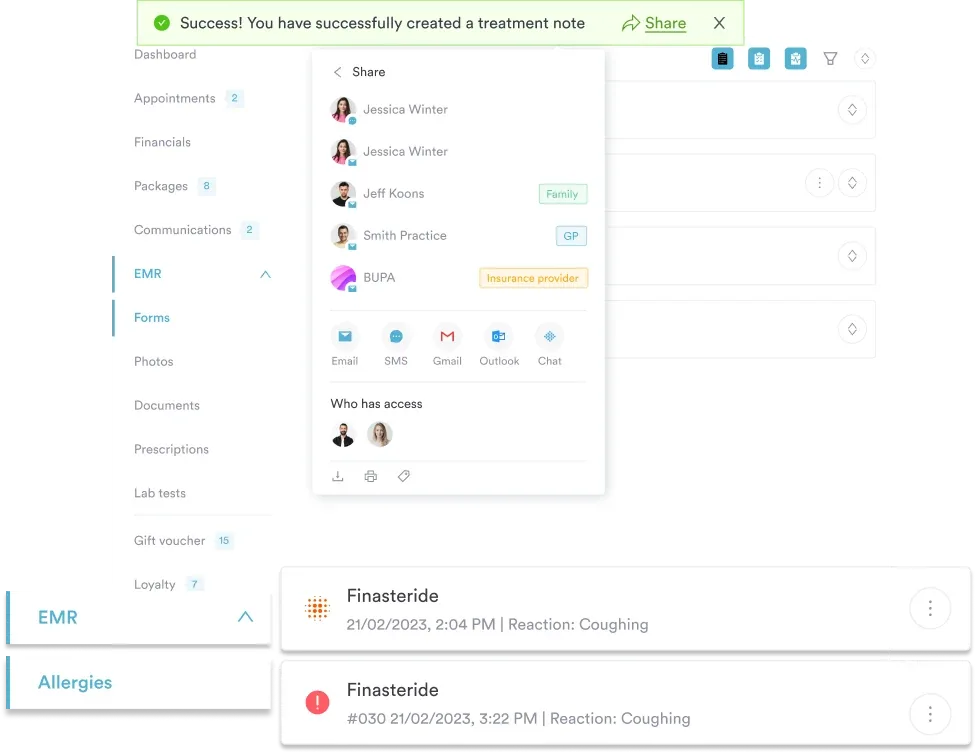
Pabau fixes that inside the record itself. Digital forms capture history in fixed fields, so intake arrives in the same wording every time. Pabau Scribe, our AI scribe, drafts the treatment note from the consultation in standard clinical language.
Groups with more than one site feel the difference first. Dr Leah Clinics runs a single patient database across its locations, so a record reads the same wherever the client is seen.
The result is one vocabulary across the practice. Handovers read cleanly, and coders bill from the words already in the note. New staff pick up the house terms by using the system.
Our guide to safer clinical notes makes the same case, because consistent language removes ambiguity.
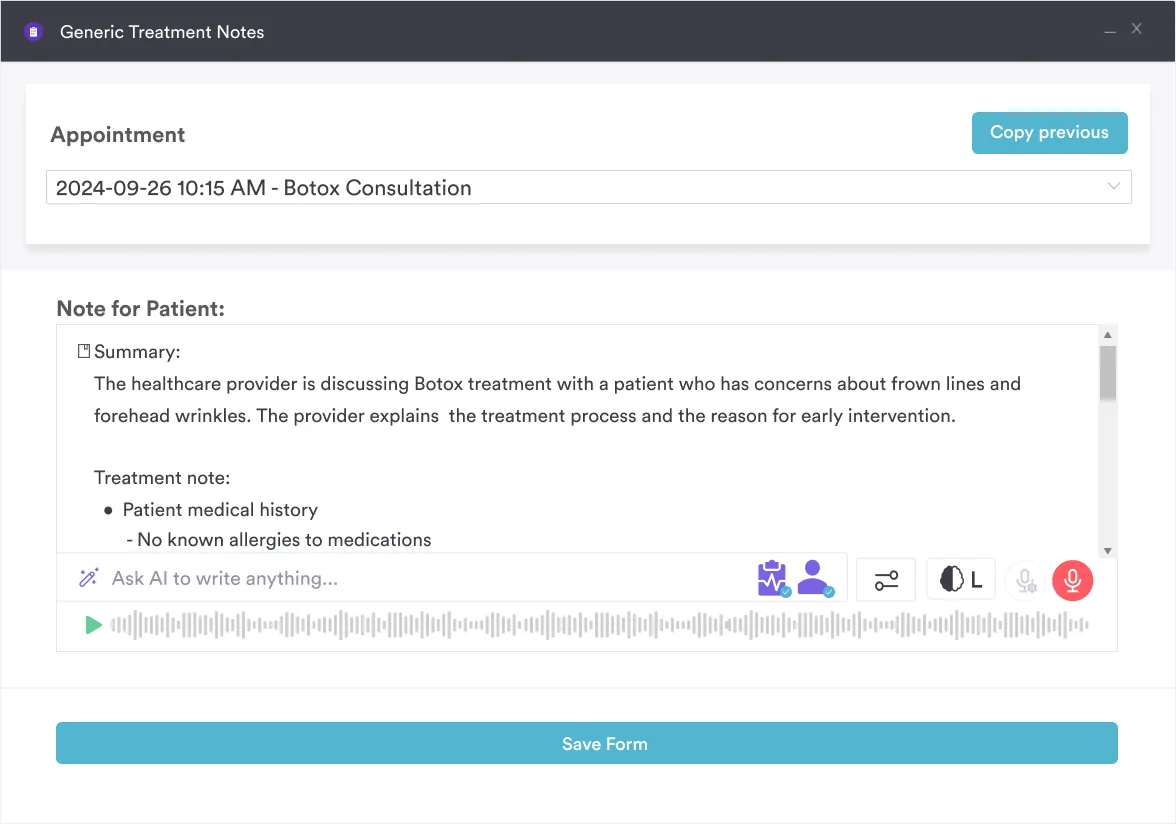

Pabau’s digital forms, clinical notes, and AI scribe put the same terms into every patient record. Coding and handovers stop depending on who wrote the note. Book a demo to see it on your own workflows.

Terminology causes trouble in two places. One is the term nobody on the team can decode. The other is the term three people write three different ways.
The glossary handles the first. Download it, learn the 30 terms, and use the prefix, suffix, and root tables when a word falls outside that list. The second problem is structural, and the system your team documents in solves it, not a reference sheet.
Book a demo to see how Pabau keeps terminology consistent across forms, notes, and claims in your practice.

Handing over between shifts? The printable nurse brain sheet keeps patient detail organized so nothing is lost between one shift and the next.
Recording what a patient takes? The free medication log template sets out what to record for each medication, dose, and change.
Handing a patient their medication schedule? Medication schedule template uses one sheet per medicine, plus the checks to run before you hand it over.
Sharing sensitive terms with a vendor? Non-disclosure agreement template compares one-way and mutual NDAs and lists the clauses your practice should include.
Documenting a minor procedure next? Operation notes template covers the procedure, anesthetic, sutures, dressings, and post-operative instructions on one page.
It is an alphabetical glossary of 30 clinical condition and symptom terms, from anemia to xerostomia. Each entry gives the term, a plain-language definition, and an example sentence.
No. The download is a glossary of whole terms. The prefix, suffix, root word, and abbreviation tables sit on this page instead. Print the page if you want them beside the glossary.
Clinicians, nurses, coders, medical assistants, students, receptionists, and practice managers. Anyone who reads or writes clinical records works better from one shared list of terms.
Yes. Print as many copies as you need. Practices often keep one at the front desk, one in each treatment room, and one with the billing team.
Start with the 30 glossary terms, since they cover what staff meet most often. Read each definition with its example sentence, then use the tables here to decode the rest.
Most follow Greek or Latin patterns rather than adding an s. Diagnosis becomes diagnoses, bacterium becomes bacteria, vertebra becomes vertebrae, and bronchus becomes bronchi.