Anemia nursing care plan
An anemia nursing care plan is a structured document that guides a nurse from as...

1
Last Updated: Oct 9, 2026

SOAP stands for subjective, objective, assessment, and plan, the four parts of a standard massage session record.
Detailed notes support insurance billing, protect you in a liability dispute, and show progress across a course of treatment.
Write the objective section in numbers you can measure again next session, such as degrees of range of motion.
Vague wording gives a reviewer nothing to check, so replace phrases like feeling better with a measurement.
Practice management software like Pabau stores notes in the client record, with customizable templates and access across locations.
A printable one-page form with prompts for client-reported pain and history, range of motion and palpation findings, your clinical interpretation, and the treatment plan. It also has space for session date, therapist name, and client and therapist signatures.
Download templateA massage therapy SOAP note records what your client reported and what you found when you worked on them. It then captures what you made of those findings and what you plan to do next. It is the record you fall back on when an insurer asks why a session was necessary.
Most therapists already know the four letters. Notes usually fall down in the objective section, which often reads like a summary of how the massage felt. A note that says lumbar flexion 60 degrees can be measured again in three weeks. A note that says lower back tight cannot.
Below is what belongs in each section, three filled-in examples by presentation, and the wording mistakes that hold up reimbursement.
Massage therapy SOAP notes are standardized clinical records that capture the details of each client session. SOAP stands for subjective, objective, assessment, and plan. The framework gives you a repeatable structure, so the same information gets captured for every client on every visit.
The American Massage Therapy Association treats SOAP notes as the profession’s standard documentation method. Their advantage over free-form session notes is consistency. A structured template prompts you for the same fields every time, which matters most on a full day of back-to-back clients.
Consistent documentation does three jobs in a massage practice. It protects you legally, supports insurance reimbursement, and shows client progress over time.
Legal and liability protection: your notes create a timestamped record of what you assessed, what you did, and why. If a client dispute or a claim arises, they show the standard of care you followed. Without them, you have no account of the session’s scope or outcome.
Insurance billing: many insurers require detailed session notes before they approve and reimburse a massage therapy claim.
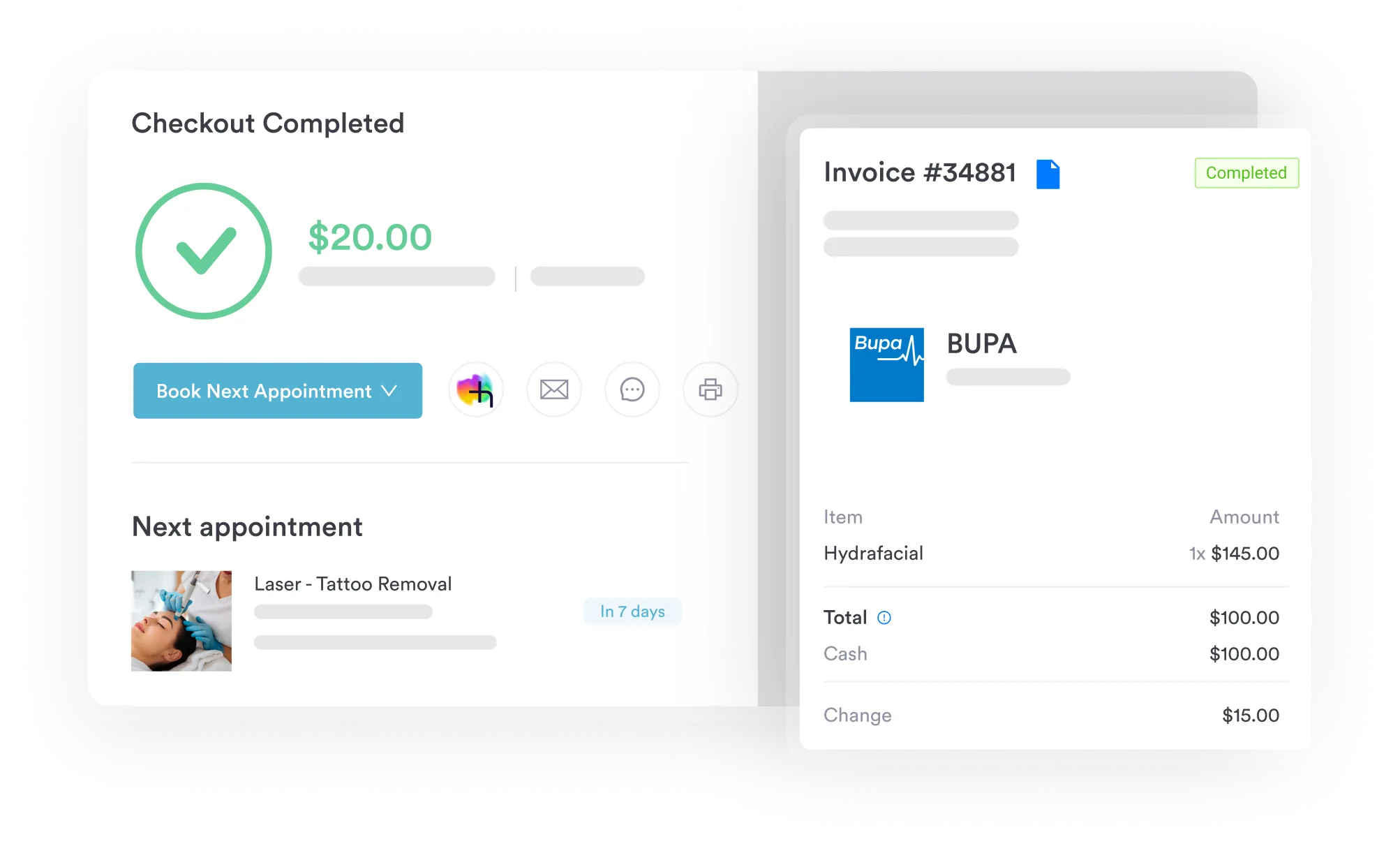
Client progress tracking: a well-organized client record system lets you compare sessions over weeks or months. You can see whether range of motion is improving and whether pain scores are dropping. That comparison is what tells you to adapt the plan or hold your course. A printable massage log template records each visit between those fuller notes.
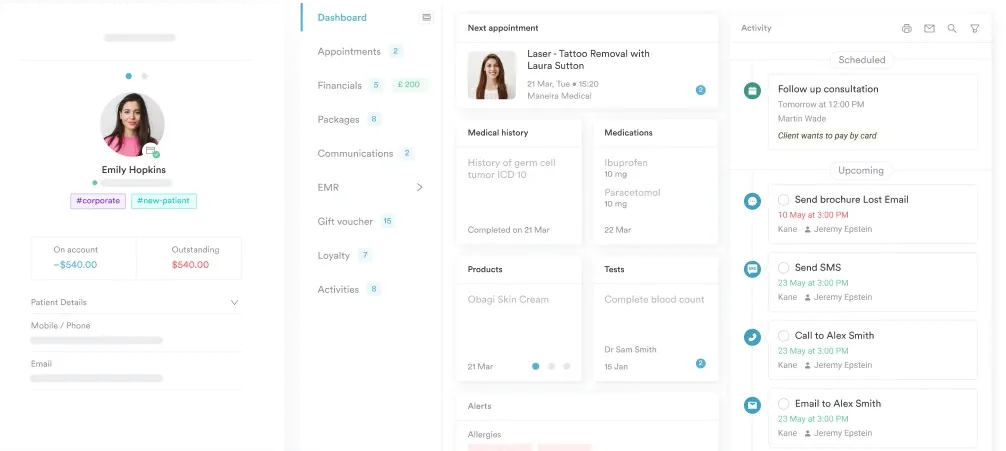
Each of the four sections has a distinct job. Getting all four right is what makes a note complete, defensible, and useful to whoever reads it next.
The subjective section captures the client’s own account, not your observation. Record the same details at every visit:
Much of that history already sits on your initial consultation form, so pull it forward rather than asking again.
Example: “Client reports chronic lower back pain, 7/10, radiating to the left hip. Worse with prolonged sitting, better with heat and stretching. Onset six months ago after lifting heavy boxes at work. Goal is less pain and enough flexibility to return to the gym.”
The objective section holds measurable, observable data. This is where range of motion testing, palpation findings, muscle tone, posture, skin condition, swelling, and any special tests belong. Standardized measures help here.
Example: “Lumbar flexion 60 degrees and pain-limited, extension 45 degrees, lateral flexion 40 degrees bilaterally. Palpation shows tight paraspinals, 4/5 tension on the left and 2/5 on the right. Tender trigger points in quadratus lumborum. Forward head posture with exaggerated lumbar lordosis. Skin intact, no edema.”
The assessment is your professional reading of the two sections above. Say whether the condition is improving, stable, or worsening, and name any pattern or contraindication you spotted. Diagnosis stays with the client’s physician. Your job is to interpret what you found in the context of the presenting complaint.
Example: “Positive response to treatment. Lumbar flexion has improved 10 degrees since the last session two weeks ago. Muscular tension remains significant on the left, matching the reported pain pattern. Pain down from 8/10 to 7/10. No contraindications noted.”
The plan sets out your strategy going forward. Name the techniques you will use, how often the client should return, and any stretches or self-care you recommend. If you are handing part of the care to someone else, a case management note keeps that referral documented alongside your own record.
Example: “Continue weekly deep tissue work on the left paraspinals and quadratus lumborum. Client to do 30-second quadratus lumborum stretches daily and apply heat first. Recommend a lumbar support pillow for desk work. Reassess range of motion and pain in one week. Refer to a physician if pain has not moved by session five.”
Resources like this pair well with telehealth software, letting remote clients complete them during virtual sessions.
Below are three filled-in notes for presentations massage therapists see most often. Adapt the wording to your own findings and to the client’s stated goal.
S: chronic lower back pain at 7/10 with left-side radiation. Worse after two or more hours at a desk, better with heat and stretching. Onset six months ago after a lifting injury at work. Goal is less pain and more flexibility for the gym.
O: lumbar flexion 60 degrees and pain-limited, extension 45 degrees, lateral flexion 40 degrees bilaterally. Tight left paraspinals and quadratus lumborum at 4/5 tension. Tender trigger points palpated. Forward head posture, exaggerated lumbar lordosis. Skin intact, no edema.
A: range of motion improved 10 degrees in flexion compared with two weeks ago. Pain down from 8/10 to 7/10. Tension remains significant on the left and matches the pain pattern. No contraindications.
P: continue weekly deep tissue work on the paraspinals and quadratus lumborum. Client to stretch daily for 30 seconds and apply heat. Recommend a lumbar support pillow. Reassess range of motion and pain in one week. Refer to a physician if nothing has changed by session five.
S: tension headaches at 5/10 starting in the shoulders and neck. Onset after a new laptop setup at work. Worse mid-afternoon, better after massage. Goal is less tension and fewer headaches during the working day.
O: neck rotation 70 degrees bilaterally, lateral flexion 35 degrees and limited on the right. Shoulder shrug strength 4/5 bilaterally. Tight upper trapezius on both sides, tender levator scapulae on the right more than the left. Forward head, rounded shoulders, right shoulder sitting about an inch higher.
A: tension consistent with postural stress from computer work. The right-side asymmetry suggests repetitive strain favoring left-hand use. Client reports mild relief after the first session, with tension not yet resolved. No red flags noted.
P: twice-weekly massage for three weeks, then reassess. Focus on upper trapezius and levator scapulae release. Client to adjust workstation setup and take a stretch break every 30 minutes. Teach self-massage for the levator scapulae and hand over a short set of neck pain exercises. Next session in three days.
S: delayed-onset muscle soreness in the quadriceps and glutes after a half-marathon three days ago. Pain 4/10 and improving daily. No swelling or bruising reported. Goal is faster recovery and a return to light training next week.
O: mild non-pitting edema visible in the quadriceps. Quads and glutes tender on palpation, with no deep bruising or severe tension. Knee flexion 110 degrees, slightly limited by soreness against a normal 135 degrees. No heat, skin intact. Client walks without a limp.
A: typical delayed-onset soreness with no signs of acute injury. The mild edema is resolving on its own. Client is appropriate for recovery-focused soft-tissue work.
P: 60-minute sports recovery massage at light to moderate pressure on quads and glutes, avoiding deep aggressive work. Recommend a cold bath tonight, light stretching, and hydration. Client to keep walking easily and avoid heavy leg training for two days. Next massage in two to three days, before running resumes.
The errors below are the ones that cost a note its legal and billing value.
The free template is ready to print, fill in by hand. It gives you a prompt for every SOAP component, plus space for range of motion notes, palpation findings, and treatment planning.
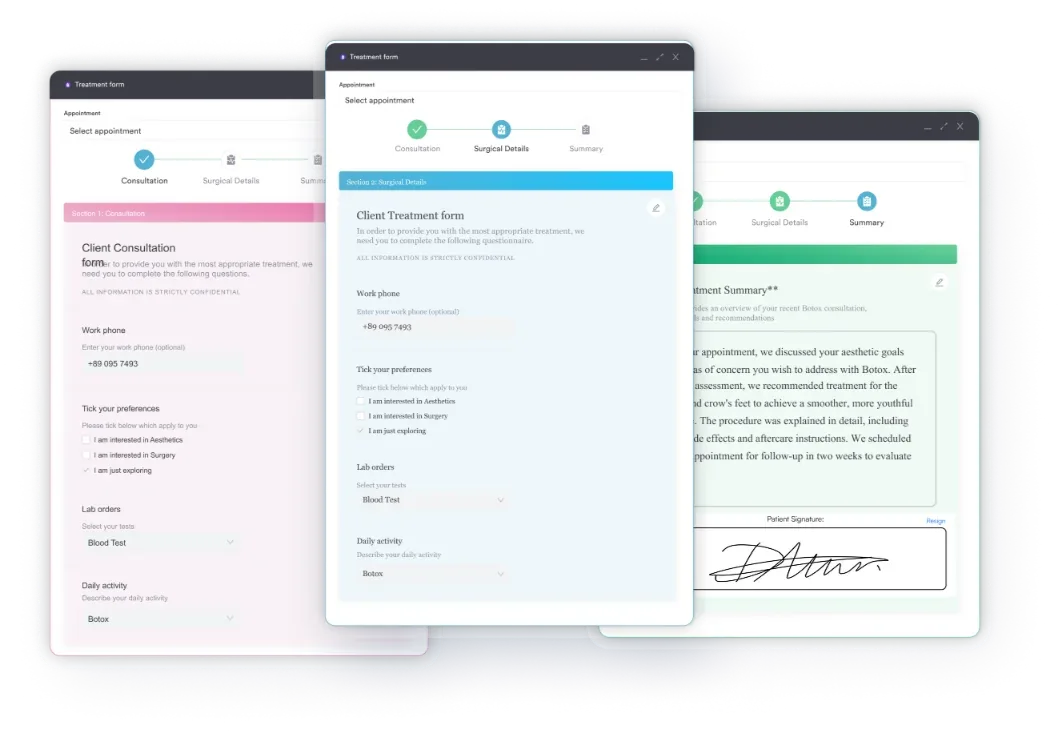
Paper is cheap and familiar. Digital wins on retrieval speed, multi-location access, and backup, which is where paper starts costing you time.
For a therapist seeing six or more clients a day, that difference is most of an hour back. There is no switching between an app, a diary, and a filing cabinet.
Therapists who add hair removal to the service menu need separate paperwork. A wax consent form covers the screening questions and the signature a waxing appointment needs.
Practice management software like Pabau keeps each note attached to the client rather than to a folder. You build the template once and fill it on a tablet between clients.
That structure is what makes up-to-date client records useful months later. It also travels. One two-location med spa ran on pen and paper until charts had to follow clients between sites. Spa management software keeps treatment history, preferences and bookings against one client record.
Every subscription includes the full feature set, so notes, scheduling, and billing sit together from day one. Notes stay timestamped and searchable, which turns a six-month history request into a search rather than an afternoon in the filing cabinet.
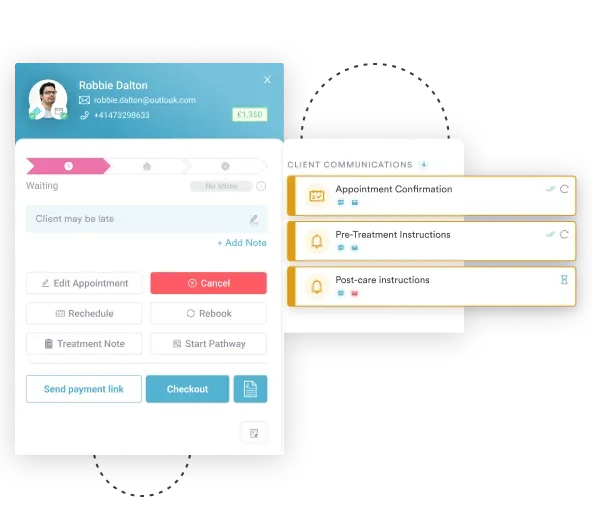

Pabau stores massage session notes against each client, with templates you can customize and open from any of your locations. Notes stay searchable and timestamped, ready for the next appointment or the next insurance query.

The format is the easy part. A note earns its place if someone can read it in six months and follow you. They should see exactly what you found and why you treated it that way.
So start with the objective section. Put a number on everything you can measure, then take the same measurement next visit. Once you have two points to compare, the assessment and the plan write themselves.
Print the template if paper suits your day. Move to digital when the filing starts costing you more time than the notes do. Book a demo to see how Pabau keeps massage notes, scheduling, and billing in one client record.

Offering piercing services alongside massage? body piercing aftercare instructions is a printable form covering saline rinse steps, healing timelines, and infection warning signs.
Adding brow treatments to your menu? brow lamination aftercare card covers the first 48 hours of care plus ongoing maintenance and when to contact the practice.
Offering colon hydrotherapy sessions too? colon hydrotherapy template bundles intake, contraindication screening, consent, and aftercare forms for colon hydrotherapy sessions.
Blending essential oils into treatments? essential oil guide covers therapeutic oil properties, safe application methods, blending basics, and contraindications for practice use.
Planning to launch your own practice? esthetician business plan template covers the executive summary, service menu, market analysis, and financial projections for a new practice.
SOAP stands for subjective, objective, assessment, and plan. Subjective is what the client reports and objective is what you measure. Assessment is your clinical interpretation and plan is your treatment strategy for next time.
A handwritten note usually takes 10 to 15 minutes per session. Digital notes built from a saved template take 5 to 8 minutes, and less again if a tool pre-populates the standard fields.
Most insurers require detailed session notes before they approve massage therapy reimbursement. The objective findings and the stated treatment justification are what support the claim and cut down on denials.
They are, if you store them in HIPAA-compliant software such as Pabau. Cloud systems encrypt data in transit and at rest, enforce access controls, keep audit trails, and back up automatically. Those controls are what the HIPAA Privacy and Security Rules ask for.
Record measurable findings: range of motion in degrees, palpation tension on a scale, posture, muscle tone, skin condition, and swelling. Add any special tests you performed and the functional limits you observed. Leave loose adjectives out.
Yes. A single template gives you a standard structure to fill in fresh for each client. Digital systems let you save that template once and reuse it for every session, which keeps your records consistent.