Anja Dodevska
Nursing care plan for aggressive behavior
A nursing care plan for aggressive behavior is a structured clinical document fo...

2
Last Updated: Oct 26, 2026
Free PDF 5 pages, print-ready Clinician-reviewed
An esthetician business plan is your roadmap for launching or scaling your skincare practice. You might be operating solo from a studio suite. Either way, this document brings clarity to your finances, target market, and growth strategy.
A ready-to-use template covering the executive summary, service menu, market analysis, and financial projections. It also includes marketing strategy, business structure, and day-to-day operations for solo estheticians, spa teams, and mobile practitioners.
Upload this PDF, or any form you already use, and Pabau's AI Form rebuilds it with tick boxes, text fields and a signature. Attach it to the treatment once, and every patient gets it on time.
AI Form rebuilds the consent, history and aftercare forms you already use. You review each one, then publish.
Patients complete forms on their phone before they arrive, so the front desk stops retyping paper.
Every signed form is versioned and attached to the treatment record, ready when you need it.
Set how long a consent stays valid. Returning patients skip forms they have already signed.
Supports HIPAA and GDPR compliance AES-256 encryption 4.8 on G2 4.7 on Capterra Trusted by 4,000+ practices worldwide

An esthetician business plan is a strategic document that outlines your practice’s operational, financial, and marketing roadmap for the next 1-3 years.
Lenders and investors require a business plan before approving loans or funding. It demonstrates you’ve validated your market and understand your numbers.
Core sections include the executive summary, services menu, market analysis, marketing strategy, financial projections, legal structure, and operational workflows.
Pabau’s practice management platform automates the execution of your business plan, running the scheduling, invoicing, client records, and marketing campaigns that carry out your strategies.
An esthetician business plan is a formal strategic document that outlines how you’ll run your skincare practice over the next 1-3 years. It includes your mission statement, service offerings, target client demographics, competitive positioning, financial projections, and operational workflows. Spa services booked by phone and online end up in two places unless one system holds both.
This document serves three critical purposes.
Many small business lenders, including SBA, banks, and credit unions, require a written plan before approving funding.
A business plan forces you to answer hard questions before you invest time and money into your practice. It clarifies whether your idea is viable, what your startup costs will be, and how long it’ll take to break even.
A complete esthetician business plan contains 7-10 core sections. Most lenders and investors expect all of them; if you’re planning solo, the first 5-7 are essential.
A 1-2 page overview of your entire plan. Include your business name, location (or service area if mobile), your mission statement, and the top 3 goals you’ll hit in year one.
Example: “Radiance Skin Studio is a solo esthetician practice based in Portland, OR, offering facials, waxing, and advanced treatments like chemical peels and microneedling. We aim to book 20 clients weekly and generate $8,000 monthly revenue by month 9.”
List every service you offer with its duration and service menu pricing. Include both entry-level offerings (basic facials, waxing) and premium services (peels, lash extensions, microneedling). Be specific about what’s included in each treatment. Sharing bikini wax pain ratings and service times alongside each price helps first-time clients book with confidence.
Nail services follow the same pattern, priced by tier. The pedicure and manicure menu sets out each tier with its duration and an example price, ready to adapt for your own plan.
Define who you serve. Are you targeting busy professionals, bridal clients, teens with acne concerns, or post-procedure clients seeking maintenance? Describe your geographic area (city, neighborhood, or service radius if mobile), population size, age ranges, and income levels.
Research your local competition. Name 3-5 competitors, note their pricing, services, and online reputation. What are they not covering? Look for underserved client groups or time slots you can fill.
Outline how you’ll reach clients. Will you rely on Google Business Profile, Instagram, referral programs, email newsletters, or local partnerships (salons, dermatologists)? Set monthly goals for new client acquisition and repeat booking rates.
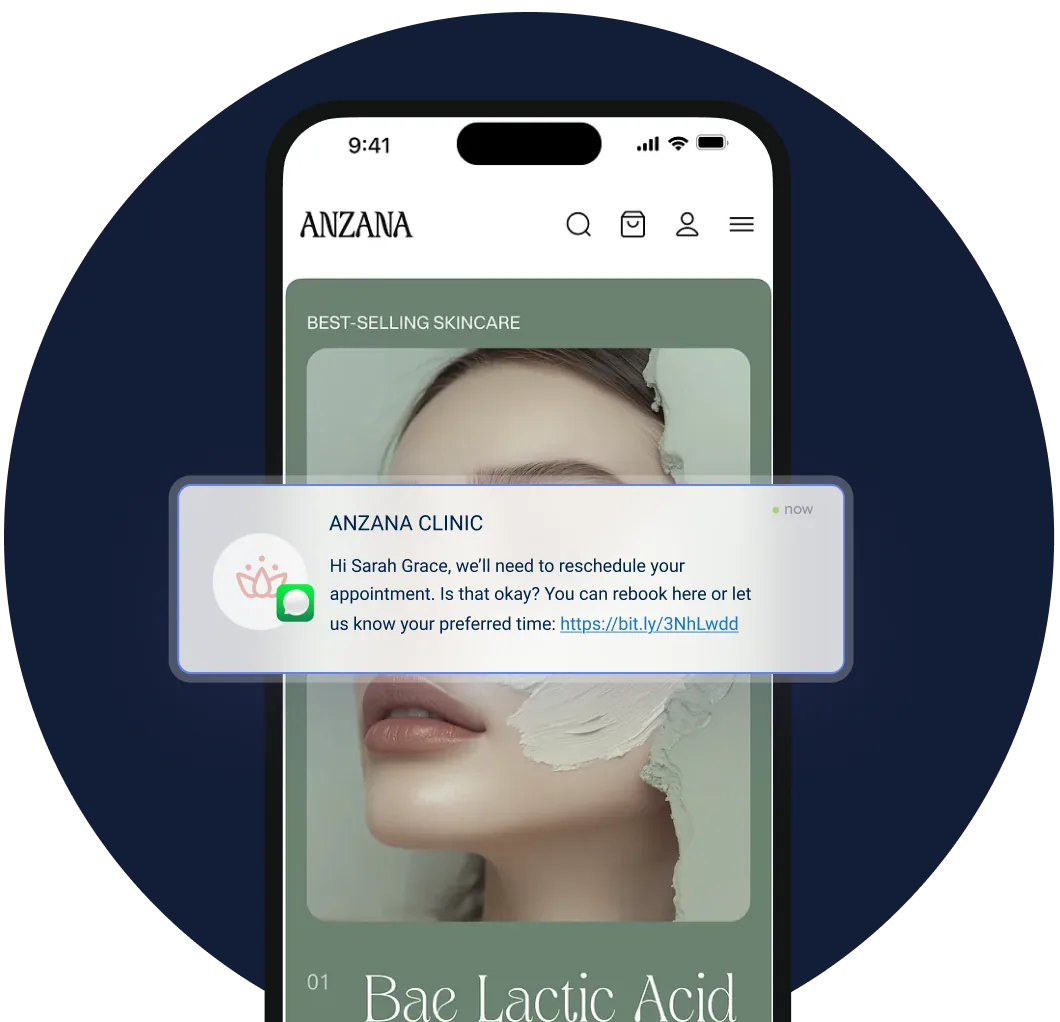
Sending post-treatment care instructions, seasonal promotions, and appointment reminders reduces no-shows and increases repeat bookings.
Startup costs for an esthetician practice typically range from $10,000 to $75,000. The exact figure depends on whether you’re renting chair space, leasing a commercial suite, or opening a multi-room spa.
Project your monthly revenue for 12-24 months based on your service pricing and realistic client volume. Subtract operating costs (rent, staff if applicable, product refills, utilities, insurance). This shows your break-even point and profitability timeline.
Decide whether you’ll operate as a sole proprietor, LLC, S-corp, or partnership. Each has tax and liability implications. Most solo estheticians choose sole proprietor or LLC for simplicity and liability protection.
You’ll also need a few legal essentials before you open:
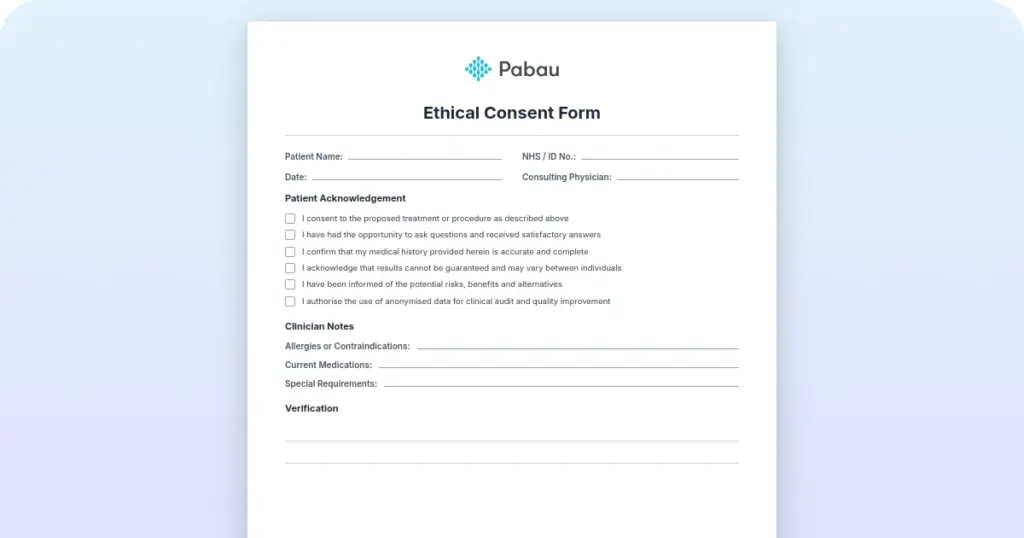
Signed consent forms back up that coverage by documenting what was agreed before each treatment. If waxing is on your menu, keep a wax consent form on file.
Describe your day-to-day workflows: hours of operation, client intake process, treatment protocols, product ordering, client record-keeping, and payment handling. If you’ll hire staff or contractors, outline roles and compensation.
With digital intake software, clients complete forms like this from home and answers flow into their record.
Your business plan will vary depending on your operating model. Here’s how the core sections adapt:
Writing a business plan is one thing. Executing it is another. Practice management software turns the written plan into daily operations, automating workflows and tracking the metrics your plan documents.
You’ll see how your revenue compares with the plan’s forecasts and adjust pricing or services accordingly.
Workflow automation handles repetitive tasks that keep your marketing strategy running:
This is the same automation built into skin clinic software, so you execute your plan without manual effort.
Your business plan stops being a static document. It becomes a living operating manual, fed by data from your clients and your revenue, so you can refine your model as you go.

From scheduling to invoicing to client retention, Pabau automates the core workflows every esthetician business plan documents.

An esthetician business plan is not a one-time document. It’s the operational compass you refer back to every time you make a pricing, staffing, or service decision.
The estheticians who secure financing and hit their booking targets plan their numbers before they open the door, not after. A rough sense that demand exists doesn’t survive a lender meeting or a slow first quarter.
Download the template above, fill in your numbers, and use it to guide your first 12 months. Book a demo to see how Pabau turns that plan into the schedule, invoicing, and client records running your practice day to day.

Need a consultation form built for estheticians? Esthetician consultation form covers skin type, contraindications, and treatment history before the first appointment.
Building out your facial service paperwork? facial consent form template covers medical history, contraindications, and a legal compliance checklist for facials.
Want a template for client intake forms? Spa intake form template walks you through capturing consultation notes, contraindications, and product preferences at your first appointment.
Planning to add massage to your services? massage intake form covers health history, contraindications, a body diagram, and pressure preference for clients.
An esthetician business plan should include an executive summary, service menu with pricing, and market analysis. Add your marketing strategy, financial projections with startup costs and revenue forecasts, and your business structure, whether that’s a sole proprietorship or an LLC. Finish with an operations plan covering schedules, client intake, and staffing.
Yes. Most lenders (SBA, banks, credit unions) require a written business plan before approving loans. The plan demonstrates you’ve researched your market, understand your costs, and have realistic revenue projections, which reduces the lender’s risk.
Startup costs range from $10,000 to $75,000 depending on your model. Solo suite operators typically spend $15,000-$40,000 on equipment, lease deposit, and initial inventory. Multi-room spas may spend $40,000-$75,000+. Mobile estheticians often start at $10,000-$20,000 since they avoid facility overhead.
Most solo estheticians choose either sole proprietor (simplest, no separate entity) or LLC (limited liability company, which protects personal assets if sued). An LLC costs slightly more to set up but offers legal protection. Consult a local accountant or lawyer to determine the best fit for your state and situation.
Price based on three factors: (1) your local market rates (research competitors), (2) your cost of supplies and overhead, and (3) the time required per treatment. A 60-minute facial might cost $80-$150 depending on whether you’re in a small town or urban area. Offer service bundles (packages of 6+ treatments at a slight discount) to encourage repeat bookings and predictable revenue.