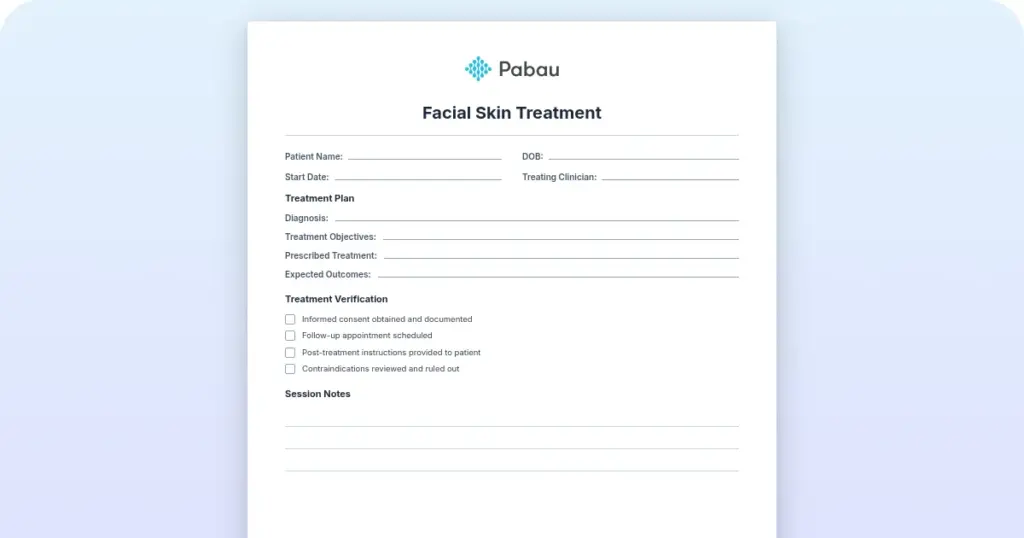
Facial skin treatment consent form template: Microneedling and phi-ion
A facial skin treatment consent form is the signed proof that a patient was scre...

2
Last Updated: Oct 21, 2026
A wax consent form is the document a client signs before a waxing service to confirm they understand the risks and agree to proceed.
It records their medical history, flags contraindications like Accutane or retinoid use, and protects your studio if a reaction occurs.
A usable form covers six parts: client details, medical history, a contraindication checklist, a risk disclosure, aftercare instructions, and signatures. Download the free template below, then add the medication questions in this guide so every yes answer tells you what to do next.
A one-page form with client details, a risk acknowledgment, disclosures for allergies, medications, skin conditions and recent treatments, and the areas to be waxed. It closes with aftercare acknowledgment, the right to withdraw, a liability release, and client and provider signatures.
Download template
A wax consent form documents informed consent and limits liability by confirming clients understand the risks and meet the safety criteria for waxing.
Essential sections include client contact information, medical history screening, contraindication acknowledgment, medication disclosures, and signature blocks.
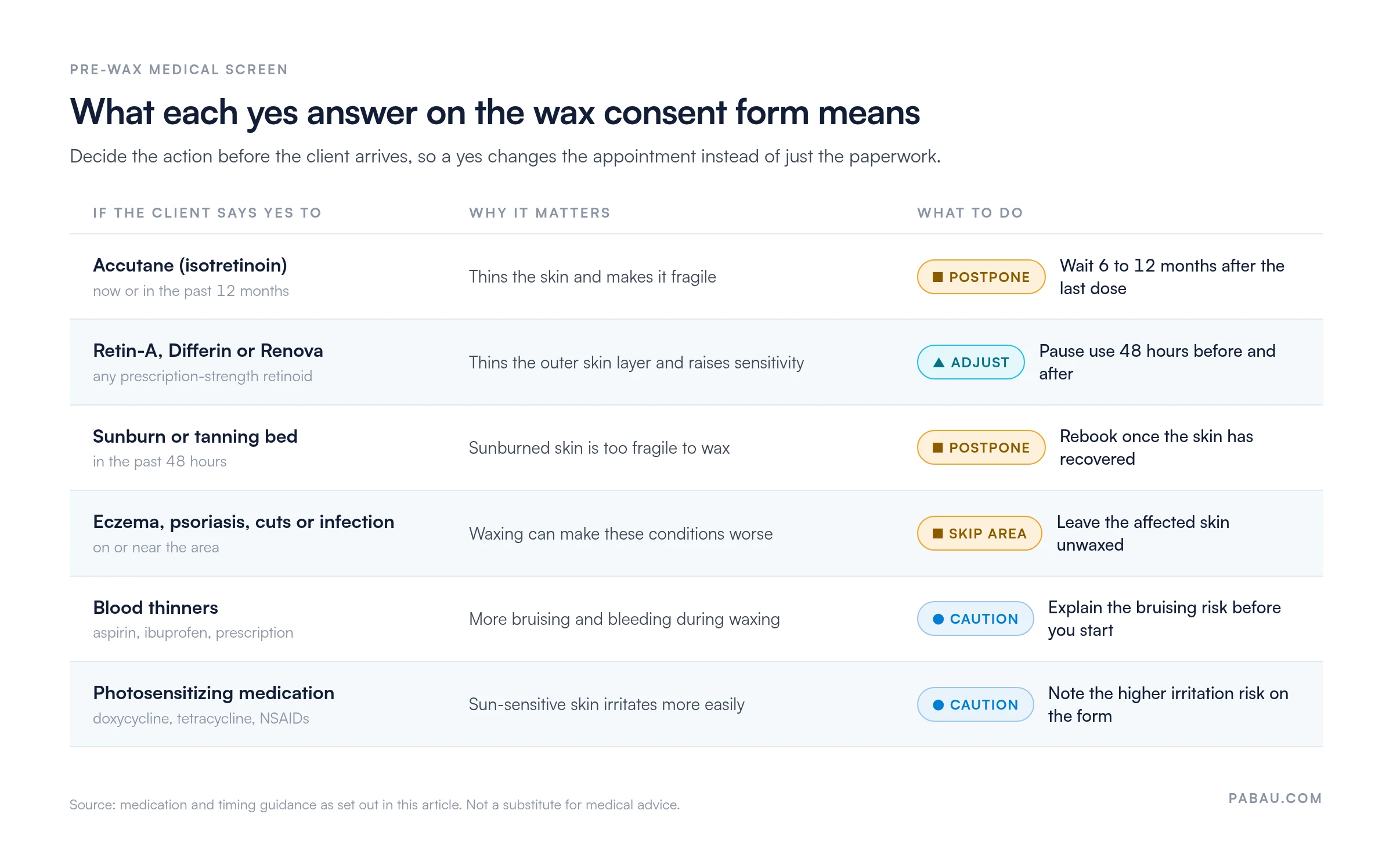
The critical questions cover Accutane, retinoids such as Retin-A, recent sunburn or tanning, and blood-thinning medications.
Decide in advance what each yes answer means for the appointment, whether that is postponing, adjusting, or skipping an area.
Digital forms in Pabau, our practice management platform, send the form before the appointment, collect the e-signature, and store it on the client record.
A wax consent form is a signed acknowledgment that a client knows the risks, contraindications, and aftercare of waxing before the service starts. It establishes informed consent and works as a liability waiver if a client later complains or has an adverse reaction.
The form confirms that clients disclosed their medical history, current medications, and skin conditions. It also records that they understand waxing may cause temporary redness, swelling, irritation, ingrown hairs, or bruising. Certain conditions, like Accutane use or severe sunburn, rule the service out.
Unlike a general esthetician client intake form, this form is built for hair removal. It asks the medication and contraindication questions that matter for waxing safety.
A written form also leaves a paper trail. If a client later disputes that they disclosed a contraindication or heard the risks, the signed form proves the conversation took place.
A complete form captures client information, medical history, contraindication acknowledgments, and signed consent. Here’s the structure to follow.
The aftercare row works best when clients take the same instructions home. For brow clients, pair the form with an eyebrow waxing aftercare sheet so what they sign matches what they follow.
The medical section is the most important part of the form. The downloadable template asks clients to list their medications and skin conditions. Turn those open fields into specific yes/no questions about what affects waxing safety:
A yes answer only protects the client if it changes the appointment. The chart below maps each answer to the action your team should take before any wax is applied.
Paper consent forms need manual filing and are hard to find when you need them. Digital consent workflows automate the process and connect to centralized client records for instant audit access.
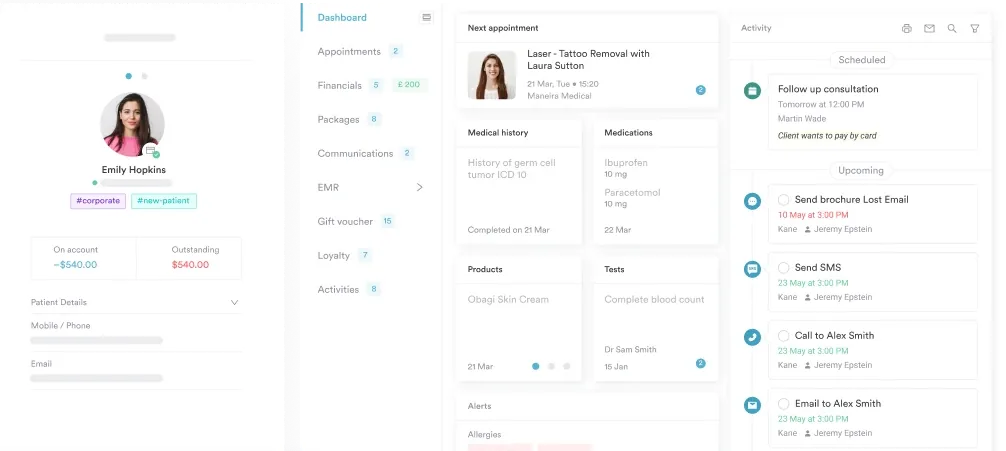
Here’s how to set up a digital waxing consent form in your studio:
Digital consent forms cut administrative time compared to paper, stop forms going missing, and keep every client’s consent documented and retrievable.
Waxing consent form requirements vary by state and country. US cosmetology licensing boards expect documentation of informed consent before service, though they don’t mandate specific form language.
In the UK, the General Data Protection Regulation (GDPR) requires consent forms to explain how client health data is stored and used. For legal enforceability, e-signature platforms must comply with the UK’s eIDAS regulations (the Electronic Identification and Trust Services for Electronic Transactions Regulations 2016).
A signed consent form doesn’t remove liability entirely, but it shows that you followed professional standards and acted in good faith. Professional liability insurance for estheticians typically requires documented informed consent as a condition of coverage.
On paper, the client fills in a printed form at the front desk. The appointment starts late, the medication answers get a quick glance, and the paper goes into a folder nobody checks again.
With Pabau, you build the wax consent form once and send it automatically with each booking. Clients sign on their phone before they arrive, so you can read their medical answers and rebook an Accutane or sunburn case in advance. Pabau GO, our iOS app for practitioners, shows which clients still have a form outstanding.
Every signed form lands on the client record next to their treatment history. When an insurer or a client asks what was disclosed, you have the answer in seconds.

Pabau sends your wax consent form with each booking, collects the e-signature, and files it on the client record. You see contraindications before the client walks in.

A wax consent form earns its keep in the medical section. Download the template, add the six yes/no questions, and agree as a team what each yes means before the first client signs.
The trade-off is a slightly longer form. In return, a postponed Accutane client costs you one slot, while a skin injury can cost you the client and a claim. Ask returning clients to confirm their answers at each visit, because medications change.
Book a demo to see how Pabau sends, signs, and stores waxing consent forms so your team screens every client before the wax is warm.

Sending brow clients home after a wax? Eyebrow waxing aftercare gives you a ready-made sheet to hand brow clients as they leave.
Want the full picture before a first treatment? Esthetician client intake form collects the client history that sits alongside a service-specific consent form.
Offering facials alongside waxing? Facial consent form template covers the risks and disclosures for facial treatments in the same format.
Planning treatments with a new client? Esthetician consultation form structures the conversation about goals, skin type and suitability before you book a service.
Running a spa with several services? Spa intake form template captures the contact and health details your spa services rely on.
Include client contact information and medical history questions on medications, allergies, and skin conditions. Add a contraindication checklist (Accutane, Retin-A, blood thinners, recent sun exposure), a risk disclosure statement, aftercare instructions, and signature blocks for client and esthetician.
Yes, professional standards and most professional liability insurance policies require documented informed consent before waxing. State cosmetology boards expect estheticians to keep written consent on file. Signed forms also protect you if a client claims they weren’t warned of risks or didn’t disclose a contraindication.
No. Accutane (isotretinoin) significantly thins the outer skin layer, making it too fragile for waxing. Most estheticians and dermatologists recommend waiting 6-12 months after stopping Accutane before resuming waxing. Always ask clients explicitly about Accutane use on your consent form and turn away active users.
Medications that contraindicate waxing include Accutane, Retin-A (tretinoin), Differin (adapalene), Renova (tretinoin), photosensitizing antibiotics (doxycycline, tetracycline), blood thinners (aspirin, warfarin), and NSAIDs. Ask about all medications on your consent form and advise clients to pause topical retinoids 48 hours before and after waxing.
Specific waxing consent form requirements vary by US state and country. Most state cosmetology boards expect documented informed consent, though they do not mandate a particular form. Professional liability insurance providers typically require written consent as a coverage condition, making consent forms a practical necessity for legal protection.
Digital storage is preferable to paper. Store e-signed forms in your practice management system linked to each client’s profile, ensuring secure, password-protected access and automatic backup. Keep paper forms in a locked cabinet, separate from other client files. Hold them for at least 3-5 years to meet professional standards and cover potential liability claims.