HIPAA compliant texting: What you can send patients & how to communicate securely
HIPAA compliant texting is possible when a text holds no protected health inform...

Last Updated: Oct 16, 2026
A massage log is the record a therapist keeps of every session with a patient. It covers what was treated, how the patient responded, and what comes next. Kept session by session, it gives you continuity of care, a defensible record for your licensing board, and evidence behind any insurance claim.
This guide covers what belongs in a massage log, how SOAP notes structure your entries, and when paper stops working for a growing practice. In fact, the free download below is a simple printable tracking log rather than a full SOAP session record. Use it alongside the clinical notes you keep in your own patient records.
A printable one-page log with space for the date and time of each entry, what was done, and the notes or actions that followed. Additionally, it leaves room for patterns noticed over the period and questions to raise at the next appointment.
Download template
A massage log records each patient session so the next appointment builds on the last one instead of starting over.
Specifically, a complete entry covers patient details and health flags, session date and duration, techniques and pressure used, areas worked, and the patient’s response.
In addition, SOAP notes give your entries a clinical structure that other practitioners and licensing boards can follow.
The free download is a printable tracking log rather than a SOAP session record, so keep your clinical notes alongside it.
Pabau’s digital forms and client records hold intake, consent, and session notes in one HIPAA-compliant file.
A massage log is the ongoing clinical record of what happens during each session with a patient. Specifically, it captures who the patient is, which techniques were used, how they responded, and what comes next.
State massage therapy licensing boards and the American Massage Therapy Association (AMTA) expect therapists to keep session-by-session records. A good log does three jobs. It documents professional accountability, so you can show what you did and why. It carries continuity, so the next therapist knows the patient’s history. It also protects the patient by recording informed consent and the reasoning behind each treatment decision.
Beyond compliance, a massage log helps you spot patterns. A patient may report tension in the right shoulder after every leg massage, or respond better to lighter pressure in one area. As a result, those patterns become visible across sessions, and that insight shapes better treatment.
Specifically, the template on this page is a one-page printable log, designed for recording entries between appointments and bringing them to the next visit.
That structure suits progress tracking and home-care follow-through between sessions. However, it does not replace your clinical session notes. Keep modality, pressure, areas treated, and your objective findings in the patient record itself, in the SOAP structure described below. The chart below shows which detail belongs where.
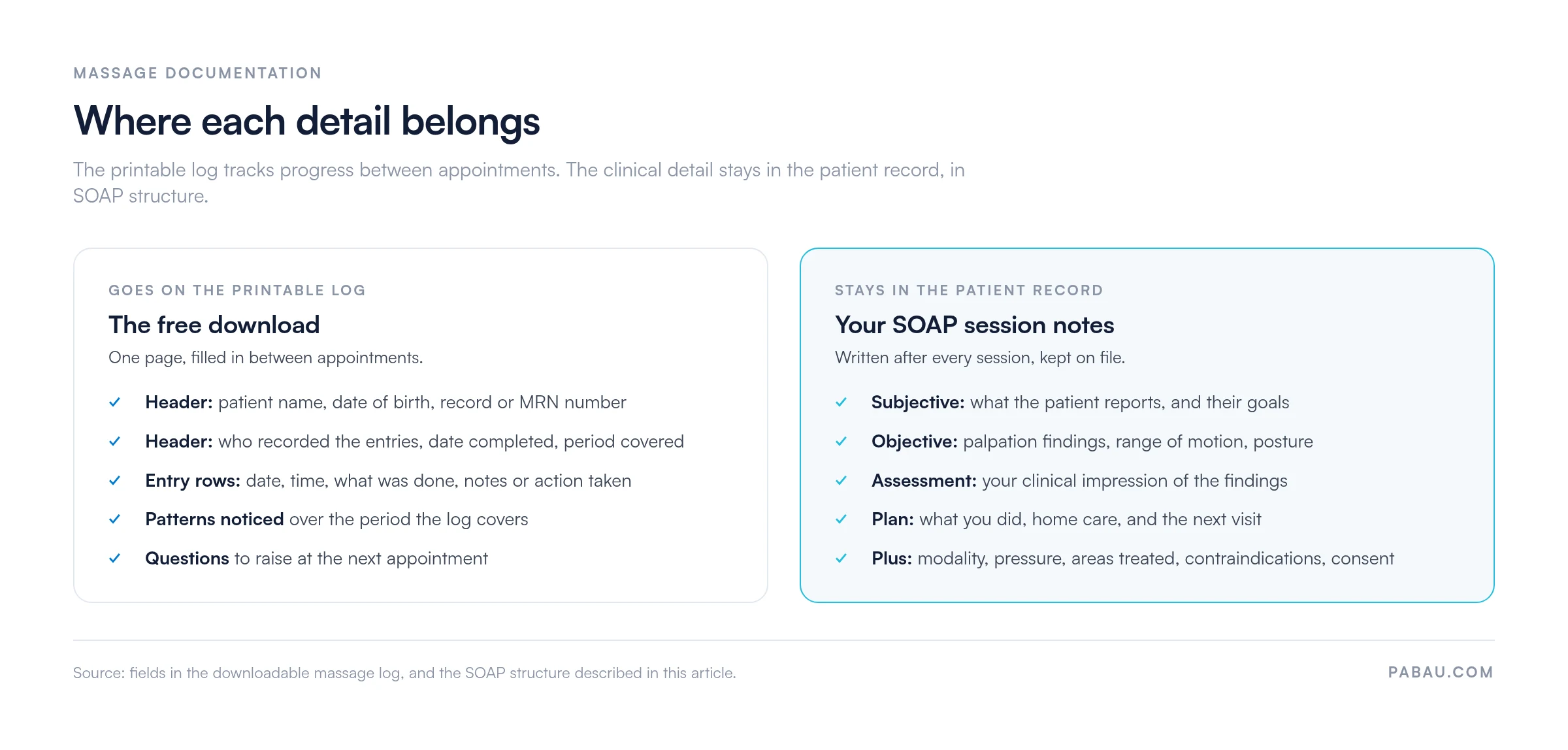
A complete massage log is built from three sections: patient information, session details, and clinical notes.
Every massage log entry starts with patient identity and critical health flags. This section repeats key data from the intake form, but it lives in the log for reference during the session.
These fields record what happened during the appointment and form the core of your clinical record.
The final section closes the loop between this session and the next one. Keep these notes with the full patient history, so anyone opening the record can see them at the next appointment.
SOAP notes are a clinical framework used across healthcare to organize session records. The four parts are Subjective, Objective, Assessment, and Plan. The National Certification Board for Therapeutic Massage and Bodywork (NCBTMB) expects certificants to keep accurate patient records. Overall, SOAP is the structure most massage programs teach for the job.
Writing a massage log in SOAP structure takes about the same time as freeform notes. The difference is that your entries become useful to anyone reviewing the file. In addition, they show your professional reasoning if a regulator ever asks. Our massage therapy SOAP notes template sets out the four headings ready to fill in after each session.
Both paper and digital logs meet documentation requirements, but they differ in workflow burden, searchability, and security.
Solo therapists often start with paper and move to digital as the practice grows. Multi-therapist practices need digital logs from day one, because paper records in a team create lost notes and duplicate work.
Moving from paper to digital massage logs happens in three steps.
Set a date when paper stops being the record of truth, and tell the whole team. In fact, running both systems indefinitely is how half a patient history ends up in a drawer.
State licensing boards expect therapists to keep patient records for a minimum period, typically three to seven years depending on the state. Check your state massage therapy board for the exact requirement. Federal HIPAA guidance sets six years for required documentation, so most practices treat that as the floor. Meanwhile, paper logs need secure, fireproof storage, and digital logs need encrypted backup and access-controlled login.
A documented massage log also protects you if a patient claims you harmed them. Your session notes show what you did, why you did it, and that the patient consented. Notably, a signed massage intake form and consent documents stored with your session logs keep that chain of evidence unbroken.
A multi-therapist practice needs one shared log. If a patient books with a colleague instead of their usual therapist, that colleague should see the whole history. Previous injuries, pressure preferences, treatment response, and how home care went all belong in front of them. As a result, paper logs scattered across individual binders leave each therapist guessing.
Shared digital logs give each therapist access to the patients they treat, while a lead therapist or manager can review all records for supervision. Spa software with shared records lets you tag each session with the therapist’s name, flag priority patients, and set follow-up reminders.
Many massage practices spread their records across three places. Intake forms sit in a drawer, session notes live in a notebook, and appointment history sits in a booking app. Pulling one patient’s history together then costs minutes you do not have between appointments.
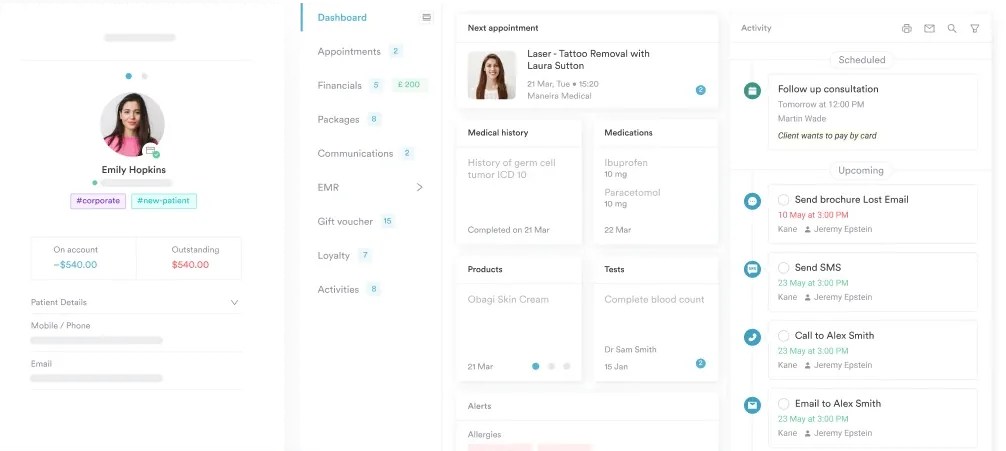
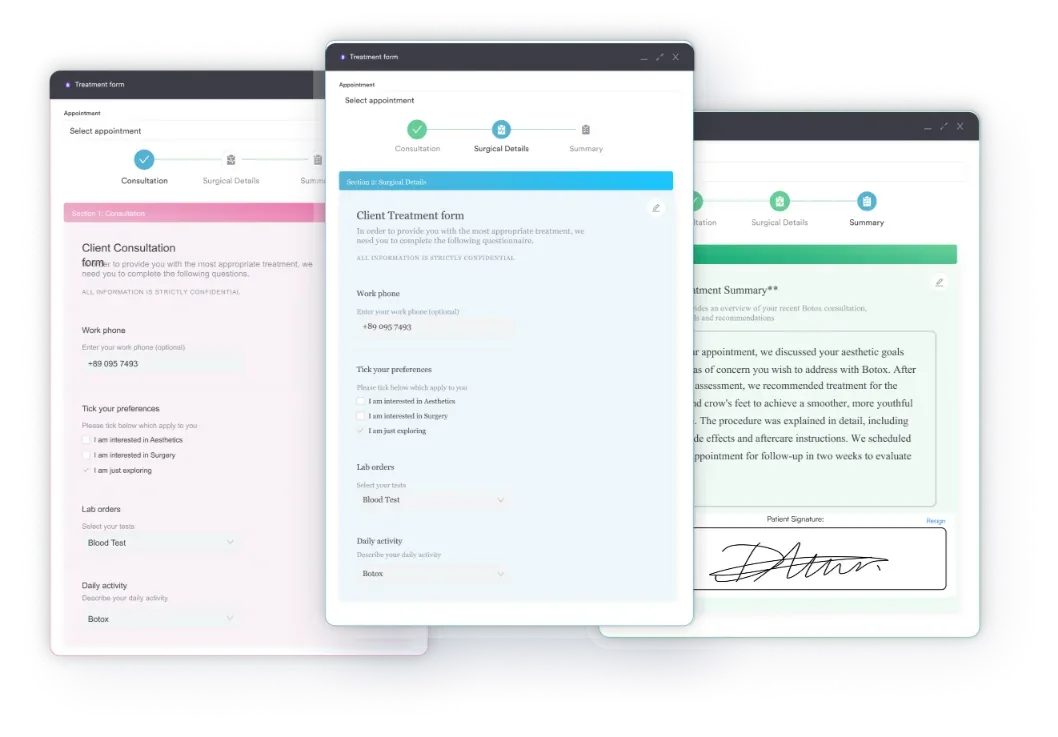
Practice management software like Pabau keeps those records together. Intake forms, consent, session notes, and appointment history attach to the same patient file. Any therapist who opens it sees the full history before the treatment starts.
Pabau Scribe, our AI scribe, turns a short spoken summary into a structured treatment note after each session. As a result, the log is written before the next patient arrives. Digital forms collect health history and consent ahead of the visit, and the records stay in HIPAA-compliant storage with an access log behind them.
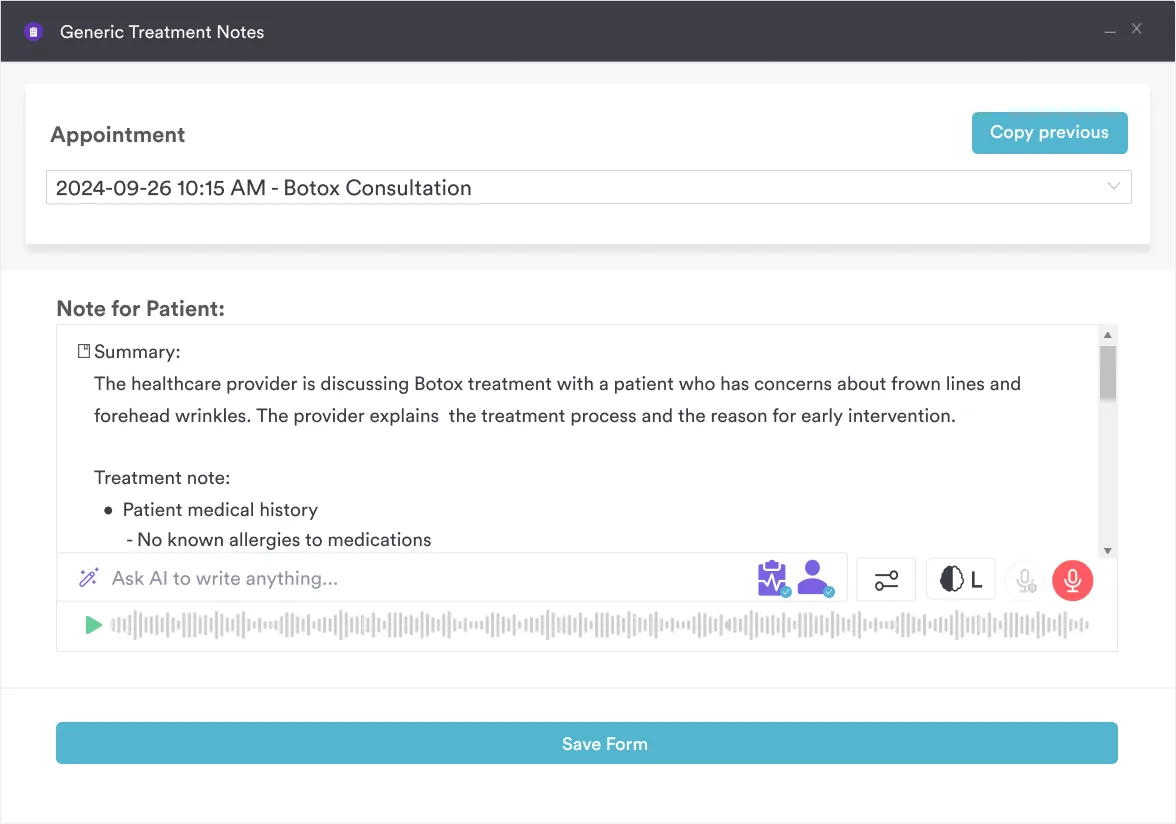

Pabau brings intake forms, consent, session notes, and appointment history into a single patient record. Therapists write their notes faster and open each appointment with the full history in front of them.

A massage log earns its keep the moment someone other than you reads it. That reader might be a covering therapist, a licensing board, an insurer, or the patient themselves.
Use the printable log above for tracking progress and home care between appointments. Keep the clinical detail, in SOAP structure, in the patient record itself. In short, the two documents do different jobs, and neither one covers for the other.
Once a second therapist joins the practice, paper stops scaling and shared digital records become the only way to protect continuity. Book a demo to see how Pabau handles massage documentation, from intake through session notes to follow-up.

Need the health history before the first session? Massage intake form template collects contraindications, medications, and consent up front.
Want your session notes preformatted? Massage therapy SOAP notes template lays out the four headings for every appointment.
Comparing software for a growing practice? Wellness clinic software reviews the platforms that hold bookings, records, and notes in one place.
A massage log records patient contact details, health history, and any contraindications. It then covers the session itself: date, duration, techniques used, pressure, and areas treated. Close each entry with your observations, the patient’s response, and follow-up care advice. Indeed, SOAP format gives all of that a clinical structure.
No. The printable log has rows for the date, the time, what was done, and the notes or action taken. Two further sections cover patterns noticed over the period and questions for the next appointment. It works as a progress tracker between visits, so keep your SOAP session notes in the patient record alongside it.
Most state licensing boards require three to seven years as a minimum, and federal guidance points to six years. Check your own state massage therapy board for the exact requirement. Overall, digital systems with automatic backups make retention easier to manage than paper.
Yes. Where massage therapy is billed under a health plan, such as a physical therapy referral, your log is the clinical evidence behind the treatment. Include objective findings and your professional assessment, since a detailed log strengthens any submission or appeal.
Paper logs can meet HIPAA requirements if they are stored securely in a locked cabinet with restricted access. They also have to be destroyed properly at the end of the retention period. In contrast, digital systems add encryption, automatic backups, access audits, and role-based permissions, which make loss and unauthorized access less likely.