Mental health self-care checklist
A mental health self-care checklist is a structured daily tool for tracking the ...

6
Last Updated: Oct 20, 2026

The CORE-OM is a 34-item self-report questionnaire covering four domains: wellbeing, problems, functioning, and risk.
Score it as a mean on a 0 to 4 scale, where anything below 1.0 counts as non-clinical.
Eight positively worded items are reverse-scored: Q3, Q4, Q7, Q12, Q19, Q21, Q31, and Q32.
The risk domain runs to six items, and two of them ask about risk to other people.
Digital forms capture responses straight into the patient record, which takes paper out of routine outcome monitoring.
The full 34-item questionnaire with its five-point response scale, ready to print or send to a patient. It covers all four domains, including the six risk items, and is free to use in NHS and charitable settings.
Download templateThe CORE-OM (Clinical Outcomes in Routine Evaluation – Outcome Measure) is a 34-item questionnaire that measures how much psychological distress a patient is carrying. It is the most widely used outcome measure in UK counseling and psychotherapy services.
Scoring is a mean across all 34 items, on the same 0 to 4 scale as the individual responses. A mean below 1.0 is non-clinical, and that is the target most courses of therapy work toward.
Eight of the items are worded positively and must be reversed before you calculate anything. A missed reversal pushes the mean up, so the scoring steps below start there.
Developed in the late 1990s by Evans and colleagues, and maintained by CORE System Trust, the CORE-OM is a pan-theoretical measure. It works across therapeutic models rather than belonging to any one of them.
The questionnaire tracks how a patient’s distress and day-to-day functioning shift over a course of treatment. It carries no diagnostic function, so it sits alongside an assessment rather than replacing one.
That makes it a routine outcome monitoring tool first. Measuring outcomes at fixed points is standard practice in NHS psychological therapy services, and NICE guidance reflects the same expectation. The measure is free in NHS and charitable settings, with separate licensing terms for private practice.
The 34 items split across four domains, each reading a different dimension of psychological functioning.
Each item uses a five-point scale from 0 (not at all) to 4 (most or all of the time), anchored on the past week. Higher scores always mean more distress. Subscale scores tell you which domain is driving the total, so a functioning problem does not read as a symptom problem.
Scoring is a mean rather than a sum, and it takes three to five minutes by hand. Do the reversals before anything else, because a missed one changes every figure that follows.
CORE System Trust allows prorating for up to 10% of missing items. In practice the total needs at least 31 of the 34 items answered. Prorating is not recommended for the shorter wellbeing and risk scores, so treat those as all-or-nothing.
Some services report a clinical score instead, which is the same mean multiplied by 10 on a 0 to 40 scale. The 1.0 cut-off becomes 10. Check which convention a report uses before you compare two numbers.
Common error: skipping the reversal on all eight items inflates the mean and can push a non-clinical patient over the cut-off.
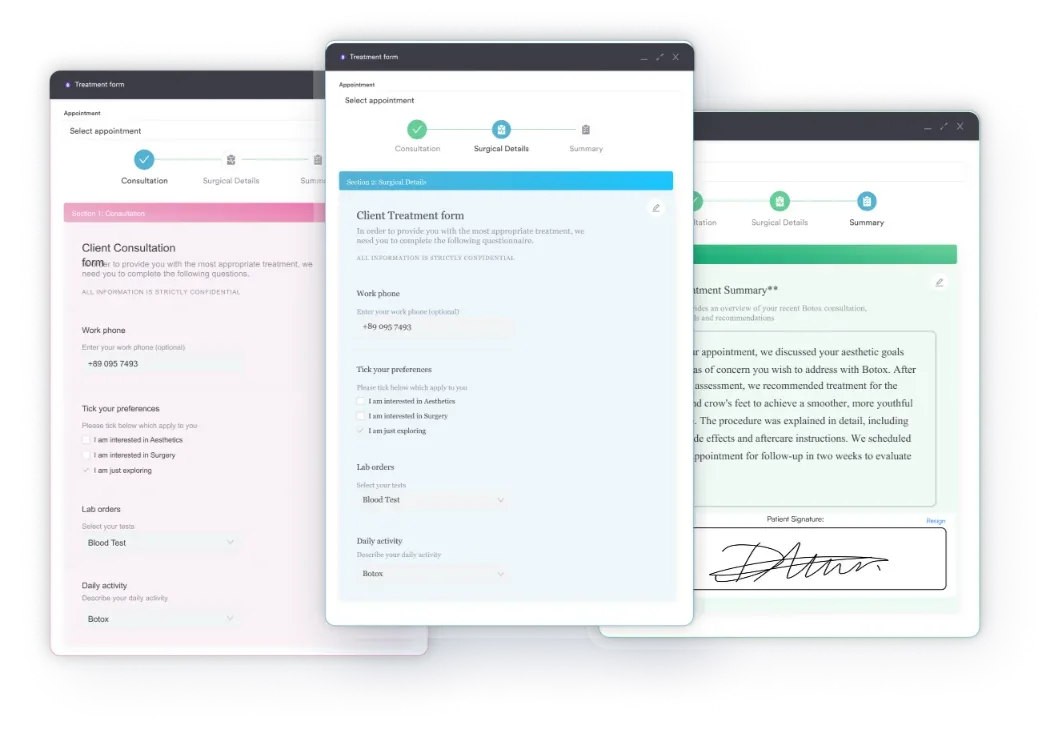
Occupational therapists often score assessments like this directly inside occupational therapy software, keeping results attached to the treatment plan.
Compare the mean against the thresholds from CORE System Trust validation work. The same bands serve session-by-session monitoring and pre-treatment and post-treatment evaluation.
The cut-off of 1.0 is the threshold that matters. Below it, the patient has reached non-clinical functioning, which is the primary outcome goal for most therapy. Above it, distress is clinically significant and intervention is still indicated.
The CORE-10 is a 10-item short form. It uses the same five-point scale and lands on the same 0 to 4 mean. It is less sensitive to change inside a single symptom domain.
Both versions are validated. The full one simply buys more clinical information for the minutes it costs.
Routine outcome monitoring means measuring at fixed points rather than whenever something feels off. The common schedule is assessment, mid-treatment, and discharge. Session-by-session measurement suits services that want to react inside the course of therapy.
NHS Talking Therapies for anxiety and depression, renamed from IAPT in 2023, measures outcomes at assessment, around session six, and at discharge. Private practices and counseling services generally follow a similar rhythm.
A score only earns its keep once it is in the note. Writing the mean into the DAP note beside the clinical impression is what lets the next clinician read the trend. Pairing the questionnaire with a Global Rating of Change adds the patient’s own view of progress.
The CORE-OM is validated for adults aged 18 and over, in NHS and private settings alike. Counselors, psychotherapists, psychiatrists, and mental health nurses all use it.
It is not a diagnostic tool, so it cannot replace an assessment. For younger patients, use the YP-CORE (Young Person’s CORE), which is validated for ages 11 to 16. For children, the usual choice is the Strengths and Difficulties Questionnaire, or SDQ.
The CORE-OM is copyright CORE System Trust and free to use in NHS and charitable settings. Commercial licensing applies in private practice, so confirm the current terms with the Trust before rolling it out across a paid service. The download button above gives you the printable version.
Paper questionnaires create work after the session ends. Someone scores the sheet by hand, types the figure into the record, and files the paper somewhere it can be found again. Practice management software like Pabau moves that loop into the patient file.
You build the CORE-OM as a digital form and send it ahead of the appointment, by email or through the patient portal. Responses are captured into the patient record, so the completed questionnaire is already there when the session starts.
The outcome score then sits with the notes it belongs to, instead of on a sheet waiting to be filed.
That means less admin between sessions, and a record that shows the whole course of treatment in one place.
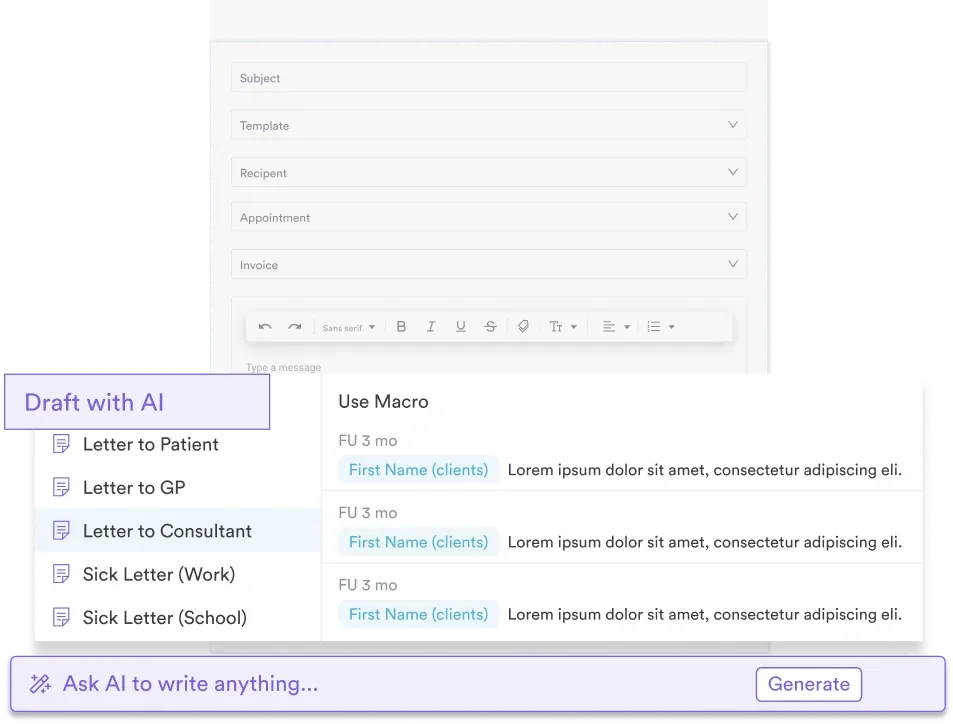

Pabau captures outcome questionnaires straight into the patient record, so scores sit beside treatment notes. Your team stops re-typing paper forms after every session.

The CORE-OM is only as useful as the number that ends up in the note. Score it as a mean, reverse the eight positively worded items, and state which convention you used. Those three habits are what make one score comparable to the next.
One trade-off is worth remembering. The full 34 items buy domain-level detail, and they cost patient time. If you are measuring weekly, the short form usually wins. If you are reporting to a commissioner, it does not.
Decide where the score will live before you start collecting it. Book a demo to see how Pabau keeps outcome questionnaires in the patient record, rather than in a filing cabinet.

Setting up a new therapy client? Counseling contract walks through the clauses a therapeutic agreement needs before the first session.
Supporting DBT skills between sessions? DBT journal gives you printable prompts across all four skills modules.
Need something to hand a patient who is escalating? Grounding worksheet collects techniques a patient can use on their own.
Exploring identity and self-concept in session? Identity worksheet structures that conversation into prompts you can send ahead.
Tracking psychological distress across sessions? CORE-10 questionnaire gives you a free, validated 10-item tool for routine outcome monitoring.
It measures psychological distress and tracks therapy progress across four domains. Services use it for routine outcome monitoring, so they can show whether treatment moved the number and report outcomes at service level.
Patients usually finish the 34 items in 5 to 10 minutes, and hand scoring adds three to five minutes. Digital delivery removes the transcription step, because the response lands in the record as soon as it is submitted.
Yes, in NHS and charitable organizations. Private practices and commercial providers need to confirm licensing terms with CORE System Trust before they use it.
A mean of 1.5 sits in the moderate band, which indicates clinically significant distress and warrants treatment. A mean below 1.0 is the non-clinical threshold, and that is the usual therapy target.
Most routine outcome monitoring frameworks recommend assessment, mid-treatment, and discharge. NHS Talking Therapies for anxiety and depression, formerly IAPT, follows that pattern. Some services measure every session, which digital delivery makes less burdensome.