Sulcus Test: Shoulder Instability Assessment
The sulcus test is an orthopedic special test that checks for inferior glenohume...

3
Last Updated: Oct 22, 2026

The Karnofsky Performance Status Scale (KPS) rates a patient’s functional status from 0 (death) to 100 (normal function with no disease) in 10-point increments.
A KPS score of 50 or below is the standard threshold for hospice eligibility, though final decisions weigh several clinical factors.
KPS differs from ECOG Performance Status: KPS spans 0-100 focused on daily activities, while ECOG spans 0-5 focused on physical capacity.
Practice management software like Pabau streamlines KPS documentation, automating scoring workflows to improve accuracy and audit readiness.
This Karnofsky Performance Scale PDF gives you the full 0-100 score table, hospice cutoffs, and space to log your own patient assessments.
Download templateThe Karnofsky Performance Status Scale rates how well a patient can perform daily activities. It’s commonly shortened to KPS or called the Karnofsky index, and it runs from 0 to 100 in 10-point increments.
Clinicians use it to track disease progression, decide whether a patient can tolerate a given treatment, and guide major care decisions, including hospice eligibility. Originally developed for cancer patients in the 1940s, the scale is now used across oncology, palliative care, occupational therapy, and chronic disease management.
Most online references show only a handful of score bands. This guide gives you the complete 0-100 table, the hospice cutoff, a full ECOG comparison, and a free downloadable template.
The Karnofsky Performance Scale, also called the Karnofsky index, gives a numerical rating of how well a patient can function in daily life. A score of 100 means normal function with no disease. A score of 0 means death.
The scale measures independence in daily activities and capacity to work, not disease severity alone. Two patients with the same diagnosis can have very different KPS scores, depending on their functional reserve. Clinicians use KPS, sometimes called the KPS performance status score, to communicate prognosis, choose treatment intensity, and support shared decision-making with patients and families.
The scale also appears in VA clinical protocols and in oncology clinical trials. Many trials set a minimum KPS score, commonly 60 to 70, as an eligibility threshold before enrolling a patient in an experimental treatment.
KPS is especially useful in palliative and hospice settings, where the goal shifts from cure to comfort and quality of life. A clinician deciding whether a patient is ready for hospice care weighs KPS alongside symptom burden, disease trajectory, and patient goals.
The scale needs no specialist equipment or lengthy questionnaire, which makes it practical for busy practices, and its predictive validity is well established. Structured clinical assessment tools like KPS form the backbone of comprehensive patient evaluation.
The complete KPS scale spans 11 score levels, each pairing a functional-status band with a clinical descriptor. Use this reference table when scoring a patient.
Scoring KPS takes clinical judgment based on direct observation or collateral history. Follow these steps for a consistent, accurate assessment.
Many practices now integrate KPS into digital clinical forms so scoring is captured at every visit. This creates an objective audit trail and triggers an automated alert if KPS declines sharply, signaling a shift in disease trajectory or care goals.

A KPS score of 50 or below is the widely accepted threshold for considering hospice referral. Clinicians sometimes shorthand this as Karnofsky scale hospice eligibility, though the full picture always involves more than one score.
Hospice eligibility involves multiple criteria beyond KPS alone. These include disease diagnosis, prognosis, symptom burden, and patient or family goals. KPS supports the conversation about hospice eligibility. It doesn’t replace clinical judgment.
Medicare and organizations such as the National Hospice and Palliative Care Organization (NHPCO) do not mandate a specific KPS threshold for hospice eligibility. Instead, they require evidence that the patient has a life expectancy of 6 months or less if disease runs its expected course. KPS helps clinicians quantify functional decline and communicate prognosis to the patient and family.
When documenting a hospice referral decision, always pair KPS with a supporting clinical narrative. Clinical assessment documentation that includes both a numerical score and a narrative rationale strengthens the medical record and supports regulatory compliance.
ECOG Performance Status and the Karnofsky scale both measure functional capacity, but they use different rating systems and serve different contexts. Knowing when to reach for each matters for oncology and palliative care teams.
Note: KPS and ECOG score equivalences are approximate. Treat the conversion table as a guide, not an exact match, since clinical context still matters.
A patient with KPS 50 due to severe pain may function more like an ECOG 2. Another KPS 50 patient with mild symptoms may sit closer to ECOG 1. Always check the underlying reason for functional decline before comparing scores across scales.
The Palliative Performance Scale was developed specifically for end-of-life and palliative care settings. It differs from KPS in structure and is optimized for very ill patients, where traditional functional capacity is less relevant than comfort and symptom management.
In practice, many palliative care teams use both scales. KPS handles the initial assessment when prognosis is uncertain, and PPS takes over once the patient is clearly in a final trajectory. Clinicians sometimes just call this the KPS PPS comparison.
If you search for a PPS scale PDF or a PPS scale calculator, you’ll find several free versions online. This guide’s KPS reference table works the same way. Patient management workflows should support both scales rather than forcing a single choice. Some practices document KPS and PPS side by side to keep multidisciplinary teams aligned.
KPS 80-100 (Fully functional to mildly symptomatic): Patient is independent, working, or managing household responsibilities. Disease may be present but does not significantly limit activity. These patients are typically candidates for active treatment or clinical trials.
KPS 60-70 (Mostly self-care, limited activity): Patient performs self-care independently but cannot work or manage complex tasks. Fatigue, pain, or weakness limits participation. Palliative approaches may be incorporated alongside disease-specific treatment.
KPS 40-50 (Requires assistance): Patient is largely dependent on caregivers for activities of daily living. Frequent medical appointments and symptom management are required. Hospice is often appropriate if prognosis is under 6 months and goals align.
KPS under 40 (Severely disabled or moribund): Patient requires complete care and is typically hospitalized or in hospice. Focus shifts entirely to comfort and dignity. Life expectancy is measured in weeks to days.
The Karnofsky Performance Scale is one of the strongest predictors of survival in oncology and palliative care. Numerous studies show that a KPS score at diagnosis, or at a clinical milestone, correlates with overall survival, treatment tolerance, and quality of life.
Lower KPS scores are associated with shorter survival and a higher risk of treatment-related complications. The scale’s predictive power holds across multiple cancer types and stages, which makes it a reliable tool for realistic prognosis conversations with patients and families.
Accurate KPS documentation supports continuity of care, audit compliance, and prognostic tracking. Record KPS systematically to create an objective, longitudinal record.
Integrating KPS into your comprehensive patient records system keeps the score from getting buried in narrative notes. It stays available for quick reference during multidisciplinary team meetings or patient consultations.
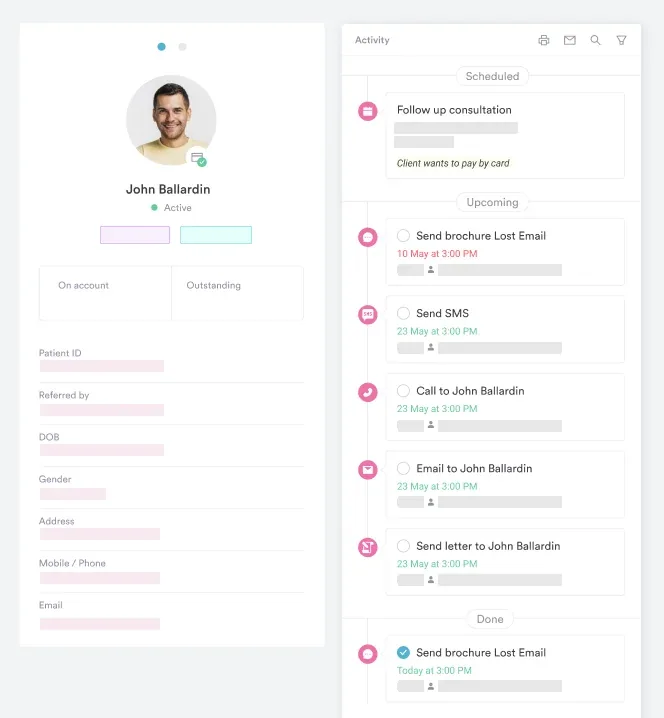
Clinical teams managing patients across oncology, palliative care, or hospice benefit from automated KPS trending. A care-coordination alert can fire when a patient’s score drops by 10 or more points in a single month.
That prompts the team to reassess goals of care and update the patient and family on the change in prognosis. This proactive approach reduces late hospice referrals and improves advance care planning.
While widely used and validated, KPS has documented limitations clinicians should understand.
Clinicians outside the United States sometimes use a regional variant. The Australian-modified Karnofsky Performance Status (AKPS) adds hospice-specific descriptors to the original scale.
Most practices track KPS in a mix of paper notes, spreadsheets, and whatever the EHR’s free-text box allows. That makes it hard to spot a 10-point drop before it becomes urgent. It’s harder still to hand a clean, defensible score history to a hospice reviewer or a multidisciplinary team.
Practice management software like Pabau keeps KPS scoring inside the same digital clinical forms a clinician already opens at each visit. The score, the supporting narrative, and the date all sit on one patient timeline instead of scattered across separate systems.
When a score drops sharply between visits, the record makes the trend visible immediately instead of requiring someone to dig back through old notes.
That single timeline is what a hospice reviewer, an oncology team, or a family member sees too. They get the full functional-status picture, not just the latest number.

Pabau’s digital clinical forms capture KPS scores, supporting narratives, and dates together, so care teams see the full trend without digging through scattered notes.

KPS earns its long clinical life because it takes two minutes to score and still predicts survival as well as far more complex tools. The trade-off is that it only captures a single moment.
Score it once and you have a snapshot. Score it consistently, alongside a brief functional narrative, and you have a trend. That trend is what tells a hospice team, an oncologist, or a family exactly when a patient’s trajectory changed. Paper notes and free-text boxes are usually where that consistency breaks down.
Book a demo with Pabau to see how digital clinical forms keep every KPS score, narrative, and date on one trustworthy timeline.

Need a nursing care plan for an oncology patient? Cancer nursing care plan walks through diagnosis-specific goals and interventions that pair naturally with a KPS score.
Administering a chemotherapy drug next? Cytarabine administration note template covers route-specific prep, dosage checks, and post-infusion monitoring for oncology teams.
Need an assessment sequence for emergency care? EMT patient assessment template covers scene size-up, primary and secondary assessment steps, and ongoing reassessment aligned to NREMT standards.
Admitting a resident to long-term care? Healthcare practitioner form records medical history, fall risk, skin condition, and nutritional status for long-term care admissions.
Need the full evaluation, not the score? History and physical form template covers demographics, medical history, systems review, exam findings, and the assessment and plan.
The Karnofsky Performance Scale is a standardized clinical tool that measures a patient’s functional status and ability to perform daily activities. It runs from 0 (dead) to 100 (normal function with no disease) in 10-point increments. This helps clinicians assess disease progression, determine treatment appropriateness, and guide prognostic discussions with patients and families.
A KPS score of 50 or below is the standard indicator for considering hospice referral. Eligibility also depends on diagnosis, prognosis, symptom burden, and family goals. Medicare does not mandate a specific KPS threshold. It requires evidence of a life expectancy of 6 months or less. Always pair KPS with a clinical narrative supporting the referral.
A KPS score of 80 means the patient can carry on normal activity with effort and has some signs or symptoms of disease. They are independent in self-care and can work or manage household responsibilities. They may still experience fatigue, pain, or other limitations that prevent full capacity. These patients are typically suitable for active treatment or clinical trials.
Karnofsky uses a 0-100 scale emphasizing daily activities and work capacity. ECOG uses a 0-5 scale focused on physical performance. KPS suits palliative care and general clinical settings, while ECOG is standard in oncology trials. Conversions are approximate: KPS 100 is near ECOG 0, and KPS 50 is near ECOG 3. Always check the underlying functional reason when comparing scores.
In palliative care, KPS guides prognosis, aligns care goals with functional reality, and supports hospice eligibility decisions. Clinicians reassess KPS regularly to track disease trajectory and prognosis. Scores of 50-70 often prompt a shift from curative to comfort-focused care. Scores below 40 suggest an end-of-life trajectory needing hospice or inpatient palliative care.
A KPS score of 50 means the patient needs considerable assistance and frequent medical care. They manage some personal needs but depend on caregivers for daily activities. KPS 50 is the threshold where hospice becomes appropriate, if prognosis is 6 months or less and family goals align with comfort-focused care.
KPS stands for Karnofsky Performance Status, sometimes also called the Karnofsky Performance Scale or the Karnofsky index. All three names describe the same 0 to 100 functional-status scale used across oncology, palliative care, and hospice.
The Lansky Play-Performance Scale is the pediatric equivalent of KPS. It scores children on the same 0 to 100 band, using play and activity level instead of work capacity. Clinicians use Lansky for pediatric patients and KPS for adults, since neither scale was validated for the other age group.