Nursing narrative note template
A nursing narrative note template is a structured PDF that guides you through re...

3
Last Updated: Oct 21, 2026

This handout gives exact roasting times and oven temperatures for beef, lamb, pork, and veal by cut and weight.
It includes the USDA safe minimum internal temperature chart for meat, poultry, fish, and eggs.
Cold storage guidelines show how long raw meat, poultry, and fish stay safe in the fridge or freezer.
A power outage checklist tells patients exactly what to keep and what to throw away.
Digital forms let a practice track exactly who received this handout and when.
This printable handout gives exact roasting times and temperatures for beef, lamb, pork, and veal. It also includes the USDA safe minimum temperature chart, cold storage guidelines by food type, and a checklist for refrigerated food during a power outage.
Download templateUndercooked meat and food left too long in the fridge cause thousands of foodborne illness cases every year. Most of it comes down to guesswork. Is this roast done? Is that leftover still good?
This free food safety handout answers both questions. Inside, you’ll find exact roasting times and temperatures for beef, lamb, pork, and veal. It also covers the USDA safe minimum temperature chart, cold storage guidelines by food type, and a power outage checklist. Print it, hand it to patients, or drop it into your digital forms so nobody has to guess.
Roasting time depends on the cut, the weight, and the oven temperature, not on the clock alone. A food thermometer is the only reliable way to confirm doneness.
Every whole cut needs to reach 145°F (63°C) internally, then rest for at least 3 minutes before carving. The full handout breaks out times for every roast, including tenderloin, crown roast, and boneless cuts.
The safe number changes by food type, and color is never a substitute for a thermometer reading.
Insert the thermometer into the thickest part of the food, away from bone and fat, for an accurate read.
Ground meat keeps for 1 to 2 days in the fridge. Whole cuts stretch to 5 days. Fish is the most perishable, at 1 to 3 days.
Metabolic health practices keep records like this organized in an EMR built for metabolic health.
The power’s been out for two hours. What now? Check the fridge thermometer first. Anything held above 40°F (4°C) for more than 2 hours needs to go.
An unopened freezer holds a safe temperature for about 48 hours, or 24 hours if it’s half full. When in doubt, throw it out.
The most common food safety mistake is skipping the thermometer. Color, smell, and time alone can’t tell you whether food crossed into the danger zone of 40°F to 140°F (4°C to 60°C).
Weight-loss clinics and wellness practices hand out nutrition-adjacent guidance like this constantly, alongside meal plans, intake forms, and other take-home instructions. A patient nutrition handout often sits in that same stack of take-home paperwork.
Most practices print this handout once and hope it reaches every patient the same way. One provider hands it out at checkout, another forgets, and nobody can prove which patients actually got it.
Practice management software like Pabau attaches the handout to a patient’s digital forms, so it goes out automatically with intake or discharge paperwork. Echo AI, Pabau’s AI scribe, drafts the treatment note referencing the handout in seconds, so the record shows exactly what was covered and when.
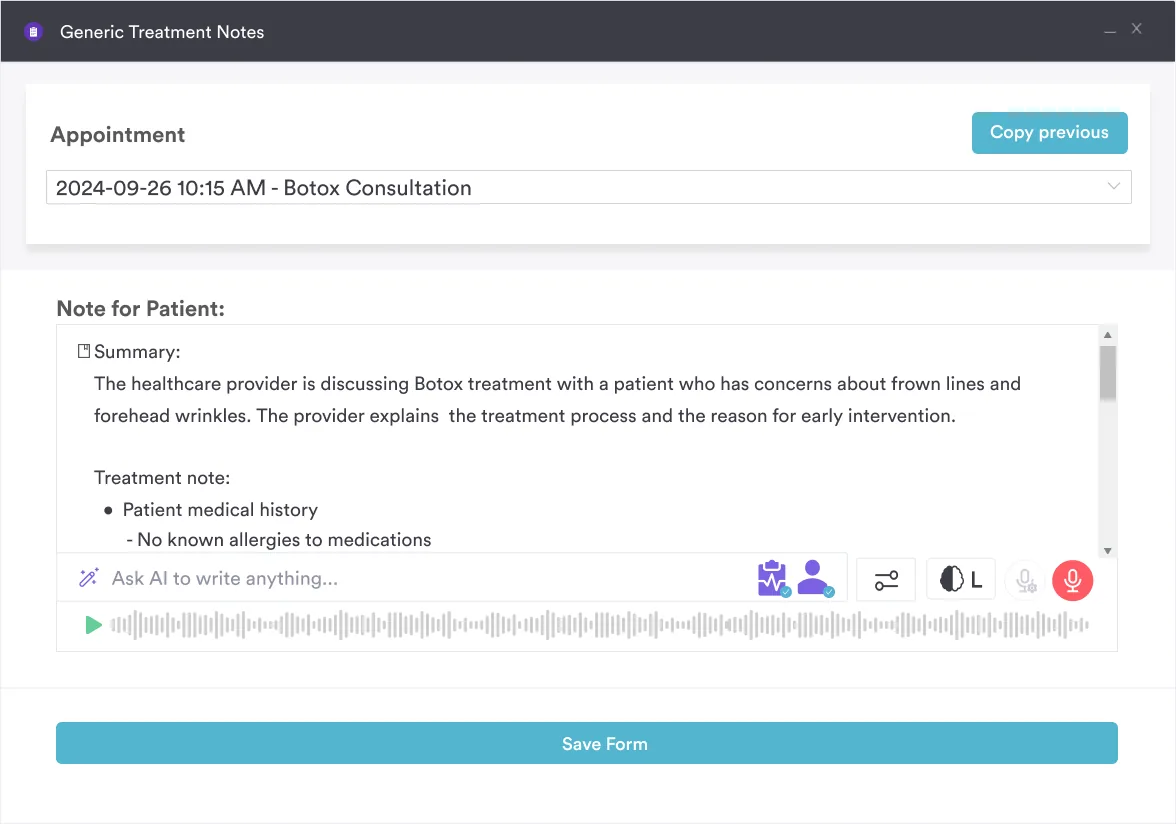
The result: every patient gets the same guidance.

Pabau’s digital forms attach this handout to a patient’s file, so it goes out automatically and the record shows exactly what was covered.

A handful of numbers on the fridge door prevent most kitchen-based illness. Hit 145°F on a roast, keep the fridge at 40°F, and act within two hours when the power goes out.
Inconsistent delivery causes more harm than missing information ever does. One patient gets the full conversation. The next gets a rushed reminder on the way out.
Book a demo to see how Pabau helps your practice hand out, track, and document patient education like this, every time.

Need another patient handout to pair with this one? High-protein meal plan template gives patients a structured eating plan you can send through the same digital forms workflow.
Want patients to log their own meals? Food diary template gives patients a one-page printable log for meals, hydration, exercise, and notes.
Counseling patients on structured meal plans? OPTAVIA diet plan explains the portion-controlled Fuelings and Lean & Green framework with three program tiers.
Resting lets the internal temperature keep rising and the juices redistribute, so the meat stays moist when you carve it. Wait at least 3 minutes for beef, lamb, pork, and veal before cutting.
Cooked leftovers stay safe for 3 to 4 days in the refrigerator. Freeze them within that window if you won’t eat them in time, since freezing extends safe storage to 2 to 3 months.
Yes, if it still has ice crystals or reads 40°F (4°C) or below on a thermometer. Quality may drop, but the food stays safe to eat.
No. Bacteria multiply fastest at room temperature, so thaw meat in the refrigerator, in cold water, or in the microwave instead. Cook it right away if you use the microwave method.
No. Washing raw chicken spreads bacteria to your sink, counters, and utensils instead of removing it. Cooking to 165°F (74°C) is what actually kills the bacteria.