Grains food list: whole vs refined grains (free PDF)
A grains food list sorts grain foods into whole and refined groups, so patients ...

3
Last Updated: Oct 20, 2026

A high protein low carb diet plan targets 1.6-2.2 g of protein per kg of body weight and under 100 g of net carbs daily.
Weight loss and metabolic health practices issue a written 7-day plan at the first or second consultation to cut decision fatigue.
Calorie and macro targets change with body weight, activity level, and conditions such as type 2 diabetes or kidney disease.
Screen for chronic kidney disease and check insulin or sulfonylurea use before you hand the plan over.
Practice management software like Pabau lets teams issue the plan, log measurements, and revise targets without paper.
The template maps seven days of breakfasts, lunches, dinners, and snacks, with protein and net carb values for every meal. It also carries a macro reference table, a categorized grocery list, and batch-cooking guidance.
Download templateA high protein low carb diet plan sounds simple in the consultation room. Then Wednesday evening arrives, the patient opens the fridge, and nothing in there matches the advice. Good intentions rarely survive a busy week on their own.
A written week fixes that. This template sets the macro targets, maps seven days of meals, and rolls the shopping into one list. Weight loss practices and metabolic health teams usually issue it at the first or second consultation. It cuts decision fatigue for the patient, and it gives the follow-up appointment something concrete to review.
The template is a nutritional framework built around protein-rich foods, with carbohydrates dialed down. The aim is weight management, steadier blood sugar, and measurable body composition change. When a patient is working strictly on reducing body fat, a dedicated plan sets the deficit and the protein target against that one aim.
A separate list of protein foods, grouped by category with the grams per serving, helps the patient shop for that framework.
Registered dietitians, nutritionists, and wellness practitioners use it as a handout, and patients on a supervised program can follow it themselves.
Three parts do the work:
Nothing in the file is locked. Swap a meal, change a portion, or drop a snack, and the macro table below tells you what to adjust to stay on target.
Day two shows the shape of it.
That puts a 75 kg patient inside the protein target, with room for a second snack on heavy training days.
Confirm the patient’s numbers first. The table below gives reference ranges from published clinical guidance. Individual figures move with body weight, activity level, and health status.
One practical note for US practices. Medicare covers face-to-face behavioral counseling for obesity in 15-minute units under G0447, as long as the visit happens in a primary care setting.
Issue it at the initial consultation, review it at the follow-up, and revise it as the patient’s numbers move.
Run this check first. It takes a minute, and it catches most of the problems that otherwise surface at the two-week review.
Three kinds of practice reach for this one most often.
Weight loss and metabolic health practices use it as a standard first-appointment handout. Patients carrying excess weight, insulin resistance, or a high fasting glucose get the most out of it. Protein handles the hunger, and fewer carbs steady the blood sugar. Teams working in metabolic health software can attach the issued plan straight to the patient record. Patients already on a diabetes nursing care plan can fold these macro targets into that same document.
Functional medicine and integrative practices slot it alongside other protocols, whether the focus is gut health, hormones, or longevity. The modular layout adapts easily for a patient already following an elimination or anti-inflammatory approach. Most practitioners pair it with a full lab panel review at the same visit.
Dietitian-led and general wellness practices use it with clients who want body recomposition without going full keto. Under 100 g of net carbs is easier to hold than 50, so more people stay with it. For patients who balk at cutting carbs that far.
Setting protein by body weight, and leaving the carb ceiling off, gives those patients the same muscle protection with fewer rules to follow.
Issue the plan digitally rather than as a printed handout. Patients who can open it on their phone are far more likely to check it in the grocery store and during meal prep. Pabau’s client portal lets you attach the file to the patient record, visible from their own login.
The evidence here is solid, and patients will ask about it. Be ready to explain the mechanism rather than just handing over the file.
Explaining the mechanism also strengthens the clinical case for the consultation itself. That matters when you are justifying the value of a program to a patient or an insurer.
The plan suits most healthy adults. Several groups need a closer look before you issue it.
The Academy of Nutrition and Dietetics publishes evidence-based practice guidelines worth reading before you adapt the plan for a complex patient. If adherence rather than the food list is the sticking point, pair the template with an emotional eating worksheet.
The plan usually leaves the room and is never seen again. The PDF goes out by email and the weight lands in a spreadsheet. The next practitioner to see the patient has no idea which version they are following.
Pabau, an all-in-one practice management system, keeps all of it on the patient record. You attach the issued plan to the file, and the patient opens it from their own login.
Follow-up reminders then go out on schedule, so the two-week review happens. Practices running weight loss and wellness programs this way.
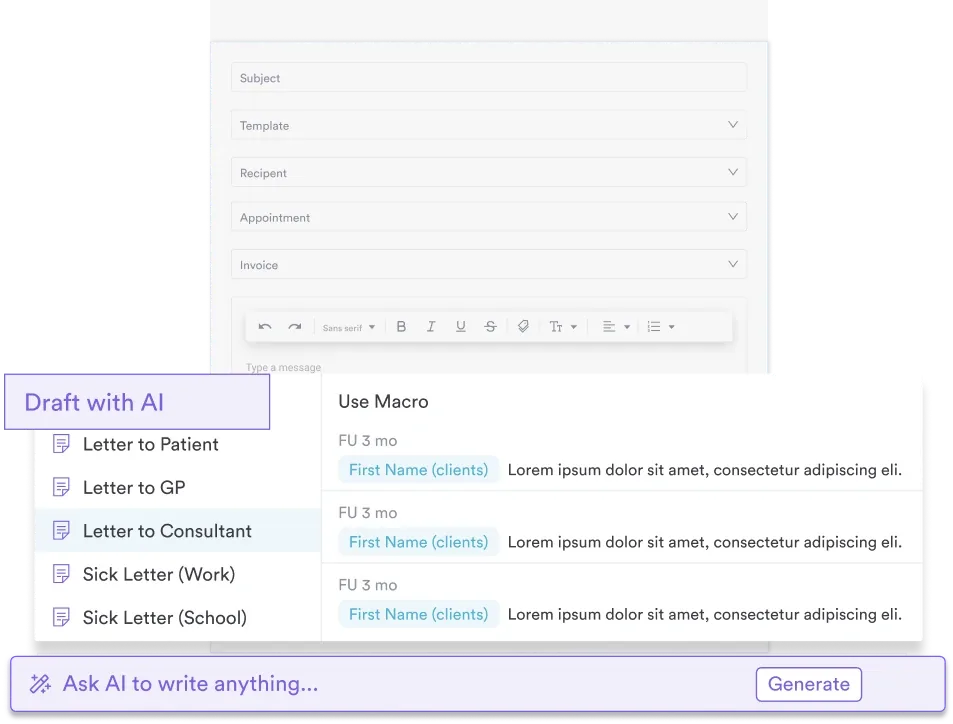

Pabau keeps the issued plan, the body composition readings, and the follow-up reminders on one patient record. Your team stops chasing spreadsheets, and the two-week review happens on time.

A patient who leaves with a written week behaves differently from one who leaves with advice. Advice gets forgotten by Wednesday. The week gets stuck to the fridge door.
The trade-off is your time up front. Ten minutes on macros, allergies, and the grocery list at the first appointment is what makes the two-week review worth having. Skip it and you are handing over a PDF and hoping.
Keeping the plan, the measurements, and the reminders in one place is what turns a handout into a program. Book a demo to see how Pabau runs nutrition and weight loss programs end to end.

Curious where weight loss clinic revenue comes from? how weight loss clinics make money covers revenue streams like GLP-1 prescriptions, memberships, and supplements for clinic owners.
Need a quick nutrition reference on the ward? Dietitian cheat sheet covers screening, diet orders, and documentation on a single page.
Standardizing your nutrition consult notes? ADIME note template is a free downloadable note template with examples and a step-by-step guide.
Investigating a hormonal cause for plateaued results? ACTH test template covers specimen collection, reference ranges, result documentation, and HPA axis interpretation for testing.
Supporting a patient through balloon treatment? Allurion balloon aftercare template walks patients through dietary progression, medication protocols, activity limits, and symptom monitoring.
Net carbs are total carbohydrates minus fiber. A cup of broccoli with 6 g of carbs and 2 g of fiber counts as 4 g net. Definitions vary between protocols, so pick one and apply it consistently across the whole plan.
Yes, though it takes more planning. Tofu, tempeh, seitan, edamame, and a soy or pea protein powder carry most of the load. Vegans usually land nearer 100 g of net carbs than 50, because legumes bring carbohydrate along with the protein.
Treat the seven days as a repeating template rather than a fixed course. Most practices run it for eight to twelve weeks, then reassess weight, bloods, and adherence. Protein can stay high long term, while carbohydrate usually eases back up once the target weight holds.
Yes, in small amounts. Berries fit easily, at roughly 5 to 8 g of net carbs per half cup. Bananas, grapes, and mango eat most of a day’s carb budget in one serving, so save those for maintenance.
Spirits with a zero-carb mixer and dry wine both fit the carb ceiling, while beer and cocktails rarely do. Alcohol also blunts fat burning and loosens appetite control. Most patients see faster progress holding it to one or two drinks a week.