High Protein Low Carb Diet Plan
A high protein plan for weight loss sets a daily protein target of 1.2–2.0 g p...

1
Last Updated: Sep 30, 2026
A free printable blood glucose log is a paper form for recording each blood sugar reading with its time, meal, and any insulin taken. Kept daily, it turns scattered readings into patterns that guide medication changes, flag problem foods, and give your clinician something concrete to review.
According to the American Diabetes Association (ADA), reviewing your glucose log regularly with your healthcare provider supports A1C reduction and better diabetes control. Logs are most useful when each reading carries its meal and medication context.
Download the log below, then use this guide to fill it in. It covers the fields each entry needs and the ADA and ACOG target ranges for each diabetes type. It also shows how to bring a completed log to an appointment.
A printable log with columns for date, time, fasting, pre-meal and 2-hour post-meal glucose, insulin doses, and carbohydrate intake. A notes column captures symptoms, exercise, and illness for your clinician to review.
Download template
A blood glucose log records each blood sugar reading with its time, meal, and medication context, so treatment patterns become visible.
Each entry should capture the time, the reading, insulin dose, carbs eaten, and any symptoms of high or low blood sugar.
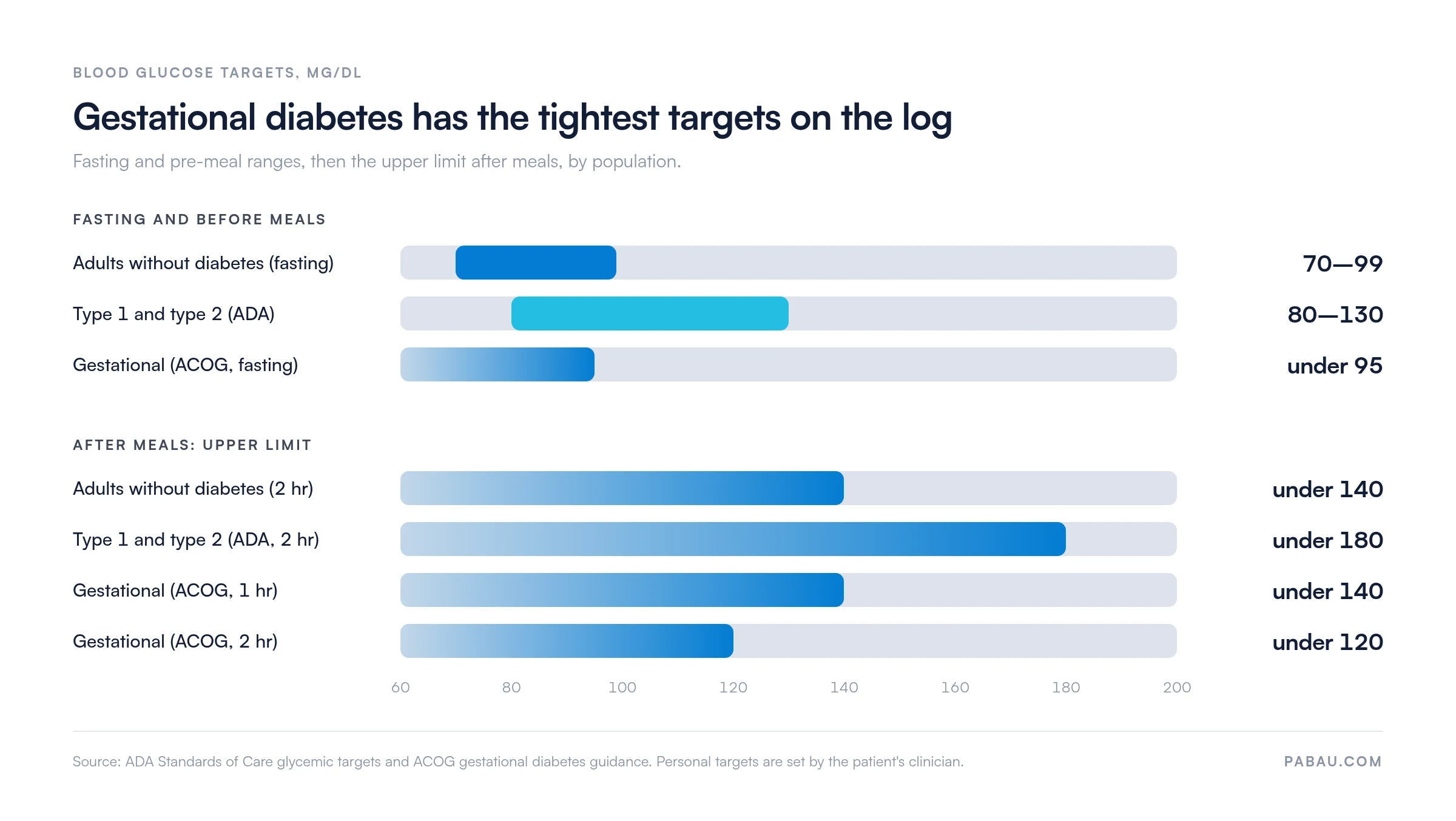
Fasting targets differ by population. Adults without diabetes typically fast at 70-99 mg/dL, and the ADA target for type 1 and type 2 diabetes is 80-130 mg/dL (4.4-7.2 mmol/L).
Gestational diabetes has the tightest limits, with ACOG setting fasting under 95 mg/dL and two-hour post-meal under 120 mg/dL.
Pabau, the practice management platform we build, can turn the log into a digital form patients complete before each visit.
A blood glucose log is a running record of daily blood sugar readings, each with its time, meal, and medication context. A single fingerstick shows one moment. A log shows whether readings spike after certain foods, dip before bed, or drift high or low across the week.
That pattern data replaces guesswork in treatment decisions. A clinician who sees seven days of fasting readings averaging 145 mg/dL knows to review the evening insulin dose. A log showing spikes after pasta but not after salad gives dietary counseling a starting point.
Metabolic health practices that review patient logs before appointments spend less of the visit problem-solving and more of it educating.
Logs also keep patients engaged. Writing down each reading builds accountability. Seeing their own trends on paper often motivates patients to stick with diet or medication changes more than a lecture would.
A complete log tracks the fields below, which give clinicians the context they need to spot patterns and adjust medication.
Blood glucose targets vary by diabetes type, age, and individual risk. The table below shows the ADA’s recommended fasting and post-meal ranges. Gestational diabetes targets come from the American College of Obstetricians and Gynecologists (ACOG).
Side by side, the ranges show that gestational diabetes carries the tightest limits on the log, especially after meals.
Individual targets often differ from these. A clinician may set tighter targets for some patients. Looser ones often suit older patients, those at high risk of hypoglycemia, or those with several other conditions. Always confirm your personal range with your healthcare provider. For a printable reference you can keep beside the log, use our blood sugar chart.
Consistent daily logging creates the pattern data your clinician needs. Follow these steps to keep each reading accurate and useful.
A seven-day layout condenses a week of readings onto one printable page. Patients and clinicians can spot trends at a glance without wading through daily detail.
The ADA recommends reviewing logs with your healthcare provider, particularly while insulin or other medications are being adjusted. With a week of fasting readings, post-meal readings, and carb counts in hand, a provider can adjust treatment in one conversation. Nobody has to wait months for the next A1C result.
Start a fresh page each week, fill it in daily, and bring the latest pages to your next appointment. Practices can also rebuild the log as one of their digital intake forms, so readings reach the patient record before the visit.
Many patients benefit from a combined food-and-glucose log that shows each meal, its timing, and the glucose response afterward. This reveals food sensitivities and helps refine carb-to-insulin ratios.
The columns track date and time, the meal, estimated carbs, and insulin dose. They also record the reading before the meal and post-meal glucose at one and two hours. Over two to three weeks, patterns emerge. A patient might see that pizza causes a 60 mg/dL spike, while fish and vegetables cause only a 20 mg/dL rise.
This data also supports medication changes. If post-meal readings keep exceeding target despite diet changes, the clinician has grounds to increase rapid-acting insulin at that meal.
Once a glucose tolerance test confirms gestational diabetes, monitoring becomes more frequent than for type 2 diabetes. Tight glycemic control during pregnancy reduces the risk of fetal complications, macrosomia, and neonatal hypoglycemia.
ACOG guidelines recommend checking fasting glucose and one- or two-hour post-meal readings at least four times daily: fasting and after each meal. The targets are stricter, with fasting under 95 mg/dL, one-hour post-meal under 140 mg/dL, and two-hour under 120 mg/dL.
A gestational diabetes log should capture the date, time of each check, and glucose reading. It should also note the meal eaten, with carbs if possible, and any symptoms. Many obstetricians hand out printed logs or ask patients to download one, and the completed pages become part of the prenatal record.
How often type 2 patients log depends on their treatment. Patients managing with diet and lifestyle changes alone may test two to three times a week. Those on oral medications may test before meals and at bedtime, and those on insulin should keep daily logs like type 1 patients.
Type 2 logs often include a notes column for medication adherence, stress, exercise, and sleep quality, since these affect insulin sensitivity. Say a patient starts daily 30-minute walks and their readings trend down. That log gives the clinician concrete evidence that exercise works for this patient.
The ADA recommends that most adults with type 2 diabetes target an A1C under 7%, individualized for age and hypoglycemia risk. Our A1C conversion chart translates that percentage into an estimated average glucose in mg/dL. Regular log review, paired with A1C checks every three months, shows whether the treatment plan is working.
A printed or digital log only helps if someone reviews it and acts on it. Before your appointment, read through the week’s readings and highlight patterns: consistently high fasting readings, post-meal spikes, or unexplained lows.
During the appointment, walk your clinician through the log and point out what you’ve noticed. You might ask, “My fasting readings are averaging 145. Should we increase the evening insulin dose?” Or, “Readings are high after breakfast but normal after dinner. What can I adjust?” Questions like these anchor the clinical decision in your own data.
Clinicians use logs to decide whether to adjust medication, schedule more frequent visits, refer to a dietitian, or consider a continuous glucose monitor. Without a log, the clinician has no view of daily patterns to base those decisions on. Agreed changes belong in the patient’s written diabetes management plan, so the next log is read against the new targets.
Paper logs cost little, work offline, and feel familiar to older patients. A printable log needs a pen and a few minutes a day, with no app to download and no subscription.
Digital logs, from apps or continuous glucose monitors (CGMs), capture readings automatically and calculate averages. Many sync to the practice’s EHR. A CGM also removes the need for routine fingersticks and alerts patients to dangerous highs or lows.
The ADA recommends CGM for most adults with type 1 diabetes. For type 2 or gestational diabetes managed without insulin, a paper log is often enough. Choose the format your clinician supports and that you’ll keep up with.
When a patient brings a paper log, the clinician usually reads a week of handwritten numbers during the visit itself. Afterward, the sheet is scanned, filed, or handed back, so the next reviewer may never see it.
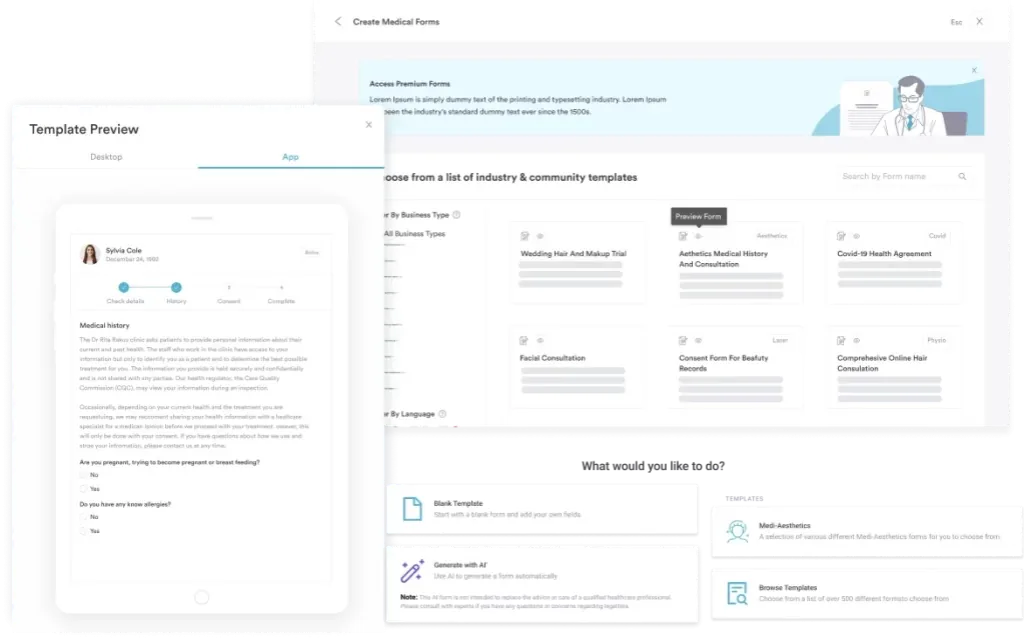
In Pabau, the same log becomes a digital form that patients complete on their phone before the appointment. Each submission is saved to their patient record, next to treatment notes and previous logs. Pre-appointment reminders prompt patients to send the week’s readings before they arrive.
The clinician opens the record with the readings already there, so appointment time goes on dosing and diet decisions rather than transcription. For practices treating diabetes alongside weight management, Pabau’s weight loss clinic software keeps these logs with the rest of the patient’s care. Every subscription includes forms, reminders, and patient records, with structured onboarding to set them up.

Turn the blood glucose log into a digital form patients complete before their appointment. Each submission is saved to the patient record, ready for review.

A glucose log only earns its place if someone reads it before the next treatment decision. Start with the fields your clinician actually reviews, log at the same times each day, and note the context behind every outlier. A week of honest entries does more than a month of bare numbers.
The trade-off is effort. Paper is simple but stays in a folder, while a digital form puts each reading in the patient record. Book a demo to see how Pabau collects glucose logs before each visit, so your team reviews readings instead of retyping them.

Tracking several diabetes medications? Diabetes medication list keeps every drug, dose and timing in one place to read alongside the log.
Planning meals around your readings? Low carb diabetic diet meal plan gives a structured eating plan to test against post-meal glucose.
Managing type 2 diabetes with diet? Type 2 diabetes diet plan offers a free seven-day template that pairs with a weekly glucose log.
Seeing frequent low readings? Hypoglycemia nursing care plan outlines how care teams assess and respond to low blood sugar.
A complete blood glucose log captures the date and time, fasting, pre-meal and 2-hour post-meal glucose, and insulin dose and type. It also records carbohydrate intake and any symptoms or clinical events. Include notes on exercise, stress, illness, or missed meals that explain deviations.
For adults with diabetes, the ADA fasting and pre-meal target is 80-130 mg/dL (4.4-7.2 mmol/L). The 2-hour post-meal target is under 180 mg/dL. Non-diabetic adults typically have fasting 70-99 mg/dL and post-meal <140 mg/dL. Gestational diabetes targets are stricter: fasting <95 mg/dL and 2-hour post-meal <120 mg/dL per ACOG. Individual targets vary, so confirm yours with your clinician.
Frequency depends on your diabetes type and treatment. Type 1 and insulin-using type 2 patients should test fasting, before meals, and at bedtime daily. Type 2 patients managing with diet alone may test two to three times a week. Gestational diabetes requires at least 4 readings daily (fasting and after each meal). Ask your clinician for a testing schedule tailored to your regimen.
Yes. Gestational diabetes logs use the same format as type 1/type 2 logs but with stricter targets and higher testing frequency. ACOG recommends fasting and 1-2 hour post-meal readings at least four times daily. Download or print a gestational-specific template if available, as these often include pregnancy-relevant fields like gestational age and clinician visit dates.
Fasting blood glucose is the reading taken after 8 hours without food or long-acting insulin, typically first thing in the morning. It reflects overnight liver glucose production and long-acting insulin function. Postprandial (post-meal) glucose is measured 1-2 hours after eating and reflects how well your body handles meal carbohydrates. Both readings guide treatment. High fasting readings point to the basal insulin dose, while high post-meal readings point to rapid-acting insulin.
Retain logs for at least 12 months for pattern analysis across seasons and to show trends at annual reviews. If your treatment has changed, keep logs from before and after the change to document efficacy. Digital logs stay in your patient record. Keep paper logs safely at home for one to two years, then shred them, since they contain health information.
A1C is a 3-month average of blood glucose and reflects overall control. An A1C of <7% is the ADA target for most adults with diabetes (equivalent to an average glucose of ~150 mg/dL). Daily glucose logs predict A1C trends: consistently high readings before your A1C check usually mean the A1C will be elevated. Regular log review helps clinicians catch rising trends before A1C worsens, allowing earlier intervention.