GLP-1 diet plan
A GLP-1 diet plan is a structured eating framework for patients taking semagluti...

2
Last Updated: Oct 13, 2026

A type 2 diabetes diet plan gives patients structured nutritional guidance that steadies blood glucose and lowers cardiovascular risk.
The diabetes plate method divides each plate into half non-starchy vegetables, one quarter lean protein, and one quarter carbohydrates. It is a visual approach recommended by CDC and ADA.
Carbohydrate counting and portion control are the tools that stabilize blood sugar. Most patients do better when dietary changes are paired with regular clinician check-ins.
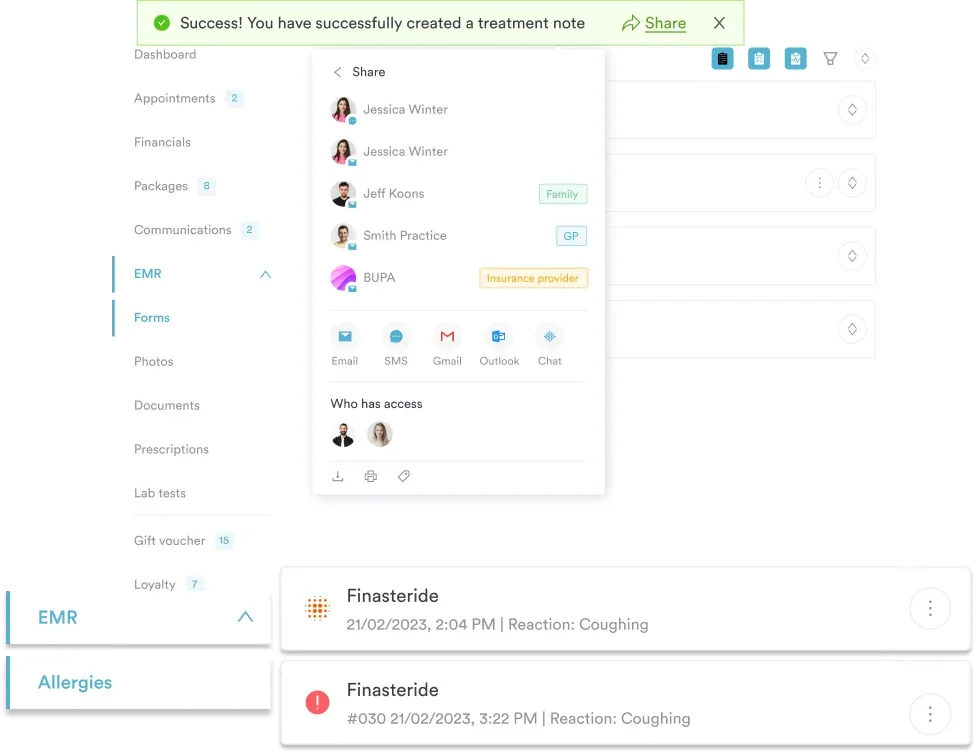
Pabau’s digital forms and clinical records store each customized diet plan, track progress against nutritional goals, and schedule automated follow-up reminders.
Seven days of breakfasts, lunches, dinners, and snacks, each one built on the plate method. The file carries per-meal carbohydrate targets, portion guidance, and notes for adapting meals to activity level and medication timing.
Download templateA type 2 diabetes diet plan is a written framework telling a patient what to eat at each meal. It also sets how much carbohydrate each meal should carry. The template above turns that framework into a seven-day plan you can hand over at the end of a consultation.
Nutrition is one of the most effective interventions available in type 2 diabetes. Patients rarely struggle with the advice itself. They struggle to turn it into a shopping list and a weekday dinner. This guide covers the meal planning methods, food lists, and follow-up habits that make dietary guidance stick.
A type 2 diabetes diet plan is a structured nutritional framework for managing blood glucose. It targets insulin sensitivity and the long-term risk of diabetes complications. Unlike generic healthy-eating advice, it is built around the metabolic needs of someone with insulin resistance or impaired glucose tolerance.
Carbohydrate intake has the most direct effect on postprandial blood glucose, which is why it anchors the plan. Helping patients choose lower-glycemic foods, control portions, and time meals creates the conditions for stable blood sugar and better HbA1c outcomes.
CDC guidance on diabetes meal planning builds the same foundation from non-starchy vegetables, lean protein, whole grains, and healthy fats.
A documented plan also supports informed consent and shared decision-making. Patients who understand why a food is restricted tend to follow the plan more closely than patients handed a list of rules.
The diabetes plate method is the most accessible meal planning tool for patients of all literacy levels. It turns carbohydrate counting into a visual format that works at home, in restaurants, and at work.
Divide a 9-inch dinner plate into three sections:
Add a small portion of healthy fat, such as olive oil, nuts, or avocado, plus water or an unsweetened drink. The split below is what patients should picture at every meal, and it removes the need for calorie counting.
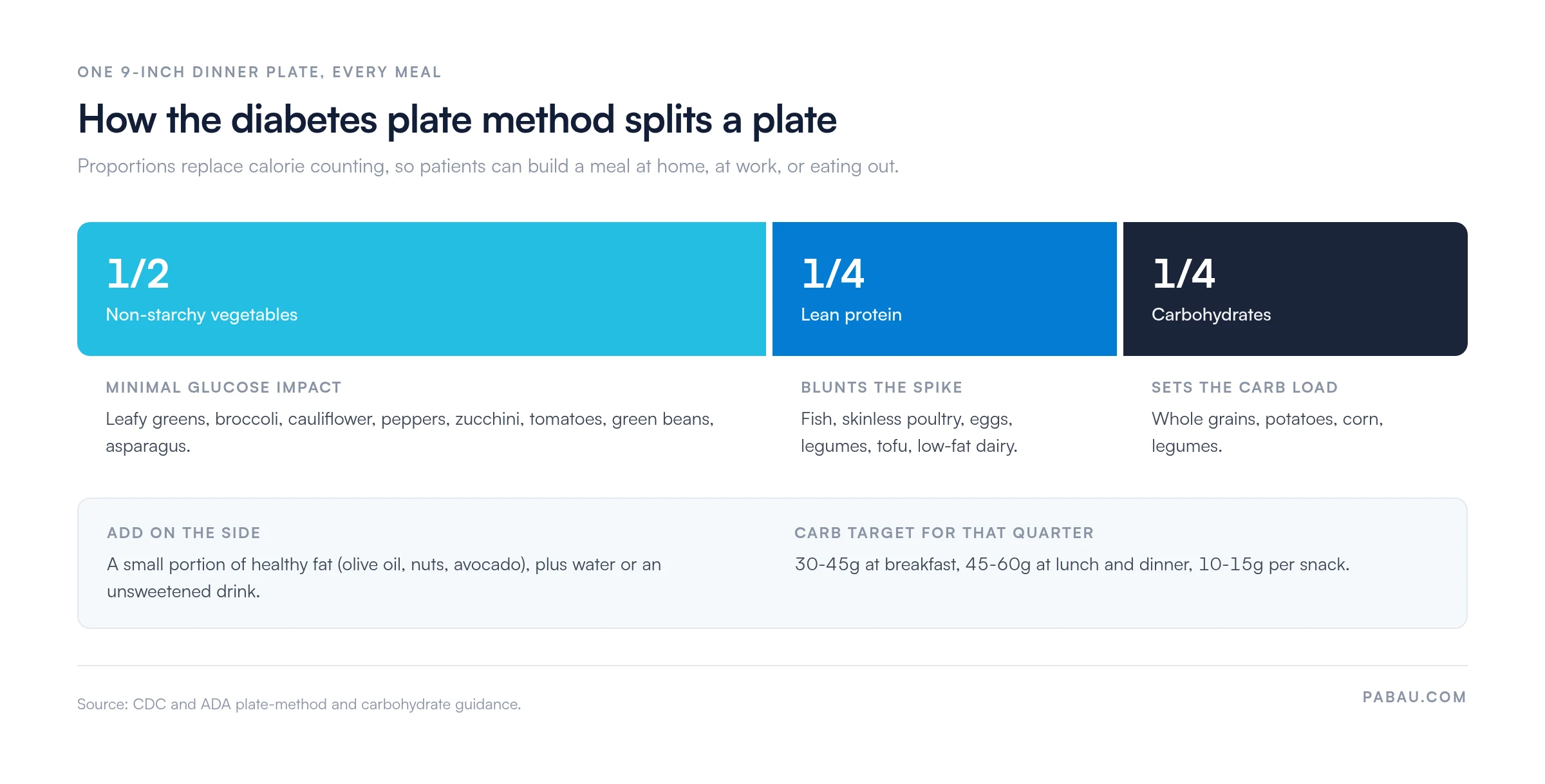
The plate method works for visual eaters. Carbohydrate counting is what you need for patients on insulin, or whenever an individualized target matters. It converts food intake into grams of carbohydrate, which maps directly to insulin requirement and glucose impact.
Teach patients the 15g rule, where one carbohydrate exchange equals 15g. A slice of bread, a small apple, or half a cup of rice each count as one exchange. That keeps portion control portable across different foods and cuisines.
Pair the targets with a blood glucose log so patients can see which meals move their readings and which leave them flat.
Certain food groups improve blood glucose control and reduce cardiovascular risk in type 2 diabetes. Point your patients at these categories first:
For something patients can take shopping, the diabetes food list breaks the same categories onto a single printable page.
Foods that cause rapid blood glucose spikes should be avoided or severely limited:
A concrete meal plan removes ambiguity and gives patients direction from day one. The downloadable template above sets out seven days of breakfasts, lunches, dinners, and snacks. Every day is balanced by the plate method and built within standard carbohydrate targets.
Each day includes:
The template also carries notes on adapting meals to activity level and medication timing. Patients with controlled type 2 diabetes on stable dosing usually do better with consistent meal times. Those on rapid-acting insulin need more flexibility.
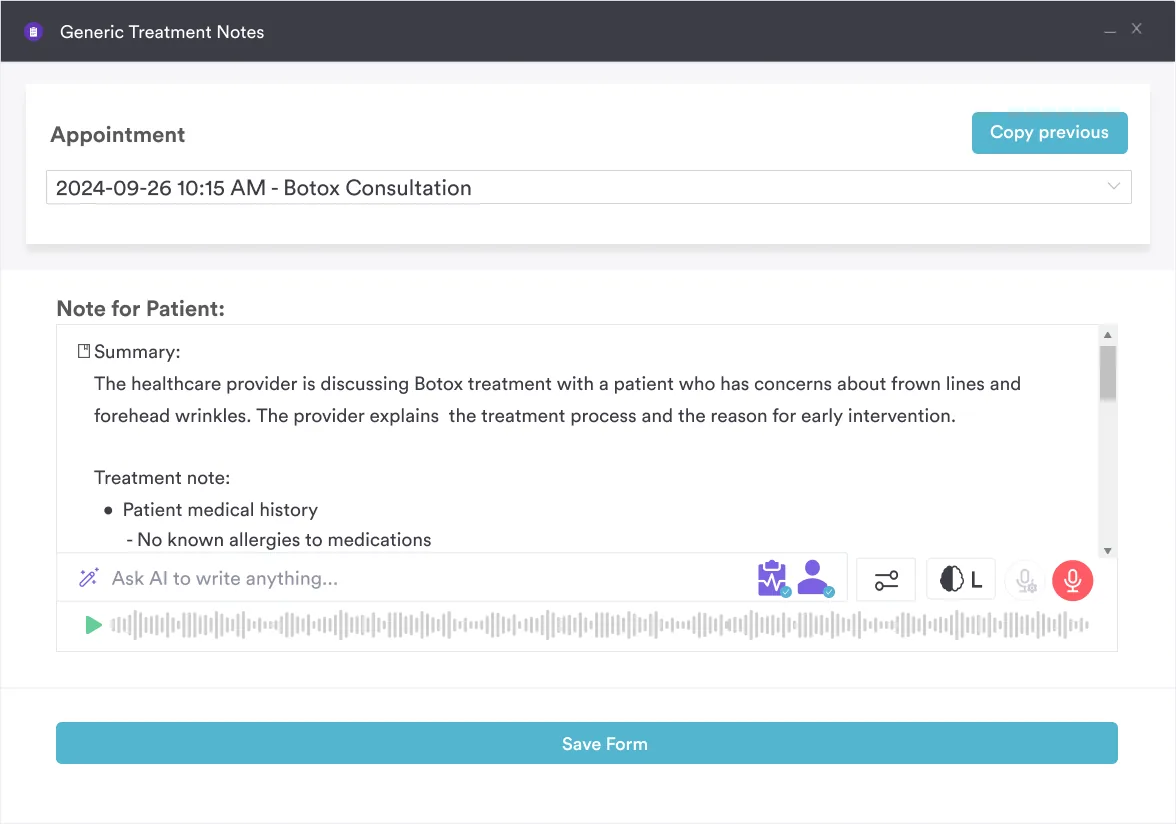
Patient adherence to any diet plan depends on practical feasibility. Build meal prep guidance into your consultations:
Record each patient’s meal prep constraints in their clinical notes, including allergies, budget, and cooking skill. Your team can then pick up the same detail at the next visit without asking again.
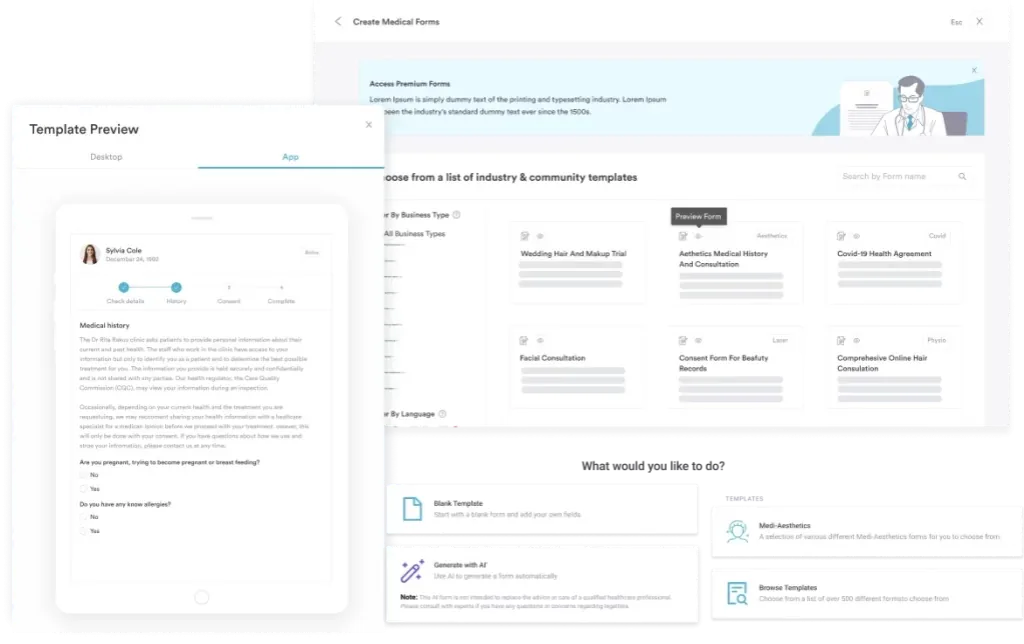
The template suits any clinician working with type 2 diabetes patients. That includes registered dietitians, functional medicine practitioners, metabolic health specialists, and primary care providers. It works equally well in private practice, integrated settings, and telemedicine.
The plan adapts to prediabetes as a prevention tool, and to insulin-requiring patients alongside medication counseling. It also fits weight loss programs where caloric reduction is the goal. Customize portion sizes and carbohydrate targets to each patient’s activity level, medication, and monitoring results.
Storing the completed plan in a metabolic health EMR keeps it beside the patient’s labs and medication history. The next clinician to open the record sees the whole picture.
Handing over a written, evidence-based plan delivers several clinical and practice-management benefits:
Handing over a static diet plan is only the first step. Clinicians who track adherence and adjust against blood glucose response get better compliance and better numbers. Practice management software like Pabau keeps the plan, the labs, and the follow-up in one patient record.
Pabau is weight loss clinic software, so the dietary workflow is built in rather than bolted on. Share a customized meal plan through the patient portal, then send automated check-ins about carbohydrate intake and glucose readings.
Your clinical notes stay linked to each patient’s plan, so the dietary history informs the next appointment without re-explaining context. The same record handles follow-up lab scheduling, medication changes that shift dietary targets, and progress reports. Showing a patient their own HbA1c curve does more for adherence than another leaflet.

Store, share, and track patient diet plans in one system. Schedule automated follow-ups, document blood glucose responses, and monitor HbA1c improvements over time.

Type 2 diabetes responds to structured dietary intervention in a way that few chronic conditions do. Handing a patient a plan grounded in Mayo Clinic diabetes diet guidance moves you from general advice to nutrition therapy you can document.
Download the template, adapt the portions to your patient population, and pair it with a review every two to four weeks. The plan itself matters less than the follow-up that keeps it honest. Patients who know their next check-in is booked eat differently in week three.
Book a demo to see how Pabau stores each patient’s diet plan, tracks their glucose response, and chases the follow-up for you.

Need to explain what a reading means? Blood sugar chart sets out the fasting and post-meal ranges patients ask about most.
Converting between HbA1c and average glucose? A1C conversion chart maps each result to its estimated average glucose in one table.
Choosing software for a metabolic practice? EMR for weight loss clinics compares what these practices actually need from a record system.
Start with the plate method. Fill half the plate with non-starchy vegetables, one quarter with lean protein, and one quarter with whole grains or starchy vegetables. Add a small portion of healthy fat. Then total the carbohydrate grams across the day, typically 130-180g for most adults, and adjust portions to fit the target. Work with a registered dietitian to personalize for activity level and medication.
Avoid or strictly limit sugary drinks, refined grains, processed sweets, saturated fats, and high-sodium foods. These cause rapid blood glucose spikes and increase cardiovascular risk. Focus instead on non-starchy vegetables, whole grains, lean protein, and healthy fats. Those four groups are the foundation of the evidence-based diabetes diet.
Yes, low-carbohydrate diets of roughly 50-130g of carbs daily have shown clinical efficacy for blood glucose control and weight loss. Very-low-carb approaches need medical supervision, especially for patients on insulin or sulfonylureas. Medication adjustments are often necessary. Ask your clinician whether a lower-carb approach suits your situation.
The plate method is a visual portion control tool. Divide a 9-inch dinner plate into three sections. Fill half with non-starchy vegetables, one quarter with lean protein, and one quarter with whole grains or starchy vegetables. Add a small portion of healthy fat and water. This approach removes calorie counting and works across cultures and cuisines.
A standard template works as a starting point for most patients, but individual customization is essential. Consider kidney disease, medication regimen, cultural food preferences, allergies, and activity level. Use the template as an educational tool. Adjust portions and food choices with each patient at follow-up appointments.
Review progress every 2-4 weeks at first, then every 8-12 weeks once the plan is established. Track blood glucose patterns, HbA1c trends, and adherence challenges. Adjust carbohydrate targets or food choices based on the response. If blood glucose stays high despite adherence, medication changes may be needed alongside the dietary work.
Significant weight loss, typically 5-10% of body weight, combined with structured dietary intervention can achieve remission in some patients. Remission means blood glucose normalizes without medication. It is not a cure, and weight regain often brings hyperglycemia back. Medical supervision and ongoing dietary adherence are essential. Discuss your own remission potential with your clinician.