Postural assessment: Free template and step-by-step guide
A postural assessment is a structured clinical evaluation of how a patient’...

Last Updated: Oct 13, 2026

An attachment theory worksheet helps clients identify their attachment style-secure, anxious, avoidant, or disorganized-by exploring relationship patterns rooted in early caregiver experiences.
The four attachment styles differ in how individuals regulate emotions, seek closeness, and respond to perceived rejection or abandonment in relationships.
Therapists use attachment worksheets during sessions to psychoeducate clients, normalize their relational patterns, and create a foundation for earned secure attachment work.
Pabau’s practice management software includes an integrated client portal and digital forms that let therapists store completed attachment worksheets directly in patient records, supporting continuity of attachment-focused care.
Attachment theory worksheet
A ready-to-use assessment tool covering the four attachment styles, psychoeducational explanations rooted in Bowlby and Ainsworth’s research, guided reflection prompts, and clinical guidance for integrating the worksheet into individual, couples, and group therapy sessions.
Download templateAn attachment theory worksheet is one of the most evidence-informed tools a therapist can use to help clients understand their relational patterns. Early caregiver experiences shape how individuals connect with others, regulate emotions, and respond to intimacy and conflict throughout their lives. This article provides comprehensive guidance on using an attachment theory worksheet in your clinical practice, from understanding the theoretical foundation to implementing it across different therapy modalities.
Attachment theory emerged from John Bowlby’s groundbreaking work in the 1950s-1970s, expanded by Mary Ainsworth’s empirical research. Bowlby proposed that infants form a secure emotional bond with their primary caregiver-a “secure base”-which shapes their ability to explore the world and regulate stress throughout life. Ainsworth’s Strange Situation procedure identified how these early bonds translate into distinct attachment patterns that persist into adulthood.
The theory explains why clients in your therapy room respond differently to closeness, rejection, and conflict. A client raised by emotionally unavailable parents may have learned to suppress their own needs (avoidant pattern). Another, whose caregivers were inconsistently responsive, may have developed hypervigilance to rejection (anxious pattern). Understanding these origins-and recognizing them as adaptive survival strategies-is the first step toward improving patient engagement in the therapeutic process.
An attachment theory worksheet guides clients through identifying their dominant style among four primary patterns. Each style reflects a unique combination of how comfortable the person is with intimacy (attachment anxiety) and how comfortable they are with dependence on others (attachment avoidance).
During a session, your attachment theory worksheet allows clients to recognize themselves in these descriptions without shame. The normalization itself-“your nervous system learned to protect you”-creates psychological safety for deeper exploration. For group psychoeducation settings.
The bridge between childhood and present-day relational patterns is the core educational value of an attachment theory worksheet. Clients tend to show greater patient compliance in therapy when they grasp the logical connection between their past and present.
A client who was parentified as a child (made responsible for their parent’s emotional wellbeing) often develops an avoidant-leaning attachment in adulthood. They may struggle to accept care from partners and become burnt out by always being the helper. An attachment worksheet invites reflection: “When did I learn that my needs weren’t important? How does that show up in my relationships now?” This narrative connects neurobiology to lived experience, shifting clients from self-criticism (“Why am I so needy?”) to compassionate understanding (“My attachment system developed in response to my environment”).
Telehealth tools make it easy to review this resource with clients face to face online.
An evidence-based attachment theory worksheet typically contains four core components:
The downloadable PDF provides all four elements in a single, portable resource you can email to clients, print for sessions.
Effective use of an attachment theory worksheet follows a structured five-step sequence:
Store the completed worksheet in your mental health EMR so you can reference it in future sessions, track progress toward earned security, and maintain continuity when working with the same client across a long-term treatment relationship. Some therapists pair the worksheet with complementary resources.
A critical misconception about attachment is that patterns are fixed. Research on “earned secure attachment” demonstrates that adults can develop security through corrective relational experiences-therapy being a primary vehicle. An attachment theory worksheet becomes more powerful when it’s paired with therapeutic work toward security.
For anxiously attached clients, therapy focuses on tolerating independence, trusting others’ reliability, and managing activation without seeking reassurance. For avoidantly attached clients, work centers on tolerating vulnerability, expressing needs, and allowing dependence. For disorganized clients, safety and coherence are foundational before deeper attachment work can proceed.
Pabau’s integrated client records and AI-powered clinical documentation tools enable therapists to capture session notes, track progress on attachment-focused goals, and attach the worksheet and follow-up reflections directly to the client’s record. This keeps all attachment work in one place, reducing the administrative friction that sometimes undermines continuity in therapy.
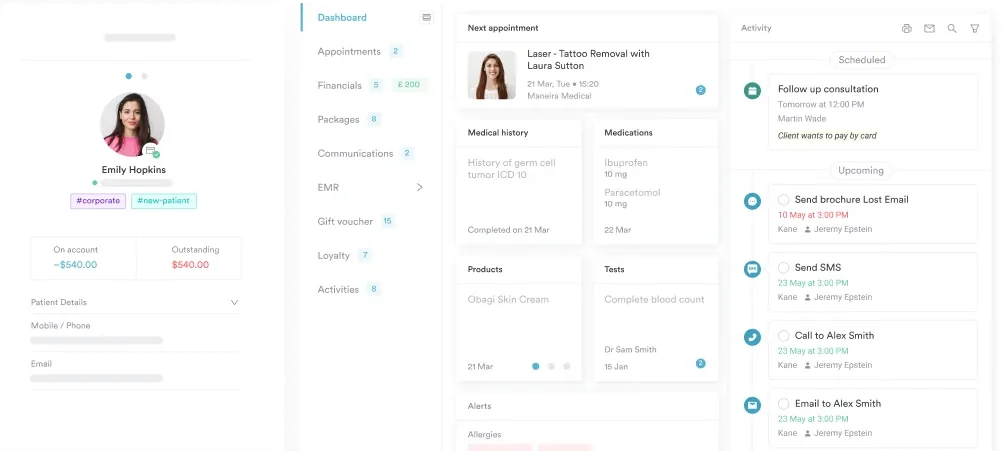
Managing attachment-based care across multiple clients and sessions requires infrastructure. An attachment theory worksheet is most effective when integrated into your practice workflow-not floating as a standalone PDF. Pabau’s practice management platform supports therapists using attachment-focused approaches by centralizing clinical resources, automating session reminders (supporting client-therapist consistency), and enabling therapists to attach assessment outcomes directly to client progress notes. The therapy practice management software also facilitates client access to completed worksheets via the secure portal, reinforcing the psychoeducational benefit between sessions.
Multi-location therapy groups and supervision teams benefit from shared resource libraries, ensuring all clinicians use consistent, evidence-based assessment tools grounded in Bowlby and Ainsworth’s foundational research.

Pabau’s integrated practice management platform helps therapists manage client records, automate session reminders, and store clinical resources-including attachment worksheets-in one secure place.

An attachment theory worksheet transforms abstract psychological concepts into a concrete, self-reflective tool that clients can hold and revisit. Rooted in Bowlby and Ainsworth’s decades of research, the worksheet normalizes relational patterns, fosters compassion for early coping strategies, and creates a foundation for earned secure attachment work. Whether you’re working individually, with couples, or in psychoeducation groups, this evidence-based resource belongs in your clinical toolkit. Download it, customize it to your client population, and integrate it into your digital practice workflow to maximize continuity and insight across your client caseload.

Choosing precise language for mood in your notes? Mood words for clinical documentation is a complete guide to the terms payers and QA reviewers scrutinize most.
Treating a client with panic attacks? Panic disorder treatment covers CBT as the first-line approach, SSRIs, and the follow-up that keeps patients engaged.
Want a structured intake tool that captures relational and developmental history? Biopsychosocial history walks through the same relational and developmental factors attachment theory addresses, giving therapists a fuller intake picture from the first session.
Attachment theory, developed by John Bowlby and expanded by Mary Ainsworth, explains how early bonds with caregivers shape emotional regulation, relational patterns, and stress response throughout life. It identifies four primary attachment styles-secure, anxious, avoidant, and disorganized-each reflecting different adaptations to early caregiver responsiveness.
Secure attachment reflects comfort with intimacy and interdependence; anxious attachment reflects fear of abandonment paired with desire for closeness; avoidant attachment reflects discomfort with emotional dependence; disorganized attachment reflects contradictory approach-avoidance behaviors, often rooted in frightening or inconsistent caregiving.
Introduce the worksheet in session or via your client portal, allow 15-20 minutes for completion with minimal guidance, then debrief collaboratively by asking open-ended questions about patterns noticed. Frame findings as adaptive survival strategies, normalize without pathologizing, and connect insights to your client’s presenting issues and treatment goals.
Yes. Research on “earned secure attachment” demonstrates that adults can develop greater security through corrective relational experiences-particularly therapy. Attachment patterns are responsive to sustained, attuned interpersonal experiences, making them a legitimate focus of therapeutic intervention.
Yes. Many couples therapists use attachment worksheets to help both partners understand their individual styles, recognize how those styles interact in conflict, and identify patterns that trigger each other. This psychoeducational foundation often accelerates couples work by replacing blame with systemic understanding.
Attachment theory is widely regarded within clinical and developmental psychology as foundational to understanding relational patterns, and it underpins several empirically supported therapies, including emotionally focused therapy (EFT) for couples.