Prediabetes diet food list: Foods to eat, avoid and print
A prediabetes diet food list is a practical set of foods that helps people with ...

1
Last Updated: Oct 22, 2026
A diet plan to lose 10 pounds in two weeks usually delivers about 4-7 pounds, and most of the early drop is water. Reaching the full 10 pounds takes a higher starting weight or a larger calorie deficit. Either way, expect only about 2-4 pounds of it to be fat.
A realistic plan pairs a moderate calorie deficit with regular, protein-led meals, exercise and a clear way to track progress. This guide explains how the deficit works, which foods help, and when to see a professional first. It also includes a free, printable care plan form for recording your goals, actions, support and progress reviews.
A blank two-page care plan covering patient details, background, up to five goals and seven actions, a support checklist, five progress reviews and signatures. Each goal carries a measure and a target date, and each action an owner plus start and review dates.
Download template
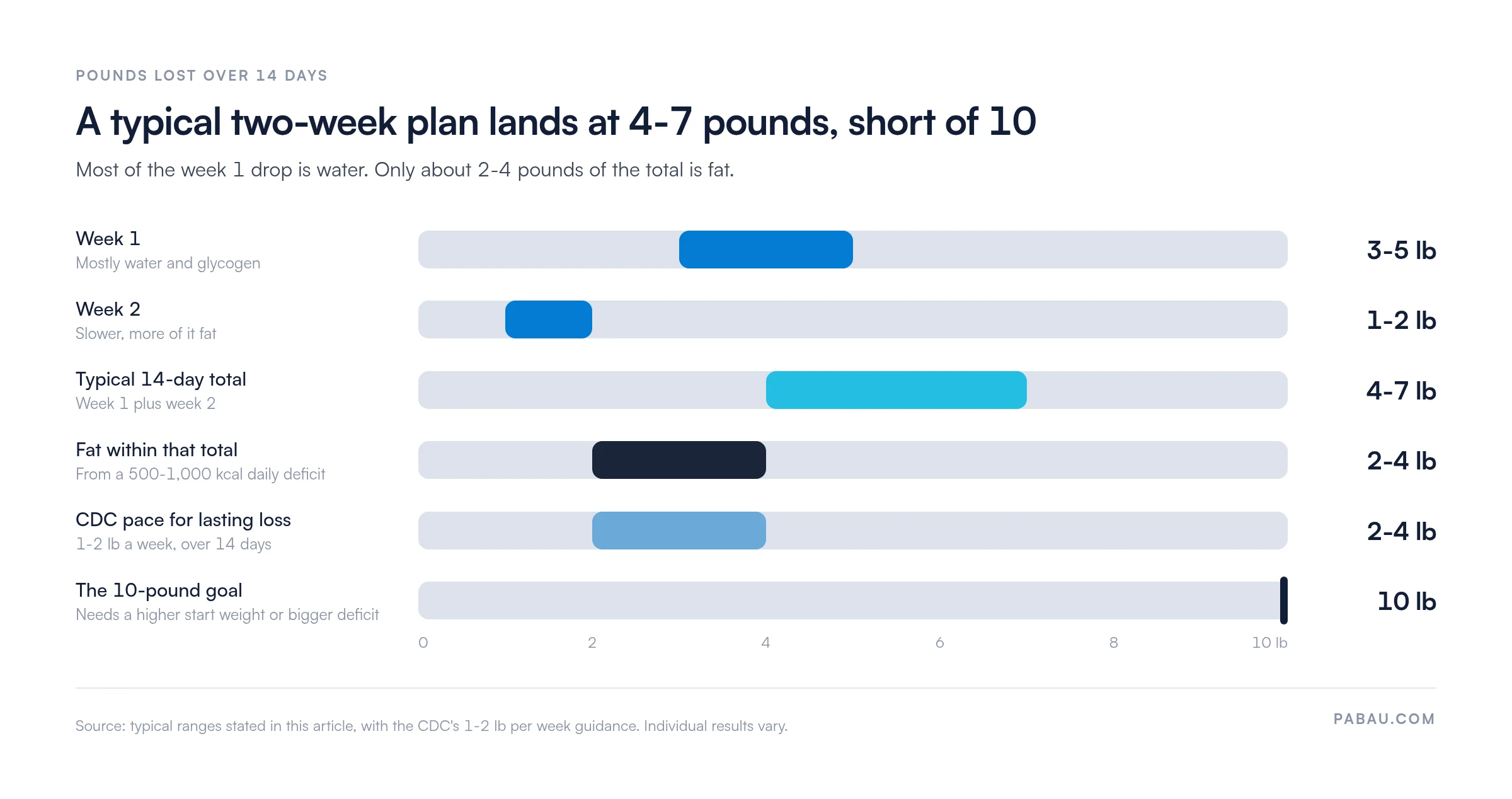
A typical two-week plan yields about 4-7 pounds, and only about 2-4 pounds of that is fat.
Hitting 10 pounds in 14 days takes a higher starting weight or a larger deficit. Both run well past the 1-2 pounds per week the CDC links with lasting loss.
A daily deficit of 500-1,000 kcal, built on lean protein, high-fiber vegetables, whole grains and water, drives the loss while limiting hunger.
The free download is a blank weight-loss care plan form for goals, actions, support and progress reviews, not a pre-written meal plan.
See a doctor or registered dietitian first if you have diabetes, a thyroid condition, an eating disorder history, or take medication that affects appetite.
Some people can, but roughly 60-80% of a 10-pound drop in two weeks is water weight, not fat. A typical plan yields about 4-7 pounds, so reaching 10 takes a higher starting weight or a larger deficit. People who lose about 1-2 pounds per week are more likely to keep the weight off, according to CDC guidance. A 10-pound loss in 14 days is well beyond that pace.
Water weight drops rapidly in week 1 when glycogen stores are depleted (each gram of glycogen binds 3-4 grams of water). Fat loss makes up a larger share in week 2. Realistic fat loss over 14 days is 2-4 pounds, depending on baseline metabolism, exercise intensity, and adherence.
That makes an aggressive two-week plan most useful as the start of longer-term weight management. The visible early drop can build the motivation to keep going after day 14. Midlife women face a hormonal shift across that longer stretch, so losing weight after 40 needs its own plan.
The plan works through a steady calorie deficit, which means eating fewer calories than your body uses. A 500-1,000 kcal daily deficit typically produces 1-2 pounds of fat loss per week.
Your body burns calories through three pathways: basal metabolism (calories burned at rest), thermic effect of food (energy used to digest), and activity. A structured meal plan manipulates intake to create a deficit while preserving muscle and managing hunger through protein, fiber, and hydration.
The lists below favor foods that keep you full for few calories. They also flag the ones that add calories without doing much for hunger.
The download is a blank care plan form, so you or your clinician write in the detail. Each section turns a vague aim into something you can check at your next review.
The form holds no meals or calorie figures, so plan those separately using the guidance below. Many short-term plans for adults, such as a 1,200-calorie diet plan, land around 1,200-1,500 kcal a day. Your own target depends on your size, sex and activity level, so ask a dietitian or doctor to set it, especially below 1,200 kcal.
A simple pattern is three meals and one optional snack, each built around lean protein and vegetables, much like a high-protein meal plan. Breakfast might be eggs or oatmeal, lunch lean protein with roasted vegetables, and dinner fish or poultry with a whole-grain side.
In week 2, rotate protein sources, cooking methods and vegetables to keep meals varied and easier to stick with. Write the pattern you choose into the Actions section of the form, so it sits alongside your goals.
Log your intake in a free app such as MyFitnessPal or Lose It for the first three days to calibrate portion sizes. That baseline shows the calorie content of the foods you eat most, so the remaining 11 days need less tracking.
Intermittent fasting is optional, and it helps some people eat less. An intermittent fasting schedule such as 16:8 means fasting for 16 hours and eating within an 8-hour window. It reduces eating occasions and can lower total calorie intake without counting every meal.
To combine it with your meal pattern, fit your three meals into a 6-8 hour afternoon and evening window. For example, skip breakfast, have lunch at noon, and finish dinner by 8 PM. Studies comparing it with ordinary calorie restriction generally find similar weight loss, so choose it only if the timing suits you.
Caution: Fasting is not recommended during pregnancy or breastfeeding, or for anyone with a history of eating disorders. People with diabetes, especially those taking insulin or other glucose-lowering medication, should fast only with medical supervision.
Pair your diet with 150 minutes of moderate cardio (brisk walking, cycling) or 75 minutes of vigorous activity (running, high-intensity interval training) per week. A structured walking exercise plan is the simplest way to reach the moderate target. Add two days of light strength training to preserve muscle during the deficit.
Exercise raises the calories you burn each day, which widens the deficit without extreme dieting. Avoid overtraining, though. Excessive exercise on a restrictive diet raises injury risk and can trigger compensatory overeating. Consistency beats intensity on a two-week timeline.
Week 1: Expect a rapid 3-5 pound loss, mostly water weight. You’ll feel lighter, clothes fit looser, and initial motivation is high. This drop reflects glycogen depletion and reduced sodium, and much of it returns if old habits come back.
Week 2: Weight loss slows to 1-2 pounds as your body stabilizes water balance. More of this slower loss comes from fat, which is the change that lasts. Progress feels less dramatic, and hunger may increase as your body adapts to the deficit.
Added together, a typical plan yields about 4-7 pounds over the 14 days. Reaching 10 pounds takes a higher starting weight or a larger deficit, ideally one set with a clinician. The chart below sets those ranges against the 10-pound goal.
Don’t be discouraged if week 2 weight stays flat for a day or two. Water fluctuations, hormonal cycles (especially for women), and digestive transit time cause daily variation. Focus on adherence, and record your weekly weight as progress in the care plan’s review record rather than reacting to daily readings. If you also track waist or hip size, a weight-loss measurement chart keeps those numbers in one place.
Seek professional guidance before starting if you have: diabetes or prediabetes, thyroid disorders, cardiovascular disease, a history of eating disorders, or are pregnant or breastfeeding. These conditions alter how your body responds to aggressive calorie restriction and may require medication adjustments or a modified plan.
A registered dietitian can set a calorie target that fits your medical history, food preferences, and lifestyle. They can also complete the care plan form with you and use its review record to adjust the plan beyond the 14 days.
Practices running weight-loss programs often hand out paper care plans, then re-type the goals and review notes into a patient file. Printed forms go missing between visits, and a patient’s progress ends up spread across several places.
Pabau, the weight-loss clinic software we build, turns a paper form like this into a digital one that patients complete and sign before their visit. Answers save straight to the patient’s record, next to treatment notes and tracked measurements such as weight.
Automated reminders bring patients back for each review, and online booking lets them pick the slot themselves. Every review then starts from the patient’s recorded numbers, so your team spends the appointment on the plan instead of the paperwork.

Pabau’s digital forms, patient records and automated reminders keep each care plan, review and measurement in one place. Your team spends less time chasing paperwork and more time with patients.

Treat a two-week plan as the opening stretch of longer weight management. A steady deficit brings a visible drop in week 1, a slower one in week 2, and about 4-7 pounds in total. Roughly 2-4 pounds of that is fat.
The trade-off is pace against staying power. A sharper deficit moves the scale faster but raises hunger and the risk of regain. Written goals and review points on the care plan form, ideally agreed with a dietitian, make the next step clear once day 14 arrives.
For practices, the same form can anchor a structured weight-loss program. Book a demo to see how Pabau keeps care plans, reviews and patient progress in one record.

Looking for professional dietary guidance? Weight loss clinic software helps dietitians track patient progress, store care plans, and automate adherence reminders in one platform.
Want a 14-day diet template? 2-week diet plan for weight loss is a free PDF template to use alongside this care plan form.
Planning beyond two weeks? The 21-day weight loss plan is a free downloadable guide for a three-week program.
Planning meals for a full month? 30-day meal plan for weight loss covers a longer run of weight-loss meals.
Working with a dietitian? Nutrition care plan gives clinicians a structured care plan for nutrition goals.
A typical two-week plan yields about 4-7 pounds, so 10 pounds is only realistic with a higher starting weight or a larger deficit. Even the typical result outpaces the 1-2 pounds per week linked with lasting weight loss, and much of it is water. If you have a health condition or take medication, consult a doctor before starting.
A daily deficit of 500-1,000 kcal built on lean proteins, high-fiber vegetables and whole grains works for most people. The free download is a blank care plan form rather than a meal plan. Use it to record your goals, actions, support and progress reviews alongside the meal pattern you choose.
Intermittent fasting can help some people by cutting eating occasions and total calorie intake, though studies generally find results similar to ordinary calorie restriction. Use it only if the timing suits you. It is not suitable during pregnancy or with an eating disorder history, and people with diabetes need medical advice first.
Expect 3-5 pounds in week 1, mostly water weight from glycogen depletion and reduced sodium. Week 2 usually adds 1-2 pounds, so a typical plan totals about 4-7 pounds. Reaching 10 pounds needs a higher starting weight or a larger deficit.
Transition to a sustainable maintenance or gradual-loss diet to prevent rapid regain. Reintroduce calories slowly, increase fiber intake, and maintain the exercise habits you built. Many people see the 14 days as a motivational sprint before a longer-term steady approach.