Impaired skin integrity nursing care plan
An impaired skin integrity nursing care plan is a structured document that recor...

2
Last Updated: Oct 16, 2026

An intermittent fasting schedule sets a fixed fasting window and eating window, then repeats that pattern day after day.
The 16:8 method is the most popular protocol, but most beginners do better starting at 12:12 and working up.
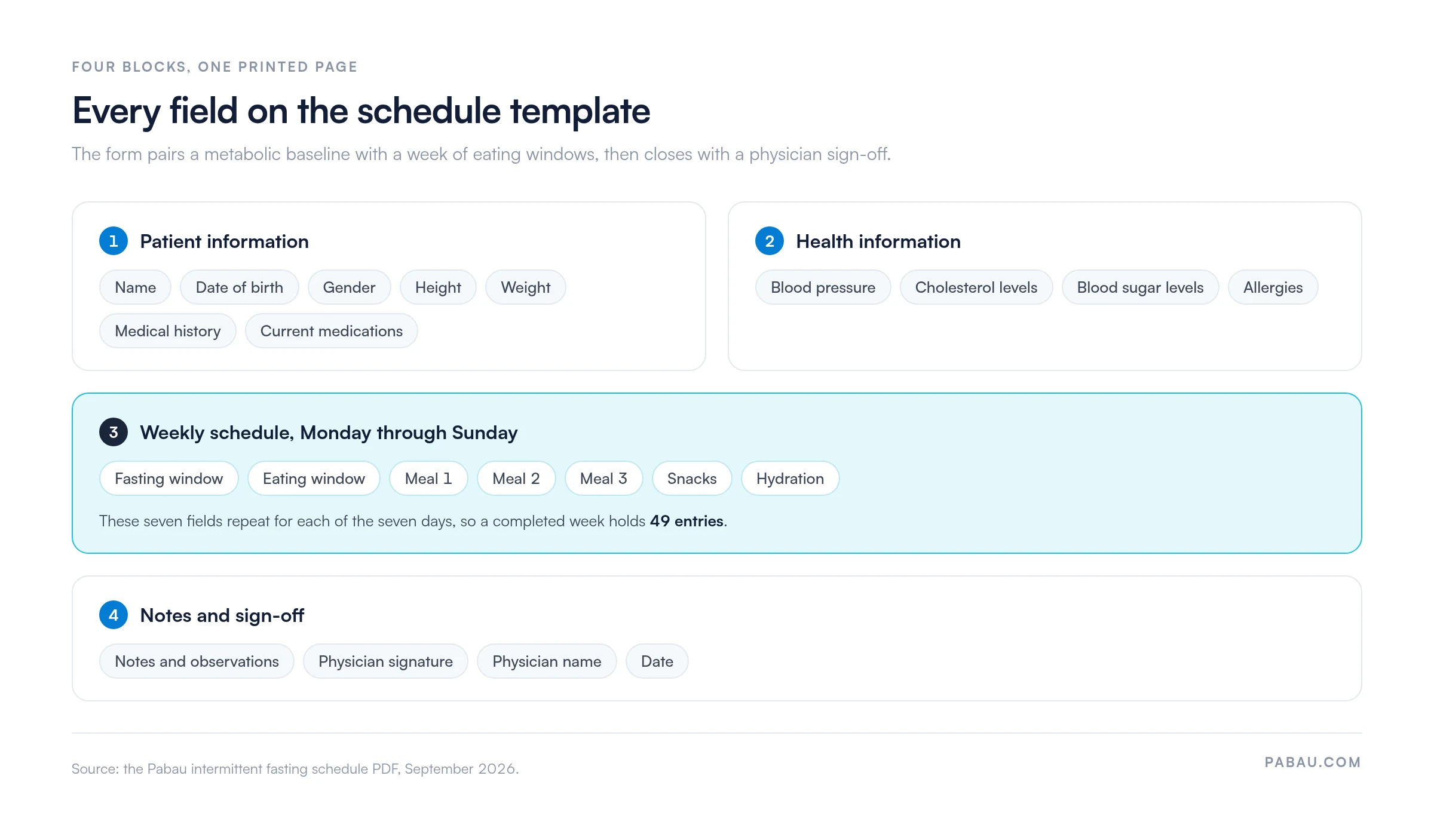
The downloadable form records a fasting window, an eating window, three meals, snacks and hydration for every day of the week.
Fasting is contraindicated in pregnancy, breastfeeding, type 1 diabetes and active eating disorders, so screen the patient before you hand it over.
Practice management software like Pabau stores the completed schedule against the patient record, so adherence is visible at the next visit.
A one-page clinical form that records the patient’s height, weight, medications, blood pressure and blood sugar. A Monday to Sunday grid then captures fasting windows, eating windows, meals, snacks and hydration, with a physician signature line at the end.
Download templateAn intermittent fasting schedule is a structured eating pattern that cycles your patient between fasting and eating windows. It sets when they eat rather than what they eat. For most adults that means 16:8, though beginners hold at 12:12 for the first couple of weeks. The right schedule depends on the patient’s health status, their metabolic goals and the shape of their working day.
An intermittent fasting schedule splits the day into two periods. The fasting window is the stretch with no calories. The eating window is when normal meals happen. Restricting the hours available for eating tends to cut total intake, and it pushes the body toward burning stored fat.
Insulin levels drop during a fast, which lets the body draw on stored fat for energy. Over several weeks that can improve insulin sensitivity. Water, black coffee and unsweetened tea are allowed throughout the fasting window, which is what makes the pattern livable for most patients.
The form runs one week to a page, and every day gets the same seven fields. Here is how to work through it with the patient in front of you.
The form suits practices treating patients for metabolic reasons, from weight loss to blood sugar control. It matters most where one clinician runs several patients on different protocols at the same time.
That is the daily reality in a weight loss practice. It is why weight loss clinic software is built around per-patient plans rather than one protocol for all. Metabolic health practices use the same page differently, sitting each week’s fasting windows next to the patient’s lab results.
A written window removes the guesswork. When patients can see the hours they committed to, compliance tends to improve, because nobody is arguing about what was agreed in the room. The form also standardizes what your practice hands out, so every patient starts from the same structure.
A printed page saves consultation time too. Instead of explaining fasting windows out loud at every visit, you hand over one sheet the patient fills in daily and brings back. That gives you something to read at the follow-up, which matters when a weight loss plateau could be the protocol or could be adherence.
Not every patient thrives on the same protocol. The three time-restricted schedules below differ only in where the window opens and closes. The 5:2 approach works on a weekly rhythm instead, so it sits outside that comparison.
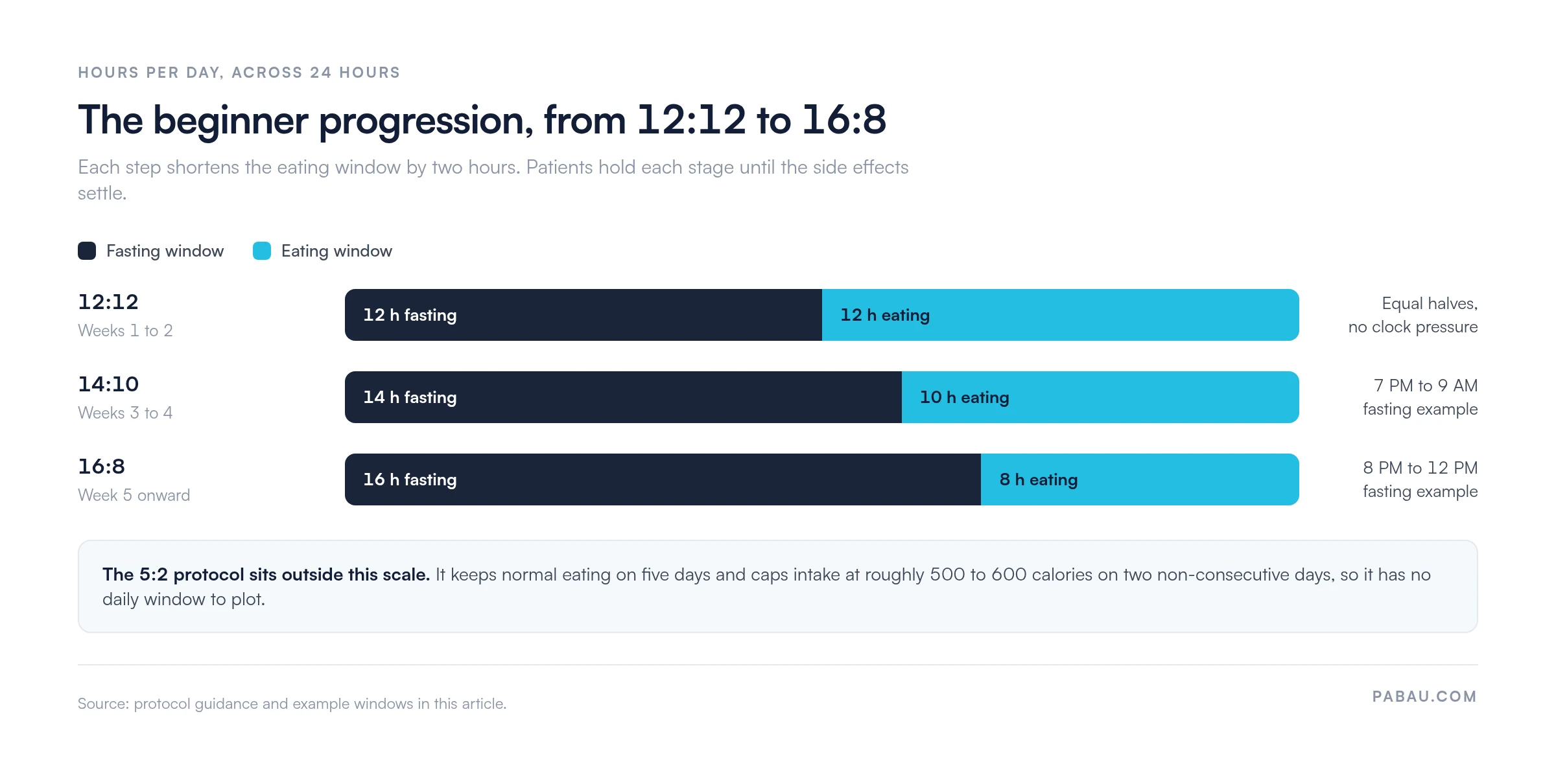
The 16:8 method fasts for 16 hours and eats within 8. A common pattern is fasting from 8 PM to 12 PM the next day, then eating between 12 PM and 8 PM. It fits around most work schedules and social calendars, which is why patients hold it long term. The window still covers lunch and dinner, so only breakfast disappears.
The 5:2 approach eats normally on five days and caps intake at roughly 500 to 600 calories on two non-consecutive days. Tuesday and Friday is the usual pairing. It suits patients who cannot hold a daily window but can commit to a weekly rhythm. Weight loss is comparable to 16:8 over time, though adherence varies more widely.
The 14:10 method fasts for 14 hours and eats within 10. Fasting from 7 PM to 9 AM is a typical pattern, and the longer window leaves room for breakfast. It is the gentler entry point for patients new to fasting or sensitive to hormonal shifts. Many move up to 16:8 after four to six weeks.
The fasting by age chart is the companion download when you want a starting point tied to the patient’s age rather than their experience.
Patients chasing weight loss need to watch what lands in the eating window, not only when it opens. The 16:8 and 5:2 protocols carry the most evidence for fat loss, largely because both cut total intake when paired with sensible portions.
Counsel patients that a daily deficit of 500 to 1,000 calories produces sustainable loss of one to two pounds a week. Anything faster than that is usually water and muscle rather than fat.
The common mistake is treating the fast as the whole plan. A patient who fasts for 16 hours and then overeats for eight will stall. Pair the schedule with an intermittent fasting meal plan that sets macro targets for the eating window. Write “eat until satisfied, not stuffed” into the notes and observations block, so the reminder travels home with the form.
Women often need a modified protocol, because caloric needs shift across the menstrual cycle. Those needs rise during the luteal phase, and a 16:8 window can leave patients tired or hormonally unsettled.
A workable approach is to drop to 14:10 or 12:12 through the luteal phase. Patients then return to 16:8 during the follicular phase, when energy is higher. Aggressive fasting during high-progesterone phases can disrupt reproductive hormone signaling, so adjust to the patient rather than to the protocol.
Women with a history of disordered eating should not fast without medical oversight. Fasting can trigger restrictive patterns in vulnerable patients, which is why the screening conversation comes before the schedule.
Starting at 16:8 is too aggressive for many newcomers. A workable progression runs 12:12 for weeks one and two, then 14:10 for weeks three and four. Move to 16:8 from week five, once the body has adapted. Staging it limits the fatigue, headaches and irritability that make patients quit altogether.
The form covers a single week, so print a fresh copy for each stage and write the target hours at the top. Patients then see the pathway ahead instead of reading week one as their permanent schedule.
A well-structured fasting schedule supports several outcomes at once. Weight loss follows the reduced intake and improved fat oxidation. Blood sugar control improves as insulin levels normalize during the fast, which flattens the spikes and crashes that drive hunger.
Metabolic flexibility also increases, meaning the body gets better at switching between burning glucose and fat. Reported benefits extend to clearer thinking during fasts, more cellular autophagy and lower inflammation markers in regular users.
These take consistent adherence over four to twelve weeks. Most patients who quit do so in the first two weeks, when the side effects have arrived and the benefits have not. The day-by-day rows give them something to fill in through that stretch.
Where blood sugar is the reason for fasting, the blood sugar levels chart sets out the normal, prediabetic and diabetic ranges you are measuring against.
Hunger, fatigue and headaches in the first week or two are normal, and they usually settle as the body adapts. Some patients should not fast at all, and others need supervision while they do.
Absolute contraindications: pregnancy, breastfeeding, active eating disorders, type 1 diabetes because of the hypoglycemia risk, and a personal or family history of disordered eating. Patients on medications that affect blood sugar should fast only under clinical supervision, with frequent glucose monitoring and dose adjustments as needed.
The form carries no screening section, so run that check yourself before you hand it over. Its medical history and current medications fields are where you record what you asked. For a patient new to the practice, a weight loss intake form captures the fuller picture first.
Tell patients to discuss fasting with their primary care physician before starting, particularly if they take regular medication or manage a chronic condition.
Most practices print the schedule, hand it over and hope it comes back. The completed page then lives in a folder, or in a photo on somebody’s phone. The next clinician to see that patient ends up working from the patient’s memory of the week.
Practice management software like Pabau closes that loop. You can send the schedule out as a digital form before the appointment. Height, weight and medication details are then already in the record when the patient arrives. Completed forms attach to the client record rather than to a filing cabinet.
Follow-ups run the same way. Weight and blood sugar readings sit on one chart the patient can see in their portal. Automated reminders bring them back at four and twelve weeks. Telehealth appointments let you review a week of windows without asking the patient to travel in.

Pabau sends the schedule out as a digital form before the visit and files the completed page against the client record. Weight and blood sugar chart over time, so your follow-up starts with the data already in front of you.

The protocol matters less than whether the patient can hold it. 16:8 suits most adults on paper. In practice, a patient who quits it in week two does worse than one who stays on 12:12 for a month.
So pick the gentlest window the patient’s goals allow, write the hours down, and let the follow-up decide whether to tighten them. Screening comes first every time, because the patients this suits least are often the ones asking for it.
Book a demo to see how Pabau files completed fasting schedules against the patient record and charts metabolic progress between visits.

Planning what the patient eats in the window? 30-day meal plan for weight loss gives you a month of structured meals to hand over alongside the fasting schedule.
Protein targets slipping inside a short window? High-protein meal plan helps patients hit their intake across only three meals.
Patients unsure what to buy? Grocery list for weight loss turns the plan into a list they can take to the store.
Weighing fasting against medication? Lifestyle vs pharmacologic interventions in metabolic health compares the two routes for patients who stall on diet alone.
Adherence dropping between visits? Weight loss reward chart gives patients a visible streak to keep through the first difficult weeks.
The 16:8 method, meaning 16 hours fasting and an 8-hour eating window, is the most sustainable protocol for most people. The best schedule, though, is the one your patient will actually follow. Beginners should start at 14:10 or 12:12 and progress to 16:8 after four to six weeks. Women may do better on a protocol that flexes with the menstrual cycle.
Yes. Water, black coffee and unsweetened tea are allowed during fasting windows and do not trigger an insulin response. Drinks containing calories or sweeteners break the fast, so keep fluids plain to hold on to the metabolic benefits.
No. Fasting is contraindicated during pregnancy and breastfeeding, and in people with type 1 diabetes or a history of eating disorders. Patients on medications that affect blood sugar need physician supervision before they start. Screen for all of this before you hand over a schedule.
Initial water weight loss shows up within three to seven days, and measurable fat loss usually appears within two to four weeks. Metabolic benefits such as improved insulin sensitivity develop over four to twelve weeks of consistent practice. A written schedule helps patients stay committed through those early weeks.
Focus on whole foods, which means vegetables, lean proteins, healthy fats and whole grains. Fasting does not require a special diet, but food quality still decides the result. Overeating processed food inside the window will slow weight loss, so portion awareness still matters.