Mental health self-care checklist
A mental health self-care checklist is a structured daily tool for tracking the ...

6
Last Updated: Oct 20, 2026

A DAP note records three things: the Data from the session, your Assessment of it, and the Plan for what comes next.
The format folds client report and clinician observation into one Data section, so it is faster to write than a SOAP note.
Write a note for every billable session, and write it within 24 hours while the detail is still fresh.
Payers read the Assessment and Plan for medical necessity, so vague wording is what usually triggers a denial.
Practice management software like Pabau keeps note templates, intake forms, and the appointment record in one place.
A blank DAP note with prompts for each of the three sections, plus space for attendance, risk, and the next appointment. Keep it open while you write, or print it for the session.
Download templateA DAP note is a structured progress note that therapists, counselors, social workers, and psychiatrists use to document a session. The acronym stands for Data, Assessment, and Plan. Those three sections cover what happened in the session, what it means clinically, and where the client goes next.
Consistent notes are what keep claims paid and audits uneventful. This guide gives you the format, three worked examples, a phrase bank for each section, and the errors that get claims denied. It also shows where notes sit in day-to-day mental health practice management.
A DAP note is a progress note with three sections: Data, Assessment, and Plan. It answers what happened in the session, what it means, and what comes next. Nothing else belongs in it.
SOAP notes split what the client said from what you observed. DAP notes put both in the Data section, which leaves you one less judgment call while you write. The format is standard in outpatient counseling, behavioral health programs, substance use treatment, school-based therapy, and psychiatric practices.
The three sections build on each other. Data is what the client reported and what you saw. Assessment is your reading of that data, covering diagnosis, progress, and risk. Plan is what happens next: interventions, homework, referrals, and the next appointment.
Written that way, one page answers the two questions a reviewer always asks. Why does this client need treatment, and what are you doing about it?
Work through the sections in order. Start with Data: client self-report, behavioral observations, and any screening scores. Move to Assessment and say what that data means. Finish with the Plan, which covers what you will do, what the client will do, and when you meet next.
The Data section is factual. Quote the client directly where the wording carries weight: “Client reported feeling anxious about the upcoming presentation.” Record what you observed, such as tearfulness or minimal eye contact.
Note attendance, late cancellations, and the results of any assessment tool you used, such as a Geriatric Depression Scale score for an older adult. Interpret none of it here. Specific data is what makes the Assessment credible later on.
At a first session there is no previous note to draw on, so the Data section rests on the account given at intake. A presenting problem template gives that account a structured place in the record, separate from the diagnosis that follows.
This is where you state your clinical judgment. Connect the data to the diagnosis, for example anxiety symptoms consistent with generalized anxiety disorder. Measure progress against the treatment goals: panic attacks down from three a week to one. Name risk factors even when they are absent today.
Your diagnostic impression usually traces back to the first psychiatry interview, so keep the wording consistent between the two. The Assessment justifies everything in the Plan, and it is the section a payer reads first.
The Plan says what happens next. Name the interventions you used and will keep using, such as cognitive behavioral therapy, known as CBT, with grounding techniques for panic moments. Set patient compliance expectations in numbers: breathing exercises three times a day, tracked in a home log. Homework such as a DBT journal gives the client something concrete to bring back.
Close with session frequency, any referrals, and the date of the next appointment. A specific Plan keeps your team aligned and shows the payer that treatment is active and necessary.
Worked examples show the format faster than any description. The three notes below cover anxiety, depression, and substance use disorder, the presentations you see most often in outpatient behavioral health. Each one uses the language reviewers expect.
Data: Client presented reporting increased worry about work performance and an upcoming performance review. States, “I can’t stop thinking about all the things that could go wrong.” Sleep disrupted by racing thoughts, averaging four to five hours per night. No changes in appetite. Affect was anxious and speech was rapid. Client engaged well and held appropriate eye contact.
Assessment: Client continues to meet criteria for generalized anxiety disorder, with a recent exacerbation tied to workplace stress. Cognitive patterns include catastrophizing about performance outcomes. Coping skills are limited, and client reports avoidance as the primary strategy. No suicidal or homicidal ideation. Prognosis is good given insight, motivation, and previous response to CBT.
Plan: Continue weekly CBT targeting thought-challenging and worry exposure. Introduce progressive muscle relaxation for physical symptoms. Client to practice it nightly and complete thought records for worry episodes before next session. Discussed sleep hygiene and an earlier bedtime. No medication changes, and client is stable on the current regimen. Next session: one week.
Data: Client reported persistent low mood, anhedonia, and fatigue across the past two weeks. Denies appetite changes but notes social withdrawal: “I’ve stopped calling friends.” Concentration difficulties at work, with three minor errors this week. Expressed hopelessness: “I don’t think things will get better.” Denies suicidal ideation. Mood rating four out of ten. Appeared withdrawn and spoke softly.
Assessment: Client presents with a moderate depressive episode consistent with major depressive disorder, currently partially treated. Isolation and anhedonia are the maintaining factors. Client shows some insight, though hopelessness is present. Risk assessment: no passive or active suicidal ideation today, no previous attempts, social support available but underused. Therapeutic alliance is strong.
Plan: Continue antidepressant as prescribed, and follow up with the prescriber if there is no improvement in four weeks. Behavioral activation focus: schedule one social activity this week. Introduce thought records for depressive thoughts. Client agreed to call one friend before the next appointment. Sleep and exercise added as behavioral targets. Next session: one week.
Data: Client attended after missing last week’s session. Reports two days of alcohol use following a family conflict, then four days abstinent. States, “I stopped counting after the third drink.” Attended two of four planned recovery meetings. Denies withdrawal symptoms and denies cravings today. Presented on time, alert, and oriented.
Assessment: Alcohol use disorder, moderate, in early remission with a recent lapse. The lapse followed an identified interpersonal trigger rather than craving alone. Client takes responsibility and returned to treatment quickly, which is a protective factor. Withdrawal risk is low. No suicidal ideation reported.
Plan: Continue weekly individual therapy with a relapse-prevention focus. Client to attend three recovery meetings before next session and log urges daily. Rehearse a refusal script for family gatherings. Coordinate with the prescriber about continuing naltrexone. Next session: one week, with a phone check-in midweek.
Substance use notes draw extra scrutiny. Record the lapse, the response to it, and the reason treatment continues.
Software designed for GP practices can attach this form to the consultation record automatically.
Consistent phrasing speeds up note-writing and keeps quality even across a team. Keep these openers to hand for each section.
Both formats are used across behavioral health, and payers accept either one. What separates them is how they group information, which matters most when you move between settings. NASW practice standards treat both as valid, so the decision usually comes down to your organization and your payer mix.
DAP groups every observation together, so it is quicker to write and quicker to skim. SOAP asks you to separate what the client said from what you saw, which costs a little time and adds a little structure. Neither is better. Most social work documentation standards accept either.
Reviewers see the same five errors over and over, and each one is avoidable. Working to clinical note safety standards keeps your documentation defensible.
Your notes should also show that consent was in place. Record that the client understood the treatment goals, the risks, and the alternatives. Our informed consent documentation covers the wording for group settings.
Payers reimburse on the strength of your documentation. A note missing an Assessment or a specific Plan can trigger a denial, which leaves you unpaid for a session you delivered.
Reviewers work through a short list on every note they pull:
Two habits cover most of it. Write the note within 24 hours, and make sure every billable session has one. CMS documentation requirements hold the same standard whichever note format you use.
The bar does not move with the service either. A behavioral health screening billed under H0002 needs the same specificity as a standard therapy hour.
Most therapy practices write every note twice. You scribble during the session, then retype it into a template that lives somewhere else. Whatever the client filled in beforehand gets copied across by hand, usually at the end of a long day. Picking the right mental health software up front avoids this double entry before it becomes a daily habit.
Practice management software like Pabau takes the retyping out.
Note templates are customizable, so the DAP layout your payers expect is the one your team sees every time. Pabau is built for therapy practice management, which means the note, the appointment, and the invoice stay attached to the same client record.
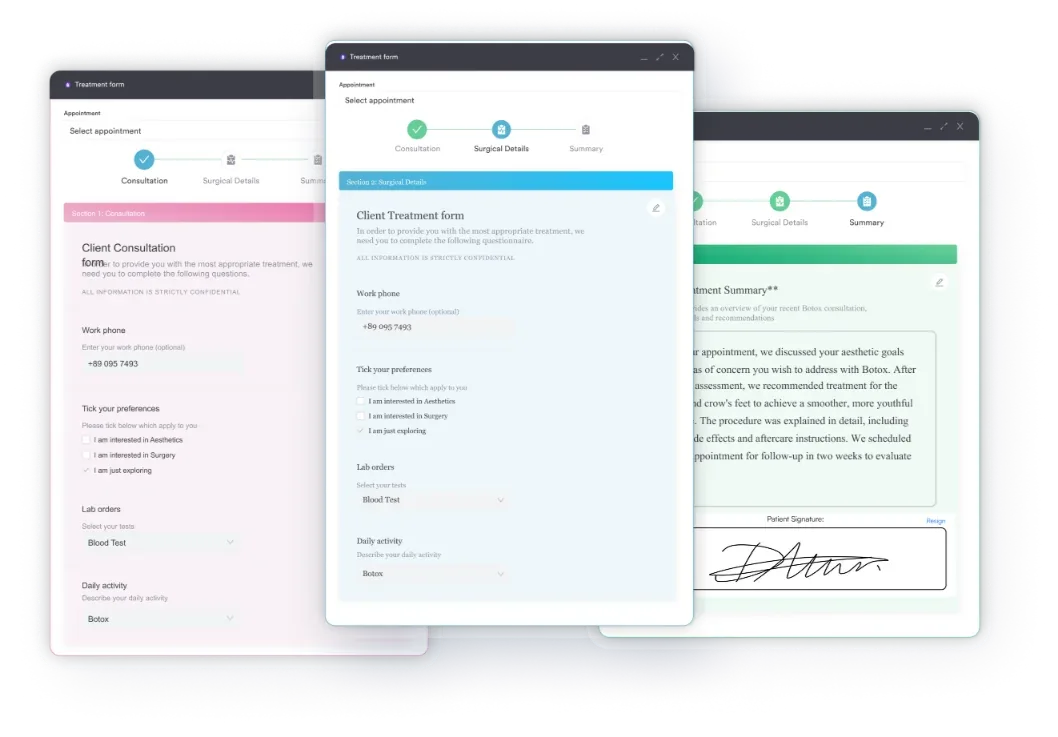
The outcome is a caseload where nothing is outstanding. Your notes get written on the day of the session, and your claims carry the detail payers ask for. Your evenings stop filling up with paperwork.

Book a demo to see how Pabau’s note templates, digital intake forms, and AI scribe help therapists document faster and get paid on time.

Reviewers reward specificity above everything else. A note that names the intervention, quantifies the change, and states what happens next will hold up in any format.
So pick one format and stay with it. Download the template and keep the phrase bank open for your first week of notes. Write each note while the session is still fresh.
The practices that never fall behind are the ones where the note lives beside the appointment and the invoice. Book a demo to see how Pabau helps therapists finish notes on the day they see the client.

Screening for impulse control? The impulsivity test template gives you a scored questionnaire you can attach to the client record.
Assessing a possible autism presentation? The CAT-Q test walks through camouflaging scores and how to read them.
Need a tool to help clients name their emotions? Emotions card template supports structured emotion-naming exercises in individual sessions or group work.
Treating a client with anxiety or phobias? Fear hierarchy worksheet ranks activities from least to most fearful for exposure therapy planning.
Helping clients set treatment goals? Goal setting worksheets offer printable sheets for SMART goal formulation and progress review.
DAP stands for Data, Assessment, and Plan. Data is what the client reported and what you observed. Assessment is your clinical interpretation and reasoning. Plan is the treatment direction and next steps.
DAP notes combine client report and clinician observations into one Data section (3 sections total). SOAP notes separate them into Subjective and Objective sections (4 sections total). Both are clinically valid, and DAP is often faster to write.
Write a DAP note after every billable client session. Insurance companies require documentation for each encounter you bill. Write notes contemporaneously (within 24 hours) to ensure accuracy.
Yes. Insurance payers require clinical documentation to justify reimbursement. A DAP note that meets medical necessity standards (clear Assessment and Plan) is the standard documentation format for behavioral health billing.
Yes. AI tools can transcribe sessions and auto-populate the Data section, but you (the clinician) must always review and finalize the Assessment and Plan. AI-assisted notes are drafts only. Your clinical judgment is final.
BIRP stands for Behavior, Intervention, Response, and Plan. It is used primarily in school-based counseling and behavior therapy. It is outcome-focused (what changed after the intervention) rather than assessment-focused like DAP. Both are valid, so choose based on your setting. A BIRP note template lays out those four components with prompts for behavior, intervention, response, and plan.