Getting along with siblings worksheet
A getting along with siblings worksheet is a printable that helps children and t...

1
Last Updated: Oct 23, 2026
An anxiety thermometer is a 1 to 10 visual scale that lets a patient rate how anxious they feel right now. It takes seconds, and it turns a vague “a bit better” into a number you can track.
That matters because anxiety is hard to put into words, especially mid-session. Rate before and after a coping technique and you see whether it helped. Rate every session and the trend shows whether anxiety is easing, steady or climbing. The free printable template below records both ratings, plus the trigger, symptoms and next steps. Read on for the score bands, the steps at each level, and the mistakes that skew the numbers.
A five-page printable form with before and after anxiety ratings on a 1 to 10 scale. It also has fields for the trigger, symptoms, support received, next steps, follow-up date and signatures.
Download template
An anxiety thermometer is a 1 to 10 visual self-report scale for rating anxiety in the moment.
It is a screening and monitoring aid, not a diagnostic test.
Rating before and after a coping technique shows whether the technique helped.
Scores of 7 or above call for a direct safety conversation under your service’s protocol.
Pabau, our practice management software, lets you store completed worksheets in patient records.
An anxiety thermometer is a self-report scale on which a patient marks how anxious they feel. It runs from 1 (calm) to 10 (the most anxiety they can imagine). It belongs to the same family as the Subjective Units of Distress Scale (SUDS) used in cognitive behavioral therapy (CBT).
The format is deliberately plain. Its strength is speed, which makes it usable with adults, teenagers and, with some adaptation, younger children.
The patient picks the number that best matches how anxious they feel right now. You record it and ask what pushed it up or down. Comparing scores across sessions shows the direction of travel.
The three bands lead to three different conversations, as the chart below shows.
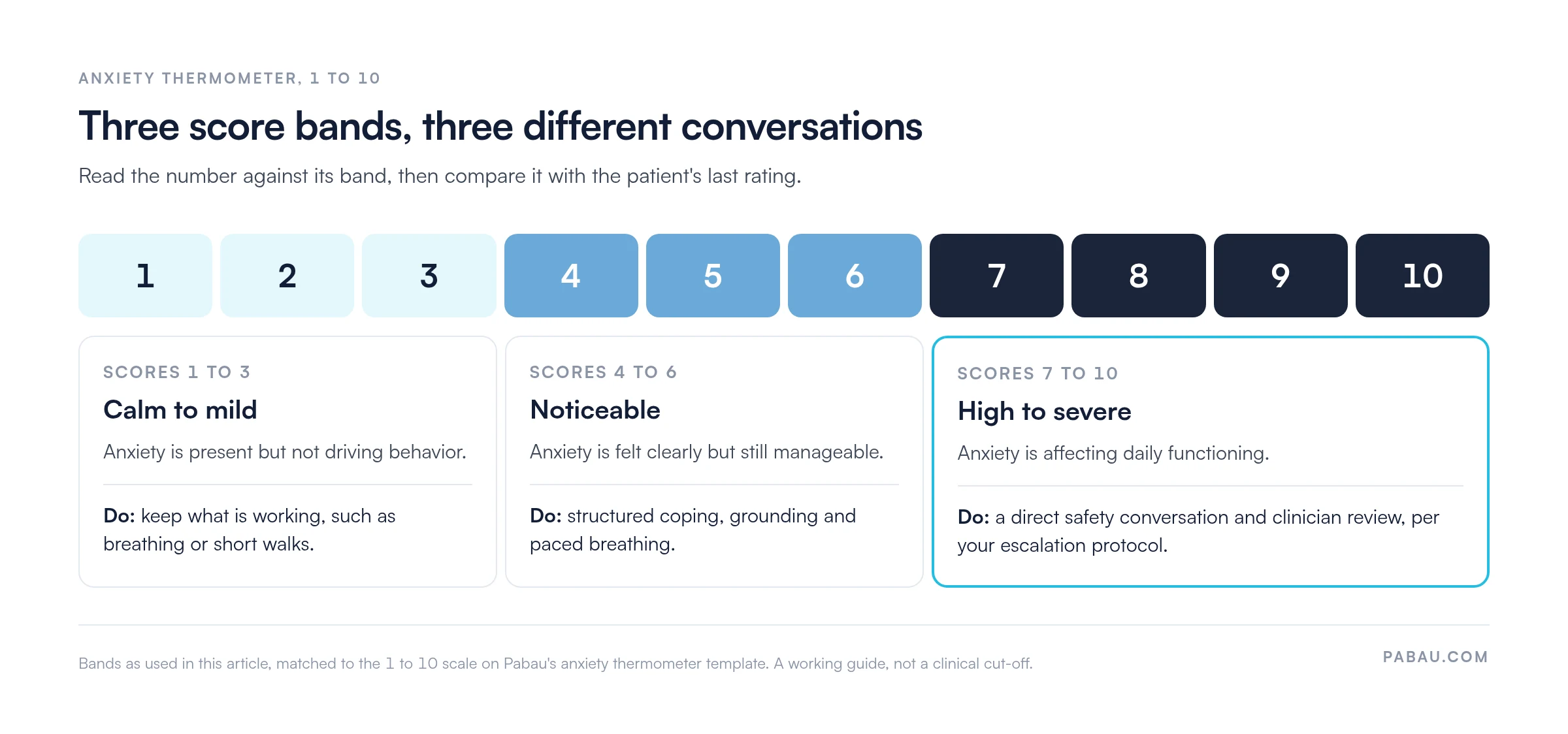
These bands are a working guide, not a clinical cut-off. Your own service protocol should define what happens in each band, including any escalation or crisis steps.
An anxiety thermometer tracks anxiety specifically. The Distress Thermometer is a validated screening tool used in oncology to flag general emotional distress. They look alike but do different jobs.
For a patient in cancer care, the validated Distress Thermometer is the instrument of record. Where you need a validated screen for generalized anxiety, the GAD-7 assessment does that job. Use the thermometer alongside either one for ongoing tracking.
In CBT, a distress rating anchors the session. The template has separate “before” and “after” scales for exactly this reason, so here’s how a typical round runs.
The gap between the two numbers tells you more than either one alone. A drop from 7 to 4 suggests the technique is worth practicing. A patient who stays at 8 across several techniques may need a different approach, and that call stays with the therapist.
Numbers can feel abstract to children. Many clinicians add color bands, such as green for calm, yellow for worried and red for very anxious. Simple wording and faces help younger children too.
The Wisconsin Office of Children’s Mental Health uses feelings thermometers in its work with young people. If a child wants to rate emotions other than worry, a broader feelings thermometer covers them.
With adults, the scale works in primary care check-ins, psychotherapy, and ongoing monitoring of chronic anxiety. A rating takes less than a minute, so it fits even a short review.
Postpartum patients may also benefit from regular ratings between sessions, since anxiety often fluctuates in this period. Use it alongside a full clinical assessment, never instead of one.
A score is a starting point for discussion, and coping suggestions should fit the band reported. The options below are general ideas to discuss with the patient, not treatment instructions.
For the middle band, a grounding techniques worksheet gives patients exercises to practice between sessions.
Any score in the 7 to 10 band should prompt a direct safety conversation. Crisis thresholds and steps should follow your organization’s own policy. Where risk is present, a mental health safety plan gives that conversation a written outcome.
The template is a printable PDF, so it works in a consultation room, a classroom or as a take-home handout. Each sheet follows one round of support from start to finish.
If the same trigger keeps coming up, an anxiety triggers worksheet helps you explore it in more depth.
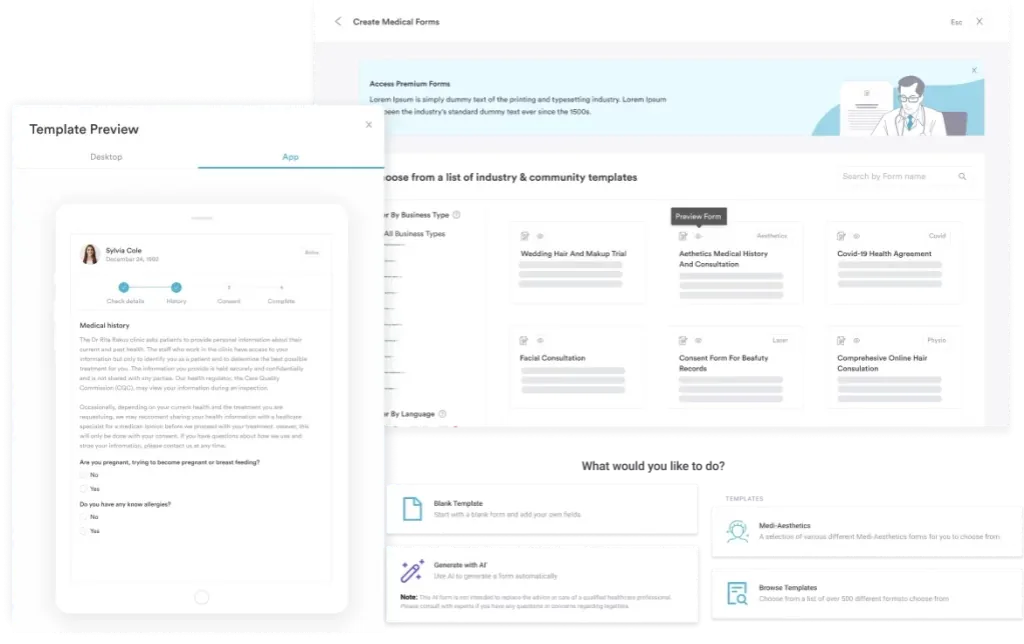
Keep completed worksheets with the clinical record. Pabau’s digital intake forms can capture the same information electronically, and the completed form can be stored in the patient record.
The scale is simple, which makes it easy to use loosely. These are the habits that quietly distort the numbers.
Psychology and therapy practices use the tool to track patient progress between sessions. Psychiatry and primary care teams use it as a quick check during review appointments. Schools and pediatric services use it to help children name feelings, while counselors use it to open conversations about worry.
The main benefit is a shared, quantified starting point for conversation. Documented ratings also support clinical audit and review, because they show what was measured and when.
Completed worksheets belong in the patient record, not in a loose folder. Store each score with the date and session context so the trend is visible.
Check your data protection obligations before storing any patient information electronically. Requirements under HIPAA in the US and GDPR in the UK and EU apply to how practices handle this data.
Paper works until you need last month’s score in the middle of a session. Printed sheets end up in folders, and the trend has to be pieced together by hand.
Pabau’s software for therapy practices lets you rebuild the thermometer as a digital form. Patients can complete it before their appointment, and the answers are saved to their patient record.
That means the “before” rating is waiting when the session starts, with a record of when it was completed. Every subscription includes forms, scheduling and reminders, so there’s no add-on to buy first.

Pabau’s digital forms let patients complete their rating before the session and save it to their record. You start the session with the score instead of a stack of paper.

The anxiety thermometer earns its place by being quick, so protect that. Agree what 1 and 10 mean with each patient, use the same three bands every time, and read each score against the last one.
Treat the number as a conversation starter rather than a verdict. A 7 is a prompt to ask about safety, and a drop after grounding is evidence the exercise helped. When you need a diagnostic answer, reach for a validated instrument instead.
Book a demo to see how Pabau collects anxiety ratings before each session and keeps them in the patient record.

Patient stuck on what-ifs? The worry tree helps patients sort worries they can act on from ones they can’t.
Need a measure of social anxiety? The Social Interaction Anxiety Scale rates fear of social situations with a standardized questionnaire.
Screening a child for anxiety disorders? The SCARED template gives you a structured screen to pair with thermometer ratings.
Looking at anxiety as a lasting trait? The Taylor Manifest Anxiety Scale measures trait anxiety rather than how a patient feels today.
Tracking stress rather than anxiety? The stress thermometer template uses the same quick-rating format for general stress.
The GAD-7 is a validated seven-item questionnaire that screens for generalized anxiety disorder over the past two weeks. An anxiety thermometer rates how anxious someone feels right now, so it tracks short-term change rather than screening.
They work the same way, but SUDS usually runs from 0 to 100. The thermometer’s 1 to 10 range is easier for children and for quick ratings in session.
Yes, and home ratings can show patterns a weekly session misses. Ask patients to note the time and trigger with each rating, then review the sheet together at the next appointment.
It’s a working clinical aid rather than a validated diagnostic test. Where a validated instrument is required, use that instrument instead.
Anchor both ends with the patient’s own examples. A 1 might be reading on the sofa, and a 10 the worst panic they remember. Then ask where they sit right now.